


Vertical Farming in India: Types, Tech & Projects
🌱 Introduction
India is an agriculture-based country, but today the situation is not like before. Rapidly increasing population, urbanization, decreasing agricultural land, and water shortage have created challenges for traditional farming. Farmers need to produce more in less land, while consumers want fresh, safe, and nutritious food. In such a situation, Vertical Farming has come forward as a modern and revolutionary solution.
Vertical farming is not just a new technology, but it is a completely new way of doing farming, where we use height instead of land. In this blog, we will understand this technique in detail- its definition, working process, technologies, advantages, disadvantages, status in India, and future.
🌿 What is Vertical Farming?
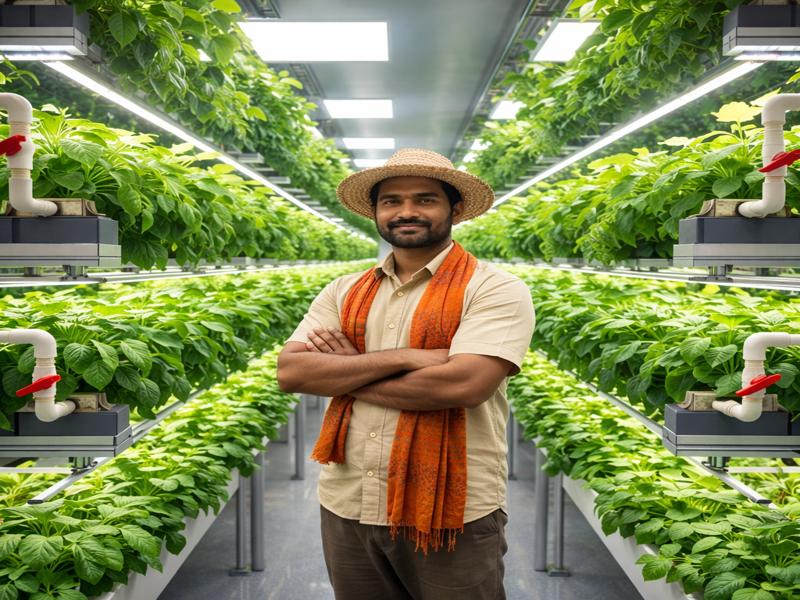
Vertical Farming is a modern agricultural system in which crops are grown in stacked layers instead of spreading on the ground. This farming is done in a Controlled Environment Agriculture (CEA), where temperature, humidity, light, water, and nutrients are controlled with the help of machines and sensors.
In simple words:
“Farming done by using height to produce more in less space is called Vertical Farming.”
In this technique, soil is not required. Instead, plants are grown using nutrient-rich water or mist.
🌾 Why is Vertical Farming Needed?
In today’s world, there are many problems which can be solved by vertical farming:
1. Increasing Population
By 2050, the world population can reach around 10 billion. Providing food for so many people will be a big challenge.
2. Decreasing Agricultural Land
Due to urbanization and industrialization, farming land is decreasing continuously.
3. Water Shortage
Traditional farming uses a lot of water, while water resources are limited.
4. Climate Change
Irregular rainfall, drought, and floods are affecting farming.
👉 All these problems can be solved through Vertical Farming.
🧪 Main Technologies of Vertical Farming
The success of vertical farming depends on its modern technologies. These technologies completely change traditional soil-based farming and help plants grow faster in a controlled environment. Below, the main technologies are explained in detail:
🌊 1. Hydroponics
Hydroponics is a technique in which plants are grown without soil, only in water. This water already contains essential nutrients, so plants get nutrition directly through their roots.
🔍 How does it work?
- Plants are placed in special trays or pipes
- Roots are kept in nutrient-rich water
- Water continuously circulates through a pump
⭐ Advantages:
- Faster plant growth
- Saves water
- Less pests and diseases
- Easy for beginners
⚠️ Important Points:
- Maintaining water quality is necessary
- Balance of nutrients is important
🌫️ 2. Aeroponics
Aeroponics is an advanced technique in which plant roots are suspended in air and sprayed with nutrient mist.
🔍 How does it work?
- Plants are fixed in a frame
- Roots remain open in the air
- Nutrient solution is sprayed at intervals
⭐ Advantages:
- Uses the least water
- Faster growth
- High-quality crops
⚠️ Important Points:
- Plants can dry quickly if the system fails
- Technical monitoring is necessary
🐟 3. Aquaponics
Aquaponics combines fish farming (aquaculture) and hydroponics to create a natural cycle.
🔍 How does it work?
- Waste from fish tanks becomes nutrients for plants
- Plants filter the water
- Clean water goes back to the fish
⭐ Advantages:
- Natural and organic system
- Dual benefit (fish + crops)
- Less chemical use
⚠️ Important Points:
- Maintaining system balance is important
- Slightly complex for beginners
🌡️ 4. Controlled Environment Agriculture (CEA)
This technology is the backbone of vertical farming. In this, all environmental factors required for plant growth are controlled.
🔍 Controlled Factors:
- Temperature
- Humidity
- Light
- CO₂ level
- Nutrients
⭐ Advantages:
- Year-round production
- No effect of weather
- High quality
🏢 Types of Vertical Farming
🏬 1. Building-Based Farming
- Farming in multi-storey buildings
- Large-scale production
- Suitable for urban areas
🚢 2. Container Farming
- Modular setup in shipping containers
- Can be installed anywhere easily
- Good option for startups
🕳️ 3. Deep Farming
- Farming in underground spaces
- Temperature remains stable
- Saves energy
⚙️ How Vertical Farming Works?
Vertical farming is a high-tech process in which many systems work together:
🔄 Process:
- Seeds are planted in trays or growing media
- Plants are arranged in vertical racks
- Nutrient-rich water is supplied
- Artificial light is given using LED lights
- Sensors control the environment
- Water is recycled
👉 This whole process is based on automation.
🌱 Crops Grown in Vertical Farming
🥬 Leafy Vegetables
- Spinach
- Lettuce
- Fenugreek
🍅 Vegetables
- Tomato
- Chilli
- Cucumber
🍓 Fruits
- Strawberry
🍄 Others
- Mushroom
- Medicinal plants
👉 Note: Small and fast-growing plants are most suitable.
🏢 Types of Vertical Farming
Vertical farming can be divided into different categories based on application. This makes it easier to understand which model is most suitable for which person, place, or business.
🏠 1. Home Vertical Farming
This model is done on a small scale in homes, rooftops, balconies, or small rooms.
🔍 Key Features:
- Can be started with low cost
- Setup in limited space
- Fresh vegetables for family use
📌 Where is it useful?
- In urban homes
- In flats and apartments
- For small farmers
⭐ Advantages:
- Fresh and organic vegetables
- Less dependency on market
- Better for health
⚠️ Limitations:
- Production is limited
- Less commercial profit
🏭 2. Commercial Vertical Farming
This is large-scale farming, where the aim is to sell products in the market and earn profit.
🔍 Key Features:
- Large setup (Warehouse, Factory, Container)
- Automation and sensor-based systems
- Use of high-tech technology
📌 Where is it useful?
- Startup business
- For agri-entrepreneurs
- For big investors
⭐ Advantages:
- Higher production and profit
- Year-round production
- High-quality crops
⚠️ Limitations:
- Very high initial cost
- Technical knowledge required
🏫 3. Educational & Research Farming
This model is used in agriculture universities, research centers, and training institutes.
🔍 Key Features:
- Testing of new technologies
- Training for students and farmers
- Focus on innovation
📌 Where is it useful?
- Agriculture colleges
- Research institutes
- Government projects
⭐ Advantages:
- Development of new technology
- Awareness for farmers
- Improvement in agriculture sector
🏬 4. Retail Vertical Farming
In this model, vertical farming is done inside supermarkets or shops.
🔍 Key Features:
- Production in front of customers
- Direct sale of fresh vegetables
- “Farm to Table” concept
⭐ Advantages:
- Zero transport cost
- Trust of freshness for customers
- Premium price
🚜 5. Rural / Agriculture-Based Vertical Farming
This model is used in rural areas along with traditional farming.
🔍 Key Features:
- Low-cost systems
- Use of natural resources
- Suitable for small farmers
⭐ Advantages:
- Increase in farmers’ income
- Low risk
- Sustainable farming
✅ Advantages of Vertical Farming
The advantages of vertical farming make it the farming of the future. Let’s understand them in detail:
🌟 1. More Production in Less Space
Due to vertical structure, farming is done in multiple layers at the same place, which increases production many times.
💧 2. Huge Water Saving
In this technique, water is recycled, which saves about 70% to 95% water.
🌿 3. Chemical-Free Farming (Organic Farming)
Due to controlled environment, the risk of pests is very low, so there is no need for pesticides.
📅 4. Year-Round Production
There is no effect of weather, rain, or drought, so farming is possible throughout the year.
🏙️ 5. Farming in Urban Areas
This technique makes farming possible even in cities, so fresh food is available locally.
🚚 6. Reduced Transport and Logistics Cost
Crops are grown near the place where they are consumed, so transport cost is reduced.
🥗 7. Better Quality and Nutrition
Due to controlled environment, crops are fresher, safer, and more nutritious.
🌍 8. Environment Friendly
- Less carbon emission
- Land conservation
- Water conservation
❌ Disadvantages of Vertical Farming
While it has many advantages, there are also some challenges:
💰 1. High Initial Cost
- Setup is expensive
- Cost on equipment, lighting, and systems
🧠 2. Technical Complexity
- Understanding of sensors and automation is required
- Need of trained staff
⚡ 3. High Energy Consumption
- Electricity cost increases due to LED lights and AC
🌾 4. Limited Crop Options
- Only some specific crops can be grown
🔧 5. Risk of System Failure
- Entire crop can be affected due to power or technical failure
🇮🇳 Vertical Farming in India
Vertical farming is slowly becoming popular in India.
📍 Major Cities:
- Bengaluru – Startup hub
- Mumbai – Urban farming
- Delhi NCR – Container farms
- Hyderabad – Tech-based farms
📈 Reasons for Growth:
- Increasing demand for organic food
- Urbanization
- Adoption of new technology
🚧 Challenges:
- High cost
- Lack of awareness
- Limited government support
💰 Is Vertical Farming Profitable?
Yes, but with proper planning.
✔ Ways to Increase Profit:
- Grow high-value crops (lettuce, strawberry)
- Sell directly to customers
- Tie-up with hotels and restaurants
📊 Potential Benefits:
- Year-round income
- High price
- Less loss
🔮 Importance of Vertical Farming in Future
In future, this technology can become a main part of agriculture.
🌍 Why is it important?
- Food for increasing population
- Production in less land
- Solution for water shortage
🚀 Future Possibilities:
- Smart farming
- AI and IoT-based farming
- Fully automated systems
🧠 Expert Tips to Succeed
- Start on a small scale
- Learn first, then invest
- Choose the right market
- Use solar to reduce energy cost
📝 Conclusion
Vertical farming is not just a new technology, but it is the future of farming. This technology has the ability to produce more with fewer resources and will play an important role in ensuring food security in the coming time.
👉 If you want to move forward in agriculture by adopting modern technology, then vertical farming is a great opportunity for you 🚀
👉 For more detailed information on technical farming, click here