


Litchi Farming Guide: High Yield Cultivation Tips
🌱 How to Do Litchi Farming: Complete Information
If you are a farmer and looking for a crop that gives high profit with low investment, then litchi farming is a very good opportunity for you. Nowadays, the demand for litchi in the market is continuously increasing, and by using the right techniques, farmers can earn lakhs per acre.
In this blog, we will tell you how to do litchi farming, how to earn more profit with less cost, which varieties to choose, how much investment is needed, and how you can get maximum production from your orchard.
👉 This complete information is given in simple language for farmers and is prepared with practical experience.
🌿 Introduction: Why Litchi Farming is a Profitable Deal?
Litchi is a juicy, sweet, and nutrient-rich fruit which has very high demand in both India and foreign countries. Once started, its farming gives continuous income for many years.
📌 Main Features of Litchi Farming:
- High market value
- Export potential
- Long-term production
- Less competition crop
- Demand in processing industry
👉 India is the second largest producer of litchi in the world, and its demand is increasing every year.
1. Crop Introduction
Litchi is a tropical fruit whose scientific name is Litchi chinensis. It is believed to originate from Southern China. In India, its farming is growing rapidly.
🌱 Plant Features:
- Evergreen tree
- Height 15 to 20 meters
- Leaves are long and green
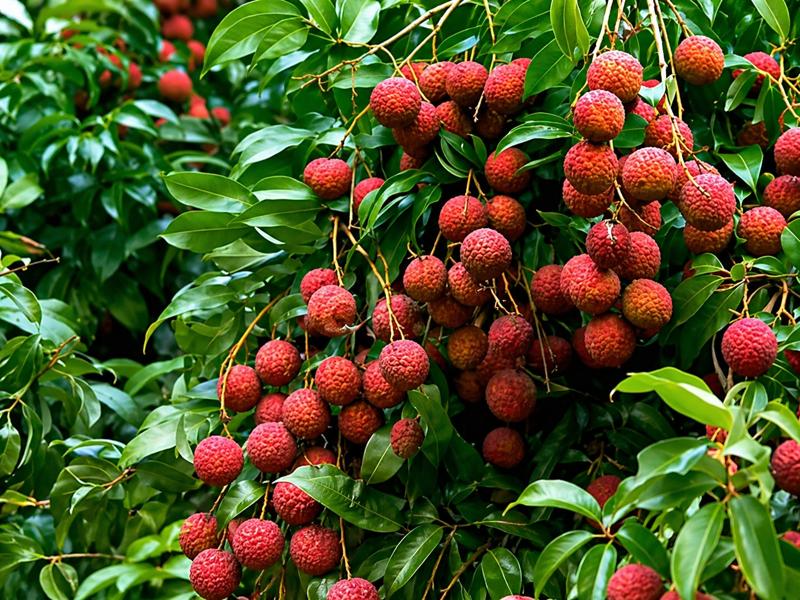
- Fruits are red or pink in color
📍 Major Production Areas in India:
- Bihar
- Uttar Pradesh
- West Bengal
- Jharkhand
- Punjab
- Assam
👉 Litchi farming is a long-term plan, but the profit is also equally high.
2. Health Benefits and Uses of Litchi
🥭 Nutrients:
- Vitamin C
- Vitamin B6
- Potassium
- Magnesium
- Fiber
💪 Health Benefits:
- Keeps the body cool
- Increases immunity
- Improves digestion
- Makes skin glowing
- Prevents dehydration
🍹 Uses:
- Fresh fruit
- Juice and shakes
- Jam and jelly
- Ice cream and sweets
3. Scientific Classification
- Scientific Name: Litchi chinensis
- Family: Sapindaceae
- Genus: Litchi
- Type: Fruit tree
👉 This information helps in understanding farming in a scientific way.
4. Climate & Temperature
Suitable climate is very important for litchi farming.
🌡️ Temperature:
- Ideal temperature: 25 to 35°C
- During fruit formation: 25 to 30°C
🌧️ Rainfall:
- Around 1000 to 1200 mm
⚠️ Important Points:
- Dry weather is required during flowering
- Light moisture is required during fruit formation
5. Soil Requirement
🌍 Suitable Soil:
- Sandy loam soil
- Well-drained soil
- Rich in organic matter
📊 pH Level:
- 5 to 7.5 is ideal
- High pH is harmful
⚠️ Important Points:
- No waterlogging
- Soil should be deep
6. 🌱 Seed & Varieties
In litchi farming, selecting the right variety decides your income. If you choose the correct variety, production will be higher and you will also get a good price in the market.
🌟 Major High Yield Varieties
1. Shahi
- Most popular variety in India
- Fruit size is big and color is deep red
- Taste is very sweet and juicy
- Highest demand in the market
2. Muzaffarpur
- Famous variety of Bihar
- High production capacity
- Suitable for export
3. Dehradun
- Early maturing variety
- Fruit is sweet and soft
- But problem of fruit cracking
4. Calcuttia
- Large size fruits
- More fruits in clusters
- Ready in the third week of June
5. Seedless Late
- Variety with less seed
- More pulp and sweet
- Late maturing
6. Rose Scented
- Medium size fruits
- Fragrant and tasty
- Good market demand
📌 Keep in Mind While Selecting Variety:
- Choose variety according to your area climate
- Give priority to disease resistant variety
- Keep market demand in mind
- Keep a mix of early and late maturing varieties
👉 Selecting the right variety can give you 20 to 30 percent more profit.
7. 🌾 Seed Rate
In litchi farming, growing from seed is less useful because plants take more time to give fruits. So, it is better to use plants prepared by plantation or air layering.
🌱 Number of Plants per Acre:
- दूरी 8 से 10 मीटर
- Plants per acre 40 to 60
📊 Tips for Plant Selection:
- Take 2-year-old plant
- Choose disease-free and healthy plant
- Roots should be well developed
8. 🌿 Where to Buy Plants?
Buying good quality plants is very important because poor plants can damage the entire crop.
📍 Trusted Sources for Buying:
- Government agriculture nursery
- Agriculture university
- Certified private nursery
⚠️ Keep in Mind:
- Always take certified plants
- Choose disease and pest free plants
- Give priority to local varieties
9. 🚜 Land Preparation
For good production of litchi, proper field preparation is very important.
🛠️ Process of Field Preparation:
- Do deep ploughing of the field 2 to 3 times
- Level the field
- Make proper drainage system
🕳️ Pit Preparation:
- Pit size 1 meter x 1 meter x 1 meter
- Dig the pit 15 days before and keep it in sunlight
🌱 Method of Filling Pit:
- 20 to 25 kg cow dung manure
- 300 gram Muriate of Potash
- 2 kg bone meal
👉 After filling the pit, give light irrigation so that soil settles.
10. 🌿 Sowing Method
Sowing of litchi should be done at the right time and in the right way.
📅 Sowing Time:
- August to September is most suitable
- In some areas up to November
📏 Spacing:
- Plant to plant 8 to 10 meter
- Row to row 8 to 10 meter
🌱 Planting Method:
- Plant in the center of the pit
- Press the soil properly
- Do irrigation immediately
🔄 Propagation Method:
- Air layering is most popular
- Seed method is less useful
11. 🌿 Fertilizer & Manure Management
Giving balanced nutrition to litchi plants is very important.
🌱 Fertilizer Quantity According to Age:
1 to 3 Years:
- Cow dung manure 10 to 20 kg
- Urea 150 to 500 gram
- SSP 200 to 600 gram
- MOP 60 to 150 gram
4 to 6 Years:
- Cow dung manure 25 to 40 kg
- Urea 500 to 1000 gram
- SSP 750 to 1250 gram
- MOP 200 to 300 gram
7 to 10 Years:
- Cow dung manure 40 to 50 kg
- Urea 1000 to 1500 gram
- SSP 1500 to 2000 gram
- MOP 300 to 500 gram
After 10 Years:
- Cow dung manure 60 kg
- Urea 1600 gram
- SSP 2250 gram
- MOP 600 gram
⚠️ Keep in Mind:
- Do irrigation after giving fertilizer
- Use more organic manure
12. 💧 Irrigation Schedule
Giving water at the right time is very important in litchi farming.
💦 Irrigation Schedule:
- New plants: 2 times in a week
- Old plants: 1 time in a week
📌 Important Time:
- During fruit formation
- In summer season
⚠️ Keep in Mind:
- Avoid waterlogging
- Use drip irrigation
13. 🌾 Weed Control
In litchi farming, weeds can become a big problem, especially in the first 3 to 4 years when plants are small. Weeds compete with plants for nutrients, water, and space, which slows down growth.
🌿 Losses Caused by Weeds:
- Plant growth stops
- Soil fertility decreases
- Risk of pests and diseases increases
- Both production and quality are affected
🛠️ Effective Control Methods:
1. Hand Weeding
- Do weeding every 20 to 25 days
- Keep soil around plants loose
- Take care that roots are not damaged
2. Mulching Technique
- Use dry leaves, straw, or plastic mulch
- Moisture remains in soil
- Weed growth stops
3. Intercropping
- Grow pulses and vegetables
- You will get extra income
- Weeds will grow less
4. Chemical Control
- Use herbicide only when needed
- Take advice from expert
👉 Proper weed control can increase production by 15 to 20 percent.
14. 🐛 Pest & Disease Management
Timely control of pests and diseases is very important in litchi farming, otherwise the whole crop can be affected.
🐛 Major Pests and Their Control
1. Fruit Borer
- Makes small holes in fruit
- Damages fruit from inside
👉 Control:
- Remove affected fruits immediately
- Use Trichogramma
- Spray neem-based insecticide
2. Aphids
- Suck juice from leaves and stems
- Leaves turn yellow and start falling
👉 Control:
- Prune infected parts
- Spray Imidacloprid
3. Leaf Miner
- Makes tunnels inside leaves
- Leaves become weak
👉 Control:
- Remove and destroy affected leaves
- Spray Dimethoate
🦠 Major Diseases and Control
1. Anthracnose
- Brown spots on leaves and fruits
- Fruit quality becomes poor
👉 Control:
- Spray Bordeaux mixture
- Keep field clean
2. Root Rot
- Plant starts drying
- Roots rot
👉 Control:
- Maintain proper drainage
- Remove affected plants
3. Red Rust
- Red spots on leaves
- Spreads fast
👉 Control:
- Spray Copper Oxychloride
- Do regular monitoring
⚠️ Important Tips:
- Identify disease on time
- Give priority to organic methods
- Do regular inspection
👉 Click here for detailed information
15. ⏳ Crop Duration
Litchi is a long-term crop, so patience is required.
⏱️ Duration:
- Start fruiting: 5 to 7 years
- Full production: after 10 years
- Production period: 25 to 30 years
👉 Once the orchard is established, it gives continuous income for many years.
16. 🍒 Harvesting Method
Right time and method of harvesting is very important because it affects both fruit quality and price.
🔍 Signs of Ripening:
- Fruit color changes from green to pink or red
- Fruit surface becomes smooth
✂️ Harvesting Method:
- Pluck fruits in clusters
- Cut with some leaves and small branches
- Handle carefully so that fruits do not get damaged
📦 After Harvest:
- Keep fruits in shade
- Do grading according to size and quality
17. 📊 Yield per Acre
Litchi production depends on the age of plants and proper care.
📈 Production Data:
- Per tree: 70 to 100 kg
- Plants per acre: 40 to 60
👉 Total production per acre:
- 3000 to 5000 kg
📌 Tips to Increase Production:
- Select improved varieties
- Do irrigation on time
- Give balanced fertilizer
18. 💰 Market Price & Profit per Acre
Profit in litchi farming is very good, especially when market demand is high.
💵 Market Price:
- ₹120 to ₹200 per kg
📊 Per Acre Calculation:
- Production: 4000 kg
- Average price: ₹150 per kg
👉 Total income:
- ₹6,00,000
💸 Cost:
- ₹1,50,000
📈 Net Profit:
👉 ₹4,50,000 per acre
📌 Ways to Increase Profit:
- Sell directly in market
- Use online platforms
- Start processing unit
19. ❄️ Storage
Litchi is a perishable fruit, so proper storage is very important.
🌡️ Temperature:
- 1.6 to 1.7°C
💧 Humidity:
- 85 to 90 percent
⏳ Storage Duration:
- 8 to 12 weeks
📦 Storage Tips:
- Keep fruits in a cool place
- Separate damaged fruits
- Do proper packing
20. 🏛️ Government Schemes
Government provides many schemes for litchi farming to farmers.
📢 Major Schemes:
🎯 Benefits:
- Subsidy on plants
- Support on irrigation system
- Training and technical support
👉 For more information, contact your nearest agriculture department.
21. ❓ Frequently Asked Questions | FAQs
1. When to start litchi farming?
August to September is the most suitable time because at this time plant roots get well established.
2. What distance should be kept between litchi plants?
Keep a distance of 8 to 10 meters so that plants get enough space.
3. How much profit can be earned from litchi farming?
Net profit of ₹4 to ₹5 lakh per acre is possible.
4. Which soil is best?
Sandy loam soil with good drainage.
5. When should irrigation be done in litchi?
Regular irrigation is required during fruit formation and in summer.
6. After how many years do litchi plants give fruit?
They start giving fruit in 5 to 7 years.
7. Which is the best variety?
Shahi and Muzaffarpur varieties are most popular.
8. How to prevent diseases in litchi plants?
Do spraying on time, maintain cleanliness, and ensure proper drainage.
9. Where to sell litchi?
Local mandi, wholesale market, and online platforms.
10. Can intercropping be done in litchi?
Yes, it should be done in the first 3 to 4 years for extra income.
🌟 Conclusion
Litchi farming is an agriculture business in which with patience and the right techniques, you can get continuous income for a long time.
👉 If you follow scientific methods, choose improved varieties, and do proper management, then the dream of how to do litchi farming with low cost and high profit can be easily achieved.
👉 In today’s time, due to increasing demand and good market price, litchi farming is a golden opportunity for farmers.
👉 For more fruits farming guides, keep exploring our website