


🌱 Latest Nutrient Management Information
View All Articles →- Fertilizer Prices in India 2026: Urea, DAP, NPK & MOP MRP Explained

- What Is Green Manure? A Natural Way to Make Soil Fertile
- How to Make Organic Vermicompost from Cow Dung in 30 Days
- Vermicompost: Uses, Benefits, Price & How to Make
🌱 The Complete Guide to Nutrient Management
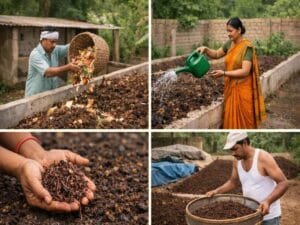
Vermicompost: Uses, Benefits, Price & How to Make
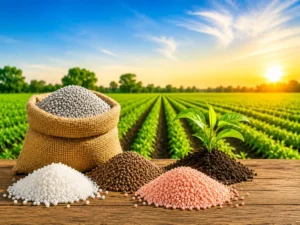
Fertilizer Prices in India 2026: Urea, DAP, NPK & MOP MRP Explained

What Is Green Manure? A Natural Way to Make Soil Fertile

Organic Farming in India

How to Make Organic Vermicompost from Cow Dung in 30 Days
🚜 Farmer Support Tools
📋 Frequently Asked Questions (FAQs)
What is Fertilizer and Nutrient Management?+
Fertilizer and Nutrient Management is the scientific process of supplying crops with the right nutrients in the right quantity, at the right time, and through the right method. It includes the balanced use of Nitrogen (N), Phosphorus (P), Potassium (K), Sulphur, Zinc, Boron, Iron, other secondary and micronutrients, along with organic manure, green manure, and biofertilizers. Proper nutrient management improves crop growth, increases yield and quality, maintains soil fertility for a long time, and reduces unnecessary fertilizer costs as well as environmental pollution.
Why is balanced fertilizer management important for crops?+
Balanced fertilizer management is important because every crop requires different amounts of nutrients. A deficiency or excess of any nutrient can affect plant growth, flowering, fruit development, and grain formation. Balanced nutrition makes plants stronger, reduces the risk of pests and diseases, improves crop quality, and increases fertilizer use efficiency. It also helps maintain soil fertility, biological activity, and water-holding capacity, making farming more sustainable and profitable.
What are NPK fertilizers?+
NPK fertilizers contain three major plant nutrients: Nitrogen (N), Phosphorus (P), and Potassium (K). Nitrogen is essential for green leafy growth, phosphorus strengthens roots and supports flowering and fruit formation, while potassium improves disease resistance, maintains water balance, and enhances crop quality. NPK fertilizers should always be applied according to soil test results, crop requirements, and the advice of local agricultural experts.
Why should soil testing be done?+
Soil testing helps identify which nutrients are available in sufficient quantities in the soil and which nutrients are lacking. Based on the soil test report, farmers can choose the right fertilizers and apply the correct quantity. This reduces unnecessary fertilizer costs, provides balanced nutrition to crops, and helps increase production. Regular soil testing also maintains soil fertility over the long term and minimizes the harmful effects of excessive chemical fertilizer use on the environment.
What is the difference between organic manure and chemical fertilizers?+
Organic manures such as farmyard manure, compost, vermicompost, and green manure are prepared from natural sources. They improve soil structure, increase organic carbon, and promote beneficial microorganisms. On the other hand, chemical fertilizers provide nutrients to plants quickly, but their excessive or unbalanced use can negatively affect soil quality and the environment. For the best results, a balanced and integrated use of organic manures and chemical fertilizers, known as Integrated Nutrient Management (INM), is recommended.
What is Integrated Nutrient Management (INM)?+
Integrated Nutrient Management (INM) is a farming practice that combines chemical fertilizers, organic manures, green manure, and biofertilizers in a balanced and scientific way. Its main objective is to provide all essential nutrients to crops, maintain soil fertility, and improve fertilizer use efficiency. Adopting INM increases crop yield, controls production costs, improves soil health, and promotes sustainable farming.
What are biofertilizers?+
Biofertilizers are beneficial microbial products that naturally help supply nutrients to plants. They include microorganisms such as Rhizobium, Azotobacter, Azospirillum, Phosphate Solubilizing Bacteria (PSB), and Mycorrhiza. These microorganisms help fix atmospheric nitrogen, make phosphorus available to plants, and promote healthy root development. Using biofertilizers reduces dependence on chemical fertilizers and improves the biological activity of the soil.
What are the symptoms of nitrogen deficiency in crops?+
When nitrogen is deficient, the older leaves of plants begin to turn light green or yellow. Plant growth becomes slow, stems remain thin, and the development of new leaves is affected. In many crops, grains or fruits become smaller, leading to reduced yield. Identifying nitrogen deficiency early and applying the recommended amount of fertilizer can significantly improve crop growth and production.
Why are micronutrients important?+
Micronutrients such as Zinc, Boron, Iron, Manganese, Copper, and Molybdenum are required by plants in very small quantities, but they play a vital role in healthy crop growth. Their deficiency can reduce plant growth, cause leaf discoloration, decrease flowering and fruiting, and lower crop yield. Therefore, micronutrients should be applied based on soil test recommendations to ensure balanced crop growth and high-quality production.
How can the right time and quantity of fertilizers be decided?+
The correct fertilizer quantity and application time should be decided based on soil test results, crop variety, soil fertility, irrigation facilities, and local climate conditions. In many crops, the basal dose is applied at the time of sowing, while fertilizers such as nitrogen are more effective when applied in split doses during different crop growth stages. Following scientific recommendations reduces nutrient loss, increases crop yield, and helps control farming costs.
What are the symptoms of phosphorus deficiency in crops?+
Phosphorus deficiency slows the early growth of plants and weakens root development. In many crops, the leaves appear dark green, and in some cases, they may develop a purple or violet tint. Flowering, fruit formation, and grain development may also be delayed. Applying the recommended amount of phosphorus fertilizer based on soil test results helps strengthen roots, improve plant energy, and increase crop yield.
What is the importance of potash for crops?+
Potash plays an important role in improving disease resistance, maintaining water balance, enhancing grain and fruit quality, and protecting plants from drought, heat, and other adverse conditions. Adequate potash makes plants stronger, improves the size and colour of fruits, and increases their storage life. A deficiency of potash may cause the edges of leaves to turn yellow or brown and can reduce crop yield.
What is foliar spray, and when should it be used?+
Foliar spray is a technique in which a solution of water-soluble fertilizers or micronutrients is sprayed directly onto the leaves of plants. It is especially useful when nutrient absorption through the soil is low, when a nutrient deficiency needs quick correction, or during critical crop growth stages that require additional nutrition. Foliar sprays should always be applied at the recommended concentration and under suitable weather conditions.
What are the benefits of using vermicompost?+
Vermicompost is a high-quality organic manure produced by earthworms. It contains essential plant nutrients, beneficial microorganisms, and organic carbon in adequate amounts. Regular use of vermicompost improves soil structure, increases water-holding capacity, promotes better root development, and supports faster plant growth. It also reduces dependence on chemical fertilizers and contributes to sustainable farming.
How does green manure contribute to nutrient management?+
Green manure refers to crops that are incorporated into the soil while they are still green. It increases organic matter and nitrogen levels in the soil, improves the activity of beneficial microorganisms, and enhances soil structure and water-holding capacity. Crops such as Dhaincha, Sunn Hemp, and Mung Bean are commonly grown as green manure. Regular use of green manure can reduce the need for chemical fertilizers and help maintain soil fertility for a long time.
Can good crop yields be achieved by using only chemical fertilizers?+
Relying only on chemical fertilizers is not recommended for long-term farming. While they may provide good yields initially, continuous and unbalanced use can reduce soil organic matter, affect beneficial microorganisms, and disturb the nutrient balance of the soil. For better and sustainable results, chemical fertilizers should be used along with farmyard manure, compost, vermicompost, green manure, and biofertilizers.