


How to Cultivate False Daisy: Complete Farming Guide and Potential Earnings
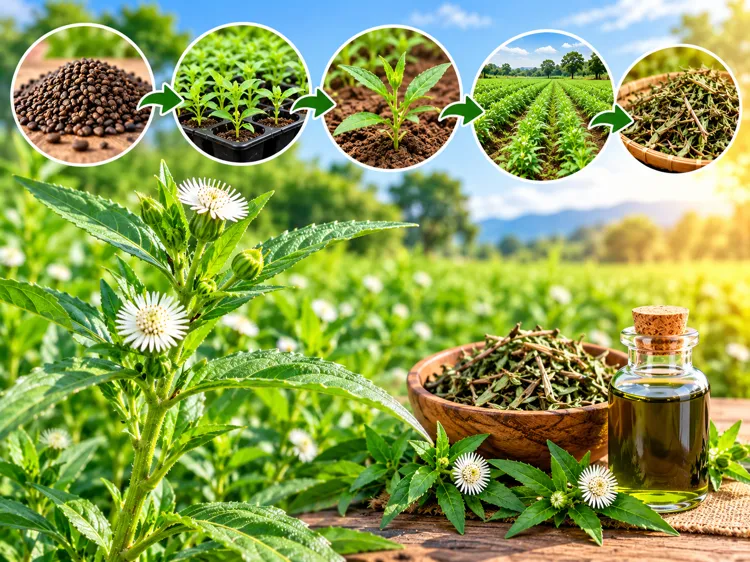
🌿 How to Cultivate False Daisy? Learn the Complete Process from Farm Preparation to Earnings
Farming is not just about putting seeds into the soil and harvesting crops for a farmer. It is the hope of their family, the result of years of hard work, and preparation for the future. Sometimes the weather supports farmers, while at other times, sudden rain, heat, or a shortage of water raises questions about all their hard work. In such situations, every farmer wants to get a good yield from their land and receive a fair price for their efforts.
Today, exploring new farming options has become important so that farmers can understand the possibilities of growing different crops according to their own conditions. Medicinal plant cultivation is also one such option. Bhringraj, also known as False Daisy, is one of these plants. It is used in traditional Ayurvedic and herbal products.
Bhringraj is especially known for its use in hair care products, herbal oils, and other traditional preparations. Because of this, its cultivation may be worth considering as an alternative crop for some farmers.
But farmer brothers, always remember one thing—the demand for a crop in the market and the guarantee of earning a profit from it are two different things. Successful farming requires attention to the right planting material, suitable soil, irrigation, timely harvesting, good quality, and the availability of buyers.
In this article, we will understand the complete process of Bhringraj cultivation in simple English so that farmers can learn the important things before starting cultivation and make informed decisions.
🌿 1. What Is Bhringraj and Why Is It Cultivated?
Bhringraj is a well-known medicinal plant. It is naturally found growing in many parts of India, especially in moist places, along the edges of fields, on vacant land, and in other suitable locations.
Its leaves, stems, and other plant parts are used in traditional herbal preparations. It is especially used in hair care oils, shampoos, and Ayurvedic products.
For farmers considering Bhringraj cultivation, it is important to understand first that the correct identification of the plant, cultivation costs, and the possibilities of selling it in the market are all connected.
If a farmer starts cultivating Bhringraj on a large area without gathering market information, they may face difficulties selling the crop after harvesting. Therefore, collecting information about local buyers and testing cultivation on a small area at the beginning is a sensible step.
Potential Benefits of Bhringraj Cultivation:
- An opportunity to explore medicinal plant cultivation as a farming option.
- The possibility of raising plants from seeds or stem cuttings.
- An opportunity to achieve good plant growth with proper care.
- The possibility of selling dried herbs or other acceptable plant parts according to local market demand.
- Gaining practical experience with cultivation costs and production by testing the crop on a small area.
To turn these possibilities into actual benefits, it is important to follow scientific cultivation practices and understand the market requirements.
🌾 2. Which Type of Soil Is Suitable for Bhringraj Cultivation?
For Bhringraj cultivation, it is better to select soil that can retain sufficient moisture, contains organic matter, and provides a suitable environment for root growth.
Red loamy soil rich in organic matter is considered useful for its cultivation. In addition, attention should also be given to the soil’s water-holding capacity and drainage.
Things to Keep in Mind While Selecting Soil
Loamy Soil: Soil that maintains a good balance between holding water and draining excess water can support plant growth.
Organic Matter: Well-decomposed cow dung manure can help improve soil structure and increase organic matter.
Sufficient Moisture: Bhringraj can grow in moist conditions. Therefore, soil that can maintain moisture according to the plant’s needs is useful.
Drainage: Water remaining in the field for a long time can be harmful. In areas receiving heavy rainfall, make sure there is a proper arrangement for draining excess water.
Soil Testing: Getting the soil tested before starting cultivation is useful. It helps farmers understand soil acidity, organic carbon, and the condition of available nutrients.
If the soil is very sandy, extra attention may be required to maintain moisture. In heavy soil, if waterlogging becomes a problem, proper drainage or raised beds can be used.
Farmer brothers, understanding your field’s soil is the first step in farming. Instead of spending too much on manure and water without knowing the soil’s condition, first identify what the soil actually needs.
☀️ 3. Suitable Climate for Bhringraj Cultivation
Bhringraj can grow well in warm and humid conditions. Available information about its cultivation describes a temperature range of approximately 25°C to 35°C as suitable.
However, the weather is different in every region. Therefore, the correct time for cultivation should be decided according to the state, district, rainfall, local temperature, and availability of irrigation.
Importance of Temperature and Moisture
When the temperature is suitable and sufficient moisture is available, the leaves, stems, and branches of the plants can grow well. On the other hand, excessive heat and a shortage of water for a long period can put stress on the plants.
At low temperatures, plant growth may slow down, which can increase the time required for the crop to mature.
Bhringraj prefers moisture, but this does not mean that water should remain standing in the field continuously. In areas receiving heavy rainfall, draining excess water is essential.
Ask These Questions Before Deciding the Cultivation Time
- When does the monsoon begin in your area?
- Will sufficient moisture be available in the soil at the time of transplanting?
- How can young plants be protected from extreme heat?
- Is there a possibility of getting dry weather at the time of harvesting?
- Is a clean and well-ventilated place available for drying the produce?
Thinking about these questions in advance can help make the cultivation plan more organised.
🌱 4. How to Prepare Bhringraj Seedlings from Seeds and Cuttings?
Bhringraj seedlings can mainly be prepared in two ways—through seeds and through stem cuttings.
Both methods have their own importance. More plants can be raised from seeds, while stem cuttings from a healthy mother plant can help produce new plants.
Method of Preparing Seedlings from Seeds
First, select good-quality seeds. Buy seeds from a reliable source where information about the correct plant identity and seed quality is available.
Before sowing seeds over a large area, it is useful to check their germination on a small scale. If the germination rate is low, the nursery may not produce the expected number of plants.
Prepare the nursery soil and sow the seeds evenly. Do not cover the seeds with a very thick layer of soil. Maintain the sowing depth according to the seed size and local agricultural advice.
After sowing, provide light irrigation. A strong flow of water can wash the seeds away or push them too deep into the soil.
Preparing Seedlings from Stem Cuttings
To prepare seedlings from cuttings, select healthy, disease-free plants with good growth.
Available cultivation information mentions the use of terminal stem cuttings approximately 10 to 15 centimetres long, containing five to six nodes.
The cuttings can be planted in nursery beds or suitable bags. Choose a growing medium that retains moisture but allows excess water to drain easily.
It may take a few weeks for roots to develop from the cuttings. The available information mentions a period of approximately one to one-and-a-half months. The actual time will depend on the weather, moisture, and quality of the cuttings.
When sufficient roots and new growth become visible on the cuttings, they can be considered ready for transplanting into the main field.
🪴 5. The Right Way to Prepare a Bhringraj Nursery
A good nursery is the foundation of successful cultivation. If the initial plants are healthy, establishing them in the field and taking care of them later can become easier.
Step 1: Select the Right Location.
Choose a place for the nursery where irrigation can be carried out easily and excess water can drain away. The area should be clean and should not have an excessive number of weeds or diseased plants.
Step 2: Prepare the Nursery Beds.
Make the nursery soil loose and crumbly. Mix in well-decomposed cow dung manure as required. Available agricultural information mentions preparing nursery beds approximately 15 centimetres high.
Keep the beds wide enough to make it easy to care for the plants from both sides.
Step 3: Sow the Seeds.
Sow the seeds evenly in the nursery beds. Sowing seeds too densely can increase competition among plants for space and nutrients.
Step 4: Maintain Moisture.
Provide light irrigation after sowing. Do not allow the soil to dry out completely, and also avoid water accumulation.
Step 5: Monitor the Plants.
Regularly check whether the plants are growing properly. If you notice weeds, changes in leaf colour, or signs of disease, investigate the cause in time.
According to the available information, the plants may become suitable for transplanting into the field approximately one-and-a-half to two months after sowing the seeds. However, do not make the decision based only on time. Also check the actual strength of the plants, root development, and weather conditions.
🚜 6. Field Preparation for Bhringraj Cultivation
Proper field preparation helps in root development, weed control, and irrigation management.
First, remove the remains of the previous crop and weeds from the field. After this, plough the field according to the soil condition.
If required, plough the field a second time to make the soil loose and crumbly. The field can be levelled by using a leveller.
After this, mix well-decomposed cow dung manure into the soil. It is better to decide the quantity of manure according to the soil test, available organic matter, and the needs of the crop.
Do not use excessive amounts of raw cow dung manure, as it may increase weed seeds and create other problems.
Also, prepare the irrigation arrangements before transplanting. If the paths for supplying water and draining excess water are decided in advance, later crop management becomes easier.
Remember, unnecessary spending on field preparation is not required. Work according to the actual condition of the soil and use resources only after considering the production requirements.
🌿 7. How to Transplant Bhringraj?
It is important to plant the seedlings prepared in the nursery in the main field at the proper distance. This gives the plants enough space to grow and makes weeding, irrigation, and harvesting easier.
The available cultivation article mentions maintaining a distance of approximately 15 to 20 centimetres between plants. The actual distance may vary according to plant growth, soil fertility, and the purpose of cultivation.
Transplanting Process
- Mark the positions of the rows and plants in the field.
- Make small holes suitable for the plant roots.
- Remove the seedlings carefully to minimise damage to the roots.
- Plant the seedlings at the proper depth.
- Gently press the soil around the roots.
- Provide light irrigation immediately after transplanting.
Transplanting under very strong sunlight may put stress on the plants. Therefore, choose the time according to the weather and soil moisture.
Inspect the field a few days after transplanting. If some plants have dried up, identify the reason and then plant healthy seedlings in the empty spaces.
💧 8. How to Irrigate Bhringraj Crops?
Balanced water management is very important in Bhringraj cultivation. The plants need sufficient moisture, but keeping water standing in the field for a long time can be harmful.
The available article recommends irrigating approximately twice a week during the first month after transplanting. After that, irrigation should be provided according to the weather and soil moisture.
Consider this as general guidance. The same irrigation schedule cannot be followed in every field.
Care During the First Month
Provide light irrigation immediately after transplanting. During the initial period, the plant roots become established in their new location, so maintaining sufficient soil moisture is useful.
If it is raining and the soil already has sufficient moisture, additional irrigation may not be necessary.
Irrigation After the Initial Stage
Once the plants are established, provide water according to soil moisture, temperature, wind, and rainfall.
Moisture may decrease quickly in sandy soil, whereas heavy soil may retain water for a longer period.
Avoid these mistakes while irrigating:
- Providing more water than required.
- Allowing waterlogging in the field.
- Ignoring the condition of dry soil.
- Irrigating again after rainfall without checking the soil.
- Increasing the amount of water without identifying the reason when plants start wilting.
Wilting of plants does not always indicate a shortage of water. Root problems and diseases can also be responsible.
🌾 9. Manure and Nutrient Management in Bhringraj Cultivation
Providing balanced nutrition to plants is necessary for good growth. For this, attention should be given to soil fertility, organic manure, and other fertilisers as required.
Well-decomposed cow dung manure can help increase organic matter in the soil and improve its structure.
While preparing the field, mix the manure properly into the soil. Determine its quantity according to the soil test and local agricultural advice.
Where available, good-quality compost or other mature organic manure can also be used. Different types of manure contain different amounts of nutrients, so it is not appropriate to use all types in the same quantity.
Before using chemical fertilisers, get the soil tested and consult a local agricultural expert.
In medicinal plant cultivation, not only high production but also the quality of the produce is important. Therefore, use any fertiliser or crop protection product carefully.
🌱 10. Weeding, Hoeing, and Weed Control
Weeds compete with crops for water, nutrients, space, and sunlight. Controlling them is particularly useful during the early growth stage.
The available cultivation article mentions carrying out the first weeding approximately 30 to 35 days after transplanting. The second weeding can be done according to weed growth in the field.
Avoid damaging the plant roots while weeding. Try to remove weeds before they produce seeds.
If you want the plants to grow again after harvesting, cleaning the field and removing weeds can also be useful.
Do not ignore weed control by considering it a minor task. Timely care helps maintain favourable conditions for plant growth.
🐛 11. Pest and Disease Management in Bhringraj Crops
Bhringraj should not be considered a completely pest- and disease-free crop. Depending on field conditions, problems such as yellowing of leaves, brown spots, leaf blight, or leaf-eating insects may appear.
Yellowing of leaves can have different causes, such as nutrient deficiency, waterlogging, lack of water, or disease. Therefore, do not assume a particular cause only by looking at the colour of the leaves.
If brown or black spots appear on the leaves and start spreading, check for the possibility of disease. Inspect the field regularly and take action according to the condition of the plants.
Before using any insecticide or fungicide, it is necessary to correctly identify the pest or disease. Follow the product instructions, safety measures, and applicable waiting periods.
Quality standards set by buyers may also be important when selling medicinal plants. Therefore, avoid using chemical pesticides without proper confirmation.
✂️ 12. When and How to Harvest Bhringraj?
The right time to harvest Bhringraj depends on the type of produce the farmer wants to sell.
If the purpose is to sell fresh green plant parts, the harvesting plan will be different. If the farmer wants to sell dried herbs or seeds, the harvesting and drying process must be decided accordingly.
The available information mentions a method of uprooting the plants, separating the roots, and spreading the plants out for drying. Another cultivation-related description explains a method of harvesting the upper parts of the plants approximately 90 days after transplanting while leaving some portion of the stem.
Therefore, following the same harvesting method in every situation would not be correct. First, ask the buyer whether they need the whole plant, leaves and stems, or seeds.
Things to Keep in Mind During Harvesting
- Check the weather forecast before harvesting.
- Keep the tools clean.
- Remove soil and unnecessary weeds from the plants.
- Prepare a clean and well-ventilated place for drying the produce.
- After harvesting, transport the produce to a suitable place quickly and safely.
If you want the plants to grow again, you may need to leave some portion of the stem during harvesting. Decide on the suitable method according to local agricultural advice.
If you also want to collect seeds, check their maturity and collect them at the right time. Dry the seeds and keep them in a clean and dry place.
🌤️ 13. The Right Method for Drying and Storing Bhringraj
After harvesting, drying and storing the produce properly is necessary to maintain its quality.
Keeping wet plants in a pile for a long time can cause problems related to moisture, heat, and fungal growth. This can affect the quality of the produce and its selling price.
First, remove soil, weeds, and other unwanted materials from the plants. If washing is necessary, use clean water and allow the excess water to drain away.
After this, spread the plants in a thin layer on a clean surface or a suitable mesh. Avoid drying them in thick piles.
Drying in the shade and in a place with good air circulation can be useful. However, the correct drying method should be decided according to the buyer’s requirements and the nature of the product.
Precautions While Storing
- Pack the produce only after drying it sufficiently.
- Use clean and suitable packaging.
- Protect the product from moisture and rain.
- Keep the storage area clean and well-ventilated.
- Do not place bags or packages directly on the ground.
- Check the affected material if signs of fungal growth or pests appear.
Farmer brothers, growing the crop is as important as maintaining its quality after harvesting.
⚖️ 14. How Much Yield Can You Get from Bhringraj Cultivation?
The yield of Bhringraj depends on the soil, climate, number of plants, irrigation, weed control, harvesting method, and type of product.
The original agricultural article provided mentions a yield of approximately 2,400 kilograms of dried plants per acre. This figure should be understood as an estimate mentioned in the published article, not as guaranteed production for every field.
While estimating the yield, it is also important to check whether the figure refers to fresh produce or dried material. Weight decreases during drying, so the two cannot be compared directly.
The following factors can mainly affect production:
Plant Establishment: If plants dry up after transplanting, the total yield may decrease.
Soil Fertility: A lack or imbalance of nutrients can affect plant growth.
Irrigation: Both water shortage and waterlogging can be harmful.
Weeds: Excessive weeds compete with the crop.
Harvesting Time: Harvesting at the wrong time can affect the yield or its quality.
Drying Process: The saleable quantity may change because of weight loss during drying.
Therefore, testing the crop on a small area will be more useful for estimating the actual yield from your own land.
💰 15. Earnings and Profit Calculation from Bhringraj Cultivation
Earnings from Bhringraj cultivation do not depend only on the yield. The market price, saleable quantity, quality of the produce, and total cultivation expenses must also be considered.
The original article mentions a market price of approximately ₹10 to ₹15 per kilogram for dried produce. The same article also gives an estimated earning of approximately ₹25,000 per acre.
These are figures published in that article. They should not be considered current market prices or guaranteed profits. The actual price may vary according to the location, time, quality, type of product, and buyer’s requirements.
How to Calculate Earnings from Your Cultivation
First, estimate the quantity of saleable dried produce. Then calculate the gross sales based on the actual price offered by the buyer.
Gross Sales = Saleable Dried Produce × Actual Selling Price per Kilogram
After this, subtract all expenses related to cultivation and selling.
Net Profit = Gross Sales − Total Cost
Total costs include the following expenses:
- Purchase of seeds or cuttings.
- Cost of preparing the nursery.
- Ploughing and field preparation.
- Manure and fertilisers.
- Irrigation, electricity, or diesel.
- Transplanting and labour.
- Weeding, hoeing, and crop protection.
- Harvesting and transportation.
- Drying, sorting, and packaging.
- Storage and selling-related expenses.
It is also better to include the cost of your land, family labour, and other resources in the calculation. This can help provide a clearer estimate of the actual profit.
Gather Buyer Information Before Selling
Potential buyers may include herbal product manufacturing units, medicinal plant traders, and units involved in herb processing.
Before starting cultivation, ask them:
- What type of produce do they require?
- Do they purchase fresh material or dried material?
- What is their minimum purchase quantity?
- What are their moisture and quality standards?
- Who will bear the transportation cost?
- What are their payment terms?
- Is a written purchase agreement available?
Make a decision about cultivating on a large area only after getting answers to these questions. Investing based only on an estimated price without market information can be risky.
🧑🌾 16. Important Precautions Before Starting Bhringraj Cultivation
Bhringraj cultivation can be considered a potential alternative crop, but it would not be right to assume that it will definitely be profitable.
Farmer brothers, start cultivation on a small area to gain experience with plant growth, irrigation requirements, harvesting time, and the drying process.
Make sure the plant is correctly identified when purchasing seeds or seedlings. If the plant is incorrectly identified, problems may arise at the time of selling the produce.
If a trader has promised to purchase the produce, clearly understand their terms and conditions. Do not invest in a large area based only on a verbal promise.
Apart from this, also gather information about the buyer’s quality standards and the applicable local rules related to the sale of medicinal plants.
The most important thing is to make your cultivation decision after considering your land, available water, labour, budget, and actual market conditions.
📋 17. Step-by-Step Plan to Start Bhringraj Cultivation
If you want to cultivate Bhringraj for the first time, following the steps given below may be useful.
Step 1: Conduct Market Research.
Gather information about medicinal plant buyers and processing units in your area. Understand the saleable product, purchase price, and quality requirements.
Step 2: Check the Soil and Climate.
Get the soil tested. Assess the suitability of irrigation, drainage, and local weather conditions.
Step 3: Arrange Seeds or Cuttings.
Obtain planting material from a reliable source. Before cultivating on a large area, check the success rate of seed germination or root development.
Step 4: Prepare the Nursery.
Prepare suitable nursery beds, maintain moisture, and protect the plants from weeds and diseases.
Step 5: Prepare the Field.
Complete ploughing, manure application, and irrigation arrangements. Do not allow water to accumulate in the field.
Step 6: Transplant the Seedlings.
Plant healthy seedlings at the proper distance. Provide light irrigation after transplanting and pay attention to the initial growth of the plants.
Step 7: Take Regular Care of the Crop.
Regularly manage irrigation, weeding, hoeing, nutrition, and monitoring of pests and diseases.
Step 8: Plan Harvesting and Drying.
Harvest the crop according to the production purpose and the buyer’s requirements. Dry the produce hygienically and store it safely.
Step 9: Calculate Sales and Profit.
Calculate gross sales based on the saleable produce and the actual price received. Subtract all expenses to estimate the net profit.
Step 10: Move Forward Based on Experience.
Analyse the experience, costs, production, quality, and sales from the first crop. Only after this should you consider increasing the cultivation area.
🌿 18. Useful Resources for Correct Farming Information
Correct farming information helps farmers make better use of their time, hard work, and resources. Farmers can prepare a more organised plan by gathering information about soil, irrigation, weather, and costs according to their crop.
Farmers can use the available farming-related information on your website, Subsistence Farming, to organise their farming plans more effectively.
Before cultivating Bhringraj, assess the local soil and climate conditions and consult an agricultural expert when required. The same cultivation method does not produce identical results in every field.
❤️ Conclusion: Farm Wisely and Get the Right Value for Your Hard Work
A farmer gets the real value of their hard work only when the farming plan is prepared according to the actual conditions of the land and market requirements.
Bhringraj is a useful medicinal plant. Its cultivation requires suitable soil, a favourable temperature of approximately 25°C to 35°C, healthy seeds or cuttings, a good nursery, transplanting at the proper distance, and balanced irrigation.
Along with these practices, timely weeding and hoeing, regular monitoring of plants, harvesting at the right time, and proper arrangements for safe drying are also important.
When calculating earnings, do not depend only on published estimates of yield or market prices. Calculate the profit based on the actual selling price, total costs, and the buyer’s requirements.
If you want to start Bhringraj cultivation, first test it on a small area, seek technical advice from a local agricultural expert, and confirm market demand. Increase the cultivation area only after gaining experience.
Remember, a successful farmer is one who makes correct information, precautions, and wise decisions a part of farming along with hard work.
Important Note: The yield and price figures related to cultivation given in this article are based on estimates published in the available original text. Actual results may vary according to local conditions. The traditional medicinal uses of Bhringraj should not be considered a substitute for proven treatment for any disease.
📚 References
- Ministry of Agriculture & Farmers Welfare, Government of India – Guidance related to crop production, plant protection, and agriculture.
- Indian Council of Agricultural Research (ICAR) – Information related to agricultural research, crop management, and pest and disease management.
- National Horticulture Board (NHB) – Information related to production and plant protection of horticultural crops.
- Vikaspedia – Multilingual knowledge portal of the Government of India.
- Krishi Jagran – Earning through Bhringraj cultivation: A guide covering soil, climate, nursery management, cuttings, transplanting, irrigation, weeding, harvesting, and estimated earnings.