


How to Use Manure and Fertilizers Correctly: Urea, DAP, and Potash Guide
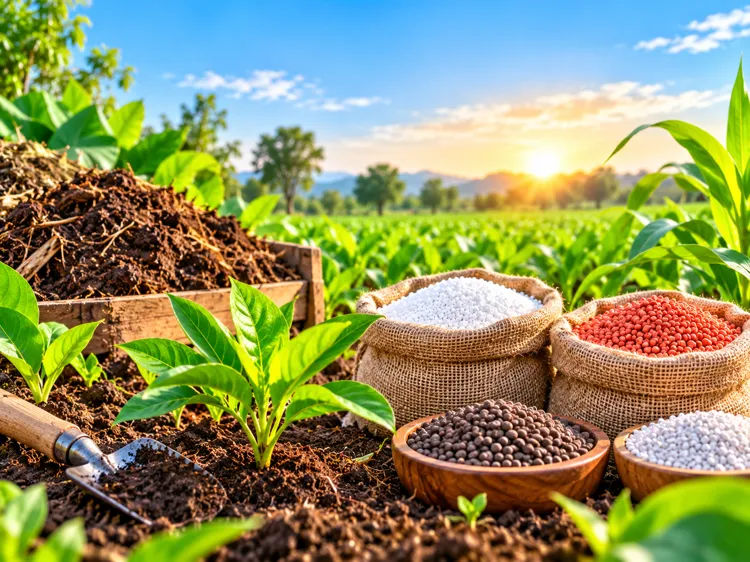
🌱 How to Use Manure and Fertilizers Correctly: Complete Guide to Organic Manure, Urea, DAP, and Potash
When a farmer sows seeds in the field, they do not just grow a crop; they also sow hopes for their family. Their hard work, time, and money are invested in the field. They want a good crop, better production, and enough income from their year-long hard work to meet their family’s needs.
However, the rising cost of manure and fertilizers is an important challenge for farmers. Sometimes, crop leaves start turning yellow, sometimes plant growth looks weak, and sometimes the yield is not as good as expected. At such times, farmers think about which fertilizer to use, how much to apply, and when to apply it.
There is often a belief that the more fertilizer is added to the field, the higher the crop yield will be. But the foundation of good farming is not using more fertilizer; it is providing the right nutrients according to the crop’s needs.
Organic manure can help increase organic matter in the soil. Chemical fertilizers, on the other hand, are a way to provide essential nutrients to plants. It is important to understand the role of both and make decisions according to soil conditions and crop requirements.
In this article, we will discuss the types of manure, cow dung manure, compost, green manure, urea, DAP, potash, micronutrients, fertilizer application methods, and ways to control farming costs wisely.
🧑🌾 1. What Are Manure and Fertilizers?
The purpose of manure and fertilizers is to provide nutrients to plants. However, their nature, nutrient availability, and effects on the soil can be different.
Manure and fertilizers can mainly be understood in two broad categories:
Organic Manure: Cow dung manure, compost, vermicompost, green manure, and other suitable organic materials.
Chemical Fertilizers: Fertilizers that provide nutrients such as nitrogen, phosphorus, and potassium to plants.
Organic manure can help add organic matter to the soil and improve its structure. Chemical fertilizers are useful for providing specific nutrients according to the needs of the crop.
Farmers should understand that all types of manure do not have the same nutrient content. Therefore, before choosing any manure or fertilizer, they should consider soil testing, crop requirements, and the quality of the available manure.
🌿 2. Types of Organic Manure and Their Benefits
Organic manure is an important way to use natural resources available on the farm. Proper management can help maintain soil quality.
🐄 Cow Dung Manure
Cow dung manure is a useful resource for farmers who rear livestock. It may contain various nutrients and organic matter.
Its proper use can help increase organic matter in the soil, improve soil structure, and improve the soil’s ability to hold water.
However, its nutrient content can vary depending on the animals’ feed, manure collection methods, and storage conditions.
🍂 Compost Manure
Compost is prepared by the controlled decomposition of suitable organic waste materials. It can be used to add organic matter to the field.
Farmers should pay attention to the quality of the compost and whether it is fully decomposed. Before using incompletely decomposed material, it is advisable to consult a local agricultural expert.
🌱 Green Manure
Green manure involves growing suitable green plants and mixing them into the soil to add organic matter. Its purpose is to contribute to soil quality and nutrient management.
The usefulness of green manure depends on the cropping system, water availability, soil type, and local conditions.
🪱 Vermicompost
Vermicompost is prepared by decomposing organic materials with the help of earthworms. It is used to provide nutrients to plants and add organic matter to the soil.
All these types of organic manure should be used according to the needs of the field and the available resources. No organic manure should be considered a complete replacement for all nutrients in every crop.
⚗️ 3. Why Is the Correct Use of Chemical Fertilizers Important?
Chemical fertilizers can play an important role in providing nutrients to crops according to their requirements. However, their benefits depend on choosing the right fertilizer, applying the correct quantity, and using it at the right time.
The three major nutrients required for plant growth are:
- Nitrogen: Plays an important role in the growth of leaves and stems.
- Phosphorus: Contributes to root development and the reproductive processes of plants.
- Potassium: Plays an important role in the overall growth of plants and various plant functions.
The requirements for these three nutrients can vary depending on the crop and its growth stage.
If a farmer continuously uses only one type of fertilizer without considering the actual need, other essential nutrients may remain deficient. Therefore, balanced nutrient management is important.
🌱 4. The Role of Nitrogen and the Use of Urea
Nitrogen is an essential nutrient for plant growth and the development of green leaves.
If a crop lacks nitrogen, its leaves may turn yellow under certain conditions, and plant growth may be affected. However, yellow leaves do not always mean nitrogen deficiency. Water-related problems, diseases, and deficiencies of other nutrients can also cause yellowing.
Urea is a major fertilizer that provides nitrogen. However, it should be used according to the actual needs of the crop.
Farmers should keep the following points in mind:
- Decide the quantity according to soil test results and the recommended nutrient requirements of the crop.
- Avoid applying more urea than necessary.
- Decide when to apply the fertilizer according to the crop’s growth stage.
- Consider soil moisture, irrigation, and weather conditions.
- Do not decide to apply extra urea only by looking at the colour of the leaves.
The required quantity of urea is not the same for every crop. Therefore, follow the recommendations of the local agriculture department or agricultural experts for wheat, rice, vegetables, and other crops.
🌾 5. The Role of Phosphorus and DAP Fertilizer
Phosphorus contributes to root development and important biological processes related to energy in plants. Having enough phosphorus available during the early growth stage can be important for crops.
DAP, which stands for Diammonium Phosphate, is a fertilizer that provides nitrogen along with phosphorus.
Therefore, while using DAP, farmers should consider not only the phosphorus requirement but also the nitrogen supplied by DAP in their overall fertilizer plan.
Farmers should pay attention to the following points:
- Understand the phosphorus requirement based on soil test results.
- Decide the quantity of DAP according to local recommendations.
- Include the nitrogen supplied by DAP in the total nutrient calculation.
- Avoid unnecessary application when the soil already has sufficient phosphorus.
Increasing the quantity of DAP without a genuine need can increase farming costs. Therefore, fertilizers should not be selected only because they are popular in the market.
🥔 6. The Role of Potassium and Potash Fertilizer
Potassium plays an important role in many plant functions. It is related to water balance and the overall growth of plants.
Potassium deficiency can affect plant growth. However, it is not always easy to identify the deficiency only by looking at external symptoms, because other factors can also cause similar symptoms.
Muriate of Potash, commonly known as MOP, is a fertilizer that provides potassium to plants.
For its use:
- Check the availability of potassium through soil testing.
- Choose the fertilizer according to the crop’s requirements.
- Follow the recommended quantity and application method.
- Include nutrients supplied by other fertilizers in the overall nutrient management plan.
The potassium requirement is not the same for every crop. Therefore, its quantity should be decided according to the crop, soil conditions, and local agricultural advice.
🔬 7. How to Identify Micronutrient Deficiencies?
Apart from nitrogen, phosphorus, and potassium, plants also need zinc, iron, magnesium, and other nutrients.
Plants may need these nutrients in relatively small quantities, but they play an important role in normal plant growth.
Under certain conditions, micronutrient deficiencies can affect leaf colour, plant growth, and crop development.
However, every yellow leaf or weak plant is not necessarily a sign of micronutrient deficiency. Therefore, using any mixed fertilizer without proper testing is not advisable.
The correct steps are:
- Observe the field conditions and symptoms shown by the crop.
- If required, get the soil or plants tested.
- Determine the need for the specific nutrient based on the test results.
- Consult an agricultural expert to select the right product, quantity, and application method.
In this way, farmers can avoid buying unnecessary products and focus on the actual needs of their crops.
⚖️ 8. How to Maintain a Balance Between Organic Manure and Chemical Fertilizers?
Good farming requires attention to both the current needs of the soil and its long-term quality.
Organic manure can add organic matter to the soil. Chemical fertilizers, on the other hand, can help meet the specific nutrient requirements of crops.
Farmers can follow the steps below to maintain a balance between the two:
First Step: Get the Soil Tested.
Soil testing provides information about the available nutrients and helps farmers understand the manure and fertilizer requirements.
Second Step: Use Available Organic Resources.
Consider the quality and availability of cow dung manure, compost, and other suitable organic materials.
Third Step: Calculate the Total Fertilizer Quantity.
Include nutrients supplied by organic manure in the nutrient management plan wherever their availability can be reasonably estimated.
Fourth Step: Pay Attention to the Crop’s Growth Stage.
Nutrient requirements can change at different stages of crop growth. Therefore, decide the timing and quantity according to local recommendations.
Fifth Step: Monitor Soil Quality.
The purpose of using fertilizers should not only be to achieve immediate plant growth but also to maintain farming in an organised and sustainable way.
🚜 9. Major Methods of Applying Manure and Fertilizers
The correct method of applying manure or fertilizer depends on its type, the crop, soil conditions, and the available equipment.
🌾 Spreading Evenly Across the Field
In this method, fertilizer is spread over the soil surface. Use this method only when it is suitable for the particular fertilizer and crop.
Uneven fertilizer distribution can cause crops to receive nutrients unevenly.
🌱 Applying Fertilizer in Rows
In some crops, fertilizer is applied at a specific place near the rows of seeds or plants. However, maintaining the proper distance between the fertilizer and seeds, along with using the correct method, is important to prevent damage to the plants.
💧 Spraying Nutrient Solutions on Leaves
Some special nutrient products can be applied by spraying them on plant leaves. For this, it is necessary to consider the product’s suitability, recommended concentration, weather conditions, and crop growth stage.
Not every fertilizer can be used for spraying on leaves.
Important: Decide the fertilizer application method and quantity according to the product instructions and local agricultural recommendations.
🐄 10. How to Manage Cow Dung Manure Properly?
Proper collection and storage are important for getting the benefits of cow dung manure.
Collect the manure properly. Make arrangements to prevent rainwater from washing the manure away.
Prevent unnecessary losses. Improper storage can cause the loss of some nutrients from the manure.
Pay attention to manure quality. Use the manure after considering its condition, source, and purpose.
Distribute it evenly across the field. This can help prevent excessive accumulation of manure in one place.
Protect water sources. Prevent manure and its runoff from reaching wells, ponds, and other water sources.
The nutrient content of cow dung manure can vary. Therefore, its quantity and use along with other fertilizers should be decided according to the actual needs of the field.
💧 11. Relationship Between Irrigation, Rainfall, and Fertilizers
While using fertilizers, water and weather conditions should not be ignored.
Heavy rainfall or uncontrolled water flow in the field can wash some nutrients away from the field. On the other hand, an unsuitable irrigation system can also affect the effective use of fertilizers.
Therefore, farmers should:
- Pay attention to the possibility of heavy rainfall.
- Check water flow and drainage arrangements in the field.
- Decide the timing of irrigation and fertilizer application according to local recommendations.
- Prevent manure and fertilizers from flowing into water sources.
- Manage the field according to soil and crop conditions.
Proper water management can help reduce unnecessary nutrient losses.
💰 12. How to Control Expenses on Manure and Fertilizers?
Saving money in farming does not only mean buying less manure or fertilizer. It means providing the right nutrients according to the actual needs of the crop and avoiding unnecessary expenses.
Farmers can follow these methods:
Get the Soil Tested. This can help in choosing the right manure and fertilizers.
Keep a Record of Fertilizer Use. Write down the type of manure or fertilizer used in each field, its quantity, and the date of application.
Do Not Buy Products Without a Need. Do not choose expensive products based only on assumptions without confirming a nutrient deficiency or receiving a recommendation.
Use Organic Resources Properly. Manage the available cow dung manure and compost properly.
Calculate the Total Nutrients. Consider the nutrients supplied by DAP, urea, and other fertilizers together.
Record Crop Results. Keeping records of yield, quality, and farming costs can help in planning the next crop.
A farmer’s income can improve only when decisions are made by considering both farming expenses and crop production.
⚠️ 13. Common Mistakes in the Use of Manure and Fertilizers
Incorrect use of manure and fertilizers can create additional costs and other problems instead of meeting the crop’s actual needs.
Avoid these mistakes:
- Assuming that applying more manure or fertilizer guarantees higher production.
- Continuously using the same fertilizer without soil testing.
- Ignoring the different roles of nitrogen, phosphorus, and potassium.
- Deciding the quantity of organic manure without knowing its nutrient content.
- Using products without confirming micronutrient deficiencies.
- Ignoring weather conditions, irrigation, and the correct timing of fertilizer application.
- Not keeping records of fertilizer quantities and crop results.
Remember, manure and fertilizers should be used correctly by considering both crop nutrition and soil quality.
📋 14. A Simple Table for Planning Manure and Fertilizer Use
Farmers can record the following information for each crop.
| Details | What to Write |
|---|---|
| Field Name | Identification of the field |
| Crop | Crop being grown |
| Soil Testing | Main findings of the soil test report |
| Organic Manure | Type and quantity used |
| Chemical Fertilizer | Name and recommended quantity |
| Application Date | Date of fertilizer application |
| Irrigation | Relevant details |
| Production | Crop yield obtained |
| Total Cost | Expenses on manure and fertilizers |
This record can help farmers understand which nutrient management practices were followed in each field and what needs attention in the future.
❤️ 15. Farmer’s Soil, Farmer’s Future
A farmer’s land is the foundation of their family’s livelihood. Maintaining soil quality is important not only for today’s crop but also for farming in the coming years.
Balanced use of manure and fertilizers gives farmers an opportunity to manage their hard work and resources more effectively.
Proper storage of cow dung manure, soil testing, using urea and DAP according to crop requirements, applying the right quantity of potash, and paying attention to micronutrients are important parts of smart farming.
Every field is different. Therefore, it is not right to assume that the quantity used in a neighbouring farmer’s field will also be suitable for your own field. Give priority to your field’s soil, crop requirements, and local agricultural advice.
Every farming season provides a new experience. If farmers keep records of their practices and learn from them, they can move towards making better decisions in the future.
Taking care of the soil, using resources properly, and providing balanced nutrition, these three are the strong foundations of better farming.
❓ 16. Common Questions About Manure and Fertilizers
Q1: What Is the Difference Between Organic Manure and Chemical Fertilizers?
Organic manure is obtained from natural organic materials and can add organic matter to the soil. Chemical fertilizers are used to provide specific nutrients to plants.
Q2: Is Cow Dung Manure Enough on Its Own?
It depends on the quality of the manure, the crop’s requirements, and the soil conditions. Cow dung manure may not provide all the nutrients needed in every situation.
Q3: What Is Urea Used For?
Urea is a fertilizer that provides nitrogen. It should be used according to the crop’s requirements and the recommended quantity.
Q4: Which Nutrients Does DAP Contain?
DAP contains nitrogen and phosphorus. While using it, both nutrients should be included in the overall fertilizer plan.
Q5: Why Is Potash Important?
Potassium contributes to the overall growth of plants and various plant functions. Its requirement should be decided according to the soil and crop.
Q6: When Should Micronutrients Be Applied?
When soil testing, plant testing, or advice from an agricultural expert shows that they are needed, micronutrients should be applied using the appropriate product and recommended quantity.
Q7: Why Is Soil Testing Important Before Applying Manure and Fertilizers?
It provides information about the nutrients available in the soil and can help avoid unnecessary fertilizer use.
Q8: Does Applying More Fertilizer Increase Crop Production?
No, there is no guarantee. Applying more fertilizer than necessary can increase costs, affect crop growth, and harm the environment.
🌱 Conclusion: Choose the Right Manure, Provide Balanced Nutrition, and Maintain Soil Health
The correct use of manure and fertilizers is an important step towards controlling farming costs, meeting crop requirements, and maintaining soil quality.
Use organic resources such as cow dung manure, compost, and green manure properly. Choose urea, DAP, potash, and micronutrients according to the needs of your field. Get your soil tested and decide the fertilizer quantity and application timing according to the advice of an agricultural expert.
Keep records of your field, evaluate the results, and avoid applying manure or fertilizers without a need.
A farmer’s hard work is valuable. Every decision made with the right information can help make better use of that hard work.
For more useful information about farming, visit Subsistence Farming. Keep learning about manure, fertilizers, soil, and crop management, and make decisions according to the conditions of your field.
Because better farming begins with understanding the soil and providing the right nutrients to the crop.
Important: The actual quantity of fertilizer should be decided according to the crop, soil test results, product composition, and local agricultural recommendations. Do not consider any general article a substitute for specific fertilizer quantity recommendations for your field.
📚 References
- Ministry of Agriculture & Farmers Welfare, Government of India – Guidance related to crop production, plant protection, and agriculture.
- Indian Council of Agricultural Research (ICAR) – Information related to agricultural research, crop management, and pest and disease management.
- National Horticulture Board (NHB) – Information related to production and plant protection of horticultural crops.
- Vikaspedia – Multilingual knowledge portal of the Government of India.