


Fertilizer Prices in India 2026: Urea, DAP, NPK & MOP MRP Explained
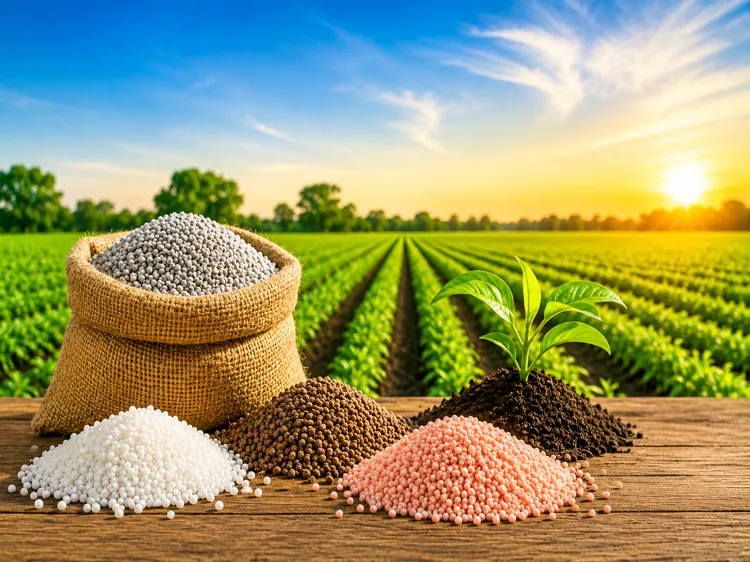
🌱 Fertilizer Prices in India, 2026: What Urea, DAP, NPK and MOP Actually Cost Farmers
Talk to a farmer in Punjab, Maharashtra, or Bihar about buying urea or DAP this season, and the price itself usually isn’t the complaint. The MRP on the bag hasn’t really moved. What’s gotten harder is everything around it, finding a dealer who’s actually stocked, not being talked into some combo you didn’t ask for, figuring out whether the rate quoted is even the real one.
And fertilizer isn’t a small line item. On most Indian farms it’s the single biggest input cost, ahead of seed, sometimes ahead of seed and irrigation combined. So when there’s confusion, about pricing, about subsidy, about what a bag is even supposed to cost, that confusion has a way of eating into the margin long before the crop is anywhere near harvest.
What follows is the current 2026 picture for Urea, DAP, NPK, and MOP in India: how the Nutrient Based Subsidy works, why the international price quoted in trade reports isn’t the number you pay at the counter, and a few things worth doing before your next purchase. Nothing here is trying to sell you anything. The figures are pulled from the Department of Fertilizers and PIB wherever they’re available.
📈 1. What Is the Fertilizer Price Trend in India?
Put simply, it’s the direction fertilizer prices in India are heading, up, down, or flat, once you separate out MRP changes, subsidy revisions, and whatever’s happening in the international market that feeds India’s imports.
Two things move independently here, and mixing them up is where most confusion starts. One is the retail price a farmer actually pays, the MRP, tightly controlled for urea and closely monitored for DAP, NPK, and MOP. The other is the international or import price, which floats with global gas, phosphate rock, and potash markets and has very little to do with the number printed on the bag.
Short-Term Versus Long-Term Movement
Short-term shifts happen fast, days, maybe a week or two, usually tied to local demand spiking right before sowing, a transport delay, or a dealer running low on stock. Long-term trends are slower, shaped by international gas prices, global potash and phosphate supply, and how much the Union Budget sets aside for fertilizer subsidy each year.
A lot of farmers watch the short-term noise too closely, panic-buying just before Kharif or Rabi sowing starts, when the government-notified MRP for urea honestly hasn’t budged since March 2018. Knowing the difference keeps you calmer when a dealer quotes something odd for a week and it settles right back down.
🔄 2. Why Fertilizer Prices Change
Natural gas is a big one, especially for nitrogen fertilizers like urea, since gas is basically the core raw material in how urea gets made. Gas prices rise, urea production gets costlier, and that cost moves fast, though in India it usually shows up as a bigger subsidy bill rather than a higher MRP. Watch the urea price trend closely here, since it tends to move first and everything else follows a few weeks behind. Raw materials matter too, phosphate rock, potash ore, sulphur, ammonia. Any hiccup in mining or processing anywhere in the world nudges Indian import costs, even if the farmer never sees it directly.
Demand works on two levels. Global demand climbs when big agricultural economies expand planting or expect a strong monsoon. Locally, demand spikes hard right before sowing, everyone’s buying at once, which is exactly why off-season prices tend to be friendlier, and stock is easier to find.
Government policy plays the biggest role of all in India specifically. Subsidy programs shape what farmers pay versus the real underlying market price, so when subsidy rates shift each Kharif or Rabi season, that’s usually a bigger deal for your wallet than anything happening on an international exchange. Trade restrictions matter too, when a major exporting country limits shipments, global supply can tighten within days, and India, which imports the bulk of its potash and a large share of its phosphate needs, feels that quickly.
Then there’s the less glamorous stuff, transportation costs, port congestion, and currency swings. Fertilizer is heavy and bulky, so any friction between port and farm adds cost, and a weaker rupee makes every imported tonne pricier even when the global dollar price hasn’t moved an inch.
🧪 3. Urea, DAP, NPK, and MOP Prices in India – 2026 Update
This is the part most farmers came for, so here’s where things stand, based on Department of Fertilizers and PIB data.
⚪ 3.1. Urea
Urea’s MRP has been ₹242 per 45 kg bag (excluding neem-coating charges and applicable taxes) since March 1, 2018, and it’s still unchanged going into 2026. The Centre covers the gap between the actual cost of delivering a bag to the farm gate and this notified price and pays that difference directly to the manufacturer or importer as subsidy. The current urea subsidy scheme has been extended through March 2026 under a three-year outlay approved by the government.
🌱 3.2. DAP (Di-Ammonium Phosphate)
DAP’s MRP has held at ₹1,350 per 50 kg bag since the Covid years, and the government reconfirmed in the Rajya Sabha in mid-2026 that this price is being maintained through Rabi 2025-26 as well. To make that possible, the Centre added a special provision of ₹3,500 per tonne on top of the regular Nutrient Based Subsidy, meant to cover logistics from factory to farm gate, GST, and a reasonable margin for manufacturers, specifically so companies aren’t tempted to quietly push retail prices up. Track the wider DAP price trend if you want to see how the underlying international cost has been moving.
🧪 3.3. NPK
NPK doesn’t have a single price, it depends on the grade, the N-P-K ratio printed on the bag. For 2025-26, the average retail price reported to Parliament works out to roughly ₹1,814.82 per 50 kg bag for NPK 10:26:26 and ₹1,711.87 per bag for NPK 12:32:16. Under the subsidy scheme, 28 different P&K grades currently qualify, so it’s worth checking your specific grade’s rate rather than assuming one number applies across the board. The NPK price trend page tracks the global side of this if you’re curious how it’s shifting.
🪨 3.4. MOP (Muriate of Potash)
MOP’s average retail price for 2025-26 comes in around ₹1,710.54 per 50 kg bag, per the same parliamentary reply. Because India imports almost all its potash, MOP is the fertilizer most exposed to global swings. Industry trade sources have flagged that new 2026 import contracts from Belarus were settled roughly 10% higher than the second half of 2025, and some dealer-level prices have crept toward ₹1,750–1,800 a bag in parts of the country. That’s an industry-reported figure, not an official notified rate, so treat it as a trend to watch rather than the last word. The potash price trend page has the international benchmark if you want to follow it.
| Fertilizer | Bag Size | Price Farmers Pay (₹) | Note |
| Urea | 45 kg | 242 | Statutory MRP, unchanged since March 2018 |
| DAP | 50 kg | 1,350 | Held via ₹3,500/MT special package + NBS |
| NPK 10:26:26 | 50 kg | 1,814.82 | Average retail price, Rabi 2025-26 |
| NPK 12:32:16 | 50 kg | 1,711.87 | Average retail price, Rabi 2025-26 |
| MOP | 50 kg | 1,710.54 | Average retail price; some regional MRPs trending higher |
🧮 4. How the Subsidy Is Actually Calculated
Under the Nutrient Based Subsidy (NBS) scheme, the government fixes a rupee subsidy per kg of nutrient, Nitrogen (N), Phosphate (P), Potash (K), and Sulphur (S), and revises it every Kharif and Rabi season. For Rabi 2025-26, the rates were:
| Nutrient | NBS Subsidy (₹ per kg) |
| Nitrogen (N) | 43.02 |
| Phosphate (P) | 47.96 |
| Potash (K) | 2.38 |
| Sulphur (S) | 2.87 |
These per-kg rates get applied to each fertilizer grade’s actual nutrient content to arrive at a per-tonne subsidy. DAP (18-46-0-0), for instance, works out to a product-level subsidy of ₹29,805 per tonne for Rabi 2025-26, a sharp jump from ₹21,911 per tonne the previous Rabi season. That increase is the main reason the ₹1,350 MRP held steady even as global DAP costs stayed elevated. MOP, with its lower per-kg potash subsidy, gets ₹1,428 per tonne, which is one reason MOP prices are more sensitive to international swings than DAP or urea.
🌍 5. International Fertilizer Prices vs What Indian Farmers Actually Pay
This is honestly where most of the confusion comes from, and it’s worth being precise about, because FOB and CIF prices get thrown around in trade reports as if they’re retail prices. They’re not.
FOB (Free on Board) is the price at the exporting country’s port, before freight, insurance, or import duty are added. CIF (Cost, Insurance, Freight) is what an Indian importer pays, landed at an Indian port, before it even reaches a wholesaler, let alone a village dealer. Neither number is what shows up on a bag at your local shop. These are trade and procurement benchmarks, useful for tracking the direction of costs, not something to line up directly against MRP.
| Product | Region | Basis | Price | As of |
| Urea | China | FOB | USD 267.50/MT | May 2026 |
| Urea | India | CIF | USD 334.84/MT | May 2026 |
| Potash | China | FOB | USD 1,120/MT | Jan 2026 |
| Potash | India | CIF | USD 1,229/MT | Jan 2026 |
To put that in perspective: India’s CIF urea price of roughly USD 334.84 per tonne in May 2026 converts to somewhere around ₹31,800 per tonne at recent exchange rates (about ₹95 to the dollar), which works out to roughly ₹1,430 for a 45 kg bag’s worth of imported urea. Compare that with the ₹242 a farmer pays for that same 45 kg bag. That gap, close to six times over, is the subsidy doing its job, not a pricing error and not a dealer discount. The government is simply absorbing almost all of the international cost, so the farmer doesn’t have to.
DAP works on the same principle. International DAP has traded well above earlier-year levels through 2025 and into 2026 on tight phosphate rock and ammonia supply, yet Indian farmers have kept paying ₹1,350 a bag because the NBS scheme and the special package are built specifically to absorb that gap.
The difference you’ll notice between China’s FOB price and India’s CIF price, for the same product, comes down to freight, insurance, and import duty, not a different underlying cost of production. It’s easy to glance at these two figures side by side and assume the higher one is “what farmers pay.” It isn’t, and that mix-up is exactly what this section is meant to clear up.
🌎 6. Global Fertilizer Market Overview
Fertilizer trade is a genuinely global business. A small handful of countries produce and export most of the world’s urea, phosphate, and potash, and India, as one of the largest consumers, stays a consistent buyer year after year regardless of what’s happening domestically.
Because so few countries control potash especially, the supply-demand balance can flip fast. A production issue in one exporting country ripples through prices everywhere within weeks. That’s part of why the Indian government leans so heavily on subsidy rather than letting MOP’s retail price track the international market directly, doing so would make potash unaffordable for a lot of small and marginal farmers overnight.
👨🌾 7. How Fertilizer Price Trends Affect Indian Farmers
The impact shows up in farm planning well before it shows up at the checkout counter. Crop selection often shifts once input costs climb, farmers lean toward crops needing less fertilizer or offering better returns per rupee spent. Farm budgets get thrown off too, since fertilizer eats up such a large share of total spending that even a subsidy revision can change the season’s math. Profit margins take a direct hit whenever crop prices stay flat, but input costs rise, and yield expectations can suffer if farmers cut fertilizer purely to save cash, which usually just creates a bigger loss down the line at harvest.
A concrete example. A wheat farmer on ten acres in western Uttar Pradesh applying DAP at the standard basal rate of around 50 kg per acre needs roughly 500 kg, ten bags, for the season. At today’s ₹1,350 MRP that’s ₹13,500 in DAP alone, manageable. If the subsidy were ever scaled back to match the international landed cost, that same ten bags could easily run past ₹30,000. That’s the real stake behind the subsidy figures above, not an abstract policy detail sitting in a PIB press note.
📋 8. A Practical Guide for Farmers: Comparing Prices, Soil Testing, and Buying Right
You can’t control the global market or the next season’s subsidy notification. But you have more control over your own buying decisions than it might feel like.
8.1. Get your soil tested before you buy anything
The Soil Health Card scheme gives farmers a free or heavily subsidized nutrient report for their field, showing the actual N-P-K-S status of the soil rather than a guess. Most Krishi Vigyan Kendras (KVKs) and state agriculture department labs run this. A card that’s a season or two old is still far more useful than buying urea simply because that’s what a neighbour bought.
8.2. Know your crop’s actual nutrient need
State agriculture universities and their packages of practices publish per-acre N-P-K recommendations by crop and by district. Your local KVK or agriculture extension officer can give you the number for your specific soil type and crop, rather than relying on a generic national average.
8.3. Understand what you’re paying for
Every subsidized fertilizer bag is legally required to display the MRP along with the per-kg and per-bag subsidy amount on the packaging. Charging above the printed MRP is an offence under the Essential Commodities Act, 1955. If a dealer quotes above that number, that’s not “market rate,” that’s overcharging, and it’s reportable.
8.4. Buy from authorized dealers, ideally a PM Kisan Samruddhi Kendra
The government has been converting village and block-level retail outlets into PM Kisan Samruddhi Kendra’s (PMKSK), one-stop shops for fertilizer, seed, and other farm inputs, tracked through the Integrated Fertilizer Management System (if MS) so stock and pricing stay traceable. Buying from an unlicensed source, even if it looks cheaper upfront, removes that protection entirely.
8.5. Compare before you commit
Prices can vary slightly dealer to dealer even within the MRP ceiling, depending on transport and local stock. A couple of phone calls before a large purchase, or checking with your local cooperative society, rarely hurts and sometimes saves a genuinely useful amount.
8.6. Consider bulk buying through an FPO or cooperative
Farmer Producer Organisations and primary agricultural cooperative societies can often negotiate better handling terms and guarantee availability during peak sowing, exactly when individual dealers sometimes run short.
8.7. Practice balanced application
Overusing urea while skimping on phosphorus and potassium is common, and it’s exactly the imbalance the NBS structure was designed to correct. Balanced NPK use, informed by an actual soil test, tends to protect yield better than loading up on whichever fertilizer feels cheapest that week.
8.8. If something feels off, report it
The fertilizer helpline (1800-180-1551) and your District Agriculture Officer exist for exactly this, overcharging, black-marketing, or fertilizer that doesn’t match its labelled nutrient content.
🔮 9. Fertilizer Price Forecast for 2026
Nobody can tell you exactly where prices are headed and be right every time, be sceptical of anyone who claims otherwise. What’s worth watching through the rest of 2026: international natural gas prices, since they drive urea costs directly; how the Kharif 2026 and Rabi 2026-27 NBS rates get set later in the year; monsoon performance and its effect on Kharif demand; and how the rupee holds up against the dollar, since a weaker rupee makes every imported tonne of DAP, MOP, and phosphate rock costlier in landed terms even if the international dollar price doesn’t move.
On the retail side specifically, MRP changes have been far less frequent and far more predictable than the underlying international market, because the government has consistently chosen to absorb cost increases through subsidy rather than pass them straight to farmers. That’s been the pattern through 2025 into 2026, and there’s no official signal it’s about to change for the upcoming Kharif season.
💡 10. Tips Before Buying Fertilizer
- Check the printed MRP and subsidy details on the bag before you pay
- Compare brands and formulations, not just the sticker price
- Verify the batch number and manufacturing date printed on the bag
- Scan the QR code where available to confirm authenticity through the fertilizer tracking system
- Stick to registered, licensed dealers, ideally a PM Kisan Samruddhi Kendra
- Know your crop’s real nutrient needs through soil testing, not guesswork
- Don’t buy more than the season calls for
- Store bags properly so moisture doesn’t quietly eat into your investment
- Report overcharging or suspicious stock on 1800-180-1551 or to your District Agriculture Officer
❓11. Frequently Asked Questions
Q1. What is the MRP of urea in India in 2026?
₹242 per 45 kg bag, excluding neem-coating charges and taxes. It’s been unchanged since March 2018, and the subsidy scheme covering it currently runs through March 2026.
Q2. What is the DAP MRP and subsidy in India right now?
DAP is priced at ₹1,350 per 50 kg bag. For Rabi 2025-26, the government’s per-tonne subsidy on DAP works out to ₹29,805, on top of a separate ₹3,500 per tonne package specifically meant to keep the retail price from moving.
Q3. Why is fertilizer subsidised so heavily in India?
Because the international, landed cost of urea, DAP, and MOP runs far above what most Indian farmers could absorb without hurting food production and rural incomes. The government bridges that gap through the Nutrient Based Subsidy for P&K fertilizers and direct subsidy payments for urea, instead of letting retail prices float with the global market.
Q4. Is the price shown in international FOB or CIF fertilizer reports what I’ll pay at the dealer?
No, and this trips a lot of people up. FOB and CIF are wholesale or import benchmarks quoted in US dollars per tonne. What you pay is the rupee MRP printed on the bag, usually a small fraction of the landed international cost thanks to subsidy.
Q5. How do I know if my fertilizer dealer is licensed?
Ask to see the dealer’s license or check with your nearest PM Kisan Samruddhi Kendra or District Agriculture Officer. Licensed dealers are listed and trackable through the government’s Integrated Fertilizer Management System.
Q6. Where can I get my soil tested?
Through the Soil Health Card scheme, usually via your nearest Krishi Vigyan Kendra or your state agriculture department’s soil testing lab. Many states run this free or at a nominal fee.
Q7. Will DAP or urea prices go up in India in 2026?
The MRP has stayed flat through repeated rounds of rising international costs because the government keeps increasing the subsidy instead of passing the cost on. That said, subsidy rates do get revised each Kharif and Rabi season, so it’s worth checking the latest Department of Fertilizers notification before a big purchase.
Q8. What should I do if a dealer charges more than the MRP?
That’s an offence under the Essential Commodities Act, 1955. Report it on the fertilizer helpline, 1800-180-1551, or to your District Agriculture Officer.
📝 Conclusion
Fertilizer price trends in India aren’t just numbers in a report nobody reads. They shape what a farmer can afford to plant, how much can be applied, and what’s left over once the harvest comes in. The good news for 2026 is that the government has, so far, absorbed most of the international volatility through the NBS scheme and urea subsidy, which is exactly why the MRP on urea, DAP, NPK, and MOP has stayed largely stable even as global prices have moved around underneath it.
Good buying habits still matter regardless, soil testing, balanced application, buying from licensed dealers, and knowing the difference between an international benchmark price and what’s printed on your bag. Keep half an eye on the Department of Fertilizers’ seasonal NBS notifications the same way you’d track weather or mandi prices. It’s a small habit, and it pays off season after season.
Written by Kunil kumar– Guest Author (Market Research Analyst at ProcurementResource)