

Pests and Diseases in Crops: Definition, Significance & Impact
🌱 1. Introduction to Pests and Diseases
India is an agriculture-based country, where most of the population depends directly or indirectly on farming. To increase crop production, improved seeds, fertilizers, irrigation, and modern agricultural technologies are widely used. However, despite all these efforts, pests and diseases remain among the biggest challenges faced by farmers.
It is estimated worldwide that 20–40% of agricultural production is lost every year due to pests, diseases, and weeds. If they are not identified and managed on time, the losses can become even higher.
Therefore, Integrated Pest and Disease Management (IPM) is given great importance in modern agriculture.
📚 2. Concept of Pests and Diseases
In agricultural science, not every living organism is harmful. Many organisms are beneficial to plants, such as pollinating insects, natural enemies of pests, and earthworms.
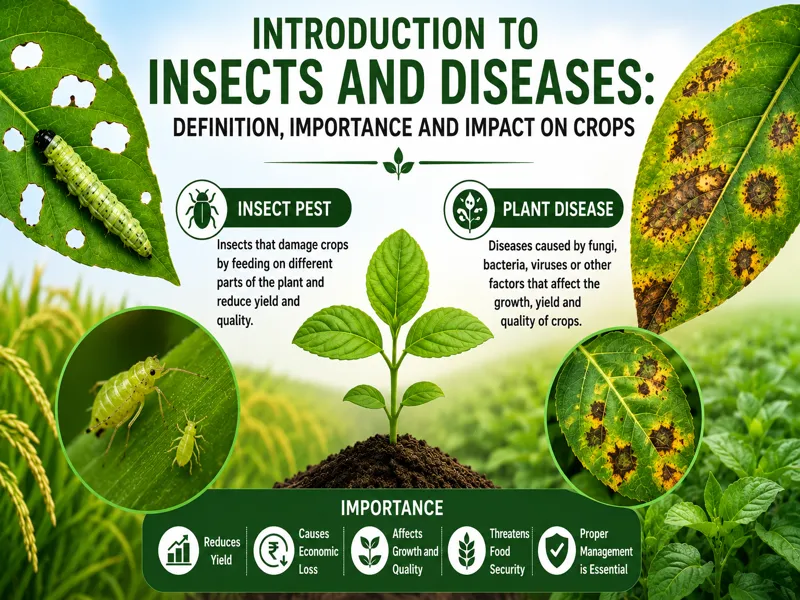
When any organism, microorganism, or other factor affects the growth, yield, or quality of plants in an economically harmful way, it is considered a pest or a disease from an agricultural point of view.
In simple words:
- Organisms that damage plants by feeding on them are called pests.
- Microorganisms or other factors that cause illness in plants are called diseases.
🐛 3. Definition of Pest
A pest is any organism that causes direct or indirect damage to crops, plants, or their products, resulting in economic loss.
Most agricultural pests belong to the Insecta class. However, some other organisms are also considered pests in agriculture, such as:
- Mites
- Nematodes
- Snails
- Rats
- Birds
Major Examples
- Stem Borer
- Aphid
- Whitefly
- Fruit Fly
- Locust
- Caterpillar
🦠 4. Definition of Disease
A disease is an abnormal condition of a plant in which its normal growth, development, and productivity are affected.
Diseases can be caused by various factors, including:
- Fungi
- Bacteria
- Virus
- Phytoplasma
- Nematodes
- Nutrient Deficiency
- Unfavourable Weather Conditions
📜 5. History of Pests and Diseases
Pests and diseases have been associated with agriculture since the beginning of human civilization.
Ancient Indian agricultural texts such as:
- Krishi Parashara
- Kashyapa Krishi Sukta
- Vrikshayurveda
mention various crop pests and plant diseases.
Modern scientific studies on pests and diseases developed rapidly during the 18th and 19th centuries.
Some Historical Events
- Irish Potato Blight (1845)
- Major Desert Locust Outbreaks
- Wheat Rust Disease
- Rice Blast Disease
These historical events established the need for scientific pest and disease management.
🌾 6. Importance of Pests and Diseases in Agriculture
If pests and diseases are not controlled, then:
- Crop production decreases.
- Crop quality becomes poor.
- Storage losses increase.
- Cost of production increases.
- Farmers’ income decreases.
- Food security is affected.
Therefore, it is very important for every farmer to have knowledge about pests and diseases.
⚠️ 7. Losses Caused by Pests and Diseases
Direct Losses
- Eating leaves
- Cutting roots
- Damaging fruits
- Boring into stems
- Destroying seeds
Indirect Losses
- Spreading diseases
- Stopping plant growth
- Reducing photosynthesis
- Lowering market value
- Affecting export quality
🐞 8. Types of Pests
1. Chewing Pests
These pests feed on leaves and other plant parts.
Examples
- Locust
- Caterpillar
- Beetle
2. Sap-Sucking Pests
These pests suck the sap from plants.
Examples
- Aphid
- Jassid
- Whitefly
- Thrips
3. Boring Pests
- Stem Borer
- Fruit Borer
- Pod Borer
4. Underground Pests
- Termite
- White Grub
- Cutworm
5. Storage Pests
- Weevil
- Rice Weevil
- Pulse Beetle
🍂 9. Types of Diseases
1. Fungal Diseases
Examples
- Blast
- Blight
- Rust
- Powdery Mildew
2. Bacterial Diseases
- Bacterial Blight
- Wilt
3. Viral Diseases
- Leaf Curl
- Mosaic
- Yellow Mosaic
4. Nematode Diseases
- Root Knot
- Cyst Nematode
5. Abiotic Diseases
- Nutrient Deficiency
- Salinity
- Temperature Stress
- Waterlogging
🌍 10. Causes of the Spread of Pests and Diseases
Main Causes
- Infected Seeds
- Infected Plants
- Continuous Cultivation of the Same Crop
- Excess Moisture
- Imbalanced Fertilizer Use
- Waterlogging
- Weeds
- Infected Agricultural Tools
- Improper Use of Pesticides
- Climate Change
🌦️ 11. Factors Affecting the Development of Pests and Diseases
Temperature
Most pests and diseases develop rapidly within a specific temperature range.
Humidity
High humidity promotes the development of fungal diseases.
Rainfall
Rain increases the spread of many plant diseases.
Wind
Wind carries spores and small pests over long distances.
Susceptible Plant Varieties
Susceptible crop varieties are more likely to become infected.
🍃 12. Symptoms of Pests and Diseases in Plants
Symptoms of Pests
- Holes in leaves
- Signs of sap sucking
- Curling of leaves
- Formation of webs
- Stem holes
- Damaged fruits
Symptoms of Diseases
- Spots
- Wilting
- Rotting
- Yellowing
- Blackening
- Leaf blight
- Abnormal growth
🔍 13. Importance of Identifying Pests and Diseases
Proper control is not possible without correct identification.
Correct identification helps in:
- Selecting the right pesticide or treatment.
- Reducing unnecessary spraying.
- Lowering production costs.
- Protecting the environment.
- Reducing the chances of resistance development.
💰 14. Economic Threshold Level (ETL)
The Economic Threshold Level (ETL) is the pest population level at which control measures should be taken to prevent economic loss.
Objectives of ETL
- Prevent unnecessary use of pesticides.
- Reduce production costs.
- Protect the environment.
- Conserve natural enemies of pests.
It is important to note that the ETL value is different for every crop and every pest.
🔄 15. Life Cycle of Pests and Diseases
Life Cycle of a Pest
The life cycle of most pests includes:
- Egg
- Larva
- Pupa
- Adult
Some pests have the following stages:
- Egg
- Nymph
- Adult
Life Cycle of a Disease
Generally, the disease life cycle includes:
- Survival of the pathogen
- Infection
- Growth
- Development of symptoms
- Spore formation
- Re-infection
🗂️ 16. Classification of Pests and Diseases
Pests
- Chewing Pests
- Sap-Sucking Pests
- Boring Pests
- Storage Pests
- Underground Pests
Diseases
- Fungal Diseases
- Bacterial Diseases
- Viral Diseases
- Nematode Diseases
- Abiotic Diseases
📌 17. Sources of Pests and Diseases
Main Sources
- Infected Seeds
- Infected Plants
- Soil
- Weeds
- Crop Residues
- Irrigation Water
- Agricultural Tools
- Storage Places
- Insect Vectors
🚜 18. Modes of Spread of Pests and Diseases
- Wind
- Water
- Seeds
- Planting Material
- Insect Vectors
- Humans
- Agricultural Tools
- Animals and Birds
🛡️ 19. Importance of Preventing Pests and Diseases
Prevention is better than treatment.
Benefits of Prevention
- Crop production increases.
- Crop quality improves.
- Production cost decreases.
- The environment remains safe.
- The use of chemicals is reduced.
📈 20. Early Monitoring and Survey
Regular field inspection is very important.
Main Monitoring Methods
- Inspect the field at least once a week.
- Check the leaves regularly.
- Use Yellow and Blue Sticky Traps.
- Use Pheromone Traps.
- Identify infected plants.
- Take decisions based on the ETL.
👨🌾 21. Important Precautions for Farmers
- Use certified seeds.
- Grow disease-resistant varieties.
- Follow crop rotation.
- Apply balanced fertilizers.
- Maintain proper drainage.
- Monitor the field regularly.
- Remove infected plants.
- Control weeds.
- Use pesticides only in the recommended dose.
- Wear Personal Protective Equipment (PPE).
- Dispose of empty pesticide containers safely.
- Conserve natural enemies of pests.
- Take advice from an agricultural expert whenever required.
🚜 22. Useful Farming Articles
- Pests and Diseases in Crops: Definition, Significance & Impact
- Pest and Disease Control
- How to Do Organic Farming
- Benefits of Natural Farming
- How to Make Organic Vermicompost from Cow Dung in 30 Days
- Vermicompost Preparation Method
- Benefits of Drip Irrigation
- Pest and Disease Management
- Soil Health Card Scheme
❓ 23. Frequently Asked Questions (FAQs)
Q1. What is the difference between a pest and a disease?
Pests are organisms that damage plants by feeding on them or sucking their sap, whereas a disease is an abnormal condition of plants caused by microorganisms, nutrient deficiency, or other factors.
Q2. What causes the highest crop loss?
Pests, diseases, and weeds together cause crop losses. Among these, pests and diseases seriously affect the yield and quality of many major crops.
Q3. What is ETL?
ETL (Economic Threshold Level) is the level at which pest control becomes economically necessary to prevent further crop loss.
Q4. What are the main types of plant diseases?
Fungal diseases, bacterial diseases, viral diseases, nematode diseases, and abiotic diseases.
Q5. What are the main types of pests?
Chewing pests, sap-sucking pests, boring pests, underground pests, and storage pests.
Q6. Why is timely identification of pests and diseases important?
Timely identification helps in adopting the correct control measures, reducing crop losses, and avoiding unnecessary use of pesticides.
Q7. Are all insects harmful?
No. Many insects are beneficial, such as honeybees (for pollination) and ladybird beetles (natural enemies of harmful pests).
Q8. How often should farmers inspect their fields?
Generally, farmers should inspect their fields at least once a week. The frequency can be increased depending on the weather conditions and crop stage.
✅ 24. Conclusion
Pests and diseases are among the most important factors limiting agricultural production. Proper identification, knowledge of their life cycle, understanding their sources of spread, and timely management based on the Economic Threshold Level (ETL) can significantly improve both crop yield and quality.
In modern agriculture, adopting Integrated Pest and Disease Management (IPM) is a more effective, economical, and environmentally friendly approach than depending only on chemical control methods. Farmers should regularly inspect their fields, use certified seeds, follow crop rotation, adopt clean agricultural practices, and make decisions based on scientific recommendations to ensure long-term and sustainable agricultural development.