


Rainwater Harvesting for Farmers: Best Water Conservation Method
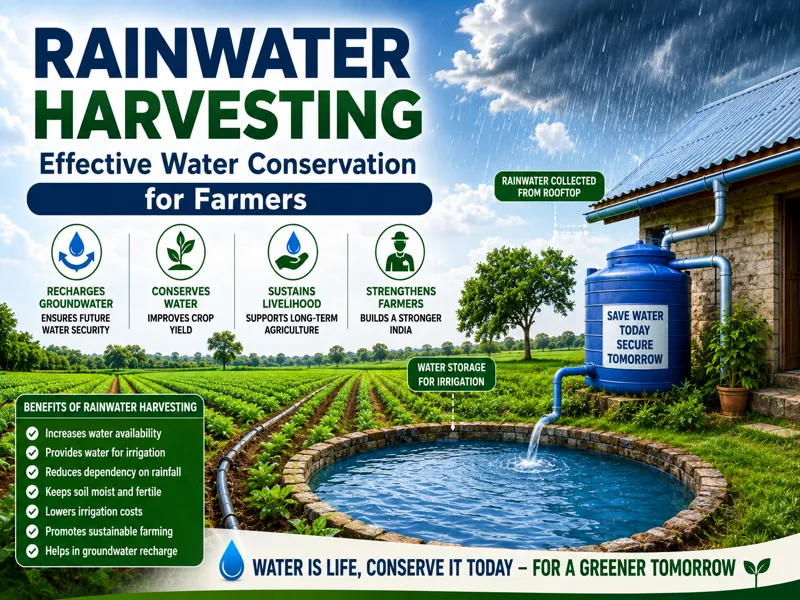
🌧️ Rainwater Harvesting: The Most Effective Water Conservation Method for Farmers
India is an agriculture-based country, where farming mainly depends on water. However, changing weather patterns, irregular rainfall, and continuously falling groundwater levels have created a serious water crisis for farmers. In many areas, a large number of borewells have been installed, causing the groundwater level to decline continuously, and many borewells have already dried up. In such a situation, depending only on groundwater or the monsoon for farming is no longer enough.
An effective solution to this problem is Rainwater Harvesting. It is a process of collecting and storing rainwater before it flows away as waste, so that it can be used whenever needed. This technique not only provides farmers with additional water for irrigation but also helps protect them from future water shortages.
By adopting rainwater harvesting in farming, farmers can irrigate their fields even during the summer season, contribute to groundwater conservation, and make their farming more sustainable.
💧1. What is Rainwater Harvesting?
Rainwater harvesting means collecting and storing rainwater through different methods so that it can be used whenever required. Normally, most rainwater flows away into drains, rivers, or other places. If this water is stored in ponds, underground tanks, pits, dams, or other storage structures, it can remain useful for a long time.
This method of water storage is not new. Earlier, villages and small towns had naturally formed ponds that collected rainwater. These water sources were used for livestock, agriculture, and other daily needs. Today, with the help of modern technologies, rainwater harvesting can be made even more effective.
🌾2. Why is Rainwater Harvesting Necessary for Farming?
Today, the demand for water in the agriculture sector is continuously increasing. Most farmers depend on groundwater for irrigating their fields. However, due to the increasing number of borewells and excessive extraction of water, groundwater levels are falling rapidly.
On the other hand, rainfall occurs every year in almost all regions to some extent. If this rainwater is stored at the right time, it can become a valuable water source for farming in the future.
By adopting rainwater harvesting for farming, farmers can:
- Get additional water for irrigation.
- Easily manage water shortages during summer.
- Reduce dependence on groundwater.
- Make better use of natural water resources.
- Make their farming more secure and sustainable.
This is why rainwater harvesting has become not just an option but a necessity for farmers today.
🚱 3. Present Water Crisis and Challenges for Farmers
Today, the use of water in homes, agriculture, and industries has increased rapidly. In rural areas, the large number of borewells has caused groundwater levels to fall continuously. In many places, even existing borewells have dried up.
In urban areas, the growing number of industries and factories has also increased water consumption, making the water crisis even more serious.
In such a situation, conserving rainwater is considered one of the simplest and most effective solutions.
If rainwater is stored instead of being allowed to flow away, it can later be used for farming, household work, and other important needs.
🌍 4. Importance of Rainwater Harvesting
Water is the foundation of life, and conserving it is the responsibility of every individual. Rainwater harvesting is not only a method of saving water but also a way to ensure future water security.
Rainwater can be conserved by building small and large ponds in villages, towns, and cities. Water collected from rooftops can be stored in tanks. Similarly, suitable structures can be built in farms and other open areas to safely store rainwater.
Forest conservation and tree plantation also play an important role in rainwater harvesting. Trees help maintain the natural rainfall cycle, which has a positive impact on the availability of water resources.
🚜 5. How Does Rainwater Harvesting Help in Farming?
Rainwater harvesting benefits farmers in many ways. Water collected during the rainy season can be used for irrigation during dry periods or when rainfall is low.
By using stored water, farmers can provide irrigation to their crops at the right time, helping maintain continuous farming activities. At the same time, making greater use of natural rainwater also helps save clean drinking water.
Rainwater harvesting also helps recharge groundwater. When rainwater enters the ground, it improves groundwater levels, which becomes beneficial for irrigation and other essential purposes in the future.
This process of water conservation can also strengthen the financial condition of farmers because improved water availability has a positive impact on the continuity of farming and overall agricultural productivity.
✅ 6. Major Benefits of Rainwater Harvesting
The availability of water in farming directly affects crop production and farmers’ income. If rainwater is collected properly, it not only reduces the water crisis but also makes farming more sustainable and profitable. By adopting rainwater harvesting, farmers can get the following major benefits.
6.1. Additional Water is Available for Irrigation
During the summer season or periods of low rainfall, the biggest challenge is the availability of water for irrigation. If rainwater is stored in ponds, tanks, or other water storage structures during the rainy season, the same water can be used later for irrigating fields whenever required.
This ensures that crops receive water on time and farming activities continue without interruption.
6.2. Helps Reduce Water Scarcity
Today, groundwater levels are continuously falling in many areas. In such a situation, depending only on borewells or other water sources can be risky.
Rainwater harvesting provides farmers with an additional source of water, reducing the chances of farming being affected during droughts or water shortages.
6.3. Supports Groundwater Conservation
One of the main objectives of rainwater harvesting is groundwater recharge.
When rainwater enters the ground through underground tanks, pits, wells, or other recharge structures, it helps maintain groundwater levels. This improves water availability for irrigation in the future.
6.4. Better Use of Natural Water Resources
Most rainwater usually flows away into drains or other places. Rainwater harvesting converts this water into a useful resource.
Stored rainwater can be used for agriculture as well as other essential purposes, leading to better conservation of natural water resources.
6.5. Useful Water Storage for Farmers
Stored rainwater can be safely preserved for a long time. This allows farmers to plan irrigation according to their needs.
When water is available in the field, crop management can also be carried out in a more organized manner.
🏞️ 7. Major Methods of Rainwater Harvesting in Farming
Depending on the geographical conditions and local requirements, different methods of rainwater harvesting can be adopted. The following methods are considered useful for both farming and water conservation.
7.1. Surface Water Collection System
Surface water is the water that flows over the ground after rainfall. If this water is collected before it flows away, it can be used in the future.
In this system, rainwater is directed through large pipes or other channels into ponds, rivers, wells, or other water storage sources. Later, this water can be used for irrigation and other essential purposes.
Main Features
- Collection of flowing rainwater.
- Large-scale water conservation.
- Availability of water for irrigation.
7.2. Rooftop Rainwater Harvesting
If there are houses, warehouses, or other buildings on the farm, the rainwater falling on their rooftops can also be collected easily.
In this system, rooftop water is carried through pipes into storage tanks. The water is filtered before use and then used as required.
Benefits of this System
- Easy collection of rainwater.
- Useful for household and agricultural purposes.
- Effective water conservation in limited space.
7.3. Underground Tanks
Underground tanks are considered an effective method of rainwater conservation.
In this system, rainwater is stored in underground tanks or pits. Water stored below the ground remains safe for a longer period and does not dry up easily.
Later, the stored water can be used with the help of a pump whenever required.
Benefits of Underground Tanks
- Long-term water storage.
- Supports groundwater recharge.
- Less water evaporation.
7.4. Water Storage Reservoirs
Collecting rainwater in ponds and small water bodies is known as the reservoir system.
The stored water is mainly used for agricultural activities. This method is especially useful in hilly and desert regions where rainfall is available only for a limited period.
Main Benefits
- Collection of a large quantity of rainwater.
- Useful for agricultural activities.
- Helps improve water availability.
7.5. Rainwater Harvesting Through Dams
Dams are built to store rainwater on a large scale.
The water stored in dams can be used for agriculture, household needs, and other purposes. During periods of water shortage, this stored water becomes extremely useful.
Many dams have been built in India to strengthen water conservation, and new water storage structures are also being developed.
🏛️ 8. Importance of Traditional Water Conservation
Earlier, naturally formed ponds in villages and towns used to collect rainwater. These water sources were used for livestock and agricultural activities.
Even today, rainwater conservation can be promoted by constructing small and large ponds. Similarly, rainwater flowing through drains in residential areas and houses can also be collected in pits for water conservation.
By combining these traditional methods with modern technologies, sufficient water can be made available for farming.
🛠️ 9. How to Implement Rainwater Harvesting on the Farm?
Adopting rainwater harvesting does not always require a large investment. Farmers can develop a suitable water storage system based on their field conditions, available space, and rainfall. If rainwater is directed properly and stored safely, the same water can later be used for irrigation and other agricultural activities.
The following measures can be adopted to make rainwater harvesting more effective.
9.1. Identify the Rainwater Collection Area
First, observe the direction in which rainwater flows in the field or nearby areas during rainfall. At places where water naturally collects, ponds, pits, or reservoirs can be built to store it.
9.2. Choose the Right Water Storage System
Depending on the land conditions and requirements, farmers can choose any of the following systems:
- Surface Water Collection System
- Rooftop Rainwater Harvesting
- Underground Tanks
- Water Storage Reservoirs
- Dams
Selecting the right system helps ensure maximum use of rainwater.
9.3. Promote Groundwater Recharge
Rainwater can be directed into the ground through pits, wells, hand pumps, and other recharge structures. This helps maintain groundwater levels and improves water availability in the future.
9.4. Use the Stored Water Properly
Stored water should be used according to the need for irrigation, farming, and other useful purposes. This reduces water wastage and ensures better use of available resources.
⚠️ 10. Important Precautions While Harvesting Rainwater
If rainwater is to be used for household or other purposes, its quality should be maintained. Along with water conservation, water cleanliness is equally important.
10.1. Filter the Water Properly
Before using stored rainwater, it should be filtered properly to remove dust, soil, and other impurities.
10.2. Store Water in Safe Containers
Rainwater should be stored in tanks or containers that do not release harmful substances when exposed to sunlight. This helps maintain water quality.
10.3. Boil the Water Before Use
If stored rainwater is to be used for household purposes, it should be boiled properly before use so that bacteria and other harmful microorganisms present in the water are destroyed.
🌳 11. Tree Plantation and Rainwater Harvesting
Trees play an important role in water conservation. When forests are cut down, the process of evaporation gets affected, which can also impact rainfall.
Planting more and more trees helps strengthen the rainfall cycle and promotes water conservation. Therefore, along with rainwater harvesting, environmental conservation is also essential.
🔮 12. Why is Rainwater Harvesting the Future Need for Farming?
Today, the demand for water is continuously increasing, while the pressure on available water resources is also rising. The need for water in agriculture, households, and industries has become much higher than before.
In such situations, rainwater conservation can become a long-term solution for farmers. By storing the water available during the rainy season, future irrigation needs can be fulfilled.
If more and more farmers adopt rainwater harvesting, it can help conserve water as well as maintain continuous agricultural production.
🚜 13. Useful Articles Related to Farming
- Rainwater Harvesting for Farmers: Best Water Conservation Method
- Plant a Tree with Just One Liter of Water – No Irrigation for Life
- Micro Irrigation System
- Low Cost Irrigation Method
- Various Dimensions of Rainwater Harvesting and Water Conservation
❓ 14. Frequently Asked Questions (FAQs)
Q1. What is Rainwater Harvesting?
Rainwater harvesting is the process of collecting and storing rainwater for future use.
Q2. Why is Rainwater Harvesting Important for Farming?
It provides additional water for irrigation, reduces water scarcity, and helps conserve groundwater.
Q3. How Can Farmers Collect Rainwater?
Farmers can collect rainwater through ponds, reservoirs, underground tanks, surface water collection systems, rooftop harvesting systems, and dams.
Q4. What are the Benefits of Underground Tanks?
Water stored in underground tanks remains safe for a long time and can be used with the help of a pump whenever needed.
Q5. What is a Surface Water Collection System?
It is a system in which rainwater flowing over the ground is collected in ponds, wells, or other water sources before it enters drains.
Q6. Does Rainwater Help Increase Groundwater Levels?
Yes, directing rainwater into the ground through recharge structures helps maintain groundwater levels.
Q7. What Should Be Kept in Mind Before Using Rainwater?
The water should be properly filtered, stored in safe containers, and boiled before use if required.
Q8. Which Areas are Suitable for the Reservoir System?
This system is especially useful for agricultural activities as well as in hilly and desert regions for collecting rainwater.
Q9. Does Tree Plantation Help in Water Conservation?
Yes, trees play an important role in maintaining the rainfall cycle and conserving water. Therefore, tree plantation should be encouraged.
Q10. Can Rainwater Harvesting Help Increase Farmers’ Income?
Yes, proper rainwater harvesting provides farmers with additional water for irrigation, helps maintain continuous farming, and supports better agricultural management.
Q11. What is Rainwater Harvesting?
Rainwater Harvesting is a process in which rainwater is collected and stored before it flows away as waste. The stored water can be used for agriculture, household work, and other essential needs.
Q12. What is Meant by Rainwater Harvesting?
Rainwater harvesting is the process of collecting and safely storing rainwater in ponds, tanks, reservoirs, wells, underground structures, or other systems for future use.
Q13. What is Rainwater Harvesting?
Rainwater Harvesting is the process of collecting rainwater and using it either for storage or groundwater recharge so that water remains available in the future.
Q14. Why is Rainwater Harvesting Necessary?
Today, groundwater levels are continuously declining while water demand is increasing. Rainwater harvesting helps reduce water scarcity, provides water for irrigation, and supports the conservation of natural water resources.
Q15. What is the Importance of Rainwater Harvesting?
The importance of rainwater harvesting lies in water conservation, groundwater recharge, providing additional water for irrigation, and protecting against future water shortages. It is considered a highly useful technique for farmers.
Q16. What are the Benefits of Rainwater Harvesting?
The major benefits of rainwater harvesting are:
- Additional water is available for irrigation.
- It helps conserve groundwater.
- It reduces the impact of water scarcity.
- It ensures better use of natural water resources.
- Water remains available for agricultural activities for a longer period.
Q17. What are the Disadvantages of Rainwater Harvesting?
If rainwater is not maintained properly, certain precautions are necessary. For example:
- Stored water should be filtered before use.
- Water should be stored in safe containers.
- It may be necessary to boil the water before household use.
With proper care and maintenance, these issues can be easily avoided.
Q18. What are the Types and Importance of Rainwater Harvesting?
The major types of rainwater harvesting include:
- Surface Water Collection System
- Rooftop Rainwater Harvesting
- Underground Tanks
- Water Storage Reservoirs
- Dams
Their importance lies in water conservation, groundwater recharge, and providing water for agriculture.
Q19. What are the Types and Importance of Rainwater Harvesting?
Different types of rainwater harvesting are useful in different situations. They help store rainwater safely for farming, household work, and other essential purposes while also playing an important role in reducing future water shortages.
Q20. What are the Methods of Rainwater Harvesting?
The major methods of rainwater harvesting are:
- Surface Water Collection System
- Rooftop Rainwater Harvesting
- Underground Tanks
- Water Storage Reservoirs
- Dams
- Rainwater Collection in Ponds
Q21. What are the Techniques of Rainwater Harvesting?
Rainwater harvesting techniques include directing rainwater through pipes into storage tanks, collecting it in ponds and reservoirs, and sending it underground through groundwater recharge structures.
Q22. How Can Rainwater Harvesting Be Done at Home?
Rainwater falling on the rooftop can be collected in a storage tank through pipes. The water should be filtered before use and stored safely.
Q23. What is a Rainwater Harvesting System?
A rainwater harvesting system is a combination of structures and techniques used to collect, store, and use rainwater whenever required.
Q24. What is a Rainwater Harvesting Project?
The objective of a rainwater harvesting project is to conserve maximum rainwater, build water storage structures, and ensure water availability for future use. Such projects are useful for both water conservation and agriculture.
Q25. What is a Rainwater Harvesting Model?
A rainwater harvesting model refers to the structure or system used to collect and store rainwater. It may include rooftop systems, underground tanks, ponds, reservoirs, and surface water collection systems.
Q26. Where is a Rainwater Harvesting Diagram Useful?
A rainwater harvesting diagram is useful for students, farmers, and awareness programmes to explain different water collection systems. It helps people easily understand the process of water flow, storage, and usage.
Q27. How Can an Essay on Rainwater Harvesting Be Written?
While writing an essay on rainwater harvesting, you can describe its definition, importance, benefits, different types, the need for water conservation, and various rainwater harvesting methods in a proper sequence. You can also include a message about the importance of water conservation.
📝 15. Conclusion
Rainwater harvesting is one of the most effective water conservation methods for farmers today. Instead of allowing rainwater to flow away, if it is safely stored in ponds, reservoirs, underground tanks, dams, or other storage structures, the same water can later be used for irrigation and other essential purposes.
This technique plays an important role in reducing water scarcity, supporting groundwater conservation, and making farming more sustainable. In addition, measures such as constructing small and large ponds, collecting rooftop rainwater, promoting groundwater recharge, and planting more trees make water conservation even more effective.
If farmers adopt rainwater harvesting at the right time, they can improve future water availability and make their farming more secure and sustainable.