


Sorghum Green Fodder: High-Yield Nutritious Feed Guide
🌾 Crop Introduction
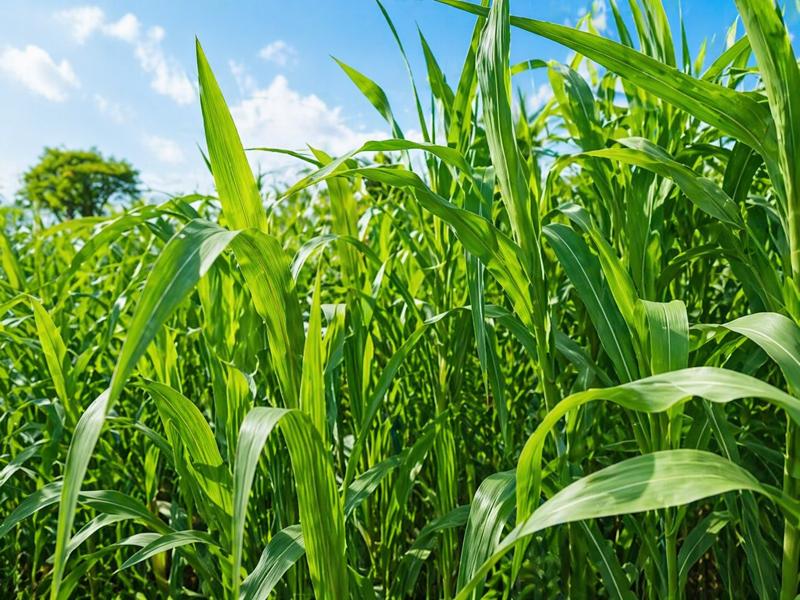
Sorghum green fodder farming is a very important and profitable option for farmers in India. Especially in Kharif and Zaid season, sorghum becomes a major source of nutritious green fodder for animals. Sorghum crop gives good yield even in low water and it has the ability of multiple cuttings, due to which farmers keep getting continuous fodder.
Sorghum fodder contains high amount of protein, fiber and energy, which increases the productivity of milk-giving animals. Apart from this, sorghum can be used in three forms – green fodder, dry fodder and silage.
Now in this blog, we will understand complete information in detail about sorghum green fodder farming: sowing, techniques and varieties.
1. 🌱 Introduction of Sorghum Crop
Sorghum is a multi-purpose fodder crop which is grown on a large scale in India. It is a drought-tolerant crop and gives high production at low cost.
Main Features:
- Crop that grows in low water
- Ability to give more than one cutting
- Nutritious fodder for animals
- Fast growing crop
2. 🥛 Health Benefits & Uses
Sorghum green fodder is very beneficial for animals.
Benefits:
- Increases milk production
- Improves digestion
- Provides energy to animals
- Strengthens bones
Uses:
- Green fodder
- Dry fodder
- For making silage
3. 🔬 Scientific Classification
| Category | Details |
|---|---|
| Botanical Name | Sorghum bicolor |
| Family | Poaceae |
| Type | Grain & Fodder Crop |
| Use | Animal Fodder |
4. 🌦️ Climate & Temperature
Warm climate is required for good production of sorghum.
Suitable Conditions:
- Temperature: 25 to 35°C
- For germination: 18 to 21°C
- Rainfall: 500 to 750 mm
- Humidity: 80 to 85%
5. 🌍 Soil Requirement
Sorghum can be grown in almost all types of soil.
Suitable Soil:
- Loamy soil
- Sandy loam
- Black soil
Required Properties:
- Good drainage
- pH 6.5 to 7.5
6. 🌾 Seed & Varieties
Single Cut Varieties:
- Haryana Chari 136
- Haryana Chari 171
- PC 9
Multi Cut Varieties:
- SSG 59-3
- Pusa Chari 23
- MP Chari
- Pioneer 998
7. 🌱 Seed Rate per Acre
Maintaining correct seed rate in sorghum green fodder farming is very important, because it directly affects plant population, growth and final yield.
✔️ Seed Quantity per Acre
- Single cut varieties: 18 to 24 kg
- Multi cut varieties: 8 to 10 kg
- In broadcasting method: 20% more seed
✔️ Factors for Deciding Seed Rate
- Seed size
- Soil fertility
- Sowing method
- Germination percentage
✔️ Seed Treatment
- Treat with fungicide
- Use organic Trichoderma
- Seeds can be soaked in water for 8 hours to increase germination
👉 Correct seed rate makes plants strong and increases production.
8. 🛒 Where to Buy Seeds?
Buying improved and certified seeds is the first step of success.
✔️ Sources to Buy Seeds
- Krishi Vigyan Kendra (KVK)
- Government seed stores
- Certified private companies
- Farmer Producer Organization (FPO)
- Online agriculture websites
✔️ Things to Keep in Mind While Buying Seeds
- Buy certified and labeled seeds
- Germination percentage should be more than 80%
- Seeds should be fresh and disease free
9. 🚜 Land Preparation
Land preparation is very important for good yield of sorghum.
✔️ Steps for Field Preparation
- Do deep ploughing 2 times
- Run harrow or cultivator 2 to 3 times
- Level the field using plank
- Maintain moisture in soil
✔️ Advanced Techniques
- Make level field using laser leveling
- Improve soil by mixing organic manure
👉 Good preparation results in fast and uniform germination.
10. 🌱 Sowing Method
✔️ Right Time of Sowing
- Irrigated area: 20 March to 1 July
- Rainfed area: With first rain
✔️ Sowing Technique
- Row to row distance: 25 to 30 cm
- Plant to plant distance: 10 to 12 cm
- Depth: 2.5 to 4 cm
✔️ Methods of Sowing
- Sowing with seed drill (best)
- Line sowing by hand
- Broadcasting method (in less prepared field)
👉 Line sowing gives higher production.
11. 🌿 Fertilizer & Manure Management
Sorghum is a high biomass crop, so it requires balanced nutrition.
✔️ Manure Quantity per Acre
- Farmyard manure: 4 to 5 tons
- Nitrogen: 32 kg
- Phosphorus: 12 kg
✔️ Method of Fertilizer Application
- Before sowing: Half nitrogen + full phosphorus
- After 30 to 35 days: Remaining nitrogen
✔️ For Multi Cut Varieties
- Give 10 to 12 kg nitrogen after every cutting
- Apply fertilizer after irrigation
✔️ Organic Options
- Vermicompost
- Jeevamrit
- Neem cake
👉 Balanced fertilizer increases both quality and quantity of fodder.
12. 💧 Irrigation Schedule
✔️ Right Time of Irrigation
- First irrigation: 15 to 20 days after sowing
- In summer: Every 10 to 15 days
- In monsoon: As per requirement
✔️ Special Care
- Do not allow water stagnation
- Irrigate after every cutting
- Save water using drip irrigation
👉 Proper irrigation increases plant growth speed.
13. 🌿 Weed Control
In sorghum, weeds cause maximum damage in early stage.
✔️ Methods of Control
- First weeding after 15 to 20 days
- Second weeding after 30 days
- 1 to 2 times hoeing
✔️ Chemical Control
- Limited use of Atrazine
- Spray within 48 hours of sowing
👉 Use less chemicals in fodder crop.
14. 🐛 Pest & Disease Management
✔️ Common Pests
- Stem borer
- Aphid
- Midge pest
✔️ Control Measures
- Neem oil spray
- Pheromone trap
- Organic pesticides
✔️ Precautions
- Do not feed fodder for 25 days after chemical spray
- Remove infected plants
15. ⏳ Crop Duration
✔️ Duration Details
- First cutting: 50 to 55 days
- Next cutting: 35 to 45 days
- Total duration: 90 to 120 days
👉 In multi cut varieties, 3 to 4 cuttings are possible.
16. ✂️ Harvesting Method
✔️ Right Time of Harvesting
- At 50% flowering stage
- Do not harvest before 40 days
✔️ Harvesting Technique
- Cut 8 to 10 cm above the ground
- Use sharp tools
✔️ HCN (Hydrogen Cyanide) Precaution
- Crop of 35 to 40 days has higher toxicity
- If early harvesting is done, leave fodder open for 2 to 3 hours
👉 Harvesting at the right time increases quality.
17. 📊 Yield per Acre
✔️ Yield Details
- Single cutting: 100 to 160 quintal
- Multi cut: 200 to 300 quintal
✔️ Tips to Increase Yield
- Use improved varieties
- Timely irrigation
- Balanced fertilizers
18. 💰 Market Price & Profit per Acre
✔️ Cost
- ₹15,000 to ₹20,000
✔️ Expected Income
- ₹50,000 to ₹90,000
✔️ Net Profit
- ₹30,000 to ₹70,000
✔️ Ways to Increase Profit
- Sell by making silage
- Connect with dairy farms
- Grow multi cut varieties
19. 📦 Storage
✔️ Storage Methods
- Store as dry fodder
- Prepare silage
- Keep in dry and cool place
✔️ Precautions
- Protect from moisture
- Prevent fungal growth
20. 🏛️ Government Schemes
✔️ Major Schemes
- Pradhan Mantri Krishi Sinchai Yojana
- Pradhan Mantri Fasal Bima Yojana
- National Food Security Mission
✔️ Benefits
- Subsidy
- Insurance protection
- Technical support
21. 🔄 Crop Rotation & Mixed Farming
✔️ Mixed Crops
- Sorghum + Cowpea
- Sorghum + Guar
✔️ Benefits
- Increases soil fertility
- Increases production
- Reduces risk
❓ FAQ | Sorghum Green Fodder Farming
Here are the most important and frequently asked questions related to sorghum green fodder farming with easy and detailed answers, which will help farmers to take the right decisions.
1. What should be the seed rate of sorghum green fodder per acre?
Seed rate of sorghum depends on variety and sowing method.
Generally:
- For single cut varieties: 18 to 24 kg per acre
- For multi cut varieties: 8 to 10 kg per acre
- In broadcasting method: 20% more seed is required
👉 Maintaining correct seed rate keeps plant population balanced and increases production.
2. What is the best time for sowing sorghum?
Sowing time of sorghum depends on region and irrigation facility.
- In irrigated areas: 20 March to 1 July
- In rainfed areas: With first rain
- For multi cut varieties: First fortnight of April is best
👉 Sowing at the right time improves germination and makes crop strong.
3. When should the first cutting of sorghum be done?
First cutting of sorghum should generally be done 50 to 55 days after sowing.
👉 Keep in mind:
- Do not cut before 40 days
- Cutting at 50% flowering stage is considered best
This improves both quality and yield of fodder.
4. How many times can sorghum be harvested?
It completely depends on the variety.
- Single cut variety: 1 time
- Multi cut variety: 3 to 4 times
👉 With proper care after each cutting, production keeps increasing.
5. What is the yield per acre of sorghum green fodder?
Yield depends on farming techniques and variety.
- Single cut: 100 to 160 quintal per acre
- Multi cut: 200 to 300 quintal per acre
👉 Production can be increased further by adopting improved techniques.
6. Which manure and fertilizer should be given in sorghum?
Sorghum requires balanced nutrition.
- Farmyard manure: 4 to 5 tons per acre
- Nitrogen: 30 to 35 kg
- Phosphorus: 10 to 12 kg
👉 In multi cut crop, it is necessary to give nitrogen after every cutting.
7. How many times irrigation should be done in sorghum farming?
- First irrigation: After 15 to 20 days
- Later: Every 10 to 15 days
- In multi cut: After every cutting
👉 Water stagnation should not be allowed.
8. Which variety of sorghum gives highest yield?
Multi cut varieties give highest yield such as:
- SSG 59-3
- Pusa Chari 23
- MP Chari
👉 These varieties give continuous fodder and more profit.
9. Can sorghum be grown in low water?
Yes, sorghum is a drought tolerant crop.
- Gives good yield even in low water
- Can be grown in summer also
👉 That’s why it is an ideal crop for water scarce areas.
10. How safe is sorghum fodder for animals?
Sorghum fodder is very nutritious and safe, but some precautions are necessary:
- Do not harvest before 40 days
- If harvested early, leave it open for 2 to 3 hours
- Do not feed fodder for 25 days after spraying
👉 This helps to avoid HCN toxicity.
📝 Conclusion
Sorghum green fodder farming has become a smart and sustainable agriculture option for farmers today. This crop has the ability to give high production with low cost, low water and low risk.
If farmers follow correct sowing time, select improved varieties, use balanced fertilizers and proper irrigation, then they can earn good profit from this crop.
👉 For livestock farmers, sorghum green fodder is a permanent solution, which makes their business strong and profitable.
👉 Adopt the right techniques, reduce risk and increase your income. 🚜🌾
👉 For more detailed information on fodder farming, click here