


Asparagus Farming in India: Complete Guide
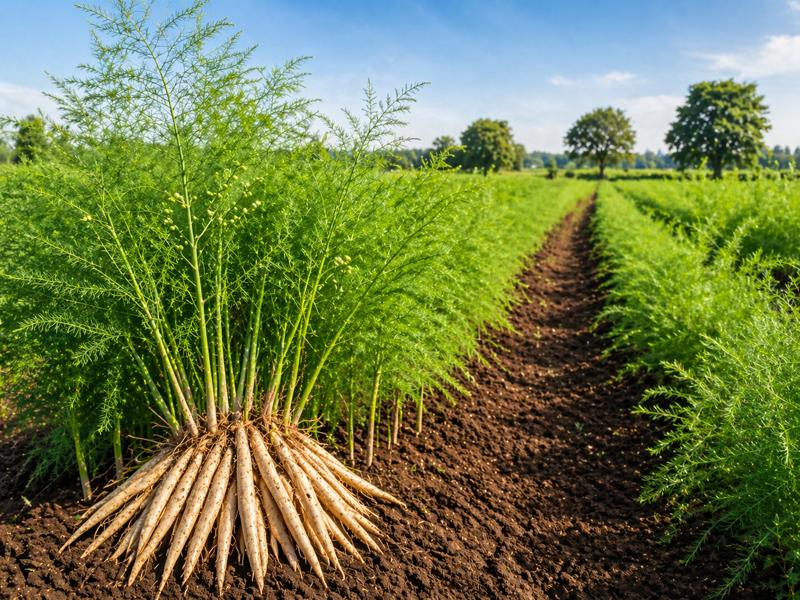
🌿 Shatavari | Satavar | Asparagus Farming: High Profit in Low Cost
Shatavari, also known as Satavar, is an important medicinal crop which is becoming a very good source of income for farmers nowadays. In Ayurveda, it is called the “Queen of Medicines” because it is used in the treatment of many serious health problems.
In India, its roots are used in large quantity every year for making medicines.
👉 This crop can be grown with less water, less care, and low cost
👉 Its demand in the market is continuously increasing
👉 Profit in lakhs is possible in 1 acre
In this blog, we will tell you:
👉 How to do Shatavari farming
👉 Complete information (from seed to market)
1️⃣ 🌿 Crop Introduction
Shatavari is a perennial shrub plant whose height is about 1 to 3 meters. Its roots grow in clusters, and these roots are used for medicinal purposes.
🌼 Main Features:
- It grows in the form of a climber or shrub
- Roots are white and thick
- Flowers are white and fragrant
- Fruits are red in color
👉 In India, this crop can be easily grown from Himalayan regions to Central India
2️⃣ 💊 Health Benefits and Uses of Shatavari
🧘♀️ Medicinal Uses
✔ Benefits for Women
- Helps in increasing milk production
- Helps in hormone balance
- Useful in the treatment of infertility
✔ For Men
- Helps in increasing strength
- Improves sexual power
✔ Other Uses
- Helpful in gastric ulcers
- Improves digestion and indigestion
- Used in skin diseases
- Relief in arthritis and pain
👉 It is used in Ayurveda, Unani, and herbal medicines
3️⃣ 🔬 Scientific Classification
| Category | Details |
|---|---|
| Botanical Name | Asparagus racemosus |
| Family | Liliaceae |
| Type | Medicinal Crop |
| Use | Root (Tubers) |
4️⃣ 🌦 Climate & Temperature
🌡 Ideal Temperature:
- Germination: 30 to 35°C
- Growth: 20 to 35°C
- Harvesting: 20 to 25°C
🌧 Rainfall:
- 600 to 1000 mm
👉 Warm and humid climate is most suitable
5️⃣ 🌍 Soil Requirement
✔ Suitable Soil:
- Sandy loam
- Black soil
- Red loam
✔ Required Features:
- Proper drainage should be there
- pH value 6 to 8
- Soil should be loose
👉 Light soil is best for tuber development
6️⃣ 🌱 Seed & Varieties
For successful Shatavari farming, selecting the right seed and variety is very important. A good variety increases production, quality, and profit.
🌿 Main Varieties (Varieties)
Asparagus racemosus (Shatavari)
- Most used variety for medicinal purpose
- Roots are thick and white
- Highest demand in the market
Asparagus sarmentosa
- Long climber type variety
- Used for medicinal purpose in some areas
Asparagus officinalis
- Used as a vegetable (soup, salad)
- Demand in big cities
✔ How to Select Right Variety?
- According to your area climate
- Always take certified seeds
- Take advice from local agriculture expert
7️⃣ 🌾 Seed Rate
Seed quantity is very important in Shatavari farming.
✔ Seed Quantity per Acre:
- Nursery method: 400 to 600 grams
- Some farmers use 1 to 2 kg
✔ Germination Capacity:
- Around 40 to 60 percent
👉 Do seed treatment for better germination
8️⃣ 🛒 Where to Buy Seeds and Plants?
✔ Trusted Sources:
- Krishi Vigyan Kendra (KVK)
- Government nursery
- Certified private companies
- Online agriculture portals
✔ Keep in Mind:
- Avoid fake seeds
- Always take bill
- Buy only high-quality seeds
9️⃣ 🚜 Land Preparation
Shatavari is a long-duration crop, so good preparation at the beginning is necessary.
✔ Field Preparation:
- Do deep ploughing in May–June
- Plough 2 to 3 times
- Make soil loose
✔ Making Ridges:
- Make ridges at 60 cm distance
- Height about 9 inches
✔ Adding Manure:
- 80 quintal cow dung manure per acre
👉 Good preparation helps better root development
🔟 🌱 Sowing Method
✔ Nursery Preparation:
- Sow seeds in April
- Germination in 8 to 10 days
- Plants ready in 40 to 45 days
✔ Transplanting:
- Plant height: 4 to 5 inches
- Spacing: 60 x 60 cm
- Depth: 4 to 5 inches
✔ Seed Treatment:
- Soak seeds in cow urine for 24 hours
1️⃣1️⃣ 🧪 Fertilizer & Manure Management
✔ Quantity per Acre:
- Cow dung manure: 80 quintal
- Urea: 52 kg
- SSP: 200 kg
- Potash: 66 kg
✔ Organic Options:
- Vermicompost
- Compost manure
- Biofertilizer
👉 Applying manure every year in June–July is beneficial
1️⃣2️⃣ 💧 Irrigation Management
✔ Irrigation Schedule:
- Irrigation immediately after transplanting
- In the beginning, gap of 4 to 6 days
- Later, gap of 7 to 10 days
✔ Keep in Mind:
- Water should not accumulate
- Drip irrigation is best
👉 Good crop even with less water
1️⃣3️⃣ 🌿 Weed Control
✔ Control Methods:
- 6 to 8 times weeding and hoeing
- Remove weeds by hand
✔ Benefits:
- Better root development
- Increase in production
1️⃣4️⃣ 🐛 Pest & Disease Management
In Shatavari crop, generally pest and disease attack is less, but timely identification and control is necessary so that production is not affected.
✔ Major Diseases
1. Rust Disease
Cause: Fungus (Puccinia spp.)
Symptoms:
- Brown or rust-like spots on leaves
- Leaves start drying
- Plant growth stops
2. Root Rot
Cause: Excess water or waterlogging
Symptoms:
- Roots become black and rotten
- Plants start wilting
✔ Control Measures
🌿 Organic Methods:
- Use neem cake
- Spray cow urine-based solution
- Use herbal pesticides made from Dhatura and Chitrak root
🧪 Chemical Methods:
- Spray 1% Bordeaux mixture
- Limited use of fungicides
✔ Preventive Measures:
- Maintain proper drainage in field
- Do seed treatment
- Remove infected plants immediately
👉 With proper management, crop remains safe and production is higher
1️⃣5️⃣ ⏳ Crop Duration
Shatavari is a perennial crop, so its duration is long.
✔ Duration:
- Crop is ready in 18 to 24 months
- Some farmers keep it for 30 to 40 months
✔ Keep in Mind:
- Keeping for more time increases root size
- Decide time according to market
👉 Harvesting at right time gives better quality
1️⃣6️⃣ ✂ Harvesting Method
✔ Right Time of Harvesting:
- March to May
- When plant seeds are matured
✔ Harvesting Process:
- Do light irrigation before harvesting
- When soil becomes soft, dig with a spade
- Remove roots carefully
✔ Keep in Mind:
- Roots should not be damaged
- Take out complete root
👉 Good harvesting gives higher price in market
1️⃣7️⃣ 📊 Yield per Acre
✔ Average Production:
- 25,000 kg fresh roots
- After processing: 2,500 kg dry roots
✔ Tips to Increase Production:
- Select good variety
- Proper fertilizer management
- Timely irrigation
👉 Average 25 quintal per acre production
1️⃣8️⃣ 💰 Market Price & Profit per Acre
✔ Current Market Price:
- ₹150 to ₹250 per kg
- Better quality gets higher price
✔ Income per Acre:
- Around ₹2,50,000
✔ Total Cost:
- Around ₹84,000
✔ Net Profit:
- Around ₹1,66,000
✔ Extra Income:
- From seed production
- From intercropping
👉 High profit possible with low cost
1️⃣9️⃣ 📦 Storage Management
After harvesting, proper processing and storage is very important.
✔ Processing Steps:
- Clean the roots
- Boil lightly
- Remove outer skin
- Dry in shade
✔ Storage:
- Keep in airtight bags
- Protect from moisture
- Store in cool and dry place
👉 Proper storage increases both quality and price
2️⃣0️⃣ 🏛 Government Schemes
Government is running many schemes for medicinal crops like Shatavari.
✔ Major Schemes:
- National Medicinal Plants Board
- Pradhan Mantri Krishi Sinchai Yojana
- Organic Farming Promotion Scheme
✔ Benefits:
- Subsidy on seeds and plants
- Support for irrigation
- Training and guidance
👉 Reduce cost by taking benefit of these schemes
2️⃣1️⃣ ❓ FAQs | How to Do Shatavari Farming
Below are the most common and important questions related to Shatavari (Satavar) farming, with detailed answers, useful for every farmer.
1. When and how to start Shatavari farming?
👉 Best time to start Shatavari farming is from June to July.
👉 First sow seeds in nursery and transplant plants in field after 40 to 45 days.
👉 Do good land preparation and maintain proper spacing.
2. What is the cost of Shatavari farming per acre?
👉 Around ₹80,000 to ₹90,000 per acre cost.
👉 It includes seeds, fertilizer, labour, irrigation, and harvesting.
👉 With proper management, cost can be reduced further.
3. In how much time crop becomes ready?
👉 This crop becomes ready in 18 to 24 months.
👉 Some farmers keep it for 30 to 40 months for better production.
4. Can Shatavari farming be done with less water?
👉 Yes, it is a low water requirement crop.
👉 Irrigation once in a month is also sufficient.
👉 Drip irrigation gives better results.
5. Which soil is best for Shatavari farming?
👉 Sandy loam soil is best.
👉 Soil should have good drainage.
👉 pH value should be between 6 to 8.
6. Are pests and diseases common in Shatavari farming?
👉 No, pests and diseases are very less in this crop.
👉 Still, take care of Rust disease.
👉 Timely control can prevent loss.
7. Can we do intercropping in Shatavari farming?
👉 Yes, other crops can be grown with Shatavari.
👉 It gives extra income.
👉 Like pulses or vegetables.
8. How much production is obtained from Shatavari farming?
👉 Around 25 quintal dry roots per acre
👉 From 25,000 kg fresh roots, about 2,500 kg dry roots are obtained
9. How is the market demand of Shatavari?
👉 Market demand is very high.
👉 Ayurvedic companies purchase in large quantity.
👉 Demand is expected to increase more in future.
10. How to earn more profit from Shatavari farming?
👉 Produce high-quality roots
👉 Harvest at the right time
👉 Contact companies directly
👉 Sell after processing
🔚 Conclusion
Shatavari farming is a golden opportunity for farmers in today’s time. This crop is not only important medicinally, but also very profitable economically.
👉 Good production with less water
👉 High profit with low cost
👉 Continuously increasing market demand
If farmers do this farming with correct knowledge and scientific methods, they can easily earn lakhs per acre.
🌿 Now it is time to move ahead from traditional farming and adopt medicinal farming to increase your income multiple times 🚜
👉 For more detailed information on medicinal farming, click here