


Nigella Seeds Farming Guide: High Yield Tips
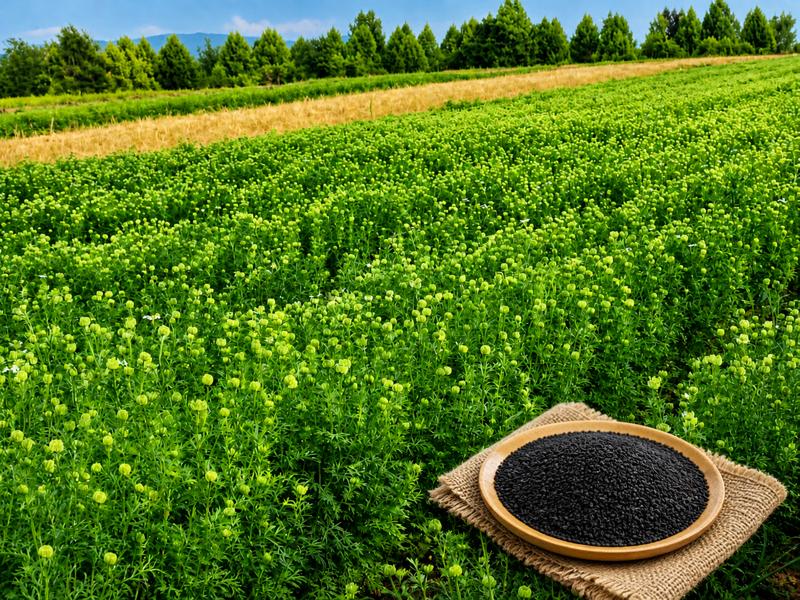
🌿 Nigella-Seeds Farming Guide | How to Grow Kalonji
Nigella-seeds, which is also called Black Cumin, is an important medicinal and spice crop. It is grown in the Rabi season and is considered a low-cost crop with good profit. Nowadays, many farmers are increasing their income by adopting nigella-seeds farming along with traditional crops.
Nigella-seeds contain about 0.5 to 1.6 percent oil, which is used in medicines and food products. By using the right farming techniques, good income per acre is possible.
1️⃣ Crop Introduction
Nigella-seeds is a spice and medicinal crop that belongs to the Ranunculaceae family. It is used in spices, Ayurvedic medicines, and home remedies.
Main Features:
- Rabi season crop
- Good yield even with less water
- Ready in 4 to 5 months
- Low cost, high profit
2️⃣ Health Benefits and Uses of Nigella-Seeds
Uses:
- As a spice
- In pickles and vegetables
- In Ayurvedic medicines
Health Benefits:
- Improves digestion
- Helpful in gas and indigestion
- Useful in headache and migraine
- Beneficial for liver
- Increases immunity
3️⃣ Scientific Classification
| Classification | Details |
|---|---|
| Botanical Name | Nigella sativa |
| Family | Ranunculaceae |
| Crop Type | Spice & Medicinal |
4️⃣ Climate & Temperature
Choosing the right climate is very important for nigella-seeds farming, because it directly affects production and quality.
Suitable Climate:
- Light cold is needed at the initial stage
- Dry weather during flowering and seed formation
- Excess rainfall can damage the crop
Temperature:
- For germination: 15 to 20°C
- For growth: 20 to 25°C
- At maturity: 25 to 30°C
Important Points:
- Protect from frost
- Do not allow waterlogging
5️⃣ Soil Requirement
Suitable Soil:
- Sandy loam soil is best
- Soil with good drainage is necessary
pH Level:
- 6.0 to 7.0 is ideal
Before Soil Preparation:
- Soil should be loose
- Enough organic matter should be present
Special Tips:
- Avoid waterlogged land
- Field should be levelled properly
6️⃣ Seed & Varieties
In nigella-seeds farming, selecting the right variety is the most important step. Improved varieties not only give higher production but are also tolerant to diseases.
Main Improved Varieties:
NRCSSN 1
- Duration about 135 days
- Tolerant to root rot disease
- Yield capacity 12 quintal per hectare
Azad Kalonji
- Duration 130 to 135 days
- Yield capacity 8 to 10 quintal per hectare
NS 44
- Duration 140 to 150 days
- Yield capacity 4.5 to 6.5 quintal per hectare
NS 32
- Duration 140 to 150 days
- Yield capacity 4.5 to 5.5 quintal per hectare
Ajmer Kalonji
- Duration 135 days
- Yield capacity 8 quintal per hectare
Kalajira
- Duration 135 to 145 days
- Yield capacity 4 to 5 quintal per hectare
Pant Krishna and Rajendra Shyam
- High quality and stable production
Tips for Selecting Right Variety:
- Choose variety according to your area climate
- Use only certified seeds
- Give priority to disease resistant varieties
👉 By selecting the right variety, about 2 quintal per acre production can be easily achieved.
7️⃣ Seed Rate
Seed Quantity per Acre:
- 4 to 5 kg seed is sufficient
Seed Selection Rules:
- Germination capacity should be more than 80 percent
- Seeds should be clean and disease free
Seed Treatment:
- Captan or Thiram 2.5 gram per kg seed
- Trichoderma 4 gram per kg seed
👉 Seed treatment reduces disease risk and improves germination.
8️⃣ Where to Buy Seeds
Reliable Sources:
- Krishi Vigyan Kendra
- State Seed Corporation
- Government seed stores
- Certified private sellers
Things to Check While Buying:
- Buy packed and certified seeds
- Check expiry and germination percentage
9️⃣ Land Preparation
Method of Field Preparation:
- Do deep ploughing once
- Do light ploughing 2 to 3 times
- Use plank to make soil loose
Use of Manure:
- Apply 4 to 5 ton cow dung manure per acre
Additional Work:
- Level the field
- Make proper drainage system
- Prepare beds
🔟 Sowing Method
Sowing Time:
- Mid September to mid October is best
Method of Sowing:
- Use row method
Spacing:
- Row to row distance 30 cm
- Plant to plant distance 15 cm
Depth:
- Not more than 2 cm
Special Tips:
- Do not sow seeds too deep
- Maintain proper spacing
1️⃣1️⃣ Fertilizer & Manure Management
Fertilizer Quantity per Acre:
- Cow dung manure 4 to 5 ton
- Nitrogen 20 to 25 kg
- Phosphorus 8 to 10 kg
- Potash 6 to 8 kg
Time of Fertilizer Application:
- Basal dose before sowing
- Remaining nitrogen in two parts:
- After 30 days
- After 60 days
Suggestions:
- Increase use of organic manure
- Maintain balanced nutrition
1️⃣2️⃣ Irrigation Schedule
Number of Irrigation:
- 5 to 6 irrigations are required
Time of Irrigation:
- First irrigation immediately after sowing
- Light irrigation at the time of germination
- At interval of every 15 to 20 days
Important Stages:
- Flowering stage
- Seed formation stage
1️⃣3️⃣ Weed Control
Methods of Control:
- 2 to 3 times weeding and hoeing
Time:
- First weeding after 20 to 25 days
- Second weeding after 40 to 50 days
- Third as per need
Chemical Control:
- Pendimethalin can be used
1️⃣4️⃣ Pest & Disease Management
In nigella-seeds crop, pest and disease control at the right time is very important, because small negligence can greatly affect the production.
Major Diseases:
1. Root Rot Disease
Cause: Rhizoctonia and Fusarium fungus
Symptoms:
- Plants turn yellow
- Roots start rotting
- Plants dry and die
Control:
- Treat seeds with Trichoderma 4 gram per kg seed
- Follow crop rotation
- Avoid waterlogging
Major Pests:
1. Aphid
- Suck sap from plants
- Leaves start curling
- Production decreases
Control:
- Spray neem oil
- If needed, use light dose of Dimethoate
2. Termite
- Damage roots and stems
- Plants start drying
Control:
- Treat during field preparation
- Use Chlorpyrifos with irrigation
Integrated Pest Management (IPM Tips):
- Do inspection on time
- Remove infected plants
- Give priority to organic methods
1️⃣5️⃣ Crop Duration
- Nigella-seeds crop gets ready in about 130 to 140 days.
- There can be slight variation according to variety and climate.
1️⃣6️⃣ Harvesting Method
Right Time of Harvesting:
- When plants start turning yellow
- When pods start drying
Harvesting Process:
- Uproot the plants with roots
- Dry in sunlight for 3 to 5 days
- Beat with stick or wooden rod to separate seeds
Precautions:
- Delay in harvesting can cause seed dropping
- Avoid harvesting during rainy time
1️⃣7️⃣ Yield per Acre
Average Yield:
- About 1.5 to 2 quintal per acre
Ways to Increase Yield:
- Selection of improved variety
- Use of balanced fertilizers
- Timely irrigation and weeding
👉 By adopting proper techniques, improvement in yield is possible
1️⃣8️⃣ Market Price & Profit per Acre
Market Price:
- 18,000 to 22,000 rupees per quintal (may vary according to mandi)
Expected Income per Acre:
- 30,000 to 45,000 rupees
Cost:
- Low cost crop
Ways to Increase Profit:
- Sell directly to traders
- Store and sell at better price
- Do processing for value addition
1️⃣9️⃣ Storage
Proper Storage Methods:
- Keep seeds fully dried
- Use airtight containers
- Store in cool and dry place
Precautions:
- Protect from moisture
- Protect from pests
- Do regular checking
2️⃣0️⃣ Government Schemes
For medicinal crops like nigella-seeds, government runs many schemes.
Main Schemes:
- Rashtriya Krishi Vikas Yojana
- Pradhan Mantri Krishi Sinchai Yojana
- Schemes promoting medicinal plants
Benefits:
- Subsidy on seeds and fertilizers
- Support on irrigation equipment
- Training and technical guidance
Where to Contact:
- Agriculture department office
- Krishi Vigyan Kendra
- Panchayat level agriculture officer
2️⃣1️⃣ Gov Approval
For Normal Farming:
- No special permission is required
For Other Activities:
- License may be required for setting up processing unit
- Registration may be required for export
2️⃣2️⃣ FAQ | Important Questions
1. What is the major disease in kalonji crop
- Root rot disease
2. How to protect from aphid
- Spray neem oil or insecticide
3. When should harvesting be done
- When plants turn yellow
4. What is the yield per acre
- 1.5 to 2 quintal
5. What is the market price
- 18,000 to 22,000 rupees per quintal
6. Is storage necessary
- Yes, for better price
7. Can this crop grow in low water
- Yes, even with limited irrigation
8. Are diseases common in this crop
- No, with proper management they are less
9. Is this crop profitable
- Yes, very profitable
10. Is government support available
- Yes, available in many schemes
🧾 Conclusion
Nigella-seeds farming is a very good crop with low cost and high profit. If farmers do pest and disease control at the right time, follow proper management, and focus on market strategy, then good income can be earned from it.
👉 With modern techniques and awareness, nigella-seeds farming can become a strong source to increase farmers income.
👉 For detailed and practical information on spice farming, click here