


Carbon Farming in India: Benefits & Practices Guide
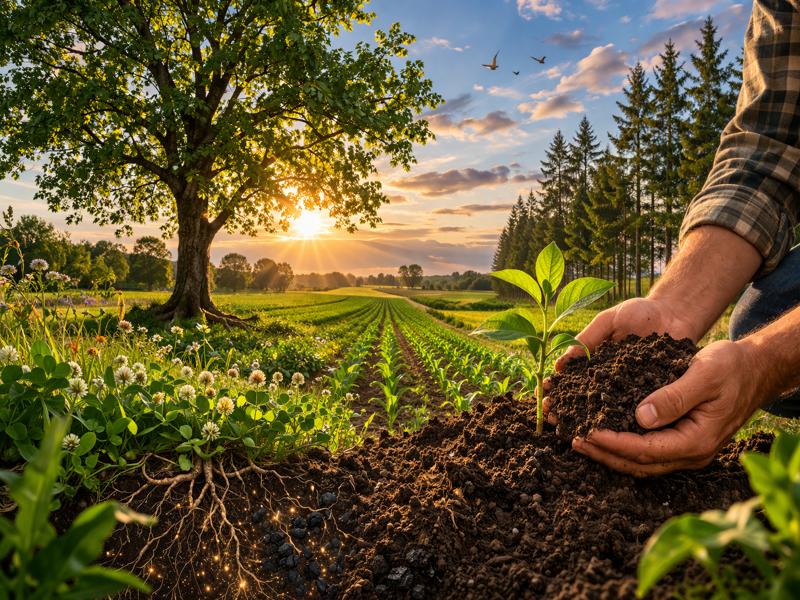
🌱 What is Carbon Farming? Benefits, Method and Full Information
Today, farming is not only a way to increase production, but it is also directly connected with environmental protection, improvement of soil quality, and human health. Due to increasing population and the race for higher production, farmers have started using excessive chemical fertilizers and pesticides, because of which soil fertility has started decreasing, the environment has become polluted, and the quality of food has also been affected.
In such a situation, Carbon Farming or Organic Farming has come forward as a safe, sustainable, and future farming method. This farming is based on natural resources and maintains soil fertility by increasing the amount of carbon in the soil.
In this detailed article, we will learn:
👉 What is carbon farming
👉 What are its benefits
👉 How to start it
👉 Techniques, schemes, and opportunities
🌿 What is Carbon Farming? (Carbon Farming Kya Hai?)
Carbon farming is a farming method in which farmers try to increase the amount of carbon in the soil and reduce carbon emissions in the environment.
In simple language:
👉 Doing farming using natural methods and keeping the soil alive is called carbon farming.
This farming uses natural resources instead of chemical fertilizers and pesticides such as:
- Cow dung manure
- Compost
- Vermicompost
- Green manure
- Organic pesticides
🌍 Importance of Carbon Farming
Today, due to increasing greenhouse gas emissions (CO₂) worldwide, climate change has become a serious problem.
👉 According to scientists, about 33% of carbon emissions come from soil.
Carbon farming provides a solution to this problem because:
- It stores carbon in the soil
- It reduces CO₂ in the environment
- It controls climate change
🌱 Main Principles of Organic Farming
Organic farming is based on some important principles:
1. Soil Health
Increasing organic matter in the soil so that its fertility remains maintained.
2. Natural Balance
Controlling pests and diseases through natural methods.
3. Use of Local Resources
Using cow dung, crop residues, green manure, etc.
4. Biodiversity
Adopting mixed farming and crop rotation.
🌾 Main Features of Organic Farming
Some main features of organic farming are as follows:
- No use of chemical fertilizers
- Use of natural fertilizers
- Maintaining soil quality
- Environmental protection
- Promoting biodiversity
🌿 Synonyms of Organic Farming
Organic farming is known by many names:
- Organic farming
- Natural farming
- Organic agriculture
- Biological farming
👍 Benefits of Carbon Farming
1. Soil Fertility Increases
Due to increase in organic matter in the soil, its quality remains maintained for a long time.
2. Healthy Food
Chemical-free food reduces the risk of diseases.
3. Reduction in Cost
There is no need to purchase chemical fertilizers and pesticides.
4. Environmental Protection
Pollution is reduced and the ecosystem remains safe.
5. Stable Production
Production may be low in the beginning but remains stable in the long term.
6. Farmers’ Income Increases
Organic products are sold at higher prices in the market.
7. Water Holding Capacity Increases
The capacity of soil to retain water increases.
8. Helps in Climate Change
Carbon stored in the soil reduces CO₂.
🔧 Main Techniques of Organic Farming
1️⃣ Vermicompost
Manure made by earthworms which makes the soil fertile quickly.
2️⃣ Jeevamrit and Ghanjeevamrit
Jeevamrit: Liquid fertilizer
Ghanjeevamrit: Solid fertilizer
These increase the number of microorganisms in the soil.
3️⃣ Green Manure
Crops like dhaincha and moong are mixed into the soil to increase nitrogen.
4️⃣ Crop Rotation
Growing different crops in each season so that pests and diseases are reduced.
5️⃣ Natural Pest Control
- Neem oil
- Cow urine
- Ash spray
- Trap crops
6️⃣ Mixed Cropping
Growing two or more crops together.
🚜 How to Start Carbon Farming in India?
✔ Step 1: Selection of Land
Choose land where the use of chemicals has been low.
✔ Step 2: Soil Testing
It is necessary to check soil nutrients and pH.
✔ Step 3: Stop Using Chemicals
Gradually reduce the use of chemical fertilizers.
✔ Step 4: Prepare Organic Fertilizer
Use cow dung manure, compost, and vermicompost.
✔ Step 5: Get Organic Certification
- PGS India
- NPOP
✔ Step 6: Select Market
- Local mandi
- Organic stores
- Online platforms
🌍 How to Do Carbon Farming?
Some important methods of carbon farming:
1. Reduce Tillage
Excessive tillage increases carbon emissions.
2. Use Organic Fertilizers
Natural fertilizers increase carbon in the soil.
3. Adopt Mixed Cropping
Crops like moong and arhar make the soil fertile.
4. Mix Crop Residues into Soil
Crop residues increase carbon in the soil.
5. Forest Conservation
Plant trees and protect forests.
💰 Opportunities for Farmers
Carbon farming is a big opportunity for farmers:
- Demand for organic products is increasing
- Higher prices in international markets
- Export opportunities
- Additional income through carbon credits
🏛 Government Schemes in India
1. Paramparagat Krishi Vikas Yojana (PKVY)
2. Organic India Certification
3. National Centre for Organic Farming (NCOF)
4. Soil Health Card Scheme
5. Rashtriya Krishi Vikas Yojana (RKVY)
6. Zero Budget Natural Farming
🤔 Are There Any Disadvantages of Organic Farming?
Yes, there are some challenges:
- Low production in the beginning
- More labor required
- Certification process is long
But in the long term, it is more profitable.
📈 Future of Carbon Farming
The future of carbon farming in India is very bright because:
- People are moving towards healthy food
- Government is providing support
- Exports are increasing
- It is a solution to fight climate change
❓ Important FAQs Related to Carbon Farming
1. What is carbon farming and how does it work?
Carbon farming is a farming method in which the amount of carbon in the soil is increased and carbon dioxide (CO₂) in the environment is reduced. It uses organic manure, crop residues, and natural methods to make the soil more fertile and alive. This process helps in storing carbon in the soil (Carbon Sequestration).
2. What is the difference between carbon farming and organic farming?
Carbon farming and organic farming are both forms of natural farming, but their focus is slightly different.
- Organic farming: Focuses on chemical-free farming
- Carbon farming: Focuses on increasing carbon in soil and reducing climate change
However, both are connected and often adopted together.
3. Can carbon farming increase farmers’ income?
Yes, carbon farming can increase farmers’ income in many ways:
- Organic products get higher prices in the market
- Additional income through carbon credit
- Profit increases due to lower cost
4. How much time does it take to start carbon farming?
Carbon farming can be started immediately, but it may take 2–3 years to see full results. During this time, soil quality improves gradually and production becomes stable.
5. Does production decrease in carbon farming?
Production may be slightly low in the initial years because the soil is leaving the habit of chemicals. But after 2–3 years, production becomes stable and quality improves.
6. Which crops can be grown in carbon farming?
Almost all crops can be grown in carbon farming such as:
- Grains: wheat, rice, maize
- Pulses: chana, arhar, moong
- Vegetables: tomato, potato, okra
- Fruits: mango, banana, guava
7. Does carbon farming require high cost?
No, carbon farming requires some effort and time in the beginning, but the cost is low because:
- No need to buy chemical fertilizers
- Use of local resources
- Expenses decrease in the long term
8. How are pests and diseases controlled in carbon farming?
Natural methods are used in carbon farming:
- Neem oil spray
- Cow urine-based solution
- Trap crops (like marigold)
- Crop rotation and mixed cropping
These methods control pests without harming the environment.
9. Is government support available for carbon farming?
Yes, the Government of India promotes organic and carbon farming through many schemes such as:
- Paramparagat Krishi Vikas Yojana (PKVY)
- Soil Health Card Scheme
- National Centre for Organic Farming (NCOF)
Through these schemes, farmers get training and financial support.
10. Can small farmers do carbon farming?
Yes, small farmers can easily start carbon farming.
👉 Advice:
- Start at a small level
- First produce organic food for your family
- Slowly expand it to a commercial level
🟢 Conclusion
Carbon farming is not only a farming method but also a sustainable agriculture system of the future.
It:
✔ Revives the soil
✔ Protects the environment
✔ Increases farmers’ income
✔ Provides healthy food
If farmers adopt it in the right way, it will not only increase their income but also create a safe and healthy environment for future generations.
👉 So, start at a small level and gradually adopt it on a larger scale.
👉 For more information on organic farming: click here