


Chiku Farming: High Profit Fruit Farming Guide
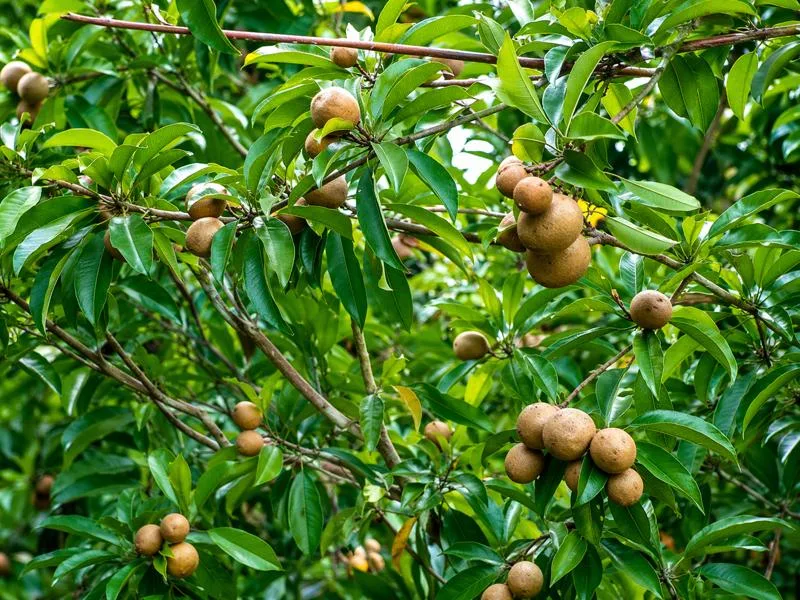
🟢 Introduction
Chiku farming: how to earn more profit with low cost is a common question among farmers today. Chiku is a popular, nutritious fruit that always has good demand in the market.
Chiku farming kaise kare | full information and income guide is explained in this blog in a simple way. Chiku is a tropical fruit originally from Mexico and South America, but now it is widely grown in India in states like Karnataka, Maharashtra, Gujarat, Tamil Nadu, etc.
👉 Important point:
Once you plant a chiku tree, it can give fruits for 40 to 50 years, giving long-term income.
1️⃣ Health Benefits and Uses of Chiku
Chiku is not only tasty but also very healthy.
🌟 Main benefits:
- Gives instant energy
- Improves digestion
- Helps in constipation
- Boosts immunity
- Good for skin
- Rich in iron
- Good for children and old people
🧃 Uses:
- Juice, shake, sweets
- Ice cream and jam
- Latex used in chewing gum
2️⃣ Scientific Classification
| Classification | Details |
|---|---|
| Botanical Name | Manilkara zapota |
| Family | Sapotaceae |
| Origin | Mexico, South America |
| Type | Fruit tree |
👉 Click here for detailed information.
3️⃣ Climate & Temperature Required
🌤️ Suitable climate:
- Tropical and sub-tropical
- Warm and humid weather
🌡️ Temperature:
- Ideal: 20°C to 35°C
- Protect from frost
👉 Chiku gives fruits twice in a year:
- January to February
- May to July
4️⃣ Soil Requirement
🌱 Suitable soil:
- Sandy loam soil
- Black soil
- Well-drained soil
⚖️ pH level:
- 6.0 to 8.0
❌ Avoid:
- Waterlogging soil
- Heavy clay soil
- High calcium soil
5️⃣ Seed & Varieties
For चीकू की खेती: कम लागत में ज्यादा मुनाफा कैसे पाएं, choosing the right variety is the most important step. A good variety increases yield, quality, and market price.
🌱 Improved Varieties and Features
1. Kaalipatti
- Most popular and high-yielding variety
- Fruits are oval and have fewer seeds
- Sweet taste and high market demand
- Average yield: 160 to 170 kg per tree
2. Cricket Ball
- Large round fruits
- Grainy pulp
- Average yield: 150 to 160 kg per tree
3. Baramasi
- Gives fruits throughout the year
- Suitable for North India
4. Pot Sapota
- Fruits even in small plants
- Can be grown in pots
5. Other Varieties
- Chhatri
- Dhola Diwani
- Calcutta Round
- Pala, Vavi Valsa, Pilipatti
👉 Tip:
For per acre farming, Kaalipatti and Baramasi are considered most profitable.
6️⃣ Seed Rate
According to चीकू की खेती कैसे करें | पूरी जानकारी और कमाई, correct plant spacing is very important.
🌿 Plants per Acre:
- Around 60 to 70 plants
📏 Plant Spacing:
- 8 to 9 meters
🌱 Plant Preparation:
- Buy plants from nursery
- Use grafted plants (best option)
- Avoid growing from seeds
👉 Tip:
Grafted plants give early and higher production.
7️⃣ Land Preparation
Good land preparation helps in strong root development and better yield.
🚜 Steps:
- Do 2 to 3 deep ploughing
- Level the field properly
- Dig pits of 1 meter × 1 meter × 1 meter
- Keep pits open for 15 to 20 days
- Fill with soil + FYM + sand mixture
👉 Important:
Adding organic manure helps faster plant growth.
8️⃣ Sowing Method
📅 Best Time:
- February to March
- August to October
🌱 Method:
- Plant saplings in prepared pits
- Press soil properly around roots
- Irrigate immediately
📏 Spacing:
- 8 to 9 meters
👉 Tip:
Rainy season planting gives best results.
9️⃣ Fertilizer & Manure Management
Balanced nutrition is very important in sapota farming.
🌿 Fertilizer per Tree (Age Wise)
| Age | FYM | Urea | SSP | MOP |
|---|---|---|---|---|
| 1 to 3 years | 25 kg | 220 to 660 g | 300 to 900 g | 75 to 250 g |
| 4 to 6 years | 50 kg | 880 to 1300 g | 1240 to 1860 g | 340 to 500 g |
| 7 to 9 years | 75 kg | 1550 to 2000 g | 2200 to 2800 g | 600 to 770 g |
| 10+ years | 100 kg | 2200 g | 3100 g | 850 g |
⏱️ Application Time:
- December to January: FYM + Phosphorus + Potash
- March: First dose of Nitrogen
- July to August: Second dose of Nitrogen
👉 Tip:
Apply fertilizers around the root zone of the tree.
🔟 Irrigation Management
💧 Irrigation Interval:
- Winter: Every 30 days
- Summer: Every 12 days
💡 Modern Method:
- Use drip irrigation
- Saves up to 40% water
🌱 Drip Setup:
- First 2 years: 2 drippers
- Later: 4 drippers
1️⃣1️⃣ Weed Control
Weeds reduce plant growth and yield.
🌿 Control Methods:
- Regular weeding
- Use mulching
- Chemical control
💊 Chemicals:
- Stomp 800 ml
- Diuron 800 g per acre
1️⃣2️⃣ Pest & Disease Management
🐛 Major Pests:
- Leaf webber
- Bud borer
- Hairy caterpillar
💊 Control:
- Quinalphos 300 ml
- Chlorpyrifos 200 ml
🦠 Major Diseases:
- Leaf spot
- Stem rot
- Anthracnose
💊 Treatment:
- Copper oxychloride 400 g
- Carbendazim 400 g
1️⃣3️⃣ Crop Duration
⏳ Duration:
- Starts fruiting after 4 years
- Full production in 8 to 10 years
- Gives yield up to 50 years
👉 It is a long-term income crop.
1️⃣4️⃣ Harvesting Method
Sapota farming: how to earn more profit with low cost – the most important stage is harvesting at the right time. If harvesting is done too early or too late, both quality and market price are affected.
📅 Right Time for Harvesting
- Main harvesting: July to September
- In some areas, harvesting is possible 2 times in a year
✔️ Identification of Ripe Fruits
- Fruit color becomes light brown or like potato
- Milky latex from fruit reduces
- Fruit becomes easy to pluck
- Fruit skin looks slightly rough
✂️ Harvesting Method
- Pluck fruits carefully by hand
- Do not damage the tree
- Use scissors or cutter for harvesting
⚠️ Important Points
- Do not pluck unripe fruits
- Do harvesting in morning or evening
- Avoid dropping fruits
👉 Proper harvesting increases both quality and price of fruits.
1️⃣5️⃣ Yield per Acre
According to चीकू की खेती कैसे करें | पूरी जानकारी और कमाई, production depends on many factors like variety, care, and age of plant.
📊 Yield per Tree
- 5 years: 30 to 50 kg per tree
- 8 to 10 years: 80 to 100 kg per tree
- Fully grown tree: 250 to 300 kg per tree
🌳 Yield per Acre
- Total plants: 60 to 70
- Total production: 8 to 10 tons per acre
👉 With proper care, yield can increase further.
1️⃣6️⃣ Market Price & Profit
Sapota farming gives stable and good profit to farmers because its demand is always high in the market.
💰 Market Price
- ₹30 to ₹80 per kg (depends on season and quality)
📈 Estimated Income per Acre
- Minimum income: ₹4 lakh
- Maximum income: ₹8 lakh per year
💸 Cost and Profit
- Initial cost: Medium
- Maintenance cost: Low
- Profit: Around 2 times of cost
👉 Special Point:
Once the orchard is established, it gives regular income for many years.
1️⃣7️⃣ Storage
After harvesting, proper storage is very important so that fruits do not spoil and can be sold in the market for a longer time.
🧊 Normal Storage
- Temperature: Around 20°C
- Duration: 7 to 8 days
🔬 Advanced Storage Technique
- Control of ethylene gas
- Use of 5 to 10 percent CO2
- Storage duration: Up to 21 to 25 days
📦 Packing
- Wooden boxes
- Plastic crates
👉 Proper storage reduces loss and increases profit.
1️⃣8️⃣ Government Schemes
The government is running many schemes to promote sapota farming.
🏛️ Main Scheme
👉 National Horticulture Mission
💸 Subsidy
- Up to 50 percent subsidy
📋 How to Get Benefit
- Contact nearby agriculture or horticulture department
- Apply for the scheme
- Submit required documents
👉 This helps farmers to start farming at low cost.
1️⃣9️⃣ Frequently Asked Questions
These questions are very important for farmers who want to understand चीकू की खेती: कम लागत में ज्यादा मुनाफा कैसे पाएं. Here you will get all answers in very simple Indian English.
1. What is the best time for sapota (chiku) farming?
👉 Best time for plantation is February to March and August to October. In this time, plants grow fast and settle well.
2. How many plants should be planted per acre?
👉 With spacing of 8 to 9 meters, around 60 to 70 plants can be planted per acre.
3. After how many years does sapota plant start giving fruits?
👉 Sapota plant starts giving fruits after around 4 years and reaches full production in 8 to 10 years.
4. How important is irrigation in sapota farming?
👉 Very important.
- In summer: every 12 days
- In winter: every 30 days
Drip irrigation is best as it saves water and increases yield.
5. Which is the best variety of sapota?
👉 Kaalipatti is the most popular and profitable variety because of high yield and good quality.
6. How much income can be earned per acre?
👉 With proper care, farmers can earn ₹4 lakh to ₹8 lakh per acre.
7. For how many years does sapota tree give production?
👉 Once planted, it gives fruits for around 40 to 50 years, giving long-term income.
8. Can we grow other crops with sapota?
👉 Yes, in early years you can grow intercropping like:
- Tomato
- Brinjal
- Papaya
- Banana
This gives extra income.
9. How to know that sapota fruit is ready for harvesting?
👉 When fruit color becomes light brown, milk reduces and fruit becomes easy to pluck, it is ready.
10. Does government give subsidy for sapota farming?
👉 Yes, under National Horticulture Mission, around 50 percent subsidy is available.
🔚 Conclusion
After understanding चीकू की खेती कैसे करें | पूरी जानकारी और कमाई, it is clear that sapota farming is a very good and safe option for farmers.
👉 It is a low-cost, high-profit farming and gives long-term income.
👉 With proper variety selection, good care, balanced fertilizer and timely irrigation, farmers can increase their income many times.
🌱 If you want to move ahead from traditional farming and try something more profitable, sapota farming is a great opportunity.
💡 Start today and convert your farm into a successful orchard!
👉 For more fruits farming guides, keep exploring our website