


Subsistence Farming
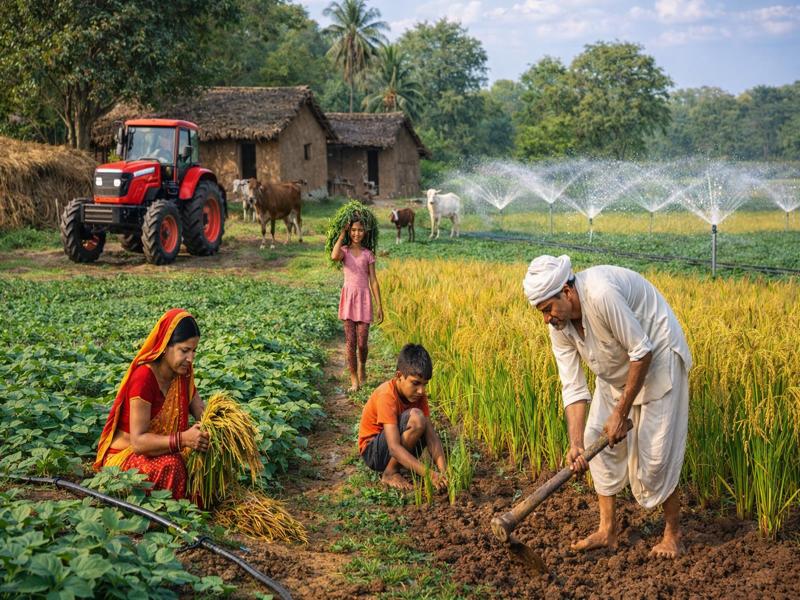
🌱 Understanding Subsistence Farming
Subsistence farming is a type of farming in which a farmer works on small land with limited resources and traditional methods. The main aim of this farming is to fulfill the food needs of the farmer’s family. Production is only enough for the farmer and his family to survive throughout the year.
In simple words –
👉 Farming done only to fill the stomach is called subsistence farming.
🚜 Key Characteristics of Subsistence Farming
- Farming is done on small fields
- Limited use of modern machines
- Family members work on the farm
- Low production but variety of crops
- High dependence on rainfall
- Traditional seeds and methods are used
🌾 Major Types of Subsistence Farming
1️⃣ Intensive Subsistence Farming (High Labour, Small Land)
- Full use of land
- More labour, less land
- Crops like rice and wheat are grown
2️⃣ Primitive Subsistence Farming (Traditional & Shifting Cultivation)
- Very old and traditional methods
- Farming after cutting forests (shifting cultivation / jhum farming)
- Very low production
🇮🇳 Importance of Subsistence Farming in India
- Main livelihood of rural India
- Support system for small and marginal farmers
- Ensures local food security
- Protects traditional farming knowledge
✅ Advantages of Subsistence Farming
- Food security for the family
- Low-cost farming
- Balance with nature
- Limited use of chemical fertilizers
- Self-reliant lifestyle
🌾 Major Problems of Subsistence Farming in India
1️⃣ 🌧️ Heavy Dependence on Monsoon Rainfall
Subsistence farming in India is still monsoon-based. Most small farmers depend on rainwater.
Main Problems:
- ⛅ No rain on time
- 🌦️ Too little or too much rainfall
- ❓ Uncertainty of monsoon
Impact:
- 📆 Sowing and harvesting time gets disturbed
- 🔥 Risk of total crop loss
- 💔 Whole year’s hard work goes waste
2️⃣ 🧩 Small and Fragmented Agricultural Land
Land keeps getting divided from generation to generation, making farms very small.
Main Problems:
- 📏 Very small land size
- 🚜 Use of machines not possible
- 📉 Limited production
Impact:
- 🌱 Low yield per hectare
- 💰 High cost, low profit
- 🚫 Economic growth stops
3️⃣ 💸 Low Farmer Income and Persistent Poverty
The aim is family survival, not market sale.
Main Problems:
- 🧺 No surplus to sell
- 💵 Very low income
- 🛡️ No financial security
Impact:
- 🏥 No spending on education and health
- 🔁 Poverty cycle continues
- 🚶 Next generation leaves farming
4️⃣ 🤖 Lack of Modern Technology and AI in Farming
Even today many farmers are far from modern machines, AI, and mobile apps.
Main Problems:
- 📱 Lack of technical knowledge
- 🧰 Lack of resources
- 💳 Expensive machines
Impact:
- 🧑🌾 More effort, less output
- ⏳ Waste of time and resources
- 🌍 Falling behind global farming
5️⃣ 🚰 Inadequate Irrigation Facilities
A large population still depends on rain-based irrigation.
Main Problems:
- 🚱 No canals or drip systems
- ⬇️ Falling groundwater level
- ☀️ Drought-prone areas
Impact:
- 🌾 Crops dry early
- 🌽 Only one crop possible
- 💦 Water wastage
6️⃣ 🌱 Declining Soil Fertility and Quality
Continuous farming reduces soil strength.
Main Problems:
- 🧪 No soil testing
- 🧂 Lack of nutrients
- 🌪️ Soil erosion and barren land
Impact:
- 🌾 Weak crops
- 📉 Reduced production
- 🧴 More fertilizer needed
7️⃣ 🌍 Climate Change Impact on Subsistence Farming
Climate change has become the biggest threat.
Main Problems:
- 🌡️ Rising temperature
- 🌊 Sudden floods and droughts
- 🔄 Changing weather cycles
Impact:
- ❌ Uncertain farming
- 🌱 Seed and crop damage
- 😟 Low farmer confidence
8️⃣ 🌾 Poor Access to Quality Seeds and Inputs
Small farmers depend on traditional or cheap seeds.
Main Problems:
- ❌ No certified seeds
- 💊 Expensive fertilizers and pesticides
- ⚠️ Fake products
Impact:
- 📉 Low yield
- 🐛 More pests and diseases
- 💸 Increased cost
9️⃣ 🏦 Agricultural Loan and Financial Support Issues
Getting loans on time is very difficult.
Main Problems:
- 🧾 Complex bank procedures
- 📄 Lack of documents
- 💰 Dependence on moneylenders
Impact:
- 📈 High interest rates
- 😓 Debt pressure
- ⚠️ Serious social problems
🔟 🎓 Lack of Farmer Education and Awareness
Many farmers are unaware of government schemes and new technologies.
Main Problems:
- 💻 Poor digital knowledge
- ℹ️ Lack of correct information
- 🗣️ Language and training issues
Impact:
- ❌ Miss government benefits
- 🐢 Slow improvement
- 🚪 Stay away from technology
1️⃣1️⃣ 👨👩👦 Rural Labour Shortage in Agriculture
Youth migrate to cities for jobs.
Main Problems:
- 🚫 No respect for farming
- 💵 Low income
- 🥵 Hard physical work
Impact:
- 🌾 Empty fields
- 📈 Expensive labour
- 📉 Reduced production
1️⃣2️⃣ 🛒 Lack of Direct Market Access for Farmers
Farmers cannot reach customers directly.
Main Problems:
- 🔗 Middlemen dominance
- 💲 No fair price
- 🚚 Poor transport
Impact:
- 📉 Low crop prices
- 😔 Farmer losses
- ❌ No full reward for hard work
🌾 Practical Solutions to Improve Subsistence Farming in India
1️⃣ 🌧️ Reducing Monsoon Dependency
- 💧 Rainwater harvesting
- 🚰 Drip and sprinkler irrigation
- 📱 Weather forecast apps
- 🌱 Low-water crops
Benefits:
- 🌾 Less crop loss
- 📆 Timely sowing
- 💧 Water conservation
2️⃣ 🧩 Smart Use of Small Land Holdings
- 🤝 Collective farming (FPOs)
- 🌱 Multi-crop and inter-cropping
- 🚜 Shared machine banks
- 🏡 Kitchen garden model
Benefits:
- 📈 Higher production
- 💰 Lower cost
- 🤝 Farmer cooperation
3️⃣ 💸 Increasing Farmer Income Sources
- 🐄 Dairy, poultry, fish farming
- 🧺 Vegetable and fruit farming
- 🏷️ Local processing (value addition)
- 📦 Self-help groups (SHG)
Benefits:
- 💵 Regular income
- 🛡️ Financial security
- 👨👩👧 Family stability
4️⃣ 🤖 Promoting Technology and AI in Agriculture
- 📱 AI-based farmer apps
- 🗣️ Voice support in local language
- 🧑🏫 Village-level digital training
- 🤖 Disease detection AI tools
Benefits:
- 🎯 Better decisions
- 🌾 Improved production
- ⏱️ Time and cost saving
5️⃣ 🚰 Improving Irrigation Infrastructure
- 💧 Micro irrigation systems
- 🌊 Ponds and check dams
- 🔁 Crop rotation
- 📊 Need-based irrigation
Benefits:
- 💦 Water saving
- 🌾 Better crops
- ☀️ Drought-resilient farming
6️⃣ 🌱 Improving Soil Health Naturally
- 🧪 Regular soil testing
- 🌿 Organic manure and compost
- 🔄 Crop rotation
- 🌾 Green manuring
Benefits:
- 🌱 Fertile soil
- 📈 Higher yield
- ♻️ Sustainable farming
7️⃣ 🌍 Climate-Resilient Farming Practices
- 🌾 Climate-resilient seeds
- 📆 Weather-based planning
- 🌳 Agroforestry
- 📡 AI weather alerts
Benefits:
- 🌦️ Less damage
- 🌾 Stable production
- 😌 Farmer confidence
8️⃣ 🌾 Ensuring Access to Quality Seeds and Inputs
- 🏪 Government seed centers
- 🌱 Local seed banks
- 🧴 Organic pesticides
- 📦 Subsidy-based supply
Benefits:
- 🌾 Better yield
- 🐛 Less disease
- 💰 Cost control
9️⃣ 🏦 Easy Agricultural Loans and Financial Support
- 💳 Kisan Credit Card (KCC)
- 🏦 Digital loan platforms
- 🛡️ Crop insurance
- 🤝 SHG-based microfinance
Benefits:
- 😌 Less financial stress
- 📉 Low interest
- 🛡️ Risk protection
🔟 🎓 Strengthening Farmer Education & Awareness
- 📱 Mobile-based agriculture knowledge
- 🧑🌾 Field demos and training
- 📺 Agriculture TV / YouTube channels
- 🗣️ Local language content
Benefits:
- 📈 Faster improvement
- 🎯 Right decisions
- 🚀 Self-reliant farmers
1️⃣1️⃣ 👨👩👦 Addressing Rural Labour Shortage
- 🚜 Small machines
- 👨🎓 Youth agri-entrepreneurs
- 🧑🤝🧑 Collective labour model
- 💼 Farming + rural employment
Benefits:
- 🌾 Active farms
- 👦 Youth return
- 📈 Stable production
1️⃣2️⃣ 🛒 Improving Market Access for Farmers
- 🛍️ Farmer Producer Organizations (FPO)
- 📱 Digital mandi platforms
- 🚚 Rural logistics
- 🏷️ Local branding
Benefits:
- 💰 Better prices
- 🚫 Fewer middlemen
- 😊 Farmer satisfaction