


Berseem Fodder
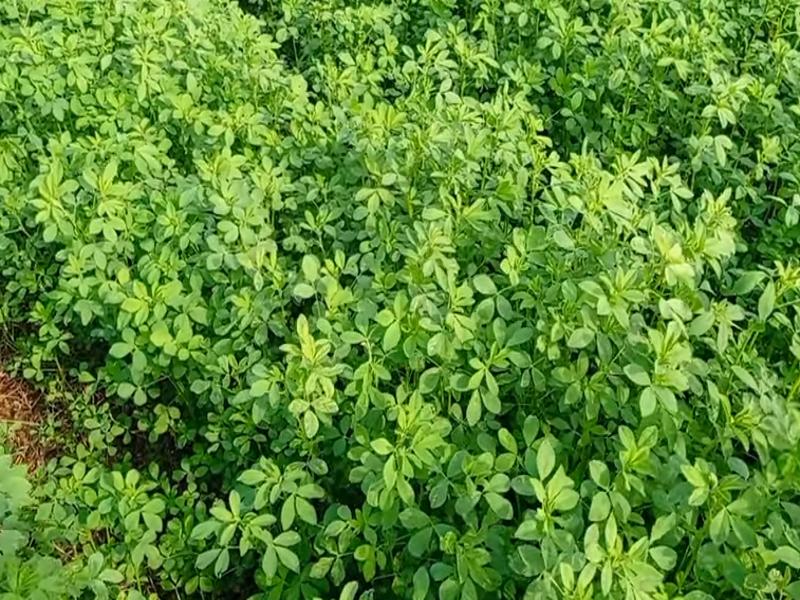
🌱 Berseem Green Fodder | Berseem Grass Farming Guide
Berseem green fodder is one of the most important fodder crops for livestock farmers in India. It is often called the “King of Fodder” because it provides highly nutritious, tasty, and easy-to-digest feed for animals. If a farmer has proper irrigation facilities, then Berseem farming is one of the best options to increase milk production and improve the health of livestock.
Berseem is a leguminous fodder crop that contains about 18 to 28 percent crude protein and nearly 70 percent digestible dry matter. Because of this, it is considered one of the best fodder crops for milk-producing animals like cows, buffaloes, and goats.
In India, Berseem seeds were first brought from Egypt in 1904. Today, this crop is widely grown in many states such as Punjab, Haryana, Delhi, Uttar Pradesh, Gujarat, Madhya Pradesh, Bihar, Maharashtra, and Andhra Pradesh.
One of the biggest advantages of Berseem cultivation is that after sowing once, farmers can harvest green fodder many times during the entire Rabi season. It also improves soil fertility because it is a legume crop that performs nitrogen fixation in the soil.
If farmers grow Berseem using the right techniques, suitable varieties, and proper care, they can get a very high quantity of green fodder per acre and significantly reduce the cost of livestock feeding.
Now below we will understand complete information about Berseem green fodder farming in detail.
1. 🌿 Crop Introduction
Berseem is a multi-cut fodder crop that is mainly grown during the Rabi season. It is a fast-growing crop and provides high-quality green fodder for livestock.
Main Features
- Berseem flowers are generally yellow or white in color.
- This crop is usually sown between September and December.
- After one sowing, farmers can get 4 to 6 cuttings of green fodder.
- This crop helps in improving soil fertility.
- It can be mixed with oats, rye grass, or maize to make silage and preserved fodder.
- Many farmers also earn additional income by combining Berseem cultivation with livestock farming.
2. 🐄 Health Benefits and Uses of Berseem
Berseem fodder is highly nutritious for animals and plays an important role in increasing milk production.
Main Benefits
Increases Milk Production
Berseem is considered a milk-enhancing fodder, which helps cows and buffaloes produce more milk.
Easy to Digest
It is a soft and juicy fodder that animals can digest easily.
Rich in Protein
It contains about 18 to 28 percent protein.
Availability of Minerals
It contains calcium, phosphorus, and other essential minerals.
Improves Animal Health
It helps in improving the immunity of livestock.
Uses
- As green fodder
- For making silage
- For preparing dry fodder
- In mixed animal feed
3. 🔬 Scientific Classification
The scientific name of Berseem green fodder is Trifolium alexandrinum. It belongs to the legume crop category and has the ability to fix nitrogen in the soil. The scientific classification of Berseem is given below in table format.
| Classification Level | Description |
|---|---|
| Kingdom | Plantae |
| Division | Magnoliophyta |
| Class | Magnoliopsida |
| Order | Fabales |
| Family | Fabaceae |
| Genus | Trifolium |
| Species | Trifolium alexandrinum |
| Common Name | Berseem Green Fodder |
| English Name | Berseem Grass |
Important Information
- Berseem is an annual leguminous fodder crop.
- It is mainly used as green fodder for livestock.
- It improves soil fertility by fixing nitrogen in the soil.
- This crop is especially grown during the Rabi season.
4. 🌦 Climate and Temperature
For good production of Berseem, cool and moist climate is considered most suitable.
Temperature
Sowing Temperature
- 25 to 27 degree Celsius
Suitable Growth Temperature
- 15 to 27 degree Celsius
Harvesting Temperature
- 15 to 20 degree Celsius
Rainfall
- 550 to 750 mm rainfall is considered suitable.
5. 🌱 Soil Requirement
Berseem farming can be done in many types of soils, but for good production some specific soils are considered better.
Suitable Soil
- Loamy soil
- Clay loam soil
- Medium to heavy soil
Soil pH
- 6.5 to 8.0 is considered best.
Soil Characteristics
- Proper drainage should be available
- Soil should contain sufficient organic matter
- Soil should be fertile
Berseem also improves soil fertility because it performs nitrogen fixation in the soil.
6. 🌾 Seeds and Varieties
For good yield of Berseem, selecting improved varieties is very important.
Major Varieties
BL 1
- Early growing variety
- Yield about 380 quintal per acre
BL 10
- Provides green fodder for a long time
- Yield about 410 quintal per acre
BL 42
- Fast growing variety
- Yield about 440 quintal per acre
BL 43
- High tillering variety
- Yield about 390 quintal per acre
BL 44
- High nutritional quality variety
- Yield about 395 quintal per acre
Mescavi
- Variety brought from Egypt
- Plants are bushy
Bundel Berseem 2
- Yield about 360 to 400 quintal per acre
Bundel Berseem 3
- Variety with high regeneration capacity
Wardan
- Yield about 250 to 280 quintal per acre
7. 🌱 Seed Rate
In Berseem farming, the correct seed rate is very important.
Seed Quantity
Per Acre
- 8 to 10 kilograms
Additional Mixing
- For better fodder, 750 grams mustard seeds can be mixed.
Seed Treatment
- Soak the seeds in water
- Remove floating seeds
- Treat the seeds with Rhizobium
8. 🚜 Field Preparation
For Berseem farming, the field should be properly leveled.
Method of Preparation
- Do 2 to 3 ploughings of the field
- After each ploughing, run a planker (Suhaga)
- Level the field properly
- There should be no water stagnation in the field
9. 🌾 Sowing Method
Sowing Time
- Last week of September
- First week of October
Sowing Method
- Sowing is done by the broadcasting method.
Seed Depth
- 4 to 5 centimeters
Sowing Time
- Sowing in the evening time is considered better.
10. 🌿 Manure and Fertilizer Management
For good yield, it is necessary to apply proper quantity of fertilizers.
Fertilizer per Acre
Urea
- 22 kilograms
Single Super Phosphate
- 185 kilograms
Nutrients
Nitrogen
- 10 kilograms
Phosphorus
- 30 kilograms
11. 💧 Irrigation Management
In Berseem farming, irrigation is very important.
First Irrigation
Light Soil
- After 3 to 5 days
Heavy Soil
- After 6 to 8 days
Later Irrigation
In Winter
- At an interval of 10 to 15 days
In Summer
- At an interval of 8 to 10 days
12. 🌿 Weed Control
In Berseem farming, Poa annua (Bui Berseem) is a major weed.
Control
- Fluchloralin 400 ml
- Mix in 200 liters of water
- Spray per acre
13. 🐛 Pest and Disease Management
Major Pests
- Grasshopper
- Whitefly
- Aphid
- Leaf miner
- Thrips
Control
- Use neem oil
- Remove infected plants
- Use insecticides if necessary
14. ⏳ Crop Duration
The Berseem crop generally becomes ready for the first cutting after 50 days.
Cutting Interval
In Winter
- 40 days
In Spring
- 30 days
15. 🌾 Harvesting Method
- First cutting after 50 days
- Next cuttings after 30 to 40 days
- Harvest using a sharp sickle
16. 📦 Yield per Acre
Average Yield
- 350 to 450 quintal green fodder per acre
With Improved Varieties
- Production up to 450 quintal is possible.
17. 💰 Market Price and Profit
If farmers sell Berseem, they can earn good income.
Average Price of Green Fodder
- 2 to 4 rupees per kilogram
Income per Acre
- Approximately
- 70,000 to 120,000 rupees
Cost
- Approximately
- 15,000 to 20,000 rupees
Net Profit
- 50,000 to 90,000 rupees per acre
18. 📦 Storage
To store Berseem safely for a long time.
Methods
- Making silage
- Making dry fodder
- Using green fodder immediately
19. 🏛 Government Schemes
Farmers can take benefit of many government schemes for Berseem farming.
Major Schemes
- National Livestock Mission
- National Agriculture Development Scheme
- Pradhan Mantri Kisan Samman Nidhi
- Agricultural Mechanization Scheme
20. ❓ Frequently Asked Questions
1. What is the correct time for Berseem cultivation
The last week of September to the first week of October is considered the best time.
2. How much seed is required for Berseem
About 8 to 10 kilograms of seed per acre is sufficient.
3. How many times can Berseem be harvested
From one crop, 4 to 6 cuttings can be taken.
4. How much protein is present in Berseem
About 18 to 28 percent protein is found.
5. In which soil Berseem grows well
It grows well in loamy and medium heavy soil.
6. When should the first cutting be done
The first cutting is done about 50 days after sowing.
7. Which is the best variety of Berseem
BL 42 and BL 44 are considered very good varieties.
8. Can Berseem be grown in dry areas
Yes, it can be grown if irrigation is available.
9. Does Berseem increase milk production
Yes, it is a milk production increasing crop.
10. Does Berseem improve soil fertility
Yes, it improves soil fertility by nitrogen fixation.
🌾 Conclusion
Berseem green fodder is a very beneficial and nutritious fodder crop for livestock farmers. It not only provides high-quality fodder to animals, but also increases milk production and improves soil fertility.
If farmers follow the right sowing time, proper fertilizer management, irrigation, and pest control techniques, then they can get very good yield per acre from Berseem cultivation.
In today’s time, when livestock farming is becoming an important source of income, Berseem green fodder | Berseem Grass cultivation can become a great option for farmers.
This crop provides more green fodder at low cost and makes livestock farming more profitable. 🌱🐄
👉 For more detailed information on fodder farming, click here