


Giloy Farming
🌿 How to Do Giloy Farming? Cost, Profit and Complete Information
Giloy farming | Giloy Ki Kheti is becoming very popular nowadays as a profitable medicinal crop. In Ayurveda, it is considered equal to nectar, so it is also called Amrit Valli. If rural farmer brothers want to earn more profit with low investment, then Giloy farming can be a very good option.
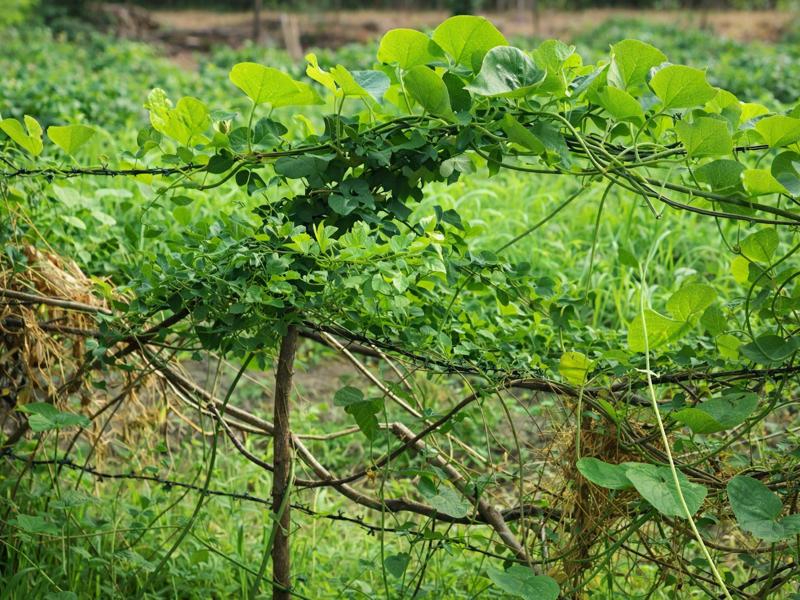
It is a climbing plant that grows by climbing on trees like mango and neem. Its leaves are heart-shaped and the stem is mostly used for medicinal purposes. This plant is very strong and gives good production even with less care.
It can be successfully cultivated in almost all tropical regions of India. From Kumaon to Assam, Bihar, Konkan and even up to Sri Lanka, it is found naturally.
1️⃣ Introduction of the Crop
1.1 Importance of Giloy
Giloy is a divine medicinal climber which is known in Ayurveda as Guduchi, Amrit Valli and Madhuparni. In Marathi, it is called Galo.
1.2 Features of the Plant
• Heart-shaped green leaves
• Thick and juicy stem
• Grows in the form of a vine
• Giloy grown on neem tree is considered medicinally superior
1.3 Mythological Story
During the Samudra Manthan, wherever drops of nectar fell, Giloy originated there. That is why it is called Amrit Valli.
2️⃣ Health Benefits and Uses of Giloy
2.1 Main Medicinal Properties
• Increases immunity power
• Beneficial in fever
• Helpful in dengue and malaria
• Useful in controlling diabetes
• Good for liver
• Purifies blood
2.2 Forms of Use
• Decoction
• Powder
• Juice
• Tablet
3️⃣ Scientific Classification
• Botanical Name: Tinospora cordifolia
• Family: Menispermaceae
• Class: Magnoliopsida
• Order: Ranunculales
4️⃣ Climate and Temperature
4.1 Suitable Climate
For Giloy farming | Giloy Ki Kheti, warm and humid climate is considered the most suitable. It is a tropical climber which can be successfully grown in almost all warm regions of India.
• Better growth in light shady environment
• Can tolerate strong sunlight
• Areas with medium rainfall are suitable
4.2 Temperature Requirement
• Ideal temperature is 25°C to 35°C
• Minimum tolerable temperature is 15°C
• Frost is harmful for this crop
4.3 Rainfall Requirement
• 800 to 1200 mm rainfall is suitable
• Protection from waterlogging is necessary
5️⃣ Soil Requirement
5.1 Suitable Land
Giloy can be grown in any type of soil, but for higher production, loamy or sandy loam soil is best.
• Good drainage should be there
• Soil should retain moisture
• Organic matter should be present in good quantity
5.2 pH Value
• 6.0 to 7.5 pH is best
• Slightly alkaline soil is also tolerable
5.3 Special Suggestions
• Can be successfully cultivated on field bunds also
• Support of big trees like neem and mango is best
6️⃣ Seeds and Varieties
6.1 Main Varieties
• Amritaballali Satva
• Giloy Satva
• Sattagilo
• Senthil Kodi
6.2 Planting Material
In Giloy farming | Giloy Ki Kheti, the cutting method is considered the most successful.
Features of Cutting
• 15 to 20 cm long
• 4 to 5 nodes
• Thickness like a finger
6.3 Propagation by Seeds
• Soak the seeds in water for 24 hours
• Sow in polybags from May to July
• Germination rate is low
7️⃣ Seed Rate Per Acre
In Giloy farming | Giloy Ki Kheti, the cutting method is considered more successful than the seed method. Therefore, proper planning of seed rate and planting material is very important.
7.1 Number of Plants for Cutting Method
• Around 1800 to 2200 plants per acre are sufficient
• If distance of 4 to 5 feet is kept, around 2000 plants can be planted
• 1 strong cutting for each plant
7.2 Quantity of Cuttings
• 250 to 300 kg green stem material is sufficient
• 15 to 20 cm long cuttings
• 4 to 5 nodes are compulsory
7.3 Quantity for Seed Method
• 1 to 1.5 kg seeds per acre
• Germination rate 60 to 70 percent
• Seeds must be soaked in water for 24 hours
👉 Advice: For higher production and uniform growth, cutting method is best.
8️⃣ Land Preparation
In Giloy farming | Giloy Ki Kheti, good land preparation helps in faster initial growth.
8.1 Ploughing
• 2 to 3 deep ploughings
• Run rotavator once
• Level the field
8.2 Mixing Organic Manure
• 8 to 10 tons well-rotted cow dung manure per acre
• 2 tons vermicompost
• 40 kg neem cake
8.3 Pit Preparation
• 1 foot deep and 1 foot wide pit
• Mix cow dung manure in the pits
• Prepare pits 10 days before planting
9️⃣ Sowing Method
9.1 Nursery Preparation
• Plant cuttings in May–June
• Use raised beds or polybags
• Dip in Rootex solution for 15 to 20 minutes
• Plants get ready in 30 to 45 days
9.2 Transplanting in Main Field
• Best in June–July during monsoon
• February–March is also suitable
9.3 Spacing
• Plant to plant distance 4 to 5 feet
• Row to row distance 4 to 5 feet
• Around 2000 plants per acre
9.4 Support System
• Wooden poles
• Wire mesh
• Neem or mango tree
Giloy grown on neem tree is considered medicinally superior.
🔟 Manure and Fertilizer Management
Giloy is a medicinal crop, so use chemical fertilizers as minimum as possible.
10.1 Basal Manure
• 8 to 10 tons cow dung manure
• 2 tons vermicompost
• 40 kg neem cake
10.2 For Growth
• 20 to 25 days after planting
• 15 to 20 grams nitrogen per plant
10.3 Organic Solutions
• Jeevamrit 200 liters per acre
• Panchgavya spray
1️⃣1️⃣ Irrigation Management
11.1 Initial Irrigation
• Light irrigation immediately after planting
11.2 Regular Irrigation
• In summer, interval of 10 to 15 days
• In normal weather, 15 to 20 days
11.3 Water Quantity
• 500 ml to 1 liter per plant in early stage
• After establishment, less water is sufficient
Protection from waterlogging is compulsory.
1️⃣2️⃣ Weed Control
12.1 Weeding
• 2 to 3 times weeding and hoeing
• Keep the distance between plants clean
12.2 Mulching
• Dry grass or straw
• Moisture conservation
• Less weeds
1️⃣3️⃣ Pest and Disease Management
Giloy farming | Giloy Ki Kheti is generally a strong and disease-resistant crop. Still, due to moisture, shade and vine nature, some fungal diseases and mild pest attacks can be seen. With proper identification and timely treatment, loss can be prevented.
13.1 Major Diseases
1️⃣ Leaf Spot Disease
Symptoms
• Brown or black spots on leaves
• Leaves start drying
• Spreads fast in high moisture
Control
• Remove and destroy infected leaves
• Spray 0.5 percent Bordeaux mixture
• Spray 0.2 percent Ziram
2️⃣ Stem Rot
Symptoms
• Stem becomes soft
• Rotting near root area
• Plant slowly dries
Control
• Prevent waterlogging
• Mix 2 kg Trichoderma per acre in cow dung manure and apply
• Maintain proper drainage in field
13.2 Major Pests
1️⃣ Aphids
• Suck sap from leaves
• Leaves curl
Control
• Neem oil 5 ml per liter of water
• Spray about 150 liters solution per acre
2️⃣ Caterpillar
• Eats leaves
• Plant growth stops
Control
• Collect by hand and destroy
• Bavaria bassiana bio-fungus 1 kg per acre
13.3 Organic Solutions
• Neem cake 40 kg per acre
• Spray cow urine solution
• Use Jeevamrit
13.4 Chemical Solutions
If attack is severe then
• 0.2 percent Ziram
• 0.5 percent Bordeaux mixture
Keep in mind that since it is a medicinal crop, use chemicals as minimum as possible.
1️⃣4️⃣ Crop Duration
14.1 Nursery Duration
• 30 to 45 days
14.2 Main Crop Duration
• Stem matures in 12 to 18 months
• Main harvesting after 1 to 2 years
14.3 Production Period
• After planting once, production continues for 3 to 4 years
1️⃣5️⃣ Harvesting Method
In Giloy farming | Giloy Ki Kheti, the stem has the highest medicinal importance.
15.1 Harvesting Time
• When stem becomes 2 to 3 cm thick
• Plant fully developed
• Generally 12 to 18 months after planting
15.2 Harvesting Process
• Harvest with sharp knife or sickle
• Keep the root safe
• Cut upper vine so that regrowth can happen
15.3 Post Harvest Process
• Cut stems into 6 to 8 inch pieces
• Wash with clean water
• Dry in shade
1️⃣6️⃣ Yield Per Acre
16.1 Average Yield
• 3 to 4 quintal dry stem per acre
16.2 With Good Care
• Up to 5 quintal possible
16.3 Tips to Increase Production
• Regular use of organic manure
• Proper support system
• Timely weeding and irrigation
1️⃣7️⃣ Market Price and Profit Per Acre
17.1 Market Rate
• 40 to 80 rupees per kg
• Higher price in medicinal companies
17.2 Income Calculation Example
If production is 4 quintal
Average rate 60 rupees per kg
• Total production 400 kg
• Total income 240000 rupees
17.3 Cost Estimation
• Planting material 15000 rupees
• Organic manure 20000 rupees
• Labor 15000 rupees
• Other expenses 10000 rupees
Total cost around 60000 rupees
17.4 Net Profit
• Around 180000 rupees per acre
This profit may be less in first year and more in second year because plants give production again.
1️⃣8️⃣ Storage
18.1 Drying Process
• Dry in shade for 7 to 10 days
• Keep moisture less than 10 percent
18.2 Storage Place
• Dry and airy room
• Do not keep directly on ground
• Keep on wooden platform
18.3 Packing
• Jute bags
• Cloth bags
• Airtight container for powder
1️⃣9️⃣ Government Schemes
Giloy farming | Giloy Ki Kheti is being promoted through many schemes.
19.1 National Medicinal Plants Board
• Subsidy on plantation
• Training facility
19.2 State Agriculture Department
• Plant material support
• Promotion of organic farming
19.3 Pradhan Mantri Kisan Samman Nidhi
• Annual financial assistance
19.4 Organic Farming Scheme
• Organic certification support
• Training programs
Farmer brothers should take information from their district agriculture office.
2️⃣0️⃣ Frequently Asked Questions
Q 1: For how many years does Giloy farming continue?
Ans: Production is received for 3 to 4 years.
Q 2: Can it grow with less water?
Ans: Yes, but initial irrigation is necessary.
Q 3: How much cost comes per acre?
Ans: Around 60000 rupees.
Q 4: How to take more profit?
Ans: Adopt organic method and sell directly to companies.
Q 5: When to harvest?
Ans: After 12 to 18 months.
Q 6: Is it profitable to grow on field bunds?
Ans: Yes, good production with low cost.
Q 7: Is use of chemicals necessary?
Ans: No, organic method is better.
Q 8: How much yield per acre?
Ans: 3 to 5 quintal.
Q 9: Is Giloy grown on neem better?
Ans: Yes, medicinal properties are considered higher.
Q 10: Where will market be available?
Ans: Ayurvedic medicine manufacturers and herbal mandi.
🌿 Conclusion
Giloy farming | Giloy Ki Kheti is a safe, profitable and long-term income giving medicinal crop. Low cost, less water requirement and facility of organic farming make it ideal for rural farmers.
If farmer brothers provide proper support, organic manure and timely care, then net profit of 1.5 to 2 lakh rupees per acre can be achieved.
🌱 Adopt medicinal farming and increase both your income and health.
👉 For more detailed information on medicinal farming, click here