


Rubber Farming in India: Complete Guide, Cultivation Process, Cost & Profit (2026)
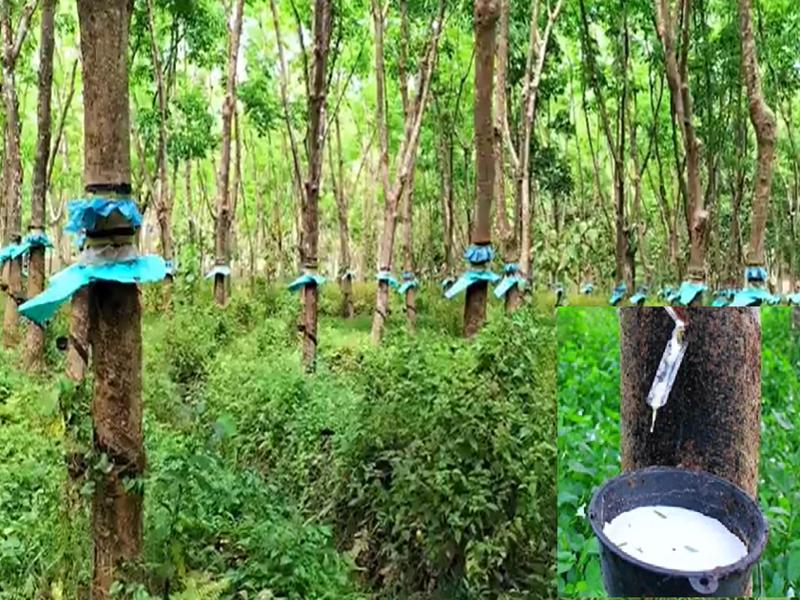
🌱 Rubber Farming in India – Full Guide, Profit & Methods
Rubber farming is considered one of the most profitable and commercial crops worldwide.
Rubber is produced from latex, a milky fluid obtained from the rubber tree (Hevea brasiliensis).
This latex is used in manufacturing tires, footwear, gloves, pipes, belts, medical equipment, and many other products, making rubber an essential raw material for various industries.
In India, rubber farming is mostly done in southern states, where the climate and soil are ideal for its growth.
1. 🇮🇳 Rubber Farming in India
Rubber is mainly cultivated in the following Indian states:
- Kerala
- Tripura
- Tamil Nadu
- Karnataka
- Assam
- Meghalaya
- West Bengal
Among these, Kerala and Tripura are the leading rubber-producing states of India.
The Rubber Board of India provides farmers with training, technical support, and high-quality planting materials to promote rubber cultivation.
2. 🌦️ Best Time for Rubber Plantation
The ideal time for planting rubber trees is from June to July, during the onset of the monsoon season.
At this time, the soil retains adequate moisture, which helps young plants establish strong roots.
If irrigation facilities are available, planting can also be done during February–March, but the success rate is highest during the monsoon.
3. 🌤️ Climate Requirements
Rubber trees grow best in tropical climates with consistent rainfall and humidity.
Ideal conditions for growth:
- Temperature: 25°C to 35°C
- Annual Rainfall: 2000–3000 mm
- Humidity: Above 70%
- Altitude: Up to 500 meters above sea level
- Sunlight: 6–8 hours per day
⚠️ Note: Prolonged drought can negatively affect the tree’s growth and reduce latex yield.
4.🌾 Land Preparation
Before planting, the land should be deeply plowed and well-prepared so that the roots can penetrate deeply.
Steps for field preparation:
- Plow the land up to 1.5 to 2 meters deep.
- Remove weeds and old roots completely.
- Create drainage channels to prevent waterlogging.
- Ensure proper water drainage, as rubber plants are sensitive to stagnant water.
Proper land preparation improves aeration and supports healthy root development.
5. 🌱 Suitable Soil for Rubber Farming
Rubber grows well in red, loamy, or deep clay soils that retain moisture but have good drainage.
Ideal soil features:
- pH level: 4.5 to 6.0
- Organic matter: Rich in nutrients
- Moisture retention: High
- Stone or sand content: Low
If the soil is too acidic or alkaline, farmers can apply lime or organic compost to balance the pH.
6. 🌿 Popular Rubber Varieties
Many varieties of rubber trees are cultivated in India and Southeast Asia, known for high yield, disease resistance, and quality latex.
| Variety | Key Features |
|---|---|
| RRII 105 | Most popular in India, high yield, disease-resistant. |
| RRIM 600 | Developed in Malaysia, known for high latex quality. |
| RRII 414 | Drought-tolerant, long lifespan. |
| GT1 | Developed in Indonesia, suitable for tropical regions. |
| PB 260 | High yield and resistant to fungal diseases. |
| PB 350 | Adaptable to different climates. |
| RRII 430 | New, high-yielding and disease-resistant variety. |
| PB 86 | Traditional and ideal for valley regions. |
| PR 107 | High biomass and resistant to most diseases. |
| RRII 422 | Fast-growing and produces abundant latex. |
7. 🌿 Number of Plants per Acre
Generally, 200–250 rubber plants per acre are planted, with a spacing of 6–7 meters between each plant to ensure adequate sunlight, air circulation, and nutrition.
8. 🌱 Planting Method
- Best time: June–July (early monsoon)
- Pit depth: 50–60 cm
- Plant spacing: 6–7 meters apart
- Mix the pit with cow dung, neem cake, and topsoil before planting.
- Water lightly after transplanting.
💡 Tip: Use bamboo sticks to support young plants during the first year for straight growth.
9. 🌾 Fertilizers and Nutrient Management
Rubber trees need balanced nutrients for healthy growth and latex production.
Recommended fertilizer doses per acre:
| Nutrient | Quantity (kg/acre) |
|---|---|
| Nitrogen (N) | 10–15 |
| Phosphorus (P) | 5–10 |
| Potassium (K) | 15–20 |
Application schedule:
- In the first year, apply more nitrogen for faster growth.
- In subsequent years, use a balanced NPK mixture.
- Apply fertilizer 2–3 times a year in small doses for better absorption.
10. 🦠 Major Diseases and Control
Rubber plants are prone to certain fungal infections, which must be managed early.
| Disease | Fungicide | Dosage per Acre |
|---|---|---|
| Black Rot Canker | Tata Rallis Blitox (Copper Oxychloride 50% WP) | 400 g |
| Collar Rot | Crystal Bavistin (Carbendazim 50% WP) | 150 g |
| Powdery Mildew | Syngenta Amistar Top (Azoxystrobin + Difenoconazole) | 200 ml |
| Leaf Spot | BASF Cabrio Top (Metiram + Pyraclostrobin) | 450 g |
Spray these fungicides at recommended intervals to prevent disease spread and improve latex quality.
11. 🐛 Pests and Their Control
Some common pests that damage rubber plants include aphids, red mites, and caterpillars.
| Pest | Recommended Pesticide | Dosage per Acre |
|---|---|---|
| Aphids | Bayer Confidor (Imidacloprid 17.8% SL) | 100 ml |
| Red Mites | Bayer Oberon (Spiromesifen 240 SC) | 200 ml |
| Root Borer | Bayer Fame (Flubendiamide 480 SC) | 100 ml (drenching) |
| Stem Borer | FMC Coragen (Chlorantraniliprole 18.5% SC) | 60 ml |
| Thrips | Syngenta Simodis (Isocyhalothrin) | 240 ml |
| Leaf Caterpillar | Dhanuka Ema 1 (Emamectin Benzoate 5% SG) | 100 g |
⚠️ Safety Tip: Always wear gloves, a mask, and full-sleeve clothing while spraying chemicals.
12.💧 Irrigation Management
- Irrigate young plants regularly for the first 2–3 years.
- During summer, water every 7–10 days.
- In the rainy season, ensure excess water drains properly.
- Use drip or sprinkler irrigation for efficient water use.
13. 🌳 Latex Production and Tapping
Rubber trees become ready for latex tapping after 7–8 years of planting.
The process of extracting latex is called tapping.
Tapping Guidelines:
- Time: Early morning (5 AM to 9 AM)
- Tool: Sharp tapping knife
- Cut angle: 30° diagonal cut
- Frequency: Every 2–3 days
Average yield:
- Latex yield per acre: 1500–2000 kg annually
- Yield depends on soil, variety, and management practices.
14. 💰 Cost and Profit in Rubber Farming
| Expense Type | Estimated Cost (₹/acre) |
|---|---|
| Planting & saplings | 15,000 – 20,000 |
| Fertilizers & manure | 8,000 – 10,000 |
| Pesticides & fungicides | 5,000 – 7,000 |
| Labor & maintenance | 10,000 – 15,000 |
| Total annual cost | ₹40,000 – 50,000 |
Once the trees mature, farmers can earn around ₹2.5 – 3 lakh per acre annually from latex.
Rubber farming is a long-term investment crop that provides steady returns for 25–30 years.
15. 🌾 Advantages of Rubber Farming
- Long-term stable income
- High industrial demand for rubber
- Environmentally sustainable farming
- Government and Rubber Board support available
- Provides rural employment opportunities
16. Recommended Farming Guides You Should Read
- How to Do Pearl Farming: Complete Beginner Guide
- Sandalwood Farming: Earn Crores with Low Investment
- Malabar Neem Farming Guide: High Profit Tree Crop
- Poplar Farming: A Complete Guide to Commercial Tree Cultivation and Profits
- Tobacco Farming
- Coffee Farming In India
- Tea Farming In India
- Rubber Farming
- Jute Farming
- Sugarcane Farming in India
- Cotton Farming in India
17.❓ Frequently Asked Questions (FAQs)
Q1. In which states is rubber farming done in India?
Answer: Kerala, Tripura, Tamil Nadu, Karnataka, Assam, and Meghalaya are major rubber-producing states.
Q2. What type of climate is suitable for rubber trees?
Answer: A tropical climate with 25°C–35°C temperature and 2000–3000 mm annual rainfall.
Q3. When should rubber trees be planted?
Answer: During the monsoon months of June–July.
Q4. Which soil is best for rubber cultivation?
Answer: Red, loamy, or clay soil with good drainage and moisture retention.
Q5. Which is the most popular variety in India?
Answer: RRII 105 is the most popular and high-yielding variety.
Q6. How many plants are required per acre?
Answer: Around 200–250 plants per acre.
Q7. What are the common pests and diseases in rubber crops?
Answer: Aphids, red mites, black rot, and powdery mildew are common issues.
Q8. When is the best time to extract latex?
Answer: Early morning when humidity is high and temperature is low.
Q9. How much latex can be produced per acre?
Answer: About 1500–2000 kg of latex per acre annually.
Q10. What is the profit from rubber farming?
Answer: After maturity, farmers can earn ₹2–3 lakh per acre each year.
Q11. What does a rubber tree look like?
Answer: A rubber tree is a tall evergreen tree that can grow up to 20–30 meters in height. It has a straight trunk, broad green leaves, and smooth bark. When the bark is tapped, it produces a white milky liquid called latex, which is used to manufacture natural rubber.
Q12. What does a young rubber plant look like?
Answer: A young rubber plant has a slender stem with shiny green leaves and a well-developed root system. Healthy seedlings are usually 6–12 months old before transplanting and grow rapidly under warm and humid conditions.
Q13. What type of agricultural crop is rubber?
Answer: Rubber is classified as a commercial plantation crop and a cash crop. It is cultivated mainly for latex production, which is widely used in the tyre, automotive, footwear, healthcare, and manufacturing industries.
Q14. What is a rubber plantation or rubber estate?
Answer: A rubber plantation, also known as a rubber estate, is a large area where rubber trees are grown commercially for latex production. These plantations are commonly found in tropical regions with high rainfall and suitable climatic conditions.
Q15. What is the recommended planting distance for rubber trees?
Answer: The recommended spacing for rubber trees is 6–7 meters between plants. This spacing allows adequate sunlight, air circulation, and root development while making field management easier.
Q16. Is rubber farming profitable in India?
Answer: Yes. Rubber farming is considered a profitable long-term agricultural business in India. Once the trees reach the tapping stage after 7–8 years, farmers can earn approximately ₹2–3 lakh per acre annually with proper plantation management and favorable market prices.
Q17. Which Indian states are best for rubber plantations?
Answer: Kerala is the largest rubber-producing state in India, followed by Tripura, Tamil Nadu, Karnataka, Assam, Meghalaya, and West Bengal. These states provide the tropical climate and rainfall required for successful rubber cultivation.
🌻 Conclusion
Rubber farming is a highly profitable and long-term commercial venture.
With proper climate selection, modern techniques, and good management, Indian farmers can achieve great success in this sector.
As demand for natural rubber continues to grow in industrial markets, rubber cultivation offers a sustainable income source for decades.
🌿 Message for Farmers:
“With the right knowledge, timing, and care – rubber farming can change the economic future of Indian farmers. It’s time to turn green dreams into real growth!”