


Ginger Farming
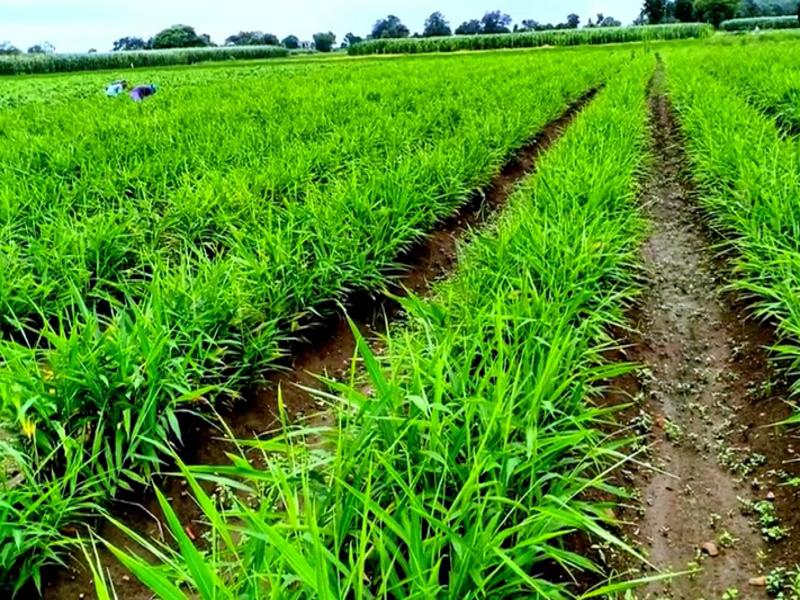
🌾 Ginger Farming in India: Climate, Soil, Seeds & Care
Ginger (Zingiber officinale Rosc.) is one of the most important spice crops widely used in every Indian kitchen. It is cultivated mainly in India, China, and Jamaica, but Indian and Jamaican ginger are globally famous for their aroma and quality.
In India, major ginger-producing states include Kerala, Odisha, Meghalaya, West Bengal, and Jharkhand. Farmers in regions like Ranchi have been growing ginger for years, but due to a lack of scientific knowledge, large-scale production has not yet been achieved.
Ginger is not only used as a spice but also has wide applications in Ayurvedic medicines, beverages, and cosmetics. With increasing domestic and international demand, ginger farming has become a profitable crop for Indian farmers.
🌤️ Climate Requirements
Ginger grows best in warm and humid climates.
- Light rains or 1–2 irrigations are needed during germination.
- Continuous rainfall supports better plant growth.
- Dry weather is preferred during harvesting for easy digging and cleaning.
Ideal Temperature: 25°C – 30°C
Annual Rainfall: 150–200 cm
🌱 Soil Requirements
Ginger prefers light loamy soil that is rich in organic matter and well-drained.
- Soil pH should be between 6.0 and 6.5.
- Waterlogging must be avoided, as it causes rhizome rot.
📅 Sowing Time
| Crop Type | Sowing Period |
|---|---|
| Main Crop | June – July |
| Early Crop | March – May |
🚜 Land Preparation
Prepare the land after the first rain with deep ploughing (5–6 times) until the soil becomes fine and loose.
- Mix 20–25 tons of farmyard manure (FYM) per hectare in the last ploughing.
- Divide the field into beds 1 meter wide and 6 meters long.
- Keep the bed height around 15 cm and 30 cm spacing between the beds for proper drainage.
🌾 Seed Rate and Sowing Method
- Seed Quantity: 1500–1800 kg per hectare
- Seed Size: Each piece should weigh 20–25 grams with 2–3 buds
Sowing Method:
Plant the seed rhizomes 20–25 cm apart and 5 cm deep in rows.
After sowing, cover the field with dry leaves or straw to maintain moisture and promote uniform germination.
🌾 Seed Treatment
Proper seed treatment is essential for good germination and disease control.
- Fungicide: Mancozeb (3 g per liter of water)
- Insecticide: Rogor or Metasystox (1 ml per liter of water)
Soak the seed pieces in the solution for 30 minutes and then dry them under shade before sowing.
🌿 Fertilizers and Manures
| Fertilizer | Quantity (kg/ha) |
|---|---|
| Urea | 80 – 100 |
| Single Super Phosphate | 50 – 60 |
| Muriate of Potash | 90 – 100 |
Apply half of the urea at sowing and the rest in two splits – after 60 and 90 days of planting.
Also, apply 25–30 tons of cow dung and 2 tons of neem cake per hectare for better yield.
🌿 Popular Ginger Varieties
| Variety | Yield (tons/ha) | Duration (days) | Oil (%) | Fiber (%) |
|---|---|---|---|---|
| Suprabha | 16.6 | 229 | 1.9 | 4.4 |
| Suruchi | 11.6 | 218 | 2.0 | 3.8 |
| Surabhi | 17.5 | 225 | 2.1 | 4.0 |
| Himgiri | 13.5 | 230 | 1.6 | 6.4 |
| Nadia | 28.5 | 200 | 0.5 | 3.8 |
| IISR Varada | 22.6 | 200 | 1.8 | 4.5 |
| IISR Mahima | 23.2 | 200 | 1.7 | 3.2 |
| IISR Rajata | 22.4 | 200 | 2.3 | 4.0 |
🌾 Crop Care and Management
🔹 Weeding and Hoeing
- Carry out 3–4 weedings during the growing period.
- Apply the remaining urea after each weeding to boost growth.
🔹 Irrigation
- Provide light irrigation before germination.
- In rainfed areas, additional irrigation is not needed if rainfall is adequate.
🔹 Mulching
Mulching with dry leaves or grasses helps retain soil moisture and control weeds effectively.
🐛 Diseases and Pest Management
🔸 Major Diseases
- Rhizome Rot:
- Cause: Excess moisture and fungal infection
- Control: Treat soil with 0.3% Mancozeb and use Trichoderma fungus
- Bacterial Wilt:
- Control: Treat seed with Streptocycline (200 ppm) and ensure proper drainage
- Leaf Spot Disease:
- Control: Spray Bordeaux mixture (1%) or Mancozeb (0.2%) every 15 days
🔸 Major Pests
| Pest | Control Method |
|---|---|
| Shoot borer | Spray neem oil (0.5%) or Dimethoate |
| Rhizome fly | Treat with Quinalphos (0.1%) |
| Leaf roller | Spray Carbaryl (0.1%) |
🌱 Organic Ginger Farming
For organic ginger farming:
- Avoid chemical fertilizers and pesticides.
- Use farmyard manure, compost, and neem cake instead.
- Apply biological control agents like Trichoderma and Pseudomonas.
- Adopt crop rotation and intercropping to maintain soil fertility naturally.
🌾 Harvesting and Yield
- Ginger is ready for harvesting in 8–10 months after planting.
- When the leaves start turning yellow and dry, dig up the rhizomes carefully.
- Wash, clean, and dry them under shade before marketing.
Average Yield: 150–200 quintals per hectare
💰 Market and Profitability
Ginger prices remain high throughout the year.
- Dry ginger (Sonth) is in high demand in the spice and pharmaceutical industries.
- Fresh ginger is sold in local markets and to food processing units.
With proper management, farmers can earn a net profit of ₹2 to ₹2.5 lakh per hectare.
❓ Frequently Asked Questions (FAQs)
1. What is the best soil for ginger farming?
Light loamy and well-drained soil rich in organic matter is best.
2. When should ginger be planted?
Main crop in June–July; Early crop in March–May.
3. How much seed is required per hectare?
Around 1500–1800 kg of seed rhizomes are needed.
4. How long does germination take?
Germination takes about 10–20 days.
5. When is the crop ready for harvest?
After 8–10 months of planting.
6. Which ginger varieties give high yield?
Nadia, Suprabha, Surabhi, and Himgiri are high-yielding varieties.
7. What are the common diseases in ginger?
Rhizome rot, bacterial wilt, and leaf spot are common.
8. What should be avoided in organic farming?
Avoid all chemical fertilizers and pesticides; use neem, compost, and Trichoderma.
9. How much profit can farmers make?
Around ₹2 lakh per hectare with proper care.
10. Can ginger be grown with other crops?
Yes, ginger can be intercropped with chili, cassava, or coconut.
🌿 Conclusion
Ginger farming is a profitable and sustainable opportunity for Indian farmers. It not only adds flavor to our food but also offers medicinal and economic benefits. By adopting scientific methods like seed treatment, proper drainage, organic manuring, and improved varieties, farmers can increase productivity and income significantly.
👉 Dear farmers, it’s time to make your fields more productive and profitable. Ginger farming can boost your income and help India strengthen its position in the global spice market. 🌱🇮🇳
👉 Explore detailed guides on other spices farming – click here to read more