

🌱 Latest Dairy & Animal Farming Information
View All Articles →- Murrah Buffalo: Complete Information on Milk, Diet & Rearing

- Sheep Farming in India: Breeds, Feed, Housing, Costs & Profit
- Desi Cow Farming 2026: Best Breeds & Complete Guide
- Goat Farming Loan 2026: Get Government Subsidy & Easy Finance
🌱 The Complete Guide to Dairy & Animal Farming
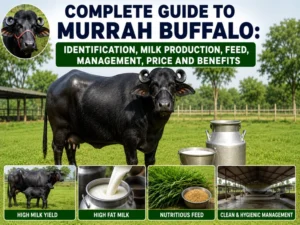
Murrah Buffalo: Complete Information on Milk, Diet & Rearing
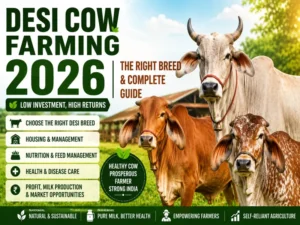
Desi Cow Farming 2026: Best Breeds & Complete Guide

Goat Farming Loan 2026: Get Government Subsidy & Easy Finance

Sheep Farming in India: Breeds, Feed, Housing, Costs & Profit
🚜 Farmer Support Tools
📋 Frequently Asked Questions (FAQs)
What is dairy and animal farming?+
Dairy and animal farming are agricultural activities in which cows, buffaloes, goats, sheep, and other useful livestock are raised using scientific methods. Dairy farming mainly focuses on milk production, animal nutrition, breeding, healthcare, feed management, and animal housing. Proper management can help improve animal health and productivity while also helping farmers increase their income.
What should be considered before starting a dairy farm?+
Before starting a dairy farm, you should assess the breed and number of animals, available land, animal shed, availability of feed and water, veterinary facilities, milk market, initial investment, and daily labor requirements. Initially, selecting animals suitable for local conditions and gradually expanding the farm can be more practical.
What types of animal feed are essential for dairy animals?+
The diet of dairy animals should include a proper combination of green fodder, dry fodder, and balanced animal feed. Depending on the requirement, grains, mineral mixtures, and salt may also be included in the diet. The quantity of feed should be determined according to the animal’s age, body weight, pregnancy status, milk production, and health condition.
How much feed should a milking cow or buffalo be given?+
The same amount of feed cannot be given to every milking animal. Its requirements depend on the animal’s body weight, breed, milk production, stage of lactation, and nutritional quality of the available feed. Generally, a combination of green fodder, dry fodder, and balanced concentrate feed is recommended. For high-yielding animals, it is better to determine the balanced diet with the advice of an animal nutrition expert or veterinarian.
Why is green fodder important for animals?+
Green fodder is an important part of an animal’s diet and can provide water, energy, protein, minerals, and other nutrients. Providing nutritious green fodder in appropriate quantities helps maintain animal health and milk production. However, animals should not rely only on green fodder; dry fodder and a balanced diet should also be provided according to their requirements.
Which green fodder is good for dairy animals?+
Fodder crops such as berseem, oats, maize, sorghum, pearl millet, cowpea, and Napier can be used for dairy animals. The right fodder should be selected according to the season, soil, irrigation facilities, and local conditions. Planning fodder crops for different seasons can help maintain the availability of nutritious fodder throughout the year.
How much and what type of water should be given to animals?+
Animals must have access to clean and sufficient drinking water. Water requirements vary depending on the animal’s size, weather, diet, and milk production. Water requirements may increase during hot weather and in high-yielding animals. Water containers or tanks should be cleaned regularly.
How to select a good milk-producing cow or buffalo?+
When purchasing a dairy animal, you should check its breed, age, physical structure, health, previous milk production, calving history, reproductive status, and available records. Before purchasing, it is also useful to observe the animal’s movement, eyes, skin, body condition, and general udder condition. If possible, seek assistance from a veterinarian or experienced expert when selecting an animal.
How can a Murrah buffalo be identified?+
A Murrah buffalo is generally identified by its black color, short and curved horns, strong body, well-developed udder structure, and distinctive physical characteristics. However, it is not appropriate to determine breed purity solely on the basis of external appearance. When purchasing, the animal’s records, breed information, and certification from a reliable source should also be considered.
Which is better for dairy farming, a cow or a buffalo?+
Neither cows nor buffaloes can be universally considered better for all farmers. The choice should depend on the local climate, availability of feed, milk market, milk demand, animal breed, management capacity, and investment. The animal that can be maintained healthily with the available resources and whose milk can be sold effectively in the local market may be more suitable for the farmer.
What should a good animal shed be like?+
A good animal shed should be clean, well-ventilated, adequately lit, and safe for animals. The floor should allow easy drainage of water and urine while reducing the risk of animals slipping. Protection from heat and rain, sufficient space, clean water, proper feed arrangements, and regular cleaning are important parts of animal shed management.
How can animals be protected from heat?+
During hot weather, animals should be provided with a shaded and well-ventilated place along with clean and sufficient water. Ensure proper air circulation in the animal shed and protect animals from direct exposure to intense sunlight during extremely hot periods. Depending on local conditions, appropriate cooling arrangements can be adopted to keep the animal shed cooler.
Why is vaccination important for animals?+
Vaccination is an important measure for protecting animals against several infectious diseases. The vaccination schedule for animals may vary according to the region, animal’s age, species, and local disease situation. Farmers should follow the vaccination schedule recommended by the local animal husbandry department or veterinarian and maintain vaccination records safely.
How can common diseases in animals be prevented?+
To protect animals from diseases, a clean animal shed, clean water, a balanced diet, regular vaccination, appropriate deworming, and timely health checkups are essential. Before introducing a new animal into the herd, its health condition should be checked and, when necessary, it should be kept separately. If signs of illness appear, it is better to consult a veterinarian rather than administering medicines on your own.
When should deworming medicine be given to animals?+
The timing of deworming depends on the animal’s age, health, parasite infection situation in the area, and the veterinarian’s advice. It is not appropriate to give the same medicine to all animals at the same time. A veterinarian or local animal husbandry expert should be consulted for the correct medicine, dosage, and interval.
How can the right time for breeding in animals be identified?+
During estrus or heat, changes in behavior and physical signs may be observed in female animals. Signs may include restlessness, frequent vocalization, mounting other animals or allowing other animals to mount, and the discharge of normal mucus from the reproductive tract. For artificial insemination or natural breeding at the right time, it is better to seek advice from a local veterinarian or trained technician.