


Black Pepper Farming in India: Complete Guide
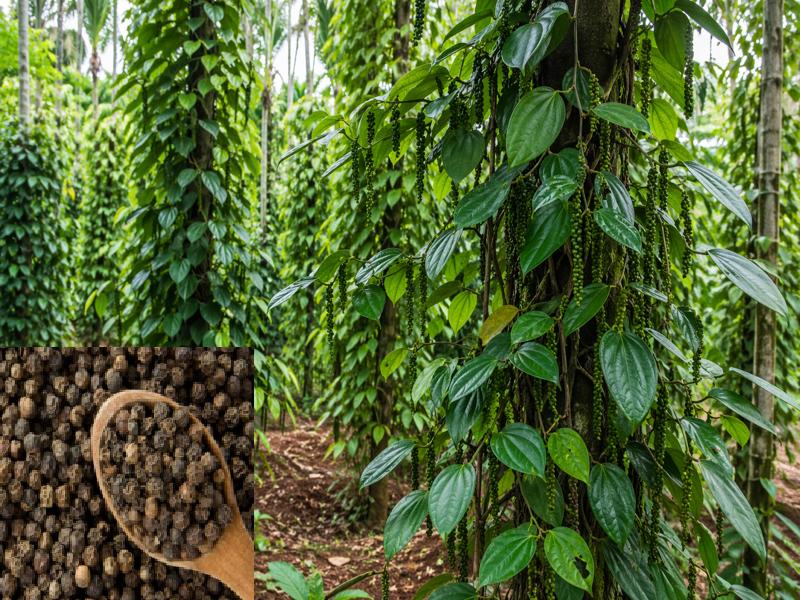
🌱 How to Do Black Pepper Farming | 40 Lakh Income Guide
Nowadays, farming is not just a source of livelihood, but it has become a strong business. If a farmer selects the right crop and adopts modern techniques, then earning lakhs of rupees is possible even from less land.
Black pepper is one such high-value spice crop, which is called the King of Spices. Its demand is continuously increasing in both domestic as well as international markets.
👉 With proper planning, right variety, and good management, earning from 10 to 40 lakh per acre is possible.
In this guide, we will understand in detail how to do black pepper farming and how you can convert this farming into a successful business as per the 40 lakh income guide.
📌 1. Introduction of Black Pepper
Black pepper is a perennial vine crop, which grows upward with support. Once planted, this crop gives continuous production for 25 to 30 years.
⭐ Main Features
✔ It is a climbing vine
✔ Gives production for a long period
✔ Used in both spices and medicine
✔ High production in less space
📍 Major Production Areas in India
✔ Kerala
✔ Karnataka
✔ Tamil Nadu
✔ Chhattisgarh
✔ Maharashtra (Konkan region)
💪 2. Benefits and Uses of Black Pepper
Black pepper is not only a spice but also a medicinal crop.
🌿 Health Benefits
✔ Strengthens the digestive system
✔ Gives relief in cold, cough, and flu
✔ Increases body immunity
✔ Helps in increasing appetite
✔ Rich in antioxidant properties
🍲 Uses
✔ Used as a spice in all types of Indian dishes
✔ Used in Ayurvedic medicines
✔ Used in the food processing industry
✔ Used in soups, salads, and bakery products
🔬 3. Scientific Classification
✔ Kingdom: Plantae
✔ Family: Piperaceae
✔ Genus: Piper
✔ Species: Piper nigrum
🌦️ 4. Climate and Temperature
Proper climate is very important for black pepper farming.
☀️ Suitable Climate
✔ Warm and humid
✔ Light shade area
🌡️ Temperature
✔ Minimum: 10 to 12°C
✔ Ideal: 20 to 30°C
✔ Maximum: 35°C
👉 Too much cold or heat affects the crop.
🌱 5. Soil Requirement
🟤 Suitable Soil
✔ Red laterite soil
✔ Loamy soil
✔ Rich in organic matter
⚖️ pH Value
✔ 5.0 to 6.0
🚫 Keep in Mind
✔ Waterlogging should not happen at all
✔ Soil should have good drainage
🌾 6. Seed & Improved Varieties
In black pepper farming, selection of the right variety decides your income. If you want high production and better quality, then choose certified and improved varieties.
🔝 Major Improved Varieties
Panniyur 1
✔ Most popular
✔ High yielding variety
✔ Good disease resistance
Sreekara
✔ Good quality berries
✔ Suitable for export
Subhakara
✔ Starts production early
✔ Better in moderate climate
Panchami
✔ Stable production
✔ Suitable for small farmers
Purnima
✔ Better berry size
✔ Good price in market
🌿 Method of Plant Preparation
Cutting method is considered the best
Select a healthy vine with 2 to 3 nodes
First develop roots in nursery
After 2 to 3 months, transplant in field
👉 Always use disease-free and certified plants only
🌿 7. Seed Rate (Per Acre)
✔ Around 650 to 700 plants can be planted in one acre
✔ Distance between plants: 2.5 to 3 meters
✔ 1 to 2 plants can be planted per pit
👉 Keeping proper distance gives enough space for plants to spread
🛒 8. Where to Buy Plants
Krishi Vigyan Kendra (KVK)
Government horticulture nursery
Certified private nursery
Online agri platforms
👉 Keep in Mind While Buying
✔ Plant should be healthy
✔ Roots should be strong
✔ Free from disease and pests
🚜 9. Land Preparation
Good land preparation can increase production by 20 to 30 percent.
📋 Preparation Steps
Do deep ploughing 2 to 3 times
Remove all weeds
Make pits of 45×45×45 cm
Mix cow dung manure, soil, and neem cake in pits
🌳 Support System
✔ Black pepper vine needs support to climb
✔ Use coconut, arecanut, or mango trees
✔ Or install wooden poles
🌱 10. Sowing and Planting Method
📅 Right Time
✔ September to October is most suitable
📌 Method of Planting
Plant the sapling in prepared pits
Plant near the support
Do light irrigation
Tie the vine to support with rope
👉 Take special care of plants in the initial days
🧪 11. Fertilizer Management
Proper nutrition increases both production and quality.
🌿 Organic Fertilizers
✔ Cow dung manure: 5 to 10 kg per plant
✔ Vermicompost
✔ Neem cake
⚗️ Chemical Fertilizers
✔ Nitrogen
✔ Phosphorus
✔ Potash
📅 Time of Fertilizer Application
✔ First dose: September
✔ Second dose: January
👉 Organic farming gives better price in the market
💧 12. Irrigation Management
Proper irrigation management is very important in black pepper farming because this crop likes moisture but cannot tolerate waterlogging at all.
🌧️ Basic Rule of Irrigation
This crop is mainly rainfed
Where rainfall is less, irrigation becomes necessary
📅 Irrigation Schedule (Per Acre)
✔ Do light irrigation immediately after planting
✔ In summer, irrigate at intervals of 7 to 10 days
✔ In winter, irrigate at intervals of 15 to 20 days
✔ Maintain moisture during flowering and fruiting stage
🚿 Modern Techniques
✔ Drip irrigation is best
✔ Saves 40 to 50 percent water
✔ Water reaches directly to roots
⚠️ Keep in Mind
✔ Do not allow water to stagnate in field
✔ Excess water can cause root rot
🌾 13. Weed Control
Weeds consume nutrients and water of the crop, which reduces production.
🌱 Control Methods
Do regular weeding and hoeing
Use mulching
Adopt organic methods
📌 Benefits of Mulching
✔ Maintains soil moisture
✔ Reduces weeds
✔ Increases production
🐛 14. Pest & Disease Management
Timely control of pests and diseases is necessary in black pepper.
⚠️ Major Pests
✔ Pollu beetle
✔ Scale insects
🦠 Major Diseases
✔ Root rot
✔ Fungal diseases
🛡️ Control Measures
Spray neem oil 0.6 percent
Use Trichoderma in soil
Cut and destroy infected branches
Use organic pesticides
👉 Do inspection every 20 to 25 days
⏳ 15. Crop Duration
Black pepper is a long-duration crop, but once production starts, it gives income for many years.
📅 Crop Cycle
✔ Flowering time: July
✔ Fruit formation time: December
✔ Harvesting time: January to March
⏱️ Production
✔ Production starts after 3 to 4 years of planting
✔ Continuous production for 25 to 30 years
✂️ 16. Harvesting Method
Timely harvesting and proper processing increase both quality and price of black pepper.
📌 Harvesting
✔ Harvest when fruits start turning light yellow or red
✔ Carefully pluck the spikes by hand
🔄 Processing Steps
Separate berries from spikes
Wash with clean water if needed
Dry in sunlight for 5 to 7 days
Reduce moisture to less than 10 percent
⭐ Method to Improve Quality
✔ Dip in boiling water for 1 minute and then dry
✔ This improves color and shine
📦 17. Yield Per Acre
✔ Per plant: 4 to 6 kg
✔ Total production: 2500 to 3000 kg per acre
📈 Tips to Increase Yield
✔ Select the right variety
✔ Timely fertilizer and irrigation
✔ Proper pest control
💰 18. Market Price & Profit Per Acre
💵 Market Price
✔ 400 to 600 rupees per kg
✔ Price increases based on quality
📊 Expected Income (Per Acre)
✔ Normal farming: 10 to 15 lakh
✔ Advanced farming: 25 to 40 lakh
📌 Additional Income Methods
✔ Sell after processing
✔ Sell in export market
✔ Take organic certification
🏪 19. Storage
Proper storage of black pepper is very important to maintain quality.
📦 Storage Rules
✔ Store only completely dried pepper
✔ Keep in moisture-free place
✔ Use airtight containers or bags
⚠️ Precautions
✔ Moisture should not be more than 12 percent
✔ Protect from fungus
🏛️ 20. Government Schemes
Government is running many schemes for farmers, which help in reducing cost.
📋 Major Schemes
✔ National Horticulture Mission
✔ Spice Board support scheme
✔ Drip irrigation subsidy scheme
🎯 Benefits
✔ Subsidy on plants
✔ Training and technical support
✔ Subsidy on equipment
❓ 21. FAQs | Frequently Asked Questions
1. How much irrigation is needed in black pepper farming
Light irrigation as per requirement
2. When does production start
After 3 to 4 years
3. How much production in one acre
2500 to 3000 kg
4. What price is available in market
400 to 600 rupees per kg
5. Is drip irrigation necessary
Not necessary, but beneficial
6. What is the right harvesting time
January to March
7. How to do storage
In dry and airtight place
8. Which pest causes most damage
Pollu beetle
9. Can we export
Yes, if quality is good
10. Is this farming profitable
Yes, very profitable
📊 22. Additional Tips
✔ Do intercropping with coconut and arecanut
✔ Save water with drip irrigation
✔ Get higher price with organic farming
✔ Do proper grading and packaging
📝 Conclusion
Black pepper farming is a crop that gives high profit in less space. With proper management, right timing, and correct techniques, farmers can earn lakhs from this crop.
👉 If you want to make farming a successful business, then black pepper farming is a very good option for you 🚜
👉 For detailed and practical information on spice farming, click here