


Tuberose Farming in India: Complete Guide for High Yield
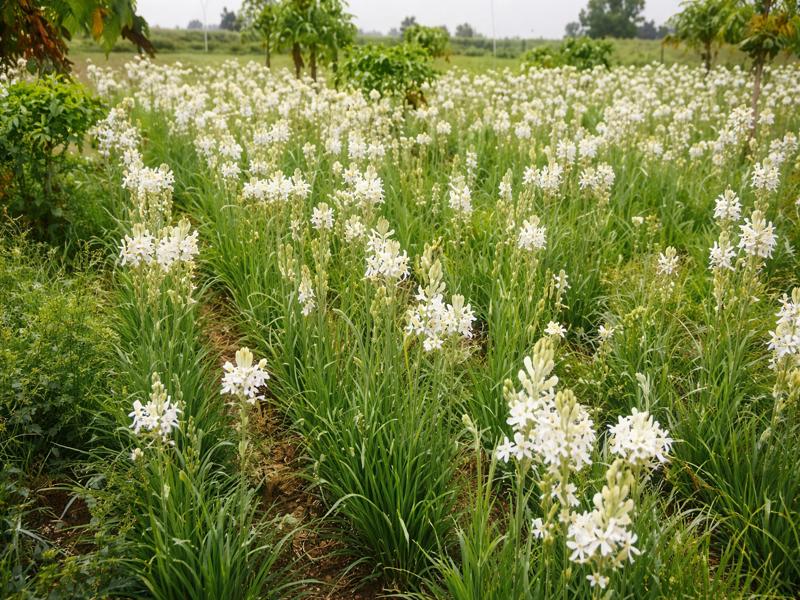
🌸 How to Do Tuberose Farming | Full Information, Cost, Profit and Technique
How to do tuberose farming has become a very important topic for farmers in today’s time. Tuberose, which is also called Nishigandha, Sugandhraj or Tuberose, is a fragrant and commercial flower crop. Its demand remains throughout the year and this farming is considered to give high profit at low cost.
This flower is exported not only in India but also to foreign countries. It is widely used in gajra, garlands, decoration, perfume and aroma therapy. If you follow the right techniques, you can earn profit up to lakhs of rupees per acre.
1. 🌱 Crop Introduction
Tuberose is a perennial bulbous flower crop which originated in Central America. In India, this farming is now done on a large scale at commercial level.
Main Features
- Plant height 75 to 100 cm
- Flowers are white and very fragrant
- 10 to 20 flowers in one spike
- Both cut flower and loose flower are useful
Uses
✔ Bouquet and decoration
✔ Garland and gajra
✔ Perfume and fragrance
✔ Religious functions
2. 💚 Health Benefits and Uses
Although it is mainly a decorative crop, it has many uses:
- Reduces mental stress
- Used in aroma therapy
- Makes environment fragrant
- Important in perfume industry
3. 🔬 Scientific Classification
- Scientific Name: Polianthes tuberosa
- Family: Asparagaceae
- Type: Bulbous perennial plant
4. 🌤️ Climate and Temperature
Suitable Climate
✔ Warm and humid climate is best
✔ Open sunlight is necessary
Temperature
✔ 20 to 35 degree Celsius is ideal
✔ Frost and too much cold cause damage
5. 🌾 Soil Requirement
Suitable Soil
✔ Sandy loam and loam soil
✔ Good drainage is necessary
pH Level
✔ 6.5 to 7.5
Special Attention
✔ Water should not get logged
✔ Soil should be loose and friable
6. 🌼 Seed & Varieties
Tuberose farming is done by bulbs, so selecting good quality bulbs is the most important. Only with the right variety and healthy bulbs, you get higher production and better quality flowers.
How to Select Bulbs
- Bulb size should be 1.5 to 2 cm or more
- Weight should be at least 30 grams
- Select disease-free and hard bulbs
- Sprouted bulbs give better production
Details of Major Varieties
1. Single Varieties
✔ Calcutta Single
- Stem is long and gives about 40 flowers
- Suitable for both cut flower and garland
✔ Prajwal
- Light pink bud turns into white flower
- High production and more demand in market
✔ Mexican Single
- Most popular variety
- Better in both fragrance and production
2. Double Varieties
✔ Vaibhav
- Better for cut flower
- Flowers are dense and attractive
✔ Suvasini
- Fragrant and suitable for decoration
✔ Pearl Double
- Flowers look like pearls
- Useful for oil extraction
3. Other Varieties
✔ Arka Nirantra
✔ Swarna Rekha
✔ Rajat Rekha
✔ Hyderabad Single and Double
👉 Suggestion
For commercial farming, single varieties are considered more profitable because they have more fragrance.
7. 🌱 Seed Rate
✔ 2100 to 2500 bulbs are required per acre
Important Points
- Bigger bulbs give higher production
- Using small bulbs gives less production
- It is necessary to treat bulbs before planting
Seed Treatment
✔ Treat with Thiram 0.3% or Bavistin 0.2%
✔ This helps to protect from fungus and diseases
8. 🛒 Where to Buy Seed or Bulbs
Buying good bulbs is the first step to success.
Reliable Sources for Purchase
- Krishi Vigyan Kendra
- Government nursery
- State agricultural universities
- Certified private nursery
9. 🚜 Land Preparation
Good land preparation helps in better development of bulbs.
Process of Field Preparation
- Plough the field once with soil turning plough
- Do 2 to 3 times ploughing
- Level the field and make soil loose with plank
Organic Manure
✔ Mix 20 to 25 tons of farmyard manure per acre
Special Attention
- Field should be level
- Proper drainage system should be there
10. 🌿 Sowing Method
Time of Sowing
✔ March to April is most suitable
Spacing
✔ Plant to plant 15 to 20 cm
✔ Row to row 20 to 30 cm
Depth
✔ 5 to 7 cm
Method of Planting
- Plant the bulb straight
- Cover with light soil
- Do not plant too deep
11. 🌱 Fertilizer & Manure Management
Fertilizer Quantity per Acre
✔ Nitrogen 296 kg
✔ Phosphorus 40 kg
✔ Potash 40 kg
Correct Method of Use
- Give full phosphorus and potash at the time of planting
- Give nitrogen in 3 parts
- First before planting
- Second after 30 days
- Third before flowering
Organic Options
✔ Vermicompost
✔ Neem cake
✔ Farmyard manure
👉 Suggestion
Maintain balance of organic and chemical fertilizers
12. 💧 Irrigation Management
When to Irrigate
- Do not irrigate till germination
- Start irrigation after germination
Irrigation Interval
✔ In summer every 6 to 7 days
✔ In winter 10 to 12 days
Total Irrigation
✔ 8 to 12 times per crop
👉 Note
Water logging can rot the bulbs
13. 🌾 Weed Control
Methods
- Do weeding and hoeing 3 to 4 times
- Keep the field clean
Chemical Control
✔ Atrazine 0.6 kg per acre
✔ Pendimethalin 800 ml per acre
👉 Timely control increases production
14. 🐛 Pest & Disease Management
To get good production in tuberose farming, pest and disease control is very important. With timely identification and correct management, you can save the crop from big loss.
Major Diseases and Their Symptoms
1. Stem Rot Disease
Symptoms
- Rot is seen on plant stem
- White fungal layer appears on leaves
- Plant slowly starts drying
Control
- Mix Brassicol 20% 12.5 kg per acre in soil
- Avoid water logging
2. Leaf Spot and Blight Disease
Symptoms
- Brown spots on leaves and flowers
- Flowers start drying
- More spread in rainy season
Control
- Spray Carbendazim 2 grams per liter water at 15 days interval
3. Wilt Disease
Symptoms
- Leaves turn yellow and bend
- Whole plant slowly dries
- Cotton-like layer forms on stem
Control
- Spray Zineb 0.3% (2 grams per liter water)
Major Pests and Control
1. Thrips
Damage
- Damage to leaves and flowers
- Flower quality becomes poor
Control
- Spray Malathion 0.1% (3 ml per liter water)
2. Aphids
Damage
- Damage to new leaves and buds
- Plant growth stops
Control
- Spray Malathion 0.1% every 15 days
3. Bud Borer
Damage
- Holes in flower buds
- Flowers get damaged
Control
- Spray Carbaryl 0.2% (6 grams per liter water)
4. Grasshoppers and Other Pests
Damage
- Eat leaves and flowers
- Production decreases
Control
- Spray Quinalphos 0.05% or Carbaryl 0.2%
Integrated Pest Management (IPM) Tips
- Regularly monitor the field
- Remove infected plants immediately
- Use balanced fertilizers
- Use organic pesticides like neem oil
15. ⏳ Crop Duration
Tuberose crop is one of the crops which gets ready quickly.
Duration
- Flowers start coming 90 to 110 days after planting
- Main flowering comes from August to September
Special Information
- After one time planting, production can be taken for 2 to 3 years
- Production increases every year if proper care is taken
16. ✂️ Harvesting Method
Harvesting at the right time is very important so that flower quality is maintained.
Right Time for Harvesting
- When 2 to 3 flowers bloom
- Do harvesting in morning or evening
Method of Harvesting
- Use sharp and clean knife
- Cut the stem near the ground
Important Points
- Long and straight spikes get more price
- Keep in water immediately after harvesting
17. 📊 Yield per Acre
Average Yield
- About 32 to 40 quintal flowers per acre
Ways to Increase Yield
- Select good variety
- Do irrigation and fertilization on time
- Focus on pest and disease control
Additional Information
- 1 to 3 spikes are obtained from one bulb
- With better management, yield can increase more
18. 💰 Market Price & Profit per Acre
Profit in tuberose farming is quite good.
Income per Acre
- First year 1.5 to 2 lakh rupees
- Second and third year 2 to 5 lakh rupees
Market Demand
- High demand during weddings and festivals
- Constant demand in perfume industry
Ways to Increase Profit
- Connect directly with mandi or flower market
- Contact wholesale buyers
- Explore export opportunities
19. 📦 Storage
After harvesting, it is important to handle flowers properly.
Storage Method
- Keep flowers in shade
- Wrap in cotton cloth
- Keep stems in water
Precautions
- Protect from sunlight
- Do not store for long time
- Send to the market quickly.
20. 🏛️ Government Schemes
Government is running many schemes to promote flower farming.
Major Schemes
- National Horticulture Mission
- Pradhan Mantri Krishi Sinchai Yojana
- State level horticulture subsidy schemes
How to Take Benefit
- Contact nearest agriculture department
- Apply online
- Submit required documents
21. ❓ FAQs | Frequently Asked Questions
The questions given below are the most common questions related to how to do tuberose farming, which often trouble farmers. Simple and clear answers are given so that you get complete information.
1. What is the best time for tuberose farming
March to April is considered the most suitable time for sowing tuberose. At this time, temperature and weather are favorable for plant growth.
2. What is the cost of tuberose farming per acre
Generally, the cost per acre comes around 40 thousand to 60 thousand rupees. This includes cost of bulbs, fertilizers, labor and irrigation.
3. How much profit is earned per acre from tuberose farming
In the first year, profit can be around 1.5 to 2 lakh rupees, while in second and third year, income of 2 to 5 lakh rupees is possible.
4. Which soil is best for tuberose
Sandy loam or loam soil with good drainage is considered best. Soil pH should be 6.5 to 7.5.
5. How often irrigation should be done
After germination, do irrigation every 6 to 7 days in summer. Overall, 8 to 12 irrigations are sufficient.
6. Which is the best variety of tuberose
Prajwal and Calcutta Single varieties are considered most popular and profitable.
7. In how many days flowers come in tuberose
Flowers start coming approximately 90 to 110 days after planting.
8. Can tuberose farming be done organically
Yes, you can do organic farming using organic manure, vermicompost and neem oil. Production may be slightly less, but better price is received in the market.
9. For how many years tuberose farming can be done
After one time planting, production can be taken continuously for 2 to 3 years.
10. What is the most important thing to increase production
Selection of good variety, timely fertilizer and irrigation, and pest and disease control are most important.
📌 Conclusion
How to do tuberose farming is now completely clear to you. If you do this farming in a scientific way, then it can become a very good farming giving high profit at low cost.
Main Points
- Do sowing at the right time
- Select good quality bulbs
- Do balanced fertilization and irrigation
- Do timely pest and disease control
- Do harvesting at the right time
Why to Do Tuberose Farming
✔ High profit at low cost
✔ Demand in market throughout the year
✔ Opportunities in both domestic and export
✔ Suitable for small and medium farmers
👉 If you are looking for a new option in flower farming, then tuberose farming is a great opportunity for you.
🌸 Right Information + Right Technique = More Production and More Profit 🌸
👉 For more flower farming guides, keep exploring our website