


Coriander Farming
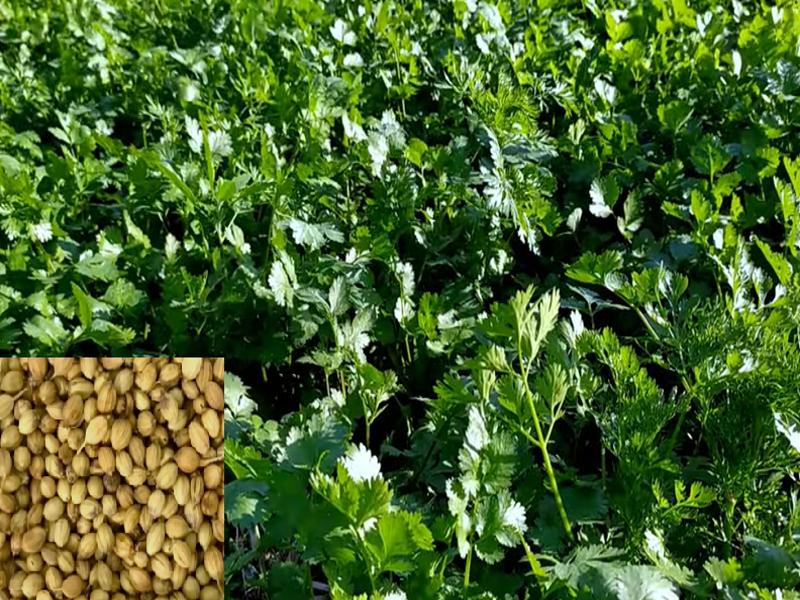
Introduction: India – The Land of Spices
Since ancient times, India has been known as the ‘Land of Spices.’ Coriander (Coriandrum sativum) is an essential spice in Indian kitchens. Its seeds and fresh green leaves enhance the aroma and taste of food. The volatile oils present in coriander seeds are widely used in the confectionery industry, pharmaceutical preparations, and for flavoring beverages. Fresh coriander leaves are a rich source of Vitamin C and are commonly used in making chutneys, soups, and sauces. Due to its medicinal properties, coriander is also used as a carminative and diuretic.
In India, Tamil Nadu, Karnataka, Madhya Pradesh, and Rajasthan are the major coriander-producing states. In Madhya Pradesh, districts such as Guna, Mandsaur, Shajapur, Rajgarh, Vidisha, and Chhindwara are especially well known for coriander cultivation.
Today, coriander farming is not only important for household consumption but has also become a profitable commercial crop for Indian farmers due to strong domestic and export demand.
Importance of Coriander Cultivation in India
India is one of the largest producers and exporters of coriander in the world. The crop plays an important role in the spice industry and helps farmers earn good income at low cultivation cost.
Coriander Cultivation in Madhya Pradesh
Madhya Pradesh is a major coriander-producing state, with cultivation spread over approximately 2.88 lakh acres, producing around 74,700 tons annually.
Major Coriander-Producing Districts
- Guna
- Mandsaur
- Shajapur
- Rajgarh
- Vidisha
- Chhindwara
The average yield is about 170–180 kg per acre, which can be increased further by adopting improved varieties and scientific farming practices.
Uses and Economic Value of Coriander
Uses of Coriander
- Spice for cooking (seeds)
- Fresh green leaves for garnishing
- Ayurvedic and herbal medicines
- Improves digestion
- Helps in detoxification
Economic Importance
- Low investment, high returns
- Strong domestic and export demand
- Important raw material for spice processing industries
- Generates foreign exchange for India
Climate Requirement for Coriander Farming
Coriander grows best in a cool and dry climate.
| Growth Stage | Ideal Temperature |
|---|---|
| Seed germination | 25–26°C |
| Vegetative growth | 20–25°C |
| Flowering & seed formation | Cool, frost-free weather |
⚠️ Frost can severely damage coriander crops, especially during flowering. Therefore, timely sowing is very important.
For high-quality seeds and better essential oil content, coriander requires:
- Cool climate
- Bright sunlight for longer duration
- Slightly elevated land
Soil Selection and Field Preparation
Suitable Soil
- Irrigated areas: Well-drained loamy soil
- Rainfed areas: Heavy black soil
- Soil pH: 6.5 to 7.5
- Good drainage is essential
Coriander does not tolerate saline or alkaline soils.
Field Preparation
- 2–3 deep ploughings
- If soil moisture is low, give pre-sowing irrigation (palewa)
- Level the field properly
- Remove weeds during preparation
Improved Varieties of Coriander (Yield per Acre)
| Variety | Duration (Days) | Yield (Quintal/Acre) | Key Features |
|---|---|---|---|
| Hisar Sugandh | 120–125 | 7–8 | Strong aroma |
| Kumbhraj | 115–120 | 6 | Disease tolerant |
| RCR-436 | 90–100 | 5–6 | Early maturing |
| Pant Haritma | 120–125 | 6–8 | Suitable for seeds & leaves |
| Gujarat Coriander-2 | 110–115 | 6–6.5 | Good for green leaves |
| RCR-446 | 110–130 | 5–6 | Suitable for rainfed areas |
Best Time for Sowing
- For seed purpose: 1st to 15th November
- For green leaves: October to December
- For frost protection: Second week of November is ideal
Timely sowing ensures better germination, healthy growth, and higher yield.
Seed Rate (Per Acre)
| Condition | Seed Quantity |
|---|---|
| Irrigated | 6–8 kg |
| Rainfed | 10–12 kg |
Seed Treatment
To protect the crop from soil- and seed-borne diseases:
- Carbendazim + Thiram (2:1) → 3 g/kg seed
OR - Carboxin + Thiram → 3 g/kg seed
- Trichoderma viride → 5 g/kg seed
Seed treatment improves germination and reduces disease risk.
Manure and Fertilizer Management (Per Acre)
Rainfed Crop
- Farmyard manure: 8 tons
- Nitrogen: 16 kg
- Phosphorus: 12 kg
- Potash: 8 kg
- Sulphur: 8 kg
Irrigated Crop
- Nitrogen: 24 kg
- Phosphorus: 16 kg
- Potash: 8 kg
- Sulphur: 8 kg
Apply fertilizers at land preparation and split nitrogen doses for better results.
Irrigation Management
- First irrigation: 30–35 days after sowing
- Subsequent irrigations: At 20–25 day intervals
- Avoid water stress during flowering stage
Excess water should be avoided as it may cause root diseases.
Weed Management
- First weeding after 30–35 days
- Second weeding if required
- Keep the field weed-free during early growth stage
Pest and Disease Management (Brief)
- Wilt disease: Use treated seeds
- Stem gall: Grow resistant varieties
- Aphids: Spray neem oil (3 ml per litre of water)
Harvesting and Yield
- Crop is ready when plants turn yellowish
- Harvest in early morning
- Dry the plants properly before threshing
Average Yield
- 5–8 quintals per acre, depending on variety and management
Estimated Profit from Coriander Farming
| Particulars | Amount (₹ per acre) |
|---|---|
| Total cost | 10,000–12,000 |
| Gross income | 35,000–50,000 |
| Net profit | 25,000–38,000 |
Frequently Asked Questions (FAQs)
Q1. Which season is best for coriander farming?
Rabi season is best.
Q2. Which coriander variety gives the highest yield?
Pant Haritma, Hisar Sugandh, and Kumbhraj.
Q3. How much yield can be obtained per acre?
Around 5 to 8 quintals.
Q4. How to protect coriander from frost?
Timely sowing and light irrigation help reduce frost damage.
Q5. When should coriander be grown for green leaves?
From October to December.
Q6. Why is seed treatment important?
It protects crops from diseases and improves germination.
Q7. How many irrigations are required?
Usually 3–4 irrigations are sufficient.
Q8. Is coriander suitable for export?
Yes, India is a major exporter of coriander.
Q9. Which soil is best for coriander cultivation?
Well-drained loamy soil.
Q10. Is coriander farming profitable?
Yes, it offers good profit with low investment.
Conclusion: A Profitable Opportunity for Indian Farmers
Coriander farming is a low-risk, high-return spice crop. By selecting improved varieties, following proper sowing time, and adopting scientific cultivation practices, farmers can significantly increase their income.
🌱 Adopt modern methods, grow coriander smartly, and turn your farm into a profitable venture.
👉 Explore detailed guides on other spices farming – click here to read more
For More Information
- https://hi.vikaspedia.in
- HP Agriculture Department
- Indian Institute of Horticultural Research
- Krishi Vigyan Kendra Portal