


Bitter Gourd Farming
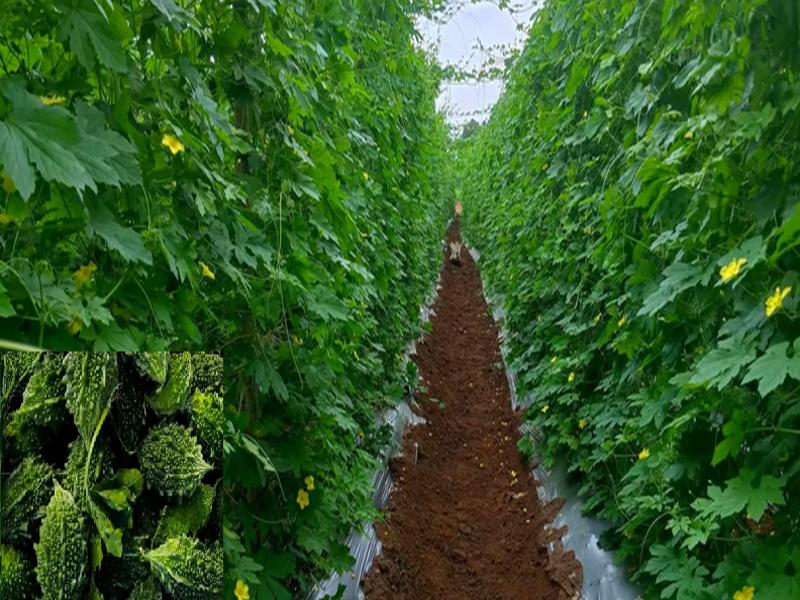
Bitter Gourd – A Crop of Health and Profit
Bitter gourd, popularly known as Karela (Momordica charantia), is one of the most valuable vegetable crops grown in India. Though bitter in taste, it is rich in Vitamin C, minerals, and medicinal properties, making it highly demanded throughout the year.
Karela is widely used in Indian kitchens and Ayurvedic treatments, especially for diabetes control, blood purification, digestion improvement, asthma, and joint problems. Due to its short duration, continuous harvesting, and good market price, bitter gourd farming is a profitable option for Indian farmers.
Major Bitter Gourd Growing States in India
Bitter gourd is cultivated in almost all parts of India. Major producing states include:
Maharashtra, Gujarat, Rajasthan, Punjab, Uttar Pradesh, Bihar, Tamil Nadu, Kerala, Karnataka, Andhra Pradesh, West Bengal, Odisha, and Assam.
Climate Requirement for Bitter Gourd Farming
1. Ideal Temperature
- Best growth temperature: 24°C to 27°C
- Minimum temperature for germination: Above 18°C
- Sensitive to frost; protection is needed in winter crops
2. Humidity
- Excess humidity may increase fungal diseases
- Proper spacing and air circulation are essential
Soil Requirement
Bitter gourd can grow in different soil types, but best results are obtained in:
- Sandy loam soil
- Loamy soil rich in organic matter
- Well-drained black soil
Ideal soil pH: 6.0 – 7.0
Avoid waterlogged fields, as standing water damages roots.
Improved Bitter Gourd Varieties (Per Acre Use)
Different varieties are preferred in different regions depending on fruit size, color, and market demand. Below is a comprehensive table of improved bitter gourd varieties developed in India.
1. All Bitter Gourd Varieties – Detailed Table
| Developing Institute | Variety Name | Key Characteristics | Average Yield* |
|---|---|---|---|
| IIHR, Bengaluru | Arka Harit | Short, spindle-shaped green fruits, regular ribs, medium bitterness | 9–12 t/ha |
| IARI, New Delhi | Pusa Vishesh | Suitable for summer crop, glossy green, medium-long fruits | – |
| IARI, New Delhi | Pusa Do Mausami | Dark green, club-shaped fruits, 7–8 ribs, 100–120 g weight | 12–15 t/ha |
| IARI, New Delhi | Pusa Hybrid-1 | Long, thick, glossy green fruits | 20 t/ha (120 days) |
| Kerala Agricultural University | Priya (VK-1) | Very long green spiny fruits, avg. length ~39 cm | 24.5 t/ha |
| Kerala Agricultural University | Preethi (MC-4) | Medium-sized white spiny fruits | 15.0 t/ha |
| Kerala Agricultural University | Priyanka | Large white spindle-shaped fruits, thick flesh, fewer seeds | 28.0 t/ha |
| TNAU | CO-1 | Dark green fruits, 20–25 cm long | 14 t/ha |
| TNAU | Coimbatore Long Green | Extra-long fruits (~60 cm), dark green | – |
| TNAU | MDU-1 | Long (30–40 cm) greenish-white fruits | 30–35 t/ha |
| TNAU | Coimbatore Long White | Very long white fruits (60–65 cm) | 15 t/ha |
| TNAU | COBgH-1 (Hybrid) | Light green, thick fruits with more warts | 44.4 t/ha |
| Konkan Krishi Vidyapeeth | Konkan Tara | Green, spiny, medium-long fruits | 24 t/ha |
| Punjab Agricultural University | Punjab-14 | Bushy plants, light green small fruits | 14 t/ha |
| CSAUA&T, Kanpur | Kalyanpur Baramasi | Long light green fruits, disease tolerant | 20 t/ha |
| MPKV, Rahuri | Hirkani | Dark green spiny fruits | 14 t/ha |
| MPKV, Rahuri | Phule Green | Dark green fruits, 25–30 cm long, disease tolerant | 23 t/ha |
2. Important Notes for Farmers
- Hybrid varieties (Pusa Hybrid-1, COBgH-1) → Higher yield and better profit
- Long-fruit varieties → Preferred in South and East India
- White varieties → Fetch good price in selected markets
Land Preparation
- Plough the field 2–3 times to make soil fine and loose
- Remove weeds and old crop residues
- Mix well-decomposed farmyard manure during final ploughing
Sowing Time and Seed Rate (Per Acre)
1. Best Sowing Time
- Summer crop: January–February
- Rainy season crop: May–June
2. Seed Rate
- 1.5–2 kg seeds per acre
3. Seed Treatment
- Treat seeds with Thiram @ 3 g per kg seed
Planting Method and Spacing
- Row to row spacing: 8–10 feet
- Plant to plant spacing: 3–4 feet
- Sow on ridges or raised beds for better drainage
Support System (Bower / Trellis System)
Bitter gourd is a climbing vine and needs proper support.
1. Advantages of Trellis System
- Harvesting continues for 6–7 months
- Better fruit quality and size
- Lower pest and disease incidence
- Higher yield compared to ground trailing
Manure and Fertilizer Management (Per Acre)
1. Organic Manure
- Well-rotted FYM: 6–8 tons per acre
2. Chemical Fertilizers
| Nutrient | Quantity (Per Acre) |
|---|---|
| Nitrogen (N) | 20–40 kg |
| Phosphorus (P₂O₅) | 16–24 kg |
| Potash (K₂O) | 12–24 kg |
Apply full P & K and half N at planting. Remaining N at flowering stage.
Irrigation Management
- First irrigation: Before sowing
- Second irrigation: 4–5 days after sowing
- Later: Every 7–8 days
Avoid water stagnation.
Weed Management
- First weeding: 25–30 days after sowing
- Total weeding: 2–3 times
Use of Plant Growth Regulators (Optional)
- Ethrel: 150 ppm
- Boron: 3–4 mg/kg seed
Helps increase female flowers and yield.
Harvesting
- First harvest: 55–60 days after sowing
- Harvest interval: Every 2–3 days
- Pick fruits when green and tender
- Harvest preferably in the morning
Yield Per Acre
- Average yield: 3–4 tons per acre
- With hybrids + trellis system: 5–6 tons per acre
Post-Harvest Management
1. Grading
- Grade fruits based on size and color
- 20–25 cm green fruits preferred
2. Packaging
- Bamboo baskets or wooden boxes
- Use newspaper or neem leaves as padding
3. Storage
- Store temporarily in shade before marketing
Pest and Disease Management
1. Major Pests
- Red pumpkin beetle
- Fruit fly
- Aphids
2. Major Diseases
- Powdery mildew
- Downy mildew
- Bitter gourd mosaic virus
Timely spraying, clean cultivation, and removal of infected plants are essential.
Frequently Asked Questions (FAQs)
Q1. Best month for bitter gourd farming?
January–February and May–June.
Q2. Seed requirement per acre?
1.5–2 kg.
Q3. When does harvesting start?
After 55–60 days.
Q4. Is trellis system necessary?
Yes, for higher yield and quality.
Q5. Cost of cultivation per acre?
₹30,000–₹40,000 (approx.).
Q6. Profit per acre?
₹70,000–₹1,20,000 depending on market price.
Q7. Best soil for karela?
Well-drained sandy loam soil.
Q8. Highest-yielding variety?
COBgH-1 and Pusa Hybrid-1.
Q9. Why fruits become too bitter?
Water stress and delayed harvesting.
Q10. Where to get official guidance?
Vikaspedia, IIHR, KVKs, and State Agriculture Departments.
A Reliable Income Crop for Indian Farmers
Bitter gourd farming is a low-investment, high-return vegetable cultivation suitable for Indian conditions. With improved varieties, balanced nutrition, proper irrigation, and trellis support, farmers can achieve excellent per-acre income.
🌾 Scientific practices + farmer dedication = profitable karela farming
Reference & Information Sources
- Vikaspedia: https://hi.vikaspedia.in
- HP Agriculture Department
- Indian Institute of Horticultural Research (IIHR)
- Krishi Vigyan Kendra (KVK) Portal
👉 Click here to read complete and detailed information about other vegetables cultivation.