


Ashwagandha Farming
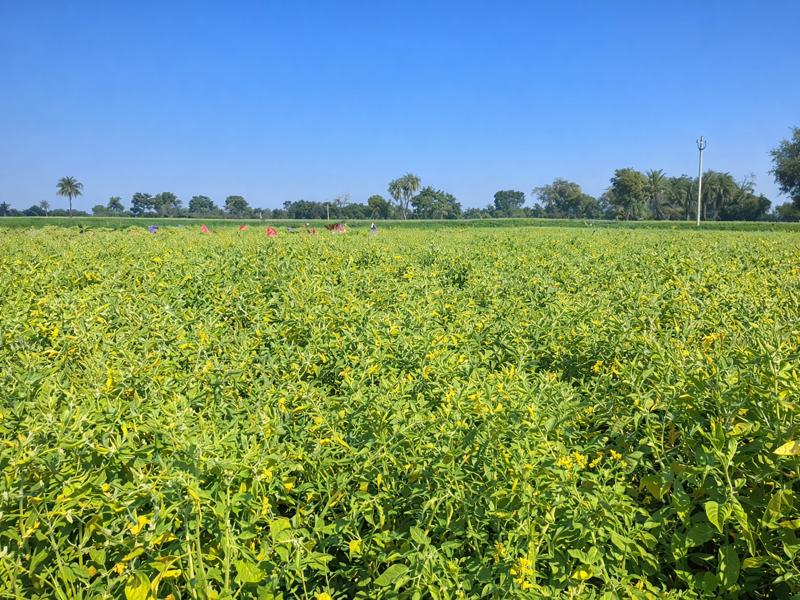
🌿 How to Do Ashwagandha Farming? Complete Information and Profit
Ashwagandha is a very important medicinal crop of India which has been used in Ayurveda for thousands of years. It is also called Indian Ginseng because it helps increase the body’s immunity, reduce mental stress, and give strength to the body. In the present time, its demand is continuously increasing in Ayurvedic medicines, health supplements, cosmetic products, and herbal industries.
Many farmers are now moving toward the cultivation of medicinal plants along with traditional crops. Ashwagandha farming is considered a low-cost and high-profit crop. It can easily grow even in land with low fertility and less water.
If you want to know ashwagandha ki kheti kaise karen, ashwagandha ki kheti kab hoti hai, ashwagandha ki kheti kaha hoti hai, or ashwagandha ki kheti kitne din ki hoti hai, then this detailed article is a complete guide for farmers.
In this article we will understand in detail how to do Ashwagandha farming, what type of soil and climate are required, how much seed is needed, what is the cost of cultivation, and how much profit a farmer can earn from one acre.
1.🌱 Crop Introduction
Ashwagandha is a perennial medicinal plant whose scientific name is Withania somnifera. This plant normally grows between 40 to 150 centimeters in height. Its stem is branched and its roots are thick and white in color.
The flowers of this plant are small green or yellow, and its fruits are red berry-like round fruits that contain many seeds.
In India, Ashwagandha farming is mainly done in the following states:
- Rajasthan
- Madhya Pradesh
- Gujarat
- Punjab
- Haryana
- Uttar Pradesh
- Maharashtra
Farmers often ask ashwagandha ki kheti kahan hoti hai. Actually, this crop grows well in dry and semi-arid regions where rainfall is low.
2.💊 Health Benefits and Uses
Ashwagandha is considered a miracle herb in Ayurveda because it has many health benefits.
Main Uses
- Helpful in reducing stress and anxiety
- Increases body immunity
- Helpful in insomnia problems
- Beneficial in arthritis and joint pain
- Useful for skin diseases
- Strengthens the digestive system
- Helps increase male strength
- Removes body weakness
- Useful in lung inflammation
- Anti-tumor properties
Medicinal Uses
The root, leaves, and seeds of Ashwagandha are used to make medicines.
- Roots are used in Ayurvedic medicines
- Leaves are used for making insecticide
- Roots are used for arthritis and skin disease medicine
3.🔬 Scientific Classification
| Class | Description |
|---|---|
| Kingdom | Plantae |
| Order | Solanales |
| Family | Solanaceae |
| Genus | Withania |
| Species | Withania somnifera |
This plant belongs to the nightshade family, which also includes tomato and potato.
4. 🌤 Climate and Temperature
Farmers who ask ashwagandha ki kheti kab ki jati hai should first understand the climate requirement.
Ashwagandha grows best in dry and semi-dry climates.
Required Temperature
- Germination temperature: about 20°C
- Growth temperature: 20–25°C
- Harvest temperature: 20–35°C
Rainfall
- 300 to 350 mm rainfall is suitable
Too much rainfall is harmful for this crop.
5.🌾Soil Requirement
If farmers want to know ashwagandha ki kheti kaise hoti hai, then selecting the right soil is the most important factor.
Light, loose, and well-drained soil is best for Ashwagandha.
Suitable Soil
- Sandy loam soil
- Light red soil
- Black soil with good drainage
Soil pH
- 7.5 to 8.0
Important Points
- Do not grow the crop in water-logged soil
- Land should be deep and loose
This crop can grow well even in low fertility land.
6.🌱 Seed and Improved Varieties
Selecting a good variety is very important in Ashwagandha farming. The right variety increases production and improves root quality. Many farmers ask ashwagandha ki kheti kaise ki jaati hai and which varieties should be planted, so here are some improved varieties.
6.1. Jawahar Asgandh 20
This variety was developed by Jawaharlal Nehru Agricultural University, Madhya Pradesh.
Features
- Plant height is small
- Can be grown in high plant density
- Withanolide content in roots about 0.30%
- Crop ready in about 180 days
6.2. Jawahar Asgandh 134
This is also a high-yield variety.
Features
- Good root quality
- High medicinal value
- Good demand in market
6.3. Raj Vijay Ashwagandha 100
This improved variety is also developed in Madhya Pradesh.
Features
- Suitable for dry areas
- Gives good production
6.4. Rakshit
This variety was developed by CSIR-CIMAP Lucknow.
Features
- High-yield variety
- Good root quality
6.5. Poshita
This variety was also developed by CIMAP.
Features
- Good yield even in low fertile soil
- Suitable for dry regions
6.6. Nagori
This is a local variety.
Features
- Thick and starch-rich roots
- Very popular in Rajasthan
7.🌾Seed Rate
Using the correct quantity of seed is important in Ashwagandha farming. Many farmers want to know ashwagandha ki kheti kaise karen and how much seed is required.
Seed Quantity per Acre
- About 4 to 5 kg seed per acre
If nursery method is used, the seed requirement may be slightly less.
Seed Treatment
Seed treatment before sowing is necessary to protect the crop from early diseases.
Seed Treatment Method
- Thiram or Dithane M-45
- 3 grams per kg seed
After treatment, seeds should be dried in shade before sowing.
8.🚜 Land Preparation
For good production, proper field preparation is necessary. When farmers ask ashwagandha ki kheti kaise kare, the first step is correct field preparation.
Field Preparation Process
- Plough the field 2 to 3 times deeply
- Make the soil loose and fine
- Level the field
- Remove weeds and stones
Use of Organic Manure
During field preparation:
- Apply 4 to 8 tons of well-decomposed cow dung manure per acre
This increases soil fertility and improves plant growth.
Land preparation should normally be done between April and May.
9.🌱 Sowing Method
Farmers often ask ashwagandha ki kheti kab ki jaati hai and how sowing is done.
Sowing Time
Ashwagandha is cultivated in the Kharif season.
Suitable sowing time:
- June to July
Nursery Preparation
Seeds are first sown in nursery to prepare plants.
- Seeds germinate in 5 to 7 days
- Plants become ready for transplanting in 30 to 35 days
Plant Spacing
- Row to row distance: 20–25 cm
- Plant to plant distance: 10 cm
Sowing Depth
- 1 to 3 cm
Sowing Methods
Ashwagandha farming can be done in two ways:
- Direct sowing
- Nursery transplanting
Nursery method is considered more successful.
10.🌿Fertilizer and Manure Management
Ashwagandha is a medicinal crop, so chemical fertilizers are used less, and organic farming is preferred.
Organic Manures
- Cow dung manure
- Vermicompost
- Green manure
Fertilizer Quantity per Acre
| Fertilizer | Quantity |
|---|---|
| Urea | 14 kg |
| Single Super Phosphate | 38 kg |
Nutrient Quantity
- Nitrogen: 6 kg
- Phosphorus: 6 kg
It is best to mix fertilizers during field preparation.
11.💧Irrigation Schedule
Ashwagandha crop does not require much water.
Too much water can damage the roots.
Irrigation Schedule
- First irrigation 30–35 days after germination
- Second irrigation 60–70 days after sowing
If rainfall is sufficient, irrigation is not required.
In irrigated areas:
- Light irrigation can be given every 10–15 days.
12.🌿Weed Control
Weeds consume crop nutrients and reduce production.
Weeding
- First weeding 20–25 days after sowing
- Second weeding 20–25 days after the first weeding
Weeding helps roots get air and improves plant growth.
Chemical Control
- Isoproturon 200 g per acre
- Glyphosate 600 g per acre
These should be used before sowing.
13.🐛 Pest and Disease Management
Normally Ashwagandha crop has less pest and disease problems, but some issues may occur.
Major Pests
Aphids
Small insects that suck plant sap.
Control
- Spray 0.5% Malathion
Shoot Borer
Damages soft plant branches.
Control
- Sumicidin 10 ml per liter of water
Mites
Damage plant leaves.
Control
- Ethion 10 ml per liter of water
Major Diseases
Seedling Rot
Occurs during seed germination stage.
Control
- Use disease-free seeds
- Seed treatment is necessary
Leaf Spot
Brown spots appear on leaves.
Control
- Dithane M-45
- 3 grams per liter water
Spray at 15-day intervals.
14.⏳Crop Duration
Many farmers ask ashwagandha ki kheti kitne din ki hoti hai.
Ashwagandha crop usually becomes ready in:
- 160 to 180 days
In some areas:
- 135 to 150 days
15.🌾Harvesting Method
When plant leaves turn yellow and fruits become red, the crop is ready for harvesting.
Harvesting Method
- Uproot the whole plant with roots
- Separate roots from plants
- Cut roots into 8–10 cm pieces
- Dry properly in sunlight
Longer roots get better market price.
16.📦 Storage
Proper storage is important to keep Ashwagandha roots safe.
Storage Method
- Dry the roots properly
- Fill them in jute bags
- Store in dry and ventilated place
Storage place should be termite-free.
With proper storage, roots can be safely kept for about 1 year.
17.🌾Yield per Acre
In normal farming:
- 120 to 200 kg dry roots per acre
In addition:
- 20 to 25 kg seeds
With improved technology and good varieties, production can increase further.
18.💰 Market Price and Profit per Acre
Ashwagandha demand is very high in Ayurvedic medicine companies and herbal industries.
Market Price
- Average root price: ₹120 to ₹180 per kg
Major Markets
- Neemuch Mandi (Madhya Pradesh)
- Amritsar Mandi (Punjab)
- Khari Baoli (Delhi)
- Panchkula (Haryana)
Estimated Income per Acre
If production is 150 kg
Total income:
- ₹20,000 to ₹30,000
Cost:
- ₹6,000 to ₹8,000
Net profit:
- ₹15,000 to ₹22,000 per acre
19. 🏛 Government Schemes
The Government of India runs several schemes to promote medicinal plant cultivation.
Major Schemes
- National Medicinal Plants Board Scheme
- AYUSH Ministry Scheme
- National Horticulture Mission
Under these schemes farmers receive:
- Subsidy
- Training
- Market support
- Planting material
20.❓Frequently Asked Questions
1. How to do Ashwagandha farming
To grow Ashwagandha, first select well-drained sandy loam soil. Plough the field 2–3 times and mix 4–8 tons of cow dung manure per acre. Sow 4–5 kg seed per acre between June and July. Keep spacing 20–25 cm between rows and 10 cm between plants. The crop becomes ready in 160–180 days.
2. When is Ashwagandha cultivated
Ashwagandha is mainly grown in the Kharif season. The best sowing time is June to July, when the monsoon starts and soil has enough moisture.
3. Where is Ashwagandha cultivated
In India, Ashwagandha farming is mainly done in dry and semi-arid regions such as Rajasthan, Madhya Pradesh, Gujarat, Punjab, Haryana, Uttar Pradesh, and Maharashtra.
4. How many days does Ashwagandha crop take
Ashwagandha crop normally becomes ready in 160 to 180 days. In some areas it may be ready in 135 to 150 days.
5. How is Ashwagandha farming done
Ashwagandha farming is done by seed or nursery method. Seeds are first treated and sown. Plants become ready in 30–35 days, then they are transplanted into the main field.
6. When is Ashwagandha sowing done
Sowing is usually done between June and July when the monsoon begins.
7. Where is Ashwagandha grown the most
In India, the highest production is in Madhya Pradesh and Rajasthan, followed by Gujarat, Punjab, Haryana, and Uttar Pradesh.
8. Can Ashwagandha be grown with less water
Yes, Ashwagandha can grow successfully with low water. It is a drought-tolerant crop.
9. Can Ashwagandha grow in low fertile land
Yes, it can be grown even in low fertility and barren land with proper management.
10. Tell about Ashwagandha farming
Ashwagandha is an important medicinal crop whose roots and leaves are used in Ayurvedic and Unani medicines. It requires low investment and has increasing market demand, so it is becoming a profitable farming option.
Conclusion
Ashwagandha farming is a low-cost and high-profit medicinal crop for farmers. Due to increasing demand, it can become a good business opportunity. If farmers select the right varieties, prepare the field properly, and take care of the crop at the right time, they can easily get good yield and profit.
Today, when farmers are searching for new and profitable crops, Ashwagandha Farming can prove to be an excellent option.
👉 For more detailed information on medicinal farming, click here