


Greenhouse Farming
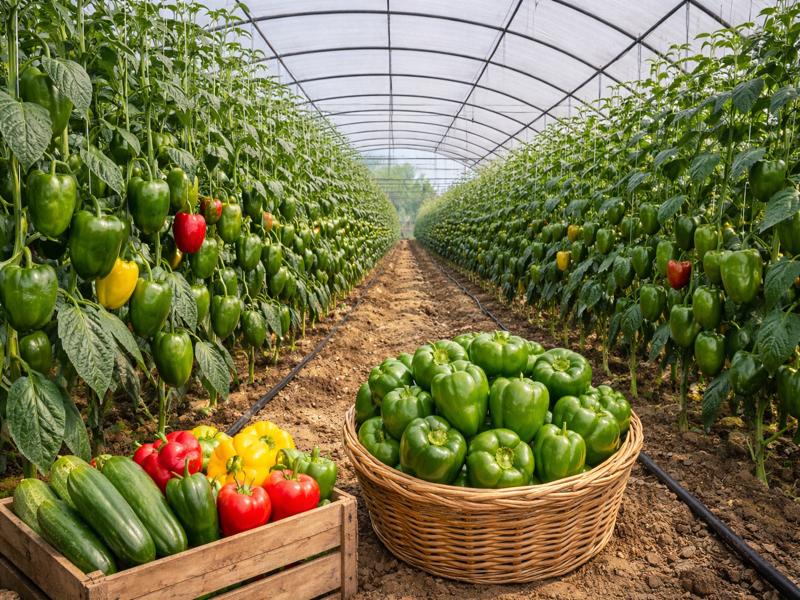
Greenhouse Farming in India – New Information 2026
Farming in India is rapidly moving towards modern technologies. Along with traditional farming, farmers are now adopting modern methods like Greenhouse Farming and Polyhouse Farming.
Through these technologies, farmers can do farming in a controlled environment, which increases production and reduces risk.
According to recent agricultural research, if modern agricultural technologies are adopted in India, the greenhouse gas emissions coming from the agriculture sector can be reduced by about 18%.
According to scientists, three major improved farming techniques are important for this:
- Effective use of fertilizers
- Better water management in rice farming
- Zero tillage technique
Along with these techniques, greenhouse farming is becoming a new and profitable farming system for farmers.
In this article we will learn:
- What is greenhouse farming
- Its condition in India
- Types of greenhouse
- Which crops are grown
- Cost and subsidy
- Difference between greenhouse and polyhouse
1️⃣ What is Greenhouse Farming
A greenhouse is a structure that is covered with glass, plastic, or transparent material. Inside it, crops are grown in a controlled environment.
The purpose of a greenhouse is to provide plants with an environment where:
- Temperature is controlled
- Humidity is balanced
- Sufficient light is available
- Air flow is balanced
By using greenhouse technology, farmers can grow both seasonal and off-season crops.
Today it is mainly used for:
- Flower farming
- Vegetable farming
- Tissue culture plant nursery
Greenhouse farming has now become one of the fastest growing agricultural businesses in the world.
2️⃣ Status of Greenhouse Farming in India
Greenhouse farming is becoming rapidly popular in India. Many state governments are promoting this technology.
Major greenhouse farming states in India are:
- Karnataka
- Maharashtra
- Gujarat
- Tamil Nadu
- Uttar Pradesh
- Rajasthan
- Kerala
- Haryana
- Andhra Pradesh
- Odisha
Among these, Karnataka is considered the leading state in greenhouse farming.
Here the state government is promoting greenhouse and polyhouse farming under the Krishi Bhagya Programme.
Today thousands of farmers in India are growing vegetables, flowers, and exotic crops in greenhouses.
3️⃣ Types of Greenhouse Farming
Greenhouses are of many types. They are classified on different bases.
Based on Shape
- Saw-tooth type
- Ground to ground type
- Interlocking ridge type
- Quonset type
- Even span type
- Uneven span type
- Ridge and furrow type
Based on Material
- Plastic greenhouse
- Glass greenhouse
Based on Ventilation
- Natural ventilation
- Climate controlled system (fan and pad system)
Based on Structure
- Pipe frame greenhouse
- Wooden frame greenhouse
Each type of greenhouse is used according to different farming conditions.
4️⃣ Advantages of Greenhouse Farming
Greenhouse farming has many major advantages.
Higher Production
In a greenhouse, many times higher production can be taken per square foot.
Farming Throughout the Year
In a greenhouse, farmers can do farming for 12 months.
Protection from Weather
Rain, storms, cold, and heat have less effect on the crop.
Protection from Pests and Birds
The greenhouse structure keeps animals and birds away from the crops.
Less Waste
Better use of resources results in less waste and more profit.
Better Quality
Crops grown in a greenhouse give better quality and higher price.
5️⃣ Major Crops Grown in Greenhouse
Many types of crops are grown in greenhouse farming.
Vegetables
- Cucumber
- Tomato
- Capsicum
- Spinach
- Peas
- Sweet corn
- Broccoli
Fruits
- Strawberry
- Grapes
- Orange
- Lemon
Other Crops
- Mushroom
- Ginseng
- Bamboo
Herbs
- Tulsi
- Mint
- Rosemary
- Ginger
- Chamomile
These crops have good demand in the market.
6️⃣ Cost of Building a Greenhouse
The cost of building a greenhouse depends on many factors:
- Size of the greenhouse
- Material used
- Technology
- Irrigation system
Normal Cost in India
| Area | Estimated Cost |
|---|---|
| 500 square meters | 4 – 6 lakh rupees |
| 1000 square meters | 8 – 12 lakh rupees |
| 1 acre | 35 – 45 lakh rupees |
This cost includes:
- Structure construction
- Irrigation system
- Plants and seeds
- Labour cost
7️⃣ Government Subsidy 2026
The Government of India provides subsidy to farmers for greenhouse farming.
National Horticulture Board (NHB)
Maximum project cost: 112 lakh rupees
Subsidy: 50%
National Horticulture Mission (NHM)
Maximum limit: 50 lakh rupees
Subsidy: 50%
State Horticulture Mission (SHM)
Additional 15% – 25% subsidy
NHM Subsidy Rate
| Area | Subsidy |
|---|---|
| Up to 500 square meters | ₹1650 per square meter |
| 500 – 1008 square meters | ₹1465 per square meter |
| 1008 – 2080 square meters | ₹1420 per square meter |
In some states, interest subsidy on agricultural loans is also provided.
8️⃣ How to Start Greenhouse Farming (Step-by-Step Guide)
If you want to start greenhouse farming in India, then you need proper planning, training, and investment. This farming is more technical compared to normal farming, so it is important to prepare completely before starting.
By following the steps given below, you can successfully start greenhouse farming.
Step 1 – Do Research on Greenhouse Farming
First you should get complete information about greenhouse farming.
For this you can:
- Take information from internet and agriculture websites
- Take advice from agriculture experts
- Learn experience from farmers who are already doing greenhouse farming
Good research helps you understand the right crop, cost, and market.
Step 2 – Arrange Investment and Bank Loan
Initial investment to start greenhouse farming is high.
So you can:
- Take agricultural loan from bank
- Use Kisan Credit Card (KCC)
- Take benefit of government schemes
Step 3 – Apply for Government Subsidy
The Government of India and state governments provide up to 50% subsidy on greenhouse farming.
You can apply through:
- Agriculture department
- Horticulture department
- State agriculture portal
Getting subsidy reduces your cost significantly.
Step 4 – Take Training in Greenhouse Farming
Greenhouse farming is a technical farming. Therefore training is very important.
You can take training from:
- Agriculture universities
- Krishi Vigyan Kendra (KVK)
- Horticulture training institutes
Training helps you learn modern farming techniques.
Step 5 – Build the Greenhouse Structure
Now you should contact a reliable greenhouse construction company to build the greenhouse.
While building the structure take care of:
- Strong frame
- Proper ventilation
- Drip irrigation system
- Temperature control system
Step 6 – Select the Right Crop
In greenhouse you should grow crops which have good demand in the market.
Examples:
- Capsicum
- Cucumber
- Tomato
- Flower farming
Step 7 – Plan Marketing and Sales
For good income in greenhouse farming, proper marketing is necessary.
You can sell your crops in:
- Local mandis
- Supermarkets
- Hotels and restaurants
- Online platforms
9️⃣ Greenhouse Farming Training Centers (India)
In India, many institutions provide training to farmers for greenhouse farming. From these institutions, farmers can learn modern agricultural techniques.
Major Training Centers in India:
- Indian Council of Agricultural Research (ICAR) – New Delhi
- Govind Greenhouse Private Limited – Pune
- NIPHT Horticulture Training Center – Pune
- University of Agricultural Sciences – Bengaluru
- Institute of Horticulture Technology – Greater Noida
- All India Organic Farming Society – Hisar
By taking training from these institutions, farmers can start greenhouse farming in a scientific way.
🔟 Profit in Greenhouse Farming
Farmers can earn more profit from greenhouse farming compared to normal farming. This is because it gives high quality crops and higher production.
Capsicum Farming
In 1 acre greenhouse:
- Production: Around 80 to 100 tons
- Estimated income: 12 to 18 lakh rupees
Cucumber Farming
From 1 acre greenhouse:
- Estimated income: 10 to 15 lakh rupees
Flower Farming
If farmers grow flowers like rose or gerbera, then:
- Annual income can be 15 to 25 lakh rupees.
If farmers choose the right technology, good crops, and the right market, then greenhouse farming can become a very profitable business.
1️⃣1️⃣ Difference Between Greenhouse and Polyhouse
Greenhouse and polyhouse both are methods of protected farming, but their structure and cost are different.
| Feature | Greenhouse | Polyhouse |
|---|---|---|
| Structure | Glass or strong material | Polythene sheet |
| Cost | Higher | Lower |
| Temperature Control | Much better | Limited |
| Durability | Higher | Lower |
| Use | High-tech farming | Low cost farming |
In simple words:
Greenhouse = High technology farming
Polyhouse = Low cost protected farming
In India, most farmers start with polyhouse farming because its cost is lower.
Conclusion
Greenhouse farming is a rapidly growing modern farming system in India. This technology gives farmers the opportunity to get higher production and higher income in less land.
Due to government subsidy, modern technology, and increasing market demand, greenhouse farming is going to become an important part of agriculture in India in the coming time.
If farmers use proper training, correct planning, and modern technologies, then earning lakhs of rupees annually from greenhouse farming is possible. 🌱
👉 For more detailed information on technical farming, click here