


Ladyfinger Farming
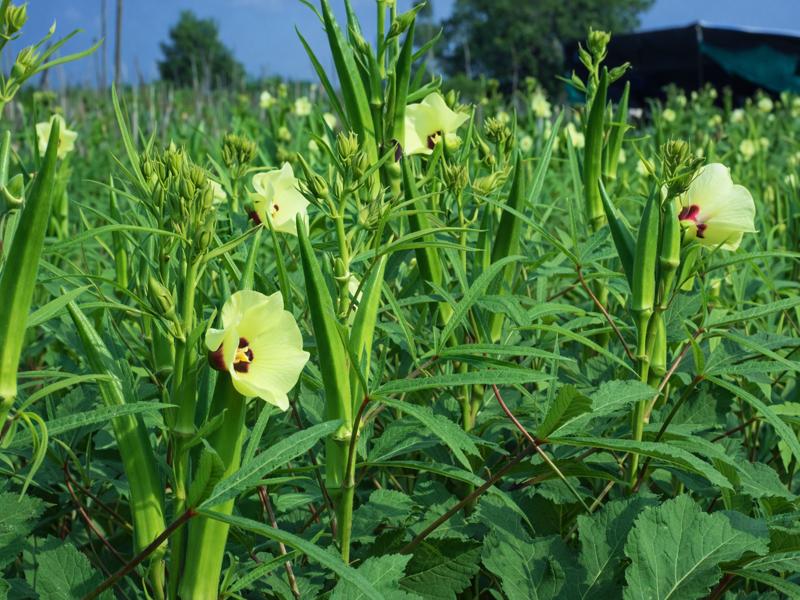
🌱 Ladyfinger Farming: Complete Guide to High Profit with Low Investment
Ladyfinger (Okra) is one of the most popular vegetables in Indian kitchens. Its demand remains strong throughout the year, making Ladyfinger Farming a reliable and profitable option for farmers. This crop grows fast, requires low investment, and gives regular harvesting, which helps farmers earn continuous income.
When grown with the right variety, proper season, and scientific farming methods, ladyfinger can become a dependable source of income for both small and marginal farmers.
👉 This blog is specially written for rural farmers.
✔ Language is simple and practical
✔ Information is explained per acre
✔ Covers season, hybrid farming, summer farming, January sowing, and income potential
If you want a complete step-by-step guide on Ladyfinger Farming, this blog is for you.
🌾 1. Crop Introduction (Ladyfinger / Okra)
Ladyfinger is an important vegetable crop belonging to the Malvaceae family. Its origin is believed to be Ethiopia. In India, it grows very well in tropical and sub-tropical climates.
📍 Major ladyfinger producing states:
- Uttar Pradesh
- Bihar
- West Bengal
- Odisha
👉 Ladyfinger is mainly cultivated for its green, tender fruits.
👉 Dry fruits and peels are also used in paper and fiber industries.
✅ Why Ladyfinger Farming is Profitable
✔ Low cost of cultivation
✔ Low risk crop
✔ Short duration crop
✔ Regular harvesting and income
🥗 2. Health Benefits of Ladyfinger
Ladyfinger is not only beneficial for farmers but also highly nutritious for consumers.
⭐ Major Health Benefits
• 🥗 Improves digestion
• 🦴 Rich in calcium, good for bones
• ❤️ Helps control cholesterol
• 🩺 Beneficial for diabetic patients
• 💪 Rich source of Vitamin A, C, and protein
• 🧠 Boosts immunity
👉 Due to these benefits, market demand always remains high.
🔬 3. Scientific Classification
• 🌱 Crop Name: Ladyfinger
• 🌍 English Name: Okra / Lady Finger
• 🧪 Botanical Name: Abelmoschus esculentus
• 🌿 Family: Malvaceae
• 🌍 Origin: Ethiopia
🌤️ 4. Climate and Temperature Requirement
Ladyfinger is a warm-season crop and performs best in moderate to high temperatures.
🌡️ Ideal Temperature
• At sowing time: 20–29°C
• During growth: 20–30°C
• At harvesting: 25–35°C
☔ Rainfall Requirement
• About 1000 mm annual rainfall is sufficient
⚠️ Excess cold and frost can severely damage the crop.
🌱 5. Soil Requirement for Ladyfinger Farming
✔️ Suitable Soil
• Sandy loam to loam soil
• Rich in organic matter
• Good drainage system
📊 Soil pH
• Ideal pH: 6.0 – 6.5
❌ Avoid These Soils
• Saline soil
• Alkaline soil
• Waterlogged fields
👉 Well-drained fertile soil gives higher yield and better quality fruits.
🌾 6. Seeds and Varieties
🌟 Popular Varieties (Punjab)
🔹 Punjab No. 13
🔹 Punjab Padmini
🔹 Punjab 7
🔹 Punjab 8
🔹 Punjab Suhawani
🌟 Other Popular Varieties
🔹 Pusa Sawani
🔹 Parbhani Kranti
🔹 Pusa Makhmali
🔹 Arka Anamika
👉 Hybrid Ladyfinger Farming gives:
✔ Higher yield
✔ Better fruit quality
✔ Uniform size and shine
🌰 7. Seed Rate (Very Important)
Correct seed rate is crucial in Ladyfinger Farming.
Too little seed reduces plant population, while too much seed weakens plants.
📦 Seed Rate per Acre
🌧️ Rainy Season Crop
• Branching varieties
👉 Seed rate: 4–6 kg/acre
👉 Spacing: 60 × 30 cm
• Non-branching varieties
👉 Spacing: 45 × 30 cm
👉 Seed rate: 4–6 kg/acre
🌸 Mid-February Sowing
• ❄️ Cold slows germination
👉 Increase seed rate
👉 15–18 kg/acre
🌞 March Sowing
• 🌱 Ideal temperature
👉 Normal seed rate
👉 4–6 kg/acre
⭐ Important Seed Tips
✔ Always use certified, treated seeds
✔ Hybrid seeds have better germination
✔ More seeds do NOT mean more yield
✔ Correct spacing keeps plants healthy
👉 Proper seed rate directly increases profit in Ladyfinger Farming.
🚜 8. Land Preparation
Good land preparation ensures strong roots and higher production.
🌾 8.1 Ploughing
• 🚜 Deep ploughing 5–6 times
• First ploughing with mouldboard plough
• Later ploughing with cultivator
• Helps remove weeds and loosens soil
🌿 8.2 Adding Organic Manure
• 🐄 Apply 100 quintals well-decomposed FYM per acre during last ploughing
✔ Improves soil fertility
✔ Increases water holding capacity
✔ Strengthens roots
👉 If available, 120–150 quintals FYM/acre gives even better results.
📏 8.3 Leveling and Bund Making
• 🪵 Level the field using plank 2–3 times
• 🌾 Make proper bunds and channels
✔ Easy irrigation
✔ No waterlogging
✔ Better plant growth
🌱 9. Sowing Method
Correct sowing time, spacing, and method are critical for good yield.
📅 9.1 Best Time for Ladyfinger Farming
🌸 Spring Season
• Sowing: February – March
• Crop ready in early summer
• High market price
🌧️ Rainy Season
• Sowing: June – July
• Less irrigation cost
❄️ January Ladyfinger Farming
• Do NOT sow in open field
• Sow seeds in nursery/polyhouse
• Transplant in February
• Early crop gives higher price
📏 9.2 Plant Spacing
• Row to row: 45 cm
• Plant to plant: 15–20 cm
👉 Too dense planting increases disease
👉 Too wide spacing wastes land
🌰 9.3 Seed Depth
• Sow seeds 1–2 cm deep
• Deep sowing reduces germination
• Shallow sowing is best in light soil
🧑🌾 9.4 Sowing Methods
✔ Pit method – most common
✔ Behind plough – suitable for large areas
✔ Seed drill – saves time and labor
👉 Light irrigation after sowing improves germination.
🌞 9.5 Summer Ladyfinger Farming Tips
• 🌿 Ensure moisture before sowing
• 💧 Light but frequent irrigation
• ☀️ Avoid midday irrigation
• 🌾 Control weeds regularly
⭐ Extra Tips
✔ Use treated seeds
✔ Do not compact soil after sowing
✔ Remove weak plants after 7–10 days
🧪 10. Fertilizer and Nutrient Management
Balanced nutrition increases flowering, fruiting, and yield.
🌿 10.1 Organic Manure
• 🐄 FYM: 120–150 quintals/acre
📌 Mix well during last ploughing
🧂 10.2 Chemical Fertilizers (Per Acre)
• ⚪ Urea: 80 kg
• 🧪 Nitrogen: 36 kg
• 🟡 Phosphorus: As per soil test
• 🔵 Potash: As per soil test
📌 Nitrogen application:
✔ Half at sowing
✔ Half after first picking
💦 10.3 Foliar Spray Schedule (High Yield)
✅ 10–15 days after sowing
• 🧴 19:19:19 – 4–5 g/litre
✅ Before flowering
• 🌸 00:52:34 – 50 g/10 litres
✅ During fruit formation
• 🍀 13:00:45 – 100 g/10 litres
✔ More flowers
✔ Less fruit drop
✔ Better size and shine
⚠️ Fertilizer Precautions
• 🚫 Do not overuse fertilizers
• 💧 Spray in morning or evening
• 🌬️ Avoid spraying in strong wind
• 🧪 Follow correct dosage
💧 11. Irrigation Management
Proper irrigation is essential in Ladyfinger Farming.
🚿 First Irrigation
• Light irrigation before sowing if soil is dry
🌱 Second Irrigation
• Immediately after germination
• Crucial for early growth
☀️ Summer Irrigation
• Every 4–5 days
• Do not allow soil to dry
• Drip irrigation saves water and increases yield
🌧️ Rainy Season
• Irrigation every 10–12 days
• Ensure drainage during heavy rain
⚠️ Special Care
• Avoid waterlogging
• Maintain moisture during flowering & fruiting
• Excess water causes root rot
🌾 Tips for High Yield
✔ Light but frequent irrigation
✔ Prevent soil crusting
✔ Mulching retains moisture
🌾 12. Weed Management in Ladyfinger Farming
Weeds grow very fast in Ladyfinger Farming. If they are not controlled on time, they absorb nutrients, water, and fertilizers meant for the crop, which leads to heavy yield loss.
⚠️ Losses Caused by Weeds
• 🌱 Crop growth slows down
• 💧 Shortage of moisture and nutrients
• 📉 Reduction in yield and quality
• 🦠 Increased risk of pests and diseases
🧑🌾 Mechanical Weed Control (Best & Safest)
Mechanical weeding is the most effective and eco-friendly method in Ladyfinger Farming.
✔️ First Weeding
• ⏳ 20–25 days after sowing
• 🌱 Plants are small, so work carefully
✔️ Second Weeding
• ⏳ 40–45 days after sowing
• 🌾 Loosens soil and improves root aeration
👉 In rainy season crops, earthing-up along rows gives excellent results.
🧪 Chemical Weed Control (When Labor Is Not Available)
If labor is scarce, approved herbicides can be used.
✔️ Apply after sowing but before seed germination
🔹 Fluchloralin
• Dose: 1 litre per acre
🔹 Pendimethalin
• Dose: 1 litre per acre
🔹 Alachlor
• Dose: 1.6 litres per acre
💧 Mix any herbicide in 200–250 litres of water and spray uniformly.
✅ Farmer Advisory for Best Results
• 🌿 Reduce dose in light soils
• 🌦️ Do not spray if rain is expected
• 🧤 Always wear gloves and mask
• 🌱 First 40 days are most critical for weed control
🐛 13. Pest and Disease Management in Ladyfinger Farming
By following organic pest and disease management, farmers can:
✅ Reduce cultivation cost
✅ Maintain soil health
✅ Get higher market price
✅ Access organic & export markets
🐛 13.1 Fruit and Shoot Borer
🔍 Identification
• Drying of shoots
• Insect excreta inside fruits
• Curved and damaged fruits
🌿 Organic Control
• 🧴 Neem oil (3000 PPM)
▪ 3 ml per litre of water
▪ Spray every 7–10 days
• 🌱 Dashparni extract
▪ 3–5 litres per acre
▪ Mix in 200 litres water
• 🪤 Pheromone traps
▪ Install 6–8 traps per acre
• ✂️ Remove and destroy infected fruits and shoots
🪲 13.2 Blister Beetle
🔍 Identification
• Feeds on leaves, flowers, and buds
🌿 Organic Control
• 👨🌾 Collect and destroy beetles manually in morning or evening
• 🌿 Neem cake solution
▪ Soak 5 kg neem cake in 50 litres water
▪ Filter and spray
• 🌼 Trap crops
▪ Grow sunflower or castor around the field
🐞 13.3 Aphids
🔍 Symptoms
• Curling of young leaves
• Sticky substance on leaves
• Black sooty mold formation
🌿 Organic Control
• 🧴 Neem oil: 2–3 ml per litre
• 🧄 Garlic–chilli extract
▪ Garlic 100 g
▪ Green chilli 50 g
▪ Grind in 1 litre water
▪ Mix in 10 litres water and spray
• 🐞 Protect ladybird beetles (natural enemies)
🌿 13.4 Yellow Vein Mosaic Disease
🔍 Symptoms
• Yellow streaks on leaves
• Stunted plant growth
• Small and hard fruits
🌿 Organic Control
• 🌱 Use resistant varieties
• 🌿 Remove infected plants immediately
• 🧴 Neem oil: 3 ml per litre
• 🪤 Yellow sticky traps
▪ 10–12 traps per acre
⚪ 13.5 White Spots on Leaves
🌿 Organic Remedies
• 🌿 Wettable sulphur: 25 g per 10 litres
• 🧄 Garlic extract spray
• ☀️ Maintain proper air and sunlight flow
🍂 13.6 Leaf Spot Disease
🌿 Biological Control
• 🌱 Trichoderma viride
▪ 4 g per kg seed treatment
• 🌿 Jeevamrit spray
▪ 10% solution
▪ Spray every 10–12 days
🌱 13.7 Root Rot
🌿 Organic Solution
• 🌾 Follow crop rotation
• 🌱 Trichoderma
▪ 2.5 kg per acre
▪ Mix with FYM and apply to soil
• 🚿 Avoid waterlogging
🌵 13.8 Wilt Disease
🌿 Natural Management
• 💧 Timely irrigation
• 🌿 Mulching
▪ Straw
▪ Dry grass
▪ Crop residues
• 🌱 Panchgavya spray
▪ 3% solution
▪ Spray every 15 days
✅ Benefits of Organic Pest Management
✔ Lower input cost
✔ Improved soil fertility
✔ Better vegetable quality
✔ Higher market price
✔ Safe for humans and environment
⏳ 14. Crop Duration in Ladyfinger Farming
Ladyfinger is a short-duration crop, making it ideal for quick income.
🌱 Crop Growth Timeline (Per Acre)
• 🌾 Germination
➡️ 4–7 days after sowing
• 🌿 Vegetative growth
➡️ 20–25 days after sowing
• 🌼 Flowering stage
➡️ 30–35 days after sowing
• 🥒 Fruit formation
➡️ 40–45 days after sowing
• ✂️ First harvesting
➡️ 60–70 days after sowing
• 🔁 Harvesting interval
➡️ Every 2–3 days
• ⏰ Total crop duration
➡️ 90–120 days
⭐ Special Advice
• 🌞 Crop duration is shorter in summer
• 🌧️ Harvesting continues longer in rainy season
• ✂️ Timely harvesting keeps fruits tender and improves price
👉 Correct harvesting time directly increases income from Ladyfinger Farming.
✂️ 15. Harvesting Method
Proper and timely harvesting improves yield, quality, and market value.
🕒 Right Time for Harvesting
• ⏳ 60–70 days after sowing
• 🌿 Harvest tender, green, soft fruits
• ❌ Avoid over-mature hard fruits
🌅 Best Time of the Day
• 🌄 Early morning
• 🌆 Evening hours
✂️ Harvesting Technique
• ✋ Hand picking carefully
• ✂️ Use clean and sharp scissors or knife if required
• 🌱 Avoid damaging the plant
🔁 Harvesting Frequency
• 🔄 Every 2–3 days
• 📈 Regular harvesting results in:
• More fruit setting
• Longer harvesting period
• Higher total yield
⚠️ Precautions
• 🧤 Wear gloves
• ☀️ Avoid harvesting in strong sunlight
• 🚫 Late harvesting causes:
• Hard fruits
• Lower taste and price
📦 16. Yield per Acre
• 🌾 40–60 quintals per acre
• 🌟 Up to 70 quintals in hybrid varieties
💰 17. Market Price and Profit
💵 Income from Ladyfinger Farming
• Market price: ₹15–₹40 per kg
• Gross income: ₹60,000 – ₹1,20,000 per acre
• Net profit: ₹35,000 – ₹70,000 per acre
❄️ 18. Storage of Ladyfinger
• 🌡️ Temperature: 7–10°C
• 💧 Humidity: 90%
📦 Packaging:
• Nearby markets: Jute bags
• Distant markets: Cardboard boxes
🏛️ 19. Government Schemes for Farmers
• 🌾 Pradhan Mantri Krishi Sinchai Yojana
• 🌿 National Horticulture Mission
• 🥬 Vegetable Production Subsidy Schemes
👉 Contact your State Agriculture Department for latest benefits.
❓ 20. Frequently Asked Questions (FAQs)
Q1. Best time for Ladyfinger Farming?
👉 February–March and June–July
Q2. Can ladyfinger be grown in January?
👉 Yes, using nursery or polyhouse
Q3. Profit from hybrid Ladyfinger Farming?
👉 20–30% higher than local varieties
Q4. Seed rate per acre?
👉 4–6 kg in normal season
Q5. Crop ready in how many days?
👉 60–70 days
Q6. How to prevent yellow vein mosaic disease?
👉 Resistant varieties and whitefly control
Q7. How to grow ladyfinger in summer?
👉 Regular irrigation and mulching
Q8. Average yield per acre?
👉 40–60 quintals
Q9. Can ladyfinger be stored?
👉 Yes, for short time in cold storage
Q10. Is Ladyfinger Farming suitable for small farmers?
👉 Yes, it is a low-investment crop
🌟 Conclusion
Ladyfinger Farming is a safe, profitable, and farmer-friendly vegetable crop. By adopting the right sowing time, improved varieties, balanced nutrition, and organic pest management, farmers can significantly increase income.
If you want regular income from vegetable farming, Ladyfinger Farming is an excellent choice.
🙏 Wishing all farmers a successful and profitable harvest!
👉 For more detailed and practical information on vegetable farming, click here.
Reference Source: