


Sesame Farming In India
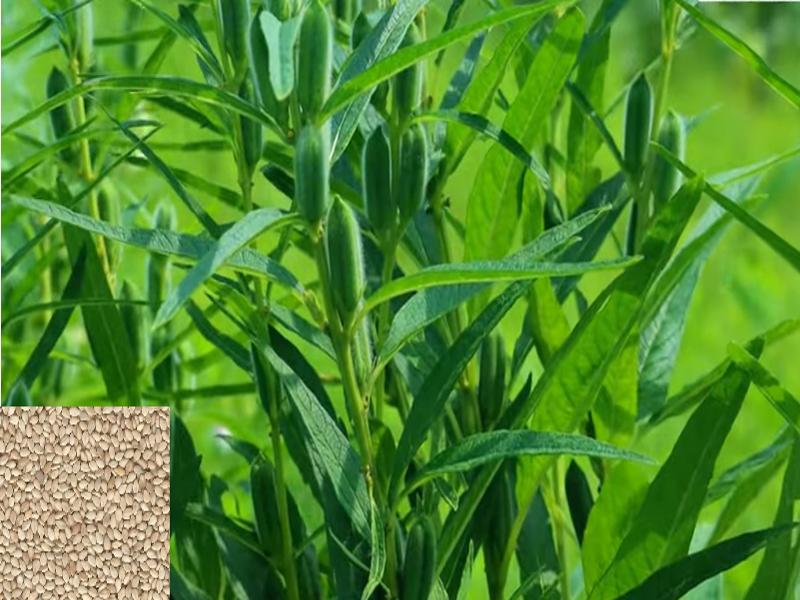
🟢 Complete Guide to Sesame Farming for Higher Yield
Sesame (Til) is one of the most important oilseed crops in India. Sesame oil is known for its rich flavour, nutritional value and strong market demand. Due to low input cost, low water requirement and high selling price, sesame is also called “the golden crop of small farmers.”
In Madhya Pradesh, sesame is cultivated in about 315,000 hectares during the Kharif season, with an average productivity of 500 kg/ha. Major sesame-growing districts are Chhatarpur, Tikamgarh, Sidhi, Shahdol, Morena, Shivpuri, Sagar, Damoh, Jabalpur, Mandla, East Nimar and Seoni.
This complete guide provides farmers with step-by-step sesame cultivation practices – from land selection to sowing, fertilizer, irrigation, pest/disease control, harvesting, storage and profit.
🟢 Best Soil for Sesame Farming
Sesame is drought-tolerant and gives good yield even in regions with low to moderate rainfall.
| Soil Type | Suitability |
|---|---|
| Light Sandy | Very Good |
| Loamy | Excellent |
| Heavy Soil | Possible with proper drainage |
📌 Ideal soil pH – 5.5 to 7.5
📌 Waterlogging should never occur in sesame fields.
🟢 Improved Sesame Varieties and Yield Potential
| Variety | Maturity (Days) | Yield (kg/ha) | Oil % | Key Features |
|---|---|---|---|---|
| TKG 308 | 80–85 | 600–700 | 48–50 | Tolerant to stem & root rot |
| JT-11 | 82–85 | 650–700 | 46–50 | Tolerant to Macrophomina disease; suitable for summer |
| JT-12 | 82–85 | 650–700 | 50–53 | White seed; disease-tolerant |
| Jawahar Til 306 | 86–90 | 700–900 | 52 | Resistant to multiple leaf diseases |
| JTS-8 | 86 | 600–700 | 52 | Resistant to Alternaria & bacterial diseases |
| TKG-55 | 76–78 | 630 | 53 | White seed; resistant to stem & root diseases |
🟢 Sowing Time and Seed Treatment
📌 For Kharif Season
👉 Last week of June to mid-July
📌 For Summer Sesame
👉 Second fortnight of January to second fortnight of February
Mandatory Seed Treatment
| Chemical | Dose |
|---|---|
| Thiram | 2 g |
| Carbendazim | 1 g |
➡ Total – 3 g mixture per kg seed
Sowing Spacing
- Row to row – 30 cm
- Plant to plant – 10 cm
- Seed depth – 3 cm
🟢 Fertilizer Management
| Farming Condition | Nitrogen | Phosphorus | Potash |
|---|---|---|---|
| Irrigated | 60 | 40 | 20 |
| Rainfed | 40 | 30 | 20 |
📌 Apply all phosphorus + potash and 50% nitrogen as basal dose at sowing
📌 Apply remaining nitrogen 30–35 days after sowing, after weeding
Using Single Super Phosphate automatically supplies sulphur which sesame needs.
🟢 Irrigation & Water Management
Sesame is sensitive to standing water.
✔ Field must have proper drainage
✔ Important irrigation stages:
| Stage | Reason |
|---|---|
| Flowering | Increases fruiting |
| Seed-filling | Increases seed weight and yield |
🟢 Weed Management
- First weeding –15–20 days after sowing
- Second weeding – 30–35 days after sowing
Chemical Weed Control
| Herbicide | Dose | Time | Method |
|---|---|---|---|
| Fluchloralin (Basalin) | 1 L/ha | Before sowing | Mix in soil |
| Pendimethalin | 500–700 ml/ha | After sowing | Spray in 500 L water |
| Quizalofop-Ethyl | 800 ml/ha | 15–20 days after sowing | Spray in 500 L water |
🟢 Major Sesame Diseases and Control
| Disease | Symptoms | Solution |
|---|---|---|
| Phytophthora | Water-soaked dark patches on leaves & stems | Ridomil MZ 2.5 g/L |
| Powdery Mildew | White powder on leaves | Wettable sulphur 2 g/L |
| Stem & Root Rot | Black patches on roots | Thiram + Carbendazim seed treatment |
| Phyllody | Flowers turn into leafy structures | Remove plants + apply Phorate |
| Bacterial Blight | Brown scattered spots | Streptocyclin 500 ppm |
🟢 Major Sesame Pests and Control
| Pest | Damage | Control |
|---|---|---|
| Leaf Webber | Feeds inside leaves | Profenophos 50 EC (1 L/ha) |
| Capsule Borer | Damages buds & pods | Quinalphos / Triazophos spray |
🟢 How to Prepare Neem Kernel Extract (5% Solution)
- Crush 10 kg neem kernels and soak in 20 L water for 24 hours
- Squeeze properly and strain
- Make total volume 200 L water
- Add 100 ml liquid soap
- Spray on crop
🟢 Harvesting, Threshing & Storage
📌 Harvest when capsules turn yellow and leaves start shedding
📌 Tie bundles and dry for 8–10 days
📌 Beat over tarpaulin and clean seeds
📌 Store only when moisture level is around 8%
🟢 Yield and Profit
| Farming Condition | Expected Yield |
|---|---|
| Rainfed | 4–5 quintals/ha |
| Irrigated | 6–8 quintals/ha |
📌 Average Cost – ₹16,500 per hectare
📌 Gross Income – ₹30,000 per hectare
📌 Net Profit – ₹13,500 per hectare
📌 Benefit Cost Ratio – 1 : 1.82
🟢 Key Tips for Higher Sesame Yield
✔ Use high-yield & disease-resistant varieties
✔ Seed treatment is compulsory
✔ Maintain proper plant spacing
✔ Practice intercropping – sesame + mung/urd/soybean
✔ Provide irrigation at flowering & seed-filling stages
✔ Timely weeding and plant protection
🟢 Ministry of Agriculture and Farmers’ Welfare – Government of India
The Ministry of Agriculture and Farmers’ Welfare is a key department of the Government of India dedicated to protecting farmers’ interests, promoting modern agricultural practices, implementing farming schemes, and strengthening the rural economy. The ministry is responsible for policies and programs related to crop production, agricultural research, insurance schemes, subsidies, crop protection, and other agriculture-related sectors. Through its official website, farmers can access information about government schemes, portals, updates, and agricultural support services.
🔗 Official Website: https://agriwelfare.gov.in/
🟢 Soil Health Card Scheme – Soil Health Card Yojana
The Soil Health Card Scheme is an important initiative introduced to provide farmers with scientific information about the quality of their farmland soil. Under this scheme, soil samples are tested in laboratory facilities, and farmers receive a detailed Soil Health Report. The report includes information on nutrient levels in the soil, recommended fertilizers, crop selection suggestions, and guidelines on organic nutrient management. This scheme helps farmers use fertilizers correctly, reduces cultivation costs, and improves crop productivity.
🔗 Official Portal: https://www.soilhealth.dac.gov.in/home
🟢 FAQs: Frequently Asked Questions on Sesame Farming
❓ 1. What is the best time to sow sesame?
👉 Last week of June to mid-July (Kharif) and January–February (Summer).
❓ 2. How much seed is required per acre?
👉 1 to 1.5 kg seed.
❓ 3. Which soil is suitable for sesame?
👉 Light sandy and loamy soil with good drainage.
❓ 4. How many irrigations are needed?
👉 Mainly two – at flowering and seed-filling stage.
❓ 5. How can sesame yield be increased?
👉 With improved varieties, seed treatment, correct spacing, fertilizers and timely irrigation.
❓ 6. Why do sesame crops get more diseases?
👉 Continuous moisture and waterlogging increase fungal infections.
❓ 7. Can farmers use organic pesticides?
👉 Yes, Neem kernel extract (5%) is effective.
❓ 8. When should weeds be removed?
👉 15–20 days after sowing and again 30–35 days after sowing.
❓ 9. What is the possible profit per hectare?
👉 Around ₹13,500 profit (may increase with good management).
❓ 10. Is intercropping profitable?
👉 Yes, sesame + mung/urd/soybean gives better income and improves soil health.
🟢 Conclusion
Sesame is a profit-giving and low-cost crop, especially suitable for dry and rainfed areas. With the right selection of improved varieties, seed treatment, fertilizer management, irrigation and pest/disease control, farmers can achieve excellent yield and high income.
🌱 Adopt scientific farming practices and bring prosperity to your field, family and future.
Wishing all farmers a productive and successful sesame crop!
👉 Explore detailed guides on other oilseeds farming – click here to read more.