


Turmeric Farming in India
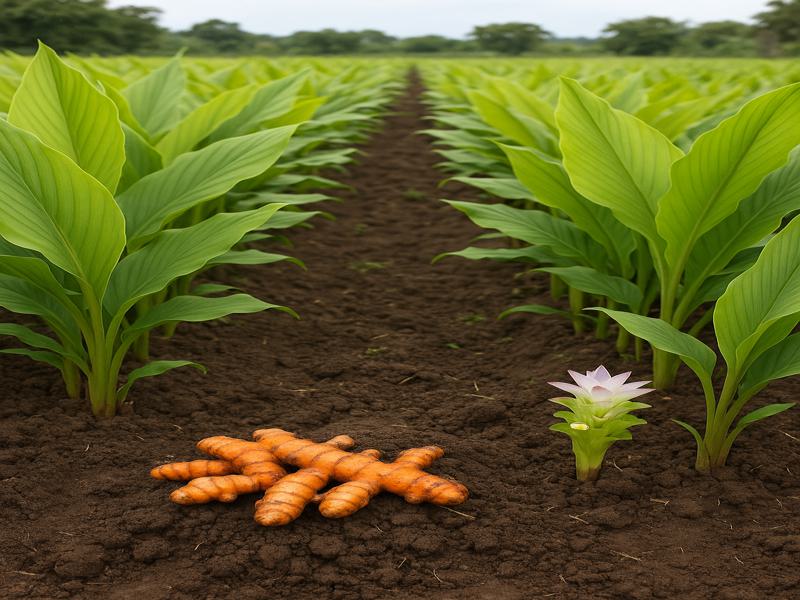
🌿 Complete Guide to Turmeric Farming: From Soil to Profit
Turmeric is not just a spice in India; it is a medicinal crop with rising demand both in domestic and international markets. This blog provides a complete, step-by-step guide for turmeric cultivation, especially crafted for Indian farmers to maximize profit using updated agricultural practices.
1️⃣ Field Preparation
🌱 Soil Selection
- Turmeric grows best in loamy soil that has good water drainage.
🧪 Soil Testing
- Before sowing, conduct soil testing to check nutrient levels and pH (ideal is 6.0 to 7.5).
🚜 Deep Ploughing and Levelling
- Plough the field 3–4 times during summer to destroy weeds and improve aeration. Then level the field properly.
🐄 Use of Organic Manure
- Apply farmyard manure, vermicompost, neem cake to improve soil fertility.
💧 Moisture Management & Bed Preparation
- Turmeric requires adequate moisture but cannot tolerate waterlogging. So prepare raised beds or ridges and furrows to manage moisture properly.
2️⃣ Seed Selection and Treatment
🌾 Choose Improved Varieties
Popular turmeric varieties in India:
- Sudarshan
- Rashmi
- Suvarna
- Irodi (Erode)
- Suguna
🔍 Disease-Free Seed Rhizomes
- Always select healthy, disease-free rhizomes for planting.
🧼 Seed Cleaning & Organic Treatment
- Soak seed in 3% salt solution to remove infected rhizomes. Treat remaining seed with Trichoderma or Bavistin for protection against diseases.
🔒 Pre-Storage Inspection
- Store seeds in a dry, ventilated place and inspect every 10-15 days.
3️⃣ Planting: Time and Method
📅 Best Time for Planting
- The ideal time to sow turmeric is May to June, preferably with the arrival of the monsoon.
📦 Seed Quantity
- About 800–1000 kg of seed rhizomes per acre is required.
📏 Sowing Depth and Spacing
- Plant rhizomes 5–7 cm deep, with 30×20 cm spacing between plants.
🌾 Ridge-Furrow or Raised Bed Method
- Use ridge-furrow in rainy areas and raised beds in plain lands for best results.
4️⃣ Irrigation: When and How
💦 Initial Irrigation
- Give a light irrigation immediately after planting.
⏳ Irrigation Frequency
- Water the field every 7–10 days, adjusting based on weather.
☁️ Adjust as per Weather
- Avoid irrigation during heavy rains. Too much moisture can rot rhizomes.
🚿 Drip or Sprinkler Irrigation
- Drip irrigation is best for turmeric as it saves water and gives moisture directly to the roots.
⚠️ Impact of Over or Under Irrigation
- Overwatering causes fungal issues; under-irrigation restricts growth.
5️⃣ Fertilizer Management
🌾 Basal Dose
- Apply 10–12 tons of FYM (farmyard manure) during field preparation.
🧪 NPK Ratio (Nitrogen, Phosphorus, Potash)
- Use 60:40:40 kg/acre as a general recommendation.
🐛 Organic Fertilizer Use
- Use vermicompost, neem cake, and Jeevamrut to boost plant growth organically.
🌱 Stage-Wise Nutrient Supply
- Apply fertilizers in phases depending on crop stage (vegetative, rhizome development).
🧬 Micronutrient Supply
- Supplement nutrients like zinc, boron, and sulphur based on soil test reports.
6️⃣ Pest and Disease Control
🐛 Common Pest Identification
- Whiteflies
- Leaf eaters
- Thrips
🍃 Organic Pest Control
- Use neem oil, garlic-ginger extract, and Trichoderma for eco-friendly pest control.
☠️ Chemical Control (If Required)
- Apply limited use of Chlorpyrifos, Quinalphos, only as per expert advice.
🛡️ Preventive Measures
- Use disease-free seed, timely weeding, and crop rotation.
👁️ Field Monitoring
- Inspect the field every 7 days for early detection.
7️⃣ Weed Management
🌿 Early Weed Control
- First weeding should be done within 15–20 days of planting.
✋ Manual Weeding
- Effective but labor-intensive.
🔧 Hoeing
- Loosen soil while removing weeds using a hoe.
💉 Use of Weedicide
- Apply Pendimethalin or Glyphosate with care and as per recommendations.
⏱️ Timely Weeding
- Do weeding at every 20–25 days for healthy crop growth.
8️⃣ Harvesting and Storage
⏰ Best Time to Harvest
- When leaves start drying, after 7–9 months of sowing.
⛏️ Digging Method
- Use spade or hand tools to avoid damaging the rhizomes.
🧼 Washing and Cleaning
- After harvesting, clean rhizomes with water to remove soil and dirt.
🌞 Drying Process
- Dry rhizomes in shade for 10–15 days. Avoid direct sunlight.
📦 Storage Method
- Store dried turmeric in jute sacks in well-ventilated rooms.
9️⃣ Cost and Profit in Turmeric Farming
| Item | Approx Cost/Profit per Acre |
|---|---|
| Seed Rhizomes | ₹15,000 |
| Fertilizers and Manure | ₹10,000 |
| Labour | ₹12,000 |
| Irrigation and Tools | ₹5,000 |
| Total Cost | ₹42,000 |
| Expected Yield (Raw) | 80–100 quintals |
| Market Price per Kg | ₹12–₹16 |
| Gross Income | ₹1,20,000–₹1,60,000 |
| Net Profit | ₹80,000–₹1,20,000 |
💡 Tips to Increase Profit
- Grow organic turmeric for premium rates
- Sell directly to processing units or exporters
- Make turmeric powder and sell with branding
🔟 Top 10 Frequently Asked Questions (FAQs) About Turmeric Farming
1. Which type of soil is best suited for turmeric farming?
Answer:
Turmeric grows best in loamy or sandy loam soil with good drainage. The ideal soil pH should be between 6.0 and 7.5 for healthy growth.
2. What is the ideal time for turmeric sowing?
Answer:
The best time to sow turmeric is between May and June, during the early monsoon season, when there is enough moisture in the soil.
3. What are the major varieties of turmeric?
Answer:
Several improved varieties of turmeric are cultivated in India, such as:
- Rusha (or Rusita)
- Rajendra Sonia
- Sudha
- Elnora (or Ellora)
- BC-47
Each variety is suited to different regions depending on climate and soil type.
4. How much fertilizer and manure is needed for turmeric farming?
Answer:
Per acre requirement (approximate):
- Farmyard manure (FYM): 10 to 12 tons
- Nitrogen: 60 kg
- Phosphorus (P2O5): 40 kg
- Potassium (K2O): 40 kg
Apply fertilizers in split doses at different stages of crop growth for better yield.
5. How often should turmeric be irrigated?
Answer:
Turmeric requires irrigation based on soil and climatic conditions:
- In rainfed areas, less irrigation is needed.
- In dry or hot regions, water the field every 10–15 days to maintain soil moisture.
6. How much time does turmeric take to mature?
Answer:
Turmeric takes approximately 7 to 9 months to mature fully. Harvesting is usually done between January and March.
7. What are the common diseases found in turmeric?
Answer:
Some common diseases that affect turmeric include:
- Leaf Blight (leaves turning brown and dry)
- Rhizome Rot (decay of underground rhizomes)
- Leaf Spot (brown or black spots on leaves)
Proper management through organic or chemical fungicides can help prevent these.
8. What is the cost and profit involved in turmeric farming?
Answer:
Per acre turmeric farming may cost around ₹50,000 to ₹70,000, and a good yield can generate ₹80,000 to ₹1.2 lakh in profit, depending on market rates and quality.
9. How is turmeric processed and stored after harvesting?
Answer:
After harvesting, the rhizomes are boiled, dried under sunlight, and polished. Proper storage in dry, ventilated areas helps maintain quality for a longer duration.
10. Are there any government schemes or subsidies for turmeric farming?
Answer:
Yes, the Central and State Governments offer support under schemes like:
- National Horticulture Mission (NHM)
- PM Crop Insurance Scheme (PMFBY)
These schemes offer subsidies, training, seed support, and insurance benefits to turmeric farmers.
📢 Conclusion
Turmeric farming is a traditional yet highly profitable business in India, especially with increasing demand for organic turmeric. If farmers adopt modern practices and manage the crop efficiently, they can earn more from less land with lower input costs.
👉 For more information and other farming-related articles, visit: subsistencefarming.in
🔗 Official Government Farmer Support Portal: www.icar.org.in
If you found this article useful, please share it and help spread the information to other fellow farmers.
👉 Explore detailed guides on other spices farming – click here to read more