


Easy Ways to Earn Big from Fenugreek Farming
🌱 Crop Introduction
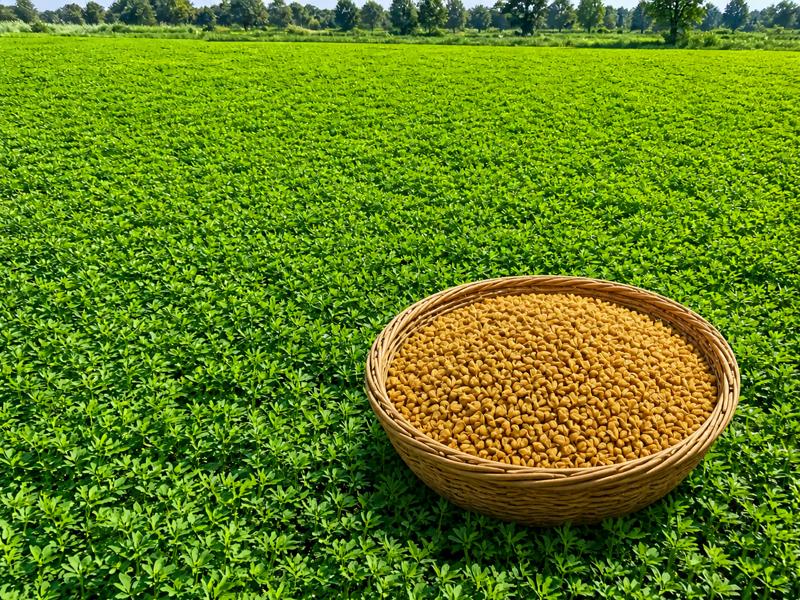
Fenugreek is a very popular and profitable crop which is grown in almost every state of India. This crop is included in those crops which give high profit at low cost. Both leaves and seeds of fenugreek are used. Leaves are used as vegetable and seeds are used as spice.
This crop is mainly grown in the Rabi season, but in some areas it is also cultivated in Kharif season.
👉 Important Information
Fenugreek is a leguminous crop and it also increases soil fertility.
📌 Major Producing States in India
Rajasthan, Madhya Pradesh, Gujarat, Uttar Pradesh, Punjab
📌 According to scientifically proven information, farmers can earn lakhs of rupees per acre from fenugreek farming if the right techniques are used.
Example
Before starting this guide, make sure to check out this case study: click here
1️⃣ Health Benefits and Uses
🌿 Health Benefits
- Helps in controlling blood pressure
- Helps in reducing cholesterol
- Useful in controlling diabetes
- Improves digestion
- Beneficial for hair and skin
🍛 Uses
- Leaves are used for vegetable and saag
- Seeds are used as spice
- Medicinal uses
- Animal fodder
2️⃣ Scientific Classification
| Class | Details |
|---|---|
| Kingdom | Plantae |
| Family | Fabaceae |
| Genus | Trigonella |
| Species | Trigonella foenum graecum |
3️⃣ Climate & Temperature
🌡️ Ideal Temperature
- 22 to 28 degree for germination
- 15 to 28 degree for growth
- 15 to 20 degree at harvesting time
🌧️ Rainfall
- 50 to 75 cm
👉 Cool climate is most suitable for fenugreek
4️⃣Soil Requirement
🌾 Suitable Soil
- Sandy loam soil
- Well-drained soil
- Soil rich in organic matter
⚖️ pH Level
- 5.3 to 8.2
👉 Avoid waterlogged land
5️⃣ Seed & Varieties
Selection of the right variety is most important in fenugreek farming, because it directly affects both production and profit.
🌱 Improved and Popular Varieties
1. ML 150
- Leaves are dark green and more dense
- Seeds are shiny and bold
- Average yield about 6.5 quintal per acre
- Also useful as fodder
2. HM 219
- High yielding variety
- Tolerant to white spot disease
- Yield 8 to 9 quintal per acre
3. Kasuri Methi
- Leaves have very good aroma
- High demand as spice
4. Pusa Early Bunching
- Early maturing variety
- Suitable for leafy vegetable
5. Rajendra Kranti
- Good yield
- Better disease resistance
👉 Advice
If you want higher production then choose HM 219 or Pusa variety
6️⃣ Seed Rate
🌾 Seed Quantity per Acre
- 12 kg seed per acre is sufficient
🌱 Seed Treatment Process
- Soak the seeds in water for 8 to 12 hours
- Carbendazim 3 gram per kg
- Thiram 4 gram per kg
- For organic treatment use Trichoderma
👉 Benefit
Seed treatment improves germination and reduces diseases
7️⃣ Where to Buy Seeds
🛒 Reliable Sources
- Krishi Vigyan Kendra
- Government seed centers
- Certified private seed sellers
- Online platforms
👉 Keep in Mind
- Always buy certified and disease-free seeds
- Choose variety according to local climate
8️⃣ Land Preparation
🚜 Steps for Field Preparation
- Do deep ploughing 2 to 3 times
- Make the soil loose and fine
- Level the field
🌿 Organic Manure
- Apply 10 to 15 tons of well-rotted cow dung manure per acre
👉 Benefit
Good land preparation helps in fast root development
9️⃣ Sowing Method
📅 Sowing Time
- Last week of October
- First week of November
📏 Spacing
- Row to row 22.5 cm
📌 Depth
- 3 to 4 cm
🌱 Sowing Method
- Broadcasting method
- Line method is better
👉 Tip
Sowing in lines makes weeding and irrigation easy
🔟 Fertilizer Management
🧪 Nutrients per Acre
- Nitrogen 5 kg
- Phosphorus 8 kg
🌿 Fertilizer Quantity
- Urea 12 kg
- SSP 50 kg
🌱 Spray Management
- NPK 19:19:19
- Brassinolide
- Triacontanol
👉 Benefit
Crop grows faster and production increases
1️⃣1️⃣ Irrigation Schedule
💧 When to Irrigate
- Before sowing
- After 30 days
- After 75 days
- After 85 days
- As per requirement
👉 Important
There should be no shortage of water at the time of flowering and seed formation
1️⃣2️⃣ Weed Control
🌿 Methods of Control
- First weeding after 25 to 30 days
- Second weeding after 55 to 60 days
🧪 Chemical Control
- Pendimethalin 1.3 liter per acre
- Fluchloralin 300 gram per acre
👉 Benefit
Less weeds increase production
1️⃣3️⃣ Pest & Disease Management
In fenugreek farming, timely control of pests and diseases is very important, because even a little carelessness can reduce production a lot.
🐛 Major Pests and Control
1. Aphids (Chepa)
This is the most common problem in fenugreek. It sucks the sap from leaves and tender shoots, which makes the plants weak.
🔍 Identification
- Leaves start curling
- Sticky substance is seen
- Plant growth stops
🛡️ Control Measures
- Spray Imidacloprid 3 ml in 10 liter water
- Spray Thiamethoxam 4 gram in 10 liter water
- For organic control use Neem oil 5 ml per liter water
👉 With regular monitoring, pests can be controlled at the early stage
🦠 Major Diseases and Control
1. Root Rot
🔍 Identification
- Plants start wilting
- Roots become black and rotten
🛡️ Control
- Mix Neem cake 60 kg per acre in soil
- Do seed treatment with Trichoderma
- Apply Carbendazim 5 gram per liter water in roots
2. Powdery Mildew
🔍 Identification
- White powder-like spots on leaves
- Leaves start drying
🛡️ Control
- Spray Penconazole 200 ml per acre
- Repeat at 10 days interval
👉 Seed treatment and field cleanliness are most important for disease prevention
1️⃣4️⃣ Crop Duration
Fenugreek crop gets ready in a short duration, so farmers can get profit quickly.
⏳ Duration
- For leafy fenugreek: 20 to 25 days
- For seed production: 90 to 100 days
👉 This crop is included in fast cash giving crops
1️⃣5️⃣ Harvesting Method
It is very important to identify the right time of harvesting so that both production and quality remain good.
✂️ Signs of Harvesting
- Lower leaves start turning yellow
- Pods become yellow
- Seeds become hard
🛠️ Method of Harvesting
- Harvest carefully with sickle
- Do not damage the plants
☀️ Post Harvest Management
- Make bundles of the crop and tie them
- Dry in sunlight for 6 to 7 days
- Do threshing to separate seeds
- Clean and do grading
👉 Proper harvesting increases quality and market value
1️⃣6️⃣ Yield per Acre
Production in fenugreek farming depends on variety, care, and technique.
📊 Production Details
- Normal production 6 to 7 quintal per acre
- With improved technique 8 to 10 quintal per acre
👉 Production can be increased with HYV variety and proper management
1️⃣7️⃣ Market Price & Profit per Acre
Good income can be earned from fenugreek farming if sold in the right market.
💰 Cost (per acre)
- Seed cost ₹1500 to ₹2000
- Manure and fertilizer ₹3000 to ₹4000
- Labour ₹4000 to ₹5000
- Other expenses ₹3000
👉 Total cost ₹12000 to ₹15000
💵 Income (per acre)
- Production 8 quintal
- Market price ₹5000 to ₹7000 per quintal
👉 Total income ₹40000 to ₹56000
📈 Net Profit
👉 ₹25000 to ₹40000 per acre
💡 Extra Earning Tip
- More profit by selling leafy fenugreek
- Higher price in off-season farming
1️⃣8️⃣ MSP
👉 Important Point
MSP is generally not declared by the government for fenugreek, because it is not included in traditional MSP crops like wheat, paddy, or pulses.
📊 What is the impact on farmers
- Price of fenugreek fully depends on market demand and supply
- Selling at the right time can give more profit than MSP crops
- Price can increase many times with processing and value addition
💡 Suggestions for Farmers
- Do not sell the crop immediately, wait for the right time
- Check both local mandi and online platforms
- Contact spice companies or wholesale traders directly
- Store and sell in off-season
👉 Conclusion
Even without MSP, fenugreek is a high-profit crop if proper marketing strategy is followed
1️⃣9️⃣ Storage
Proper storage maintains both quality and price of fenugreek.
📦 Storage Methods
- Dry the seeds completely
- Store in moisture-free place
- Use airtight containers
- Neem leaves can be added to protect from insects
👉 Wrong storage can spoil the crop
2️⃣0️⃣ Government Schemes
Government provides support to farmers for crops like fenugreek under many schemes.
📢 Major Schemes
- Pradhan Mantri Kisan Samman Nidhi Yojana
- Rashtriya Krishi Vikas Yojana
- Soil Health Card Scheme
- Agricultural Mechanization Scheme
👉 Farmers can get subsidy and training from these schemes
2️⃣1️⃣ Gov Approval
👉 For normal fenugreek farming, no government approval is required
⚠️ When it is Required
- If you set up a processing unit
- If you do business at large scale
- If you want to export
📄 Required Registrations
- FSSAI license
- GST registration
- APEDA registration
2️⃣2️⃣ FAQ | Frequently Asked Questions
Q1. What is the right time for fenugreek farming
👉 The best time for sowing fenugreek is considered from the last week of October to the first week of November. At this time temperature is around 20 to 25 degree which is ideal for germination.
Q2. What should be the seed quantity per acre
👉 About 12 kg seed is sufficient for one acre field. If line method is used then seed quantity can be slightly less.
Q3. Which is the best variety of fenugreek
👉 HM 219, ML 150 and Pusa Early Bunching are considered the best varieties. Among these, HM 219 is the highest yielding and disease resistant variety.
Q4. How much irrigation is needed in fenugreek crop
👉 Generally 3 to 4 irrigations are required in fenugreek. Especially at the time of flowering and seed formation, there should be no shortage of water, otherwise it affects production.
Q5. What is the total cost in fenugreek farming
👉 The total cost of fenugreek farming in one acre is about ₹12000 to ₹15000, which is quite low compared to other crops.
Q6. How much profit is there in fenugreek farming
👉 With proper farming, net profit of ₹25000 to ₹40000 per acre can be easily obtained. If leafy fenugreek is sold, then profit can be even higher.
Q7. Which soil is best for fenugreek
👉 Well-drained sandy loam soil is most suitable for fenugreek. Soil pH should be between 5.3 to 8.2.
Q8. How to protect fenugreek crop from pests and diseases
👉 Seed treatment, timely spray and field cleanliness are most important measures. Use of neem-based organic medicines is also beneficial.
Q9. In how many days fenugreek crop gets ready
👉 For leafy use, fenugreek gets ready in 20 to 25 days, while for seeds it takes 90 to 100 days.
Q10. Where can fenugreek be sold
👉 You can sell fenugreek in local mandi, wholesale market, spice companies and online platforms.
Q11. Does fenugreek get MSP
👉 No, MSP is not fixed by the government for fenugreek. Its price depends on market demand and supply. So farmers can earn more profit by selling at the right time.
Q12. Can fenugreek farming be done organically
👉 Yes, fenugreek farming can be done fully organically. For this use cow dung manure, vermicompost and neem-based products.
Q13. Is fenugreek farming possible with less water
👉 Yes, fenugreek is a low water crop. It can give good yield even with limited irrigation, so it is suitable for water scarcity areas.
Q14. Is fenugreek farming profitable for small farmers
👉 Yes, fenugreek is a low cost and short duration crop, so it is a very profitable option for small farmers.
Q15. How to earn lakhs from fenugreek farming
👉 For this you need to follow
- Selection of improved variety
- Sowing at the right time
- Balanced fertilizer and irrigation
- Right market selection
- Value addition and storage
🔚 Conclusion
Fenugreek farming has become a very good opportunity for farmers in today’s time. Due to low cost, short duration and good market demand, this crop is becoming popular very fast.
👉 If farmers follow scientific methods and have correct market knowledge, then they can easily get good income.
👉 The special thing is that even without MSP, with the right strategy this crop can give more profit than traditional crops like wheat and paddy.
🌾 So if you want to earn more profit with low investment, then
Fenugreek farming: higher production and earning lakhs is a great option for you 🚀
👉 For detailed and practical information on spice farming, click here