


Gooseberry Farming Guide: High Yield & Profit Tips
Gooseberry Farming: Method, Hybrid Varieties and Benefits
Amla farming has now become a very profitable and low-risk farming option for farmers. Its demand remains throughout the year because it is widely used in medicines, Ayurvedic products, health supplements, and the cosmetic industry. If farming is done in the right way, good profit can be earned per acre.
This article is prepared in very simple language keeping rural farmers in mind, so that every farmer can understand it and apply it in their farming.
1. 🌱 Crop Introduction
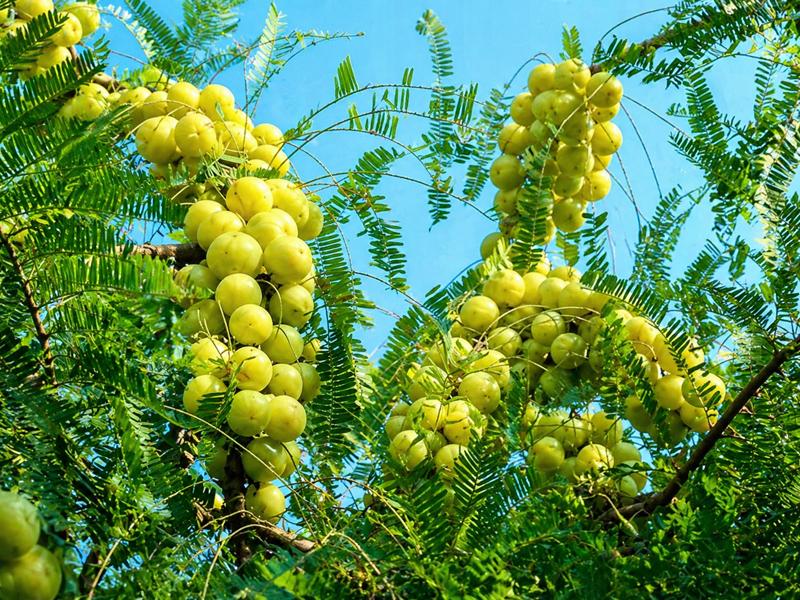
Amla, also called Indian gooseberry, is a multi-purpose fruit. It is a medium-sized tree whose height is about 8 to 18 meters. Its fruits are light yellow in color and contain a very high amount of Vitamin C.
👉 Key Points
✔ Major producing states in India are Uttar Pradesh and Himachal Pradesh
✔ Highest demand in medicinal use
✔ Once planted, it can produce for 40 to 50 years
2. 🥗 Health Benefits and Uses
Amla is considered equal to nectar in Ayurveda.
Main Benefits
✔ Richest source of Vitamin C
✔ Increases immunity
✔ Useful for hair and skin
✔ Improves digestion
Uses
✔ Chyawanprash
✔ Amla juice
✔ Candy, pickle
✔ Herbal oil and shampoo
3. 🔬 Scientific Classification
✔ Scientific Name: Emblica officinalis
✔ Family: Phyllanthaceae
✔ Common Name: Amla
4. 🌦️ Climate and Temperature Required
Amla farming can be done in almost every climate.
Required Temperature
✔ Maximum temperature: 46 to 48°C
✔ Germination temperature: 22 to 30°C
✔ Harvesting temperature: 8 to 15°C
Rainfall
✔ 630 to 800 mm
5. 🌾 Soil Requirement
Amla is a tolerant crop.
Suitable Soil
✔ Loamy soil is best
✔ Can also grow in slightly alkaline and saline soil
pH Level
✔ 6.5 to 9.5
❌ Avoid heavy soil and waterlogging land
6. 🌱 Seed and Varieties
In amla farming, selecting the right variety is the most important. By choosing the right variety, production, quality, and market value all increase.
🔹 Major Hybrid and Improved Varieties
1. Banarasi
✔ Early maturing variety
✔ Fruit weight about 48 grams
✔ Soft peel
✔ Production per tree about 120 kg
2. Krishna
✔ Early ready variety
✔ Fruit size is large and attractive
✔ Average production 120 to 125 kg per tree
3. NA 9
✔ Most popular variety
✔ Very high Vitamin C content
✔ Best for making jam, jelly, and candy
4. NA 10
✔ Medium size fruits
✔ Good pulp and useful for processing
5. Francis
✔ Medium duration variety
✔ Large fruits
✔ Famous as “Hathi Jhool”
6. NA 7
✔ Medium duration variety
✔ Good production and market demand
7. Kanchan
✔ Small size fruits
✔ Average production about 120 kg per tree
8. NA 6
✔ Low fiber
✔ Suitable for processing
9. Chakaiya
✔ Late maturing variety
✔ Best for pickle and dry products
📌 Suggestion
✔ Plant 2 to 3 varieties in the same field for better pollination
✔ Combination of NA 9 and Chakaiya is considered best
7. 🌿 Seed Rate
In amla farming, generally plantation is done through plants, but seeds are used for preparing nursery.
🔹 Seed Quantity per Acre
✔ About 200 grams of seeds is sufficient
🔹 Seed Treatment
✔ Treat with Gibberellic Acid 200 to 500 ppm
✔ After treatment, dry the seeds in shade
🔹 Tips to Improve Germination
✔ Use good quality seeds
✔ Do light irrigation in nursery
8. 🛒 Where to Buy Seeds / Plants
It is very important to buy correct and certified plants so that there is no problem in production later.
🔹 Places to Buy
✔ Government nursery
✔ Krishi Vigyan Kendra (KVK)
✔ State horticulture department
✔ Certified private nursery
🔹 Keep in Mind While Buying
✔ Plants should be disease-free
✔ Take grafted plants
✔ 6 to 12 months old plants are better
9. 🚜 Land Preparation
Land preparation is very important for amla farming.
🔹 Ploughing
✔ Do deep ploughing 2 to 3 times
✔ Make the soil loose and fine
🔹 Pit Preparation
✔ Size 1 meter x 1 meter x 1 meter
✔ Leave pits open for 15 to 20 days
🔹 Adding Manure
✔ 10 to 15 kg cow dung manure per pit
✔ Mix well with soil
10. 🌱 Sowing Method
For successful amla farming, it is very important to follow the correct sowing technique. Because it is a long-term horticulture crop, if the start is correct, production will also be good in future.
🔹 Right Time of Sowing
✔ July to September is considered the best time
✔ Where irrigation facility is available, plantation can also be done from January to February
🔹 Plant Spacing
✔ 4.5 meter x 4.5 meter
✔ About 180 to 200 plants can be planted per acre
🔹 Pit Preparation and Planting
✔ Prepare pits of 1 meter x 1 meter x 1 meter
✔ Keep pits open in sunlight for 15 to 20 days
✔ Mix cow dung manure and neem cake in soil
✔ Place the plant straight and press the soil
🔹 Care After Planting
✔ Do light irrigation immediately
✔ Use a wooden stick to support the plant
✔ Do mulching around the plants
📌 Keep in Mind
✔ Use only grafted plants
✔ Plants should be healthy and disease-free
11. 🌿 Fertilizer & Manure Management
In amla farming, giving balanced nutrition is very important so that plants grow fast and fruiting is good.
🔹 Fertilizer Quantity per Plant
✔ Nitrogen: 100 grams
✔ Phosphorus: 50 grams
✔ Potash: 100 grams
🔹 Organic Manure
✔ 10 to 15 kg cow dung manure per plant
✔ Use of vermicompost is also beneficial
🔹 Fertilizer Schedule
✔ First dose: January to February
✔ Second dose: In the month of August
🔹 Micro Nutrients
✔ Zinc sulphate: 100 to 150 grams
✔ Boron: As required
📌 Special Tip
✔ Increase the amount of fertilizer every year as the plant keeps growing
12. 💧 Irrigation Schedule
Proper irrigation management is necessary for good yield of amla.
🔹 In Summer Season
✔ Do irrigation every 10 to 15 days
🔹 In Winter Season
✔ Do light irrigation as per requirement
🔹 In Monsoon
✔ No need of extra irrigation
⚠ Important Precautions
✔ Do not irrigate at the time of flowering
✔ Avoid waterlogging
13. 🌾 Weed Control
Weeds stop the growth of plants, so timely control is necessary.
🔹 Control Methods
✔ Regular weeding and hoeing
✔ Remove weeds by hand
✔ Use mulching
🔹 Benefits of Mulching
✔ Maintains moisture
✔ Reduces weeds
✔ Increases soil fertility
🔹 Pruning (Pruning)
✔ Remove irregular branches
✔ Keep 4 to 5 main branches
✔ This makes the plant strong
14. 🐛 Pest & Disease Management
For good production, timely control of pests and diseases is necessary.
🔹 Major Pests
1. Bark Eating Caterpillar
✔ Damages the trunk from inside
✔ Symptoms: holes in bark and drying
✔ Control
✔ Put Quinolphos 0.01 percent solution in the holes
2. Gall Caterpillar
✔ Makes tunnels in the upper part of the trunk
✔ Control
✔ Spray Dimethoate 0.03 percent
🔹 Major Diseases
1. Rust Disease
✔ Red spots on leaves and fruits
✔ Control
✔ Spray Indofil M 45 at 0.3 percent
2. Internal Rot
✔ Fruit becomes black from inside
✔ Control
✔ Spray Boron 0.6 percent
3. Fruit Rot
✔ Fruits start rotting
✔ Control
✔ Borax and chloride 0.1 to 0.5 percent
15. ⏳ Crop Duration
Amla is a long duration crop.
🔹 Start of Production
✔ Starts giving fruits after 7 to 8 years
🔹 Full Production
✔ Higher production after 10 to 12 years
🔹 Lifespan
✔ Continuous production for 40 to 50 years
16. ✂️ Harvesting Method
The right time and method of harvesting affect both production and quality.
🔹 Harvesting Time
✔ In the month of February
🔹 Identification
✔ Fruits turn from light green to yellow
✔ Vitamin C content is high
🔹 Harvesting Method
✔ Shake the tree lightly to drop the fruits
✔ Can also pluck by hand
17. 📊 Yield per Acre
🔹 Average Yield
✔ Per tree: 100 to 120 kg
✔ Per acre: 8 to 10 tons
🔹 Tips to Increase Yield
✔ Select good variety
✔ Balanced fertilizer
✔ Timely irrigation
18. 💰 Market Price & Profit per Acre
🔹 Market Price
✔ ₹15 to ₹40 per kg
🔹 Total Income
✔ ₹1.5 lakh to ₹3 lakh per acre
🔹 Total Cost
✔ ₹50,000 to ₹80,000
🔹 Net Profit
✔ ₹1 lakh to ₹2.5 lakh
📌 Extra Income
✔ Make amla candy, juice, powder for higher profit
19. 📦 Storage
Proper storage after harvesting is very important.
🔹 Storage Methods
✔ Keep in a cool and dry place
✔ Store in bamboo baskets or wooden boxes
🔹 Precautions
✔ Separate damaged fruits
✔ Send to market quickly
20. 🏛️ Government Schemes
Government gives many schemes for horticulture crops to farmers.
🔹 Major Schemes
✔ National Horticulture Mission
✔ Pradhan Mantri Kisan Samman Nidhi Yojana
✔ State Horticulture Department subsidy
🔹 Benefits
✔ Subsidy on plants
✔ Training and guidance
✔ Support on irrigation equipment
21. ❓ Frequently Asked Questions | FAQs
Q1. What is the right time for amla farming
✔ July to September is the best time
Q2. How many plants are planted per acre
✔ About 200 plants
Q3. After how many years does amla give fruit
✔ 7 to 8 years
Q4. Which is the best variety
✔ NA 9 and Chakaiya
Q5. How much irrigation is required
✔ Every 10 to 15 days in summer
Q6. How much production is there
✔ 8 to 10 tons per acre
Q7. What market price is received
✔ ₹15 to ₹40 per kg
Q8. What is the cost
✔ ₹50,000 to ₹80,000
Q9. How to prevent diseases
✔ Timely spray and nutrition management
Q10. Where is amla used
✔ Medicine, juice, oil, cosmetics, food products
🔚 Conclusion
By properly understanding amla farming: method, hybrid varieties, and benefits, farmers can make it a stable source of income. It gives good production even with low maintenance and its market demand always remains.
👉 If you want to do safe and profitable farming in the long term, then amla farming is a very good option.
👉 For more fruits farming guides, keep exploring our website