


Polyhouse Farming
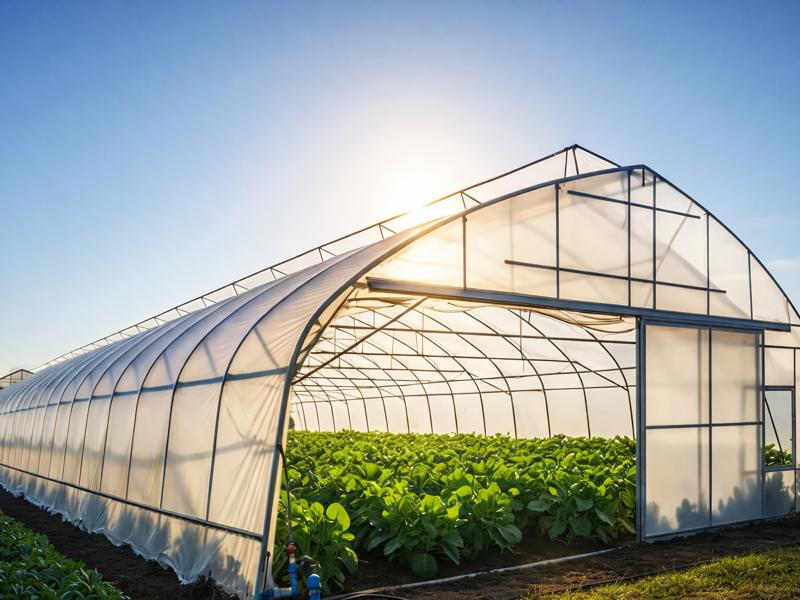
🌿 Polyhouse Farming Guide: Cost, Profit & Subsidy
India is an agriculture-based country. But traditional farming fully depends on weather. Sometimes heavy rain, sometimes drought, sometimes hailstorm – because of these reasons farmers face heavy losses.
In this situation, Polyhouse Farming has come as a modern and scientific solution.
In this article, we will understand in detail:
- What is Polyhouse?
- What is its cost?
- How much subsidy government gives?
- Which crops give highest profit?
- How much profit per acre is possible?
- Construction, maintenance and success secrets
This is a complete guide useful for small, medium and big farmers.
1️⃣ What is Polyhouse Farming?
Polyhouse is a protected structure. It is made with GI pipes or steel frame and covered with UV-stabilized polythene sheet.
Inside this structure, crops are grown in a controlled environment.
Main factors controlled inside polyhouse:
- Temperature
- Humidity
- Light
- Carbon dioxide
- Irrigation
- Nutrients
Because of this technology, farmers can grow off-season vegetables and flowers throughout the year.
2️⃣ Why Polyhouse Farming is Important?
In India, farming mostly depends on monsoon. But due to climate change, uncertainty in production is increasing.
Polyhouse farming gives a strong solution to this problem.
Benefits of Polyhouse Farming
✔ Production throughout the year
✔ Off-season crops possible
✔ High-quality produce
✔ Less water consumption
✔ Easy pest and disease control
✔ More production in less area
Compared to open field farming, 3–5 times higher yield is possible in polyhouse farming.
3️⃣ Types of Polyhouse
Polyhouse is mainly classified on the basis of environmental control system, technology level and cost. The right type should be selected according to farmer’s land, budget, climate and crop.
Below, the main types are explained in detail:
1. Naturally Ventilated Polyhouse
This is the most common and cost-effective model. In this type, no automatic machinery is used to control temperature and humidity. It mainly depends on natural ventilation (air flow).
Main Features:
- Side vents and roof vents for air circulation
- 200 micron UV stabilized poly sheet cover
- Insect net
- Drip irrigation system
Cost:
₹750 – ₹1200 per square meter (depends on location and material)
Suitable For:
- Small and medium farmers
- Normal vegetable and flower production
- Areas with moderate climate
Benefits:
✔ Low investment
✔ Easy maintenance
✔ Low electricity cost
Limitations:
✖ Full control is not possible in extremely hot or cold regions
2. Medium Tech / Manually Controlled Polyhouse
In this type of polyhouse, some artificial equipment is used to control temperature and humidity. It is more advanced than naturally ventilated model.
Main Equipment:
- Cooling pad
- Exhaust fan
- Thermostat
- Foggers or misting system
Cost:
₹1000 – ₹1500 per square meter
Suitable For:
- Commercial level farming
- Off-season vegetables
- High-quality crop production
Benefits:
✔ Better temperature control
✔ Increase in production
✔ More effective disease control
Limitations:
✖ Dependence on electricity
✖ Higher maintenance cost
3. Hi-Tech / Fully Climate Controlled Polyhouse
This is the most advanced and modern type of polyhouse. In this system, temperature, humidity, CO₂ level and light are fully controlled through automatic systems.
Main Features:
- Automatic climate control system
- Sensor-based monitoring
- Automatic irrigation and fertigation
- Shading and heating system
Cost:
₹3000 – ₹4000 per square meter
Suitable For:
- Large farmers
- Export-quality production
- Farmers planning for very high profit
Benefits:
✔ Year-round controlled production
✔ Maximum yield
✔ Premium quality produce
Limitations:
✖ Very high investment
✖ Technical knowledge required
4. Structure-Based Types
Apart from technology, polyhouse is also classified based on structure material.
🔹 Bamboo-Based Polyhouse
- Low cost
- Popular in rural areas
- 3–5 years lifespan
🔹 GI Pipe / Steel-Based Polyhouse
- Strong and durable
- 10–15 years lifespan
- Better for commercial farming
5. Cost-Based Categories
Low-Tech
- ₹500 – ₹700 per square meter
- Without machinery
Medium-Tech
- ₹1000 – ₹1500 per square meter
- With fans and cooling pads
High-Tech
- ₹3000 – ₹4000 per square meter
- Fully automatic system
4️⃣ Polyhouse Structure Design
Polyhouse can be built in different designs:
- Dome shape
- Cave type
- Hut type
- Tunnel design
Construction Materials:
- GI pipe
- Angle iron
- Bamboo (for low-cost model)
- UV stabilized 200 micron poly sheet
- 75% shade net
👉 Good quality material can last for 10–15 years.
5️⃣ Polyhouse Farming Cost
The cost of polyhouse depends on technology level, location and quality of material used.
🔹 Cost Per Square Meter:
Low-Tech:
- ₹500 – ₹700
Medium-Tech:
- ₹1000 – ₹1500
High-Tech:
- ₹3000 – ₹4000
🔹 Cost for 1000 Square Meters:
- ₹8 – ₹12 lakh
🔹 Cost for 1 Acre (4000 Square Meters):
Naturally Ventilated:
- ₹32 – ₹45 lakh
High-Tech:
- ₹60 – ₹90 lakh
The total cost depends on location, materials and technology used.
6️⃣ Government Subsidy (Polyhouse Subsidy)
The Government of India and state governments provide 40% to 80% subsidy on polyhouse.
Main Schemes:
- National Horticulture Mission (NHM)
- MIDH Scheme
- NABARD Loan
In some states, subsidy can go up to 70–80%.
👉 Application is submitted in the District Horticulture Department.
7️⃣ Crops Grown in Polyhouse
Different types of vegetables, flowers and fruits can be grown in polyhouse.
🌱 Vegetables
- Tomato
- Capsicum
- Cucumber
- Bitter gourd
- Okra
- Cabbage
🌸 Flowers
- Rose
- Gerbera
- Carnation
- Orchid
- Marigold
🍓 Fruits
- Strawberry
- Papaya
8️⃣ Profit Per Acre (Polyhouse Profit)
The biggest attraction of polyhouse farming is its high profit percentage. Compared to open field farming, production is higher and quality is better in controlled environment. Because of this, farmers get premium price in the market.
🔹 Estimated Annual Net Profit Per Acre
Capsicum:
₹8 lakh – ₹12 lakh
Cucumber:
₹6 lakh – ₹10 lakh
Hybrid Tomato:
₹7 lakh – ₹11 lakh
Gerbera (Flower):
₹10 lakh – ₹15 lakh
Rose:
₹8 lakh – ₹14 lakh
⚠️ Note: Actual profit depends on market price, management, seed quality and climate.
📈 Production Capacity Comparison
Cucumber in Open Field:
80–120 quintal per acre
Cucumber in Polyhouse:
200–300 quintal per acre
This means production can be 2–3 times higher.
9️⃣ Crop Management in Polyhouse
For high production, scientific management is very important.
1️⃣ Soil Preparation
- 3 kg well-rotted cow dung manure per square meter
- Balanced use of NPK
- Soil sterilization (Formalin / Solarization)
2️⃣ Nursery Management
- Pro-tray technique
- Cocopeat (50%) + Vermicompost (15%)
- Seedlings ready for transplanting in 25–30 days
3️⃣ Irrigation and Fertigation
- Drip irrigation system
- Use of water-soluble fertilizers
- Regular nutrient management
4️⃣ Pest and Disease Control
- Insect net
- Yellow / Blue sticky traps
- Use of organic pesticides
🔟 Temperature and Humidity Control
Proper control of temperature and humidity is very important in polyhouse farming.
In Winter:
- Keep doors and vents closed
- Give ventilation for 2–3 hours in the afternoon
In Summer:
- Use shade net
- Use cooling pads and foggers
Maintaining proper temperature helps in better flowering and fruit development.
1️⃣1️⃣ Popularity of Polyhouse Farming in India
Protected cultivation is growing fast in many states of India.
Major States:
- Maharashtra
- Haryana
- Punjab
- Uttar Pradesh
- Karnataka
- Tamil Nadu
In these states, due to government subsidy and high market demand, polyhouse farming is expanding rapidly.
1️⃣2️⃣ Difference Between Greenhouse and Polyhouse
| Basis | Greenhouse | Polyhouse |
|---|---|---|
| Covering Material | Glass | Polythene Sheet |
| Cost | High | Low |
| Maintenance | High | Medium |
| Popularity (India) | Limited | High |
Polyhouse is more affordable and suitable for Indian conditions compared to greenhouse.
1️⃣3️⃣ How to Start Polyhouse Farming? (Step-by-Step Guide)
1️⃣ Do Market Research
2️⃣ Select High-Demand Crop
3️⃣ Get Soil Testing Done
4️⃣ Apply for Government Subsidy
5️⃣ Construction by Certified Agency
6️⃣ Install Drip and Fertigation System
7️⃣ Use High-Quality Seeds / Seedlings
8️⃣ Regular Monitoring and Record Keeping
Frequently Asked Questions (FAQ)
1. Is Polyhouse Farming Really Profitable?
Yes. If managed in a scientific way, polyhouse farming gives 3–5 times more production compared to traditional farming. Off-season vegetables and flowers get premium price in the market, which increases net profit significantly.
2. What is the Cost of Building a Polyhouse?
The cost depends on structure and technology level.
1000 Square Meter:
Around ₹8–12 lakh
1 Acre (4000 Square Meter):
₹32–45 lakh (Naturally Ventilated)
Hi-Tech Model:
₹60 lakh or more
After getting government subsidy, the actual cost becomes much lower.
3. How Much Subsidy Does Government Provide?
Depending on state and scheme, 40% to 80% subsidy is provided. Application is done through the District Horticulture Department. In some special schemes, small farmers get more benefit.
4. Which Crop Gives Maximum Profit in Polyhouse?
Capsicum, cucumber, tomato, rose, gerbera and carnation are considered highly profitable crops. Export-quality flowers can give even higher income.
5. Can Small Farmers Start Polyhouse Farming?
Yes. Polyhouse can be started even in 500 to 1000 square meter area. Farmers can begin on small scale and later expand based on experience and profit.
6. How Many Years Does a Polyhouse Structure Last?
GI pipe-based structure can last 10–15 years. Poly sheet may need replacement in 3–5 years depending on quality and maintenance.
7. Is Bank Loan Available for Polyhouse?
Yes. NABARD and other nationalized banks provide agricultural loans for polyhouse construction. After subsidy approval, the loan process becomes easier.
8. How Much Water is Used in Polyhouse?
Due to drip irrigation system, 40–60% water saving is possible compared to open field farming. This makes farming possible even in water-scarce areas.
9. Is Less Pesticide Required in Polyhouse?
Yes. Because of protected environment and insect net, pest entry is less. With organic and controlled spray, disease management becomes easier.
10. What Should Be Considered Before Starting Polyhouse?
- Study market demand
- Test soil and water
- Get information about government schemes
- Construction from proper agency
- Take technical training
🔥 Conclusion
Polyhouse farming is a big step towards modern agriculture. This technology protects farmers from weather problems and allows year-round production of high-quality crops.
With government subsidy, bank loan and scientific guidance, it can become a strong source of income for both small and big farmers.
If you follow proper planning, training and market strategy, polyhouse farming can take your agriculture business to the next level.
👉 Now is the time to move from traditional farming to scientific and profitable farming.
👉 For more detailed and practical information on technical farming, click here.