


Fennel Farming
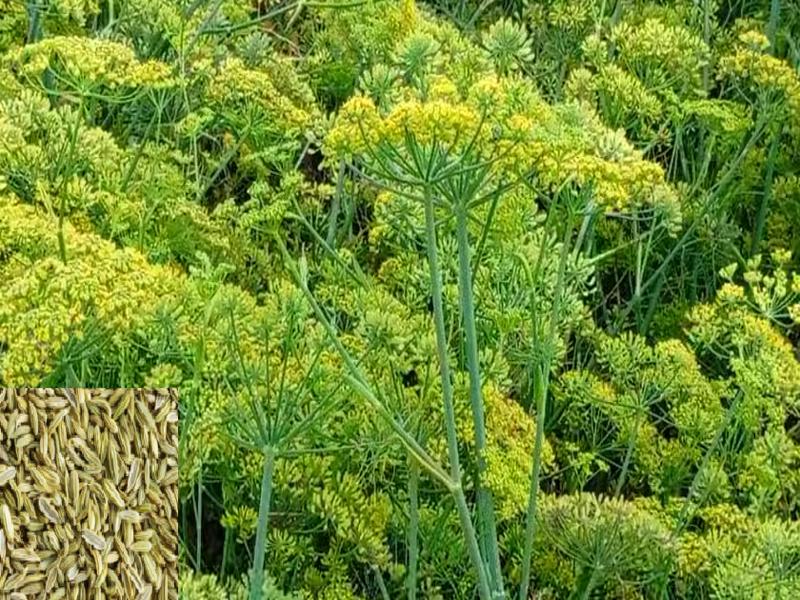
How to Do Fennel Farming: Advanced Method & Profit
Fennel is an important spice of the Indian kitchen, valued not only for its taste but also for its health benefits. Eating fennel after meals is an age old Indian tradition because it helps in digestion. Today, fennel cultivation has become a profitable cash crop for farmers. Due to low input cost, good market demand, and export potential, this crop is suitable for small and marginal farmers as well.
This blog is written specially for Indian rural farmers, so that they can understand fennel cultivation in a scientific yet simple way and increase income by getting higher yield per acre.
1. General Information About Fennel Cultivation
- Fennel belongs to the Apiaceae family
- It is an annual spice crop
- Its origin is considered to be Europe
- Dried seeds are used as a spice
- Fennel is a rich source of fiber, vitamin C, and potassium
- It is used to enhance flavor in meat dishes, soups, and vegetables
- Fennel leaves are also used for salad garnishing
- It has medicinal properties and is useful in digestion, constipation, diarrhea, sore throat, and headache
- Fennel is grown as a rabi season crop
- Major fennel producing states in India are Rajasthan, Gujarat, Madhya Pradesh, Uttar Pradesh, Punjab, Haryana, Karnataka, and Andhra Pradesh
2. Suitable Climate for Fennel Cultivation
- Fennel requires cool and dry climate
- Excess humidity and frost can damage the crop
2.1 Temperature Requirement
- Ideal temperature for germination is 15 to 25 degree Celsius
- Best temperature for crop growth is 18 to 25 degree Celsius
- Harvesting temperature should also be between 18 to 25 degree Celsius
2.2 Rainfall Requirement
- Annual rainfall requirement is 50 to 75 millimeter
- Excess rainfall may cause root rot problems
3. Suitable Soil for Fennel Cultivation
- Soil rich in organic matter is best
- Sandy and sandy loam soils give better yield
- Avoid heavy and waterlogged soils
- Soil pH should be between 6.5 and 8
4. Improved Varieties and Yield of Fennel
4.1 Local Variety
- Plant height reaches about 150 centimeter
- Crop duration is 185 to 190 days
- Seeds are long, striped, and greenish gray in color
- Average yield is 5 to 6 quintal per acre
4.2 Improved Varieties
RF 101
- Ready for harvest in 155 to 160 days
- Average yield is 6.5 quintal per acre
Gujarat Fennel 1
- Crop duration is about 255 days
- Drought tolerant variety
- Average yield is 6.6 quintal per acre
RF 35
- Crop duration is about 225 days
- Resistant to leaf spot disease and sugary disease
- Average yield is 5.2 quintal per acre
CO 1
- Crop duration is about 220 days
- Suitable for saline and water retaining soils
- Average yield is 3 quintal per acre
5. Land Preparation
- Level the field properly
- Do 2 to 3 ploughings in light soil
- Do 3 to 4 ploughings in heavy soil
- Use harrow after each ploughing
- Field should be friable and weed free
6. Sowing Details
6.1 Time of Sowing
- Complete sowing by the second fortnight of October
- Late sowing reduces yield
6.2 Row and Plant Spacing
- Row to row spacing should be 45 centimeter
- Plant to plant spacing should be 10 centimeter
6.3 Seed Depth
- Sow seeds at 3 to 4 centimeter depth
6.4 Method of Sowing
- Direct sowing method is commonly used
- In some regions, nursery raising and transplanting is also practiced
7. Seed Rate
- Use 4 kilogram seed per acre
- Always use certified and disease free seed
8. Manure and Fertilizer Management
8.1 Organic Manure
- Apply 4 to 6 quintal of well decomposed farmyard manure per acre
8.2 Chemical Fertilizers
- Nitrogen requirement is 20 kilogram per acre
- Apply 45 kilogram urea per acre
- Split nitrogen dose into 2 or 3 equal parts
- First dose at sowing
- Remaining doses at 30 and 60 days after sowing
- Apply phosphorus and potash only on the basis of soil test
9. Weed Management
- Do one or two hand weedings as required
- Apply Pendimethalin 1 liter per acre for weed control
10. Irrigation Management
- Give light irrigation before sowing
- First irrigation should be done 10 to 15 days after sowing
- Further irrigations at an interval of 15 to 25 days
- Ensure no moisture stress during flowering and seed formation
11. Pest and Disease Management
11.1 Aphid Pest
- On infestation, spray
- Dimethoate 30 EC at 2 milliliter per liter of water
or - Methyl Demeton 25 EC at 2 milliliter per liter of water
11.2 White Spots on Leaves
- Spray Sulphur 2 gram per liter of water
12. Harvesting of Fennel Crop
- Crop becomes ready in 180 to 190 days
- Harvesting period is from end of April to end of May
- Harvest when umbels turn from green to light yellow
- Harvest by plucking the umbels
- Dry in sunlight for 1 to 2 days
- Then keep in shade for 8 to 10 days
13. Post Harvest Management
- Clean seeds thoroughly after drying
- Do grading based on quality
- Pack seeds in jute bags
- Store in dry and moisture free place
14. Additional Benefits of Fennel Cultivation
- Good profit with low investment
- Year round market demand
- Medicinal and export value
- Helpful for beekeeping activities
15. Frequently Asked Questions
1. In which month should fennel be sown
Fennel should be sown in the second fortnight of October
2. What is the cost of fennel cultivation per acre
Average cost is around 20000 to 25000 rupees per acre
3. How much yield is obtained from fennel per acre
With good management, 5 to 7 quintal per acre
4. Can fennel be grown in irrigated and rainfed conditions
Yes, but irrigated conditions give better yield
5. Which soil is best for fennel cultivation
Sandy loam and sandy soils are best
6. How many days does fennel crop take to mature
Depending on variety, 180 to 255 days
7. Which diseases are common in fennel crop
Leaf spot disease and aphid infestation
8. Can fennel be cultivated organically
Yes, with proper organic manure and bio pesticides
9. How is the market price of fennel
Market price is stable and profitable due to good demand
10. What are the main benefits of fennel cultivation for farmers
Stable income with low risk and good returns
16. Conclusion
Fennel cultivation is a strong income generating option for Indian farmers. With timely sowing, balanced nutrient management, and proper crop care, farmers can earn good profit per acre. With scientific farming practices, fennel can become a successful spice crop for the future.
👉 Click here to get detailed and useful information related to spice farming 🌿
Reference Websites
🌱 Hardworking farmers are the real strength of India. Adopt correct information, practice smart farming, and move towards self reliance.