


Coconut Farming in India: Profit & Complete Guide
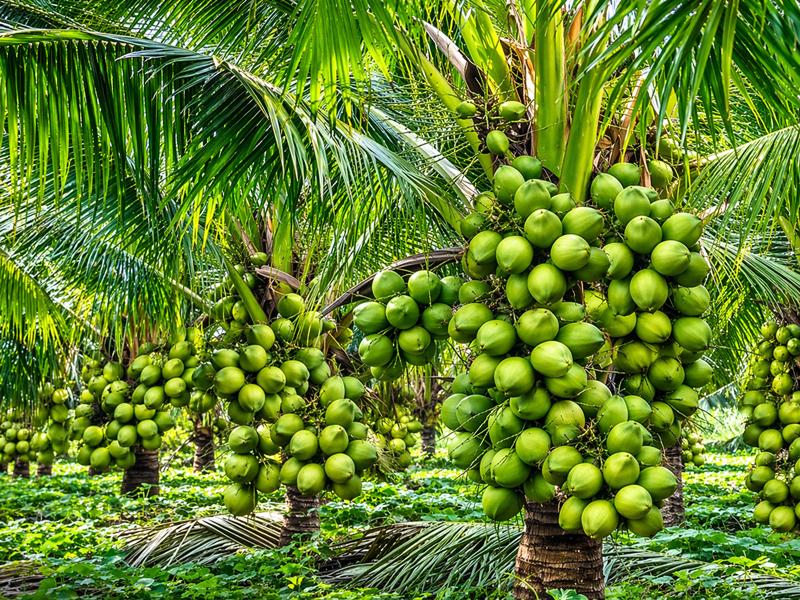
🌴 Coconut Farming Kaise Kare | Complete Information
Coconut farming in India is considered a very profitable and long-term farming. It is called “Kalpavriksha” because every part of it is useful in some way. For rural farmers, it is a stable source of income, which gives continuous production for 60 to 70 years.
India is one of the major coconut producing countries in the world and its demand is very high in religious, food, industrial and medicinal uses.
This article will provide you Coconut Farming Kaise Karein | Complete Information, in which all stages from seed to marketing are explained in easy language. This information will help farmers to get more production per acre and earn more profit.
1. 🌱 Crop Introduction
Coconut is a tropical plant whose scientific name is Cocos nucifera.
Main Features:
- After planting once, it gives production for 60 to 70 years
- Source of regular income every year
- Good yield even with low maintenance
- Every part is useful like water, oil, shell, fiber
2. 🥥 Health Benefits & Uses
Uses:
- Coconut water – gives cooling and energy to the body
- Coconut oil – useful for hair and skin
- Copra – used for oil production
- Shell – used in making rope and mats
Health Benefits:
- Improves digestion
- Increases immunity
- Keeps the body hydrated
- Beneficial for heart
3. 🔬 Scientific Classification
| Class | Details |
|---|---|
| Kingdom | Plantae |
| Family | Arecaceae |
| Genus | Cocos |
| Species | nucifera |
4. 🌦️ Climate & Temperature
Suitable Climate:
- Tropical region
- Between 20°N to 20°S
Temperature:
- Ideal temperature: 25°C to 35°C
- Rainfall: 1500 to 2500 mm
👉 For more production, equal rainfall throughout the year is necessary
5. 🌍 Soil Requirement
Suitable Soil:
- Loamy soil
- Alluvial soil
- Sandy coastal soil
Soil Features:
- Depth: At least 1.5 meter
- pH: 5.2 to 8.0
- Good drainage should be there
Important Points:
- Waterlogging should not happen
- There should not be hard rock in the land
6. 🌰 Seed & Varieties
In coconut farming, selecting the right variety is the biggest key to success. Good variety increases production, quality and profit all three.
Types of Main Varieties:
6.1. Tall (Long Varieties)
- Height: 50 to 90 feet
- Start fruiting: 7 to 10 years
- Life: 60 to 80 years
- Production: Stable and long-term
Examples:
- West Coast Tall
- Lakshadweep Ordinary
- Andaman Ordinary
6.2. Dwarf (Short Varieties)
- Height: 20 to 60 feet
- Start fruiting: 4 to 5 years
- Life: Less but early production
Examples:
- Chowghat Dwarf Green
- Orange Dwarf
6.3. Hybrid Varieties
👉 Mix of Tall + Dwarf
- Gives fruit early
- Higher production
- Better quality
Examples:
- T × D (Tall × Dwarf)
- D × T (Dwarf × Tall)
👉 Hybrid is considered best for commercial farming
Important Points for Plant Selection:
- Plant should be 9 to 12 months old
- At least 6 to 8 leaves should be there
- Stem should be thick and healthy
- Select disease-free plants
7. 🌱 Seed Rate
Number of Plants per Acre:
- 70 to 80 plants per acre
Spacing:
- Plant to plant distance: 7.5 to 8 meter
- Triangular method: 7.6 meter
- Square method: 8 × 8 meter
👉 Proper spacing gives enough sunlight, air and nutrition to plants
8. 🛒 Where to Buy Seeds/Plants?
Reliable Sources:
- Agriculture universities
- Government nursery
- Certified private nursery
- Coconut Development Board
Points to Keep in Mind While Buying:
- Take certified plants
- Plants should be disease-free
- Should have good root system
9. 🚜 Land Preparation
Land Selection:
- Land should not have waterlogging
- Soil should be deep and fertile
Steps of Preparation:
- Do deep ploughing of the field
- Remove weeds and stones
- Do leveling
Pit Preparation:
Size:
- Loamy soil: 1m × 1m × 1m
- Sandy soil: 0.75m × 0.75m × 0.75m
Filling Material:
- Cow dung manure (20-25 kg)
- Soil
- Ash
👉 Prepare the pit 15 days before planting
10. 🌿 Sowing Method
Time of Planting:
- March to July (most suitable)
- Before start of monsoon
Process of Planting:
- Make a small pit in the center of big pit
- Place the plant carefully
- Fill soil and press it
- Do irrigation immediately
Special Tips:
- Protect from waterlogging
- Keep the plant straight
11. 🌾 Fertilizer & Manure Management
Organic Manure:
- Cow dung manure: 20 to 50 kg per tree
- Compost
- Neem cake
Chemical Fertilizer (per tree per year):
- Urea: 1 kg
- Phosphate: 1.5 kg
- Potash: 2 kg
Time of Application:
- During monsoon
- Better to give in two parts
👉 Balanced fertilizer can increase production up to 30 to 40%
12. 💧 Irrigation Schedule
Water Requirement:
- Per plant: 40 to 45 liters
Irrigation Interval:
- Summer: Every 3 days
- Winter: Once in a week
Modern Method:
👉 Drip irrigation is most effective
Benefits:
- Saves water
- Increases production
- Keeps roots healthy
13. 🌾 Weed Control
In coconut farming, weeds compete for nutrients, water and sunlight, due to which production can decrease. So timely control is very important.
Methods of Weed Control:
13.1. Mechanical Method
- Do weeding and hoeing every 30 to 45 days
- Remove weeds by hand or machine
13.2. Mulching
- Use dry leaves, coconut husk or straw
- Maintains soil moisture
- Prevents weed growth
13.3. Chemical Method
- Use herbicide only when needed
- Use only with expert advice
13.4. Intercropping (Mixed Farming)
- Grow pulses or vegetables
- You will also get extra income
👉 Proper weed control can increase production up to 20 to 25%
14. 🐛 Pest & Disease Management
Coconut trees can be affected by many types of pests and diseases. Timely identification and control is very important.
Major Pests:
14.1. Rhinoceros Beetle
- Damages leaves
- Stops plant growth
Control:
- Install pheromone traps
- Use neem-based insecticide
14.2. Red Palm Weevil
- Makes the trunk hollow from inside
- Tree can dry
Control:
- Remove infected part
- Give insecticide injection
Major Diseases:
14.3. Bud Rot
- Top part starts rotting
Control:
- Spray fungicide
14.4. Leaf Spot
- Spots appear on leaves
Control:
- Use copper-based medicine
👉 Timely control can save crop from up to 30% loss
15. ⏳ Crop Duration
Growth Stages:
- Plant establishment: 0 to 1 year
- Initial growth: 1 to 3 years
- Start fruiting: 4 to 5 years
- Full production: 7 to 10 years
Life:
👉 Gives production for 60 to 70 years
👉 This is a long-term investment farming
16. 🌴 Harvesting Method
Harvesting of coconut at the right time is very important so that quality and market value is better.
Harvesting Time:
- Fruits take 11 to 12 months to mature
- Green coconuts can be harvested early for water
Harvesting Frequency:
- 2 to 6 times in a year
Signs of Harvesting:
- Change in coconut color
- Fruit becomes hard
Method:
- Get harvesting done by trained person by climbing tree
- Use modern tools
17. 📊 Yield per Acre
Production Capacity:
Per Tree:
- 70 to 120 coconuts per year
Per Acre:
- 70 to 80 trees
- Total production: 3000 to 6000 coconuts
Ways to Increase Production:
- Selection of improved varieties
- Drip irrigation
- Balanced fertilizer
👉 With good care, production can increase up to 50%
18. 💰 Market Price & Profit per Acre
Cost (per acre):
- Plants: ₹80 × 80 = ₹6400
- Manure and fertilizer: ₹8000 to ₹12000
- Labour: ₹10000 to ₹15000
- Other expenses: ₹5000
👉 Total cost: ₹30,000 to ₹40,000
Income (per acre):
- Total production: 3000 coconuts
- Price per coconut: ₹20 to ₹30
👉 Total income: ₹60,000 to ₹90,000
Net Profit:
👉 ₹30,000 to ₹60,000 per acre
👉 In long term, this profit keeps increasing
19. 🏪 Storage
Proper Storage Methods:
- Keep in dry and ventilated place
- Do not keep directly on ground
- Use wooden platform
Storage Duration:
- Dry coconut: 2 to 3 months
- Green coconut: 10 to 15 days
Precautions:
- Protect from moisture
- Keep safe from pests
20. 🏛️ Government Schemes
Government of India and state governments run many schemes for coconut farmers.
Major Schemes:
20.1. Coconut Development Board Scheme
- Providing planting material
- Technical support
20.2. Kera Suraksha Insurance Scheme
- Compensation in natural disaster
- Security for farmers
20.3. Coconut Palm Insurance Scheme
- Protection of trees
- Financial support
20.4. Training and Subsidy
- Modern farming techniques
- Subsidy on drip irrigation
Benefits:
- Cost reduces
- Risk reduces
- Production increases
❓ FAQ | Frequently Asked Questions
Q1. What is Coconut Farming Kaise Karein | Complete Information?
👉 For coconut farming, proper soil, climate, improved variety, proper spacing, irrigation, fertilizer and pest control are necessary. If all these things are followed properly, then farmers can earn good profit per acre.
Q2. How many coconut trees can be planted in one acre?
👉 Normally 70 to 80 plants are planted per acre, if spacing is kept 7.5 to 8 meter.
Q3. In how many years coconut tree gives fruit?
👉 Dwarf varieties start giving fruit in 4 to 5 years, while tall varieties give fruit in 7 to 10 years.
Q4. How many coconuts are obtained from one tree in a year?
👉 From one healthy tree, on average 70 to 120 coconuts are obtained per year. With good care, this number can go up to 150.
Q5. How much water should be given in coconut farming?
👉 Around 40 to 45 liters water is required per plant. In summer irrigate every 3 days and in winter once in a week.
Q6. Which soil is best for coconut farming?
👉 Loamy, alluvial and sandy soil are most suitable, where drainage is good and depth is at least 1.5 meter.
Q7. Which variety is best for coconut farming?
👉 Hybrid varieties give highest production, so they are considered best for commercial farming.
Q8. Is coconut farming profitable?
👉 Yes, it is a long-term and stable income farming, in which profit of ₹30,000 to ₹60,000 per acre can be earned.
Q9. Which pests are most dangerous in coconut farming?
👉 Rhinoceros beetle and Red Palm Weevil are the most dangerous pests, which can cause serious damage to the tree.
Q10. When should coconut be harvested?
👉 Coconut gets ready in 11 to 12 months and harvesting can be done 2 to 6 times in a year.
🔗 Useful Links (External & Internal Links)
👉 External Links:
👉 Internal Links:
📌 Additional Useful Information (Bonus Tips for Farmers)
1. Extra Income from Intercropping
You can grow the following crops between coconut trees:
- Pulses
- Vegetables
- Pineapple
- Ginger
👉 This can increase your income up to 20 to 30%
2. Adopt Drip Irrigation
- Saves water
- Increases production
- Reduces cost
3. Use Mulching
- Maintains moisture
- Reduces weeds
4. Do Regular Monitoring
- Identify pests and diseases early
- Do treatment on time
🔚 Conclusion
After understanding Coconut Farming Kaise Karein | Complete Information, it is clear that this farming is a long-term, safe and profitable investment.
If farmers select the right variety, adopt scientific methods and do timely care, then they can earn good production and profit per acre.
👉 The special thing is that once planted coconut garden gives income for many generations, so it can become a strong financial support for rural farmers.
🌴 So plan today and start advanced coconut farming. 💰
👉 For more cash crop farming guides, keep exploring our website