


Biomass Pellets: Price, Uses & Machine Guide
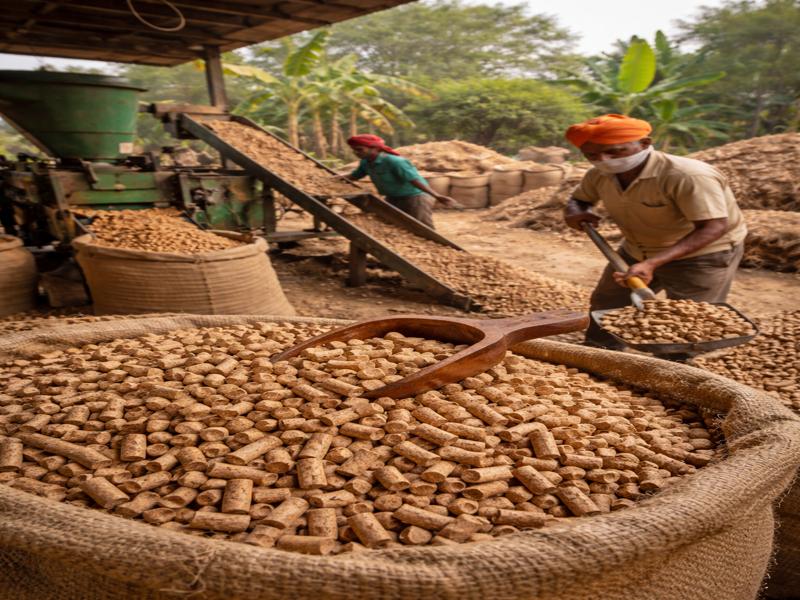
What are Biomass Pellets? Definition, Types, Benefits, Uses and Examples (Full Guide)
In today’s time, when the demand for energy is continuously increasing and pollution has become a big problem, we need such fuel which is affordable and also does not harm the environment. To fulfill this need, biomass pellets (Biomass Pellets) have emerged as a very good option.
This article will give you complete information about biomass pellets – such as what they are, how they are made, their types, benefits, uses and examples.
1. What are Biomass Pellets?
Biomass pellets are small cylindrical-shaped solid fuel, which are made from natural organic waste.
Understand in simple language:
When we take waste from farms or wood (such as straw, wood sawdust, sugarcane bagasse) and compress it using a machine into small granules, then it is called biomass pellets.
👉 These look like small pieces of wood
👉 When burned, they give a good amount of heat energy
👉 They are a good alternative to coal and gas
👉 For more information, click here
2. Definition of Biomass
Biomass is an organic material that is obtained from plants and animals and is used to generate energy.
Sources of Biomass:
- Wood and wood sawdust
- Crop residue
- Animal waste (dung)
- Sugarcane bagasse
- Groundnut shells
👉 When this biomass is processed and converted into pellets, then it is called biomass pellets.
3. How Biomass Pellets are Made?
The process of making biomass pellets is technical, but it is very logical and systematic. If you understand this section carefully, you can easily understand this industry or even start your own business.
Below the complete process is explained step-by-step in simple language:
3.1. Raw Material Collection
First, biomass raw material is collected.
Main raw materials:
- Rice husk
- Wheat straw
- Sugarcane bagasse
- Wood sawdust
- Groundnut shells
- Mustard stalk
👉 Keep in mind:
The drier and cleaner the raw material is, the better the quality of pellets will be.
3.2. Drying
The raw material often has high moisture, which needs to be reduced.
Why is it important?
- If moisture is high, pellets are not formed properly
- The machine can get jammed
- Energy efficiency decreases
Ideal moisture level:
👉 10% – 15%
Methods of drying:
- Sun drying (small scale)
- Dryer machine (industrial level)
3.3. Size Reduction / Grinding
Now the raw material is converted into small particles.
Machines:
- Hammer Mill
- Crusher
Why is it important?
- Uniform particle size makes strong pellets
- Smooth feeding in the machine
👉 Ideal particle size: 3–5 mm
3.4. Mixing and Conditioning
If the raw material is of different types, then it is mixed properly.
What happens in this?
- Moisture and temperature are balanced
- If needed, a little water or steam is added
👉 This makes the bonding of pellets strong.
3.5. Pelletizing
This is the most important step.
What happens in this?
- The raw mix is fed into the pellet machine
- It is compressed with high pressure and temperature to form small cylinders
Types of machines:
- Flat Die Pellet Machine
- Ring Die Pellet Machine
👉 Pellets are made without chemicals, only with pressure and lignin (natural binder).
3.6. Cooling
When pellets come out of the machine, they are very hot.
Why is it important?
- Cooling makes pellets strong
- Chances of breaking are reduced
👉 For this, a cooler machine is used.
3.7. Screening
In this step:
- Broken pellets are separated
- Fine dust is removed
👉 This improves the quality of the final product.
3.8. Packaging and Storage
Finally, the prepared pellets are packed in bags.
Storage tips:
- Keep in a dry place
- Protect from moisture
- Proper air ventilation should be there
👉 Proper storage increases the life of pellets.
4. Types of Biomass Pellets
Biomass pellets are divided into different types based on their raw material and use. Each type has its own features and uses.
4.1. Wood-Based Pellets
This is the most commonly used type.
Features:
- High calorific value (High energy output)
- Low ash content
- Stable quality
Examples:
- Softwood pellets – from pine, spruce wood
- Hardwood pellets – from oak, beech, maple wood
- Sawdust pellets – from wood sawdust
- Wood chip pellets – from small wood pieces (chips)
- Furniture waste pellets – from wood scrap/waste
- Mixed wood pellets – made by mixing different woods
Uses:
- Hotel industry
- Heating systems
- Large boilers
👉 These are considered premium quality pellets.
4.2. Agricultural Residue Pellets
These are made from agricultural waste.
Features:
- Cheap and easily available
- Highly used in India
Examples:
- Rice husk
- Wheat straw
- Cotton waste
Uses:
- Small and medium industries
- Brick kilns
4.3. Bagasse Pellets
These are made from sugarcane residue (bagasse).
Features:
- Easily available in India
- Stable supply
Uses:
- Sugar mills
- Power plants
4.4. Mixed Pellets
In this, different biomass materials are mixed.
Features:
- Lower cost
- Balanced quality
Uses:
- Large industrial plants
5. Examples of Biomass Pellets
In India, many types of biomass pellets are produced and used.
Common examples:
- Rice Husk Pellets (rice husk)
- Sawdust Pellets (wood sawdust)
- Bagasse Pellets (sugarcane residue)
- Groundnut Shell Pellets (groundnut shells)
- Mustard Stalk Pellets (mustard stalk)
👉 All these are used as fuel in different industries.
6. Benefits of Biomass Pellets
This section is very important for SEO because people often search “benefits of biomass pellets”.
6.1. Better for Environment
- Low CO₂ emission
- Less air pollution
- Source of green energy
6.2. Cost Saving
- Cheaper than coal
- More economical than LPG and diesel
👉 In the long term, it gives big savings.
6.3. Renewable Energy
- Can be produced again and again
- Does not get exhausted
6.4. Use of Agricultural Waste
- No need to burn waste in fields
- Extra income for farmers
6.5. High Efficiency
- More heat production
- Less smoke
6.6. Easy Handling
- Small size
- Automatic feeding system
6.7. Government Support
- Subsidy schemes
- Mandatory use in power plants
7. Uses of Biomass Pellets
The use of biomass pellets is increasing rapidly in many sectors.
7.1. Industrial Use
- Boiler fuel
- Steam production
- Textile industry
7.2. Power Generation
- Thermal power plants
- Co-firing with coal
7.3. Domestic Use
- Cooking
- Room heating
7.4. Hotels and Restaurants
- Kitchen fuel
- Alternative to gas
7.5. Brick Kilns
- Used instead of coal
7.6. Dairy and Farming
- Milk processing
- Poultry and farms
8. Biomass Pellets vs Coal
| Parameter | Biomass Pellets | Coal |
|---|---|---|
| Environment | Safe | Pollution |
| Cost | Low | High |
| Renewable | Yes | No |
| Smoke | Less | More |
| Energy Efficiency | Good | Medium |
👉 Conclusion: Biomass pellets are a smart and future fuel.
9. Future in India
The market of biomass pellets is growing rapidly in India.
Main reasons:
- Availability of agricultural waste in large quantity
- Pollution control regulations
- Government policies
👉 In the coming time, this sector can become a business of crores.
10. Biomass Pellets Business Guide
If you are an entrepreneur, then this sector is very good for you.
Initial requirements:
- Machinery
- Raw material
- Space
- Electricity
Benefits:
- High demand
- Low competition (in some areas)
- Good profit
11. Disadvantages
- Quality gets affected due to moisture
- Storage is necessary
- Initial investment
👉 But with proper planning, these problems can be easily managed.
12. FAQs Related to Biomass Pellets
Q1. What are biomass pellets?
Biomass pellets are small solid fuel, which are made by compressing agricultural and wood waste and are used for energy production.
Q2. From which materials biomass pellets are made?
They are made from organic waste like rice husk, wheat straw, sugarcane bagasse, wood sawdust, groundnut shells, etc.
Q3. Are biomass pellets an alternative to coal?
Yes, biomass pellets are a cheaper, eco-friendly and renewable alternative to coal, and their use is increasing in many industries.
Q4. Where are biomass pellets used?
They are used in industries, power plants, hotels, restaurants, brick kilns and domestic cooking/heating.
Q5. How are biomass pellets beneficial for the environment?
They produce less carbon emission, reduce pollution and convert agricultural waste into useful energy, which keeps the environment safe.
Q6. What is the cost of making biomass pellets?
The cost depends on machinery, raw material and scale, but it can be started with low investment at a small level and gives good profit.
Q7. What is the calorific value of biomass pellets?
Generally, the calorific value of biomass pellets is between 3000–4500 kcal/kg, which makes them a good fuel.
Q8. Are biomass pellets safe?
Yes, they are completely safe, non-toxic and eco-friendly fuel, and do not contain any harmful chemicals.
Q9. How to store biomass pellets?
They should be kept in a dry and ventilated place, and it is important to keep them away from moisture so that their quality does not get affected.
Q10. Is biomass pellets business profitable?
Yes, it is a fast-growing sector with increasing demand, government support and can give good profit in the long term.
13. Conclusion
Biomass pellets are a sustainable, cost-effective and eco-friendly energy solution in today’s time.
👉 It not only reduces pollution but also benefits farmers and industries.
👉 In the coming time, it is going to become a big part of the energy sector.
👉 For more detailed information on technical farming, click here