


Digital Agriculture Mission
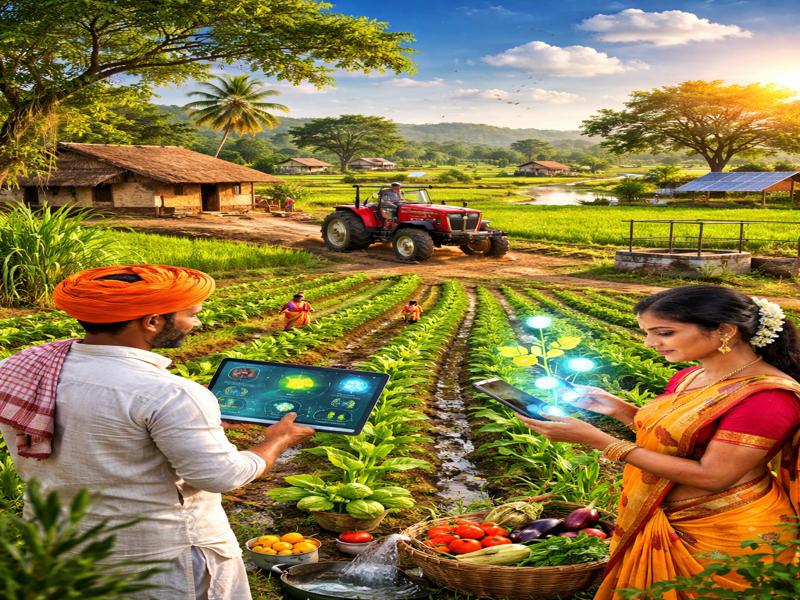
Digital Agriculture Mission: Digital Revolution in Indian Farming
India is an agriculture-based country, where even today almost half of the population depends on farming and related work. But with changing time, farming methods are also changing fast. Now it is not possible to depend only on plough, bullocks, and traditional farming.
Today’s farming is becoming based on data, mobile, internet, and modern technologies.
To speed up this change, the Government of India has started – Digital Agriculture Mission
What is Digital Agriculture Mission?
Digital Agriculture Mission is an ambitious scheme of the Government of India whose objective is:
- To make farming digital
- To connect farmers with technology
- To make farming more profitable and sustainable
In simple language:
When mobile, apps, internet, data, and machines are used in farming, it is called digital agriculture.
Why was Digital Agriculture Mission needed?
Today farming is facing many problems:
- Uncertain weather
- Not getting the right price for crops
- Increasing cost
- Lack of information
- Pressure of middlemen
These problems can be solved only with technology.
That is why Digital Agriculture Mission was started so that farmers can do smart farming.
Main Objectives of Digital Agriculture Mission
1. Right information at the right time
Farmers should get weather, seeds, fertilizers, pesticides, and market information on mobile.
2. Making farming smart
Using AI, drones, sensors, and satellites to modernize farming.
3. Increasing production and quality
Producing more and better quality crops at lower cost.
4. Increasing farmers’ income
Connecting farmers directly to the market so they get the right price.
5. Transparency and digital system
Sending benefits of government schemes directly to farmers’ bank accounts.
Mobile-Friendly Digital Farming – Why is it Important?
Today every farmer has a smartphone or is slowly getting one. The biggest benefit of digital agriculture mission is:
Farmer can control complete farming from mobile
What can a farmer do with mobile?
- Check weather information
- Take crop advice
- Know mandi rates
- Sell crops online
- Check status of government schemes
Now “Mobile = Farmer’s biggest tool”
Main Components of Digital Agriculture Mission
1. Digital Farmer Database
Information of every farmer is stored digitally:
- Land records
- Crop details
- Bank account
- Aadhaar link
This helps the government reach farmers directly.
2. Agri Stack
It is a big digital platform where:
- Farmer data
- Crop information
- Weather data
All are available at one place.
3. Drone Technology
Use of drones is increasing fast:
- Pesticide spraying
- Field monitoring
- Crop assessment
This saves time, water, and medicine.
4. Satellite Technology
From satellite we get:
- Rainfall information
- Soil condition
- Water level
This helps farmers prepare in advance.
5. Mobile Apps and Digital Platforms
Government and private companies are making many apps:
- Kisan apps
- Weather apps
- Agriculture advisory apps
Everything is available on mobile.
Modern Technologies Used in Digital Agriculture
The biggest strength of Digital Agriculture Mission is its advanced technologies. These make farming easy, accurate, and more profitable.
1. Artificial Intelligence (AI) – Smart Decision Technology
AI helps farmers to take decisions based on data.
Uses of AI:
- Crop disease detection (Image Recognition)
- Yield prediction
- Smart advisory
- Right amount of pesticide
Example: Farmer can click a photo from mobile and know the disease in crop.
2. Internet of Things (IoT) – Live Data from Field
In IoT, small sensors are installed in fields which give real-time data.
What sensors tell:
- Soil moisture
- Temperature
- pH level
- Water requirement
Benefits:
- Irrigation as per need
- Saving water and electricity
- Better production
3. Drone Technology – Monitoring from Sky
Drones are becoming popular in farming.
Uses of drones:
- Pesticide spraying
- Crop monitoring
- Field survey and mapping
- Damage assessment
Benefits:
- Saves time
- Low cost
- Accurate work
4. Big Data Analytics – Decisions from Data
A lot of data related to farming (weather, soil, production) is collected.
Use:
- Which crop to sow and when
- Which crop is best for which area
- How to increase production
Benefits:
- Less risk
- Better planning
5. Blockchain Technology – Secure and Transparent System
Blockchain keeps data safe and transparent.
Use:
- Supply chain tracking
- Crop traceability
- Transparent payments
Benefits:
- Less fraud
- Right payment to farmer
6. Cloud Computing – Data Always Available
Cloud keeps farmers’ data safe online.
Benefits:
- Access from anywhere
- Data safety
- Easy use from mobile
Benefits of Digital Agriculture Mission
Digital agriculture mission is not only technology, it brings practical change in farmers’ life.
1. Right and timely information
Farmer knows in advance:
- When it will rain
- What temperature will be
- Which crop to grow
This reduces loss.
2. Big reduction in cost
- Less water
- Less fertilizer
- Less pesticide
Means less cost and more profit.
3. Improvement in production and quality
With new technology:
- Crop grows faster
- Quality becomes better
Good price in market.
4. Direct connection with market
Through digital platforms farmer can:
- Connect directly with buyers
- Sell crops online
No need of middlemen.
5. Direct benefit of government schemes
- DBT (Direct Benefit Transfer)
- Subsidy directly in bank
Transparency increases.
6. Reduction in risk and loss
- Weather information
- Disease detection
Farmer can prepare in advance.
Changes in Farmers’ Life (Real Impact Analysis)
Digital agriculture mission has brought many important changes:
1. Traditional to modern farming
Now farmers:
- Take decisions based on data, not guess
- Use new technology
2. Saving time and effort
- Machines and drones make work easy
- More work in less time
3. Increase in income
- Production increases
- Direct market connection
Overall income increases.
4. Self-dependent farmer
With digital information farmer:
- Can take own decisions
- Less dependent on others
Future of Digital Agriculture in India (Vision 2030)
Digital agriculture mission will give new direction to India:
1. Every farmer will be digital
- Digital ID for every farmer
- Farming through mobile
2. Smart Villages
- Internet-connected villages
- Technology-based farming
3. AI-based farming
- Complete farming based on data and AI
4. Growth of Agritech startups
- New companies will come
- More opportunities for youth
5. Global recognition of India
India can become a leader in digital agriculture.
Challenges of Digital Agriculture Mission
1. Lack of digital literacy
- Many farmers don’t know how to use mobile and apps properly
2. Internet and network issues
- Weak network in rural areas
3. Initial cost
- Drones and sensors can be expensive
4. Lack of awareness
- Farmers don’t have full information about the scheme
5. Data security and privacy
- Farmers’ data must be kept safe
Solutions (Actionable Solutions)
1. Digital training and workshops
- Training at village level
- Education in simple language
2. Strong internet infrastructure
- 4G/5G network in every village
3. Subsidy and finance
- Make technology affordable
- EMI and loan facility
4. Awareness campaigns
- Information through TV, mobile, village meetings
5. Data security system
- Secure platforms
- Build farmers’ trust
Role of Government and Private Sector
1. Role of Government
- Create digital platforms
- Provide subsidy to farmers
- Give training
2. Role of Private Companies
- Develop new technologies
- Create mobile apps
- Provide services to farmers
Both together can make digital agriculture successful.
Digital Agriculture Mission and Employment
1. New job sectors
- Drone operator
- Agri-data analyst
- AI expert
- Agritech startups
2. Opportunities for youth
Farming has now become “Tech + Business”
Smart Tips for Farmers
- Check weather app daily
- Download government apps
- Don’t fear adopting new technology
- Participate in training
- Keep your data safe
Conclusion
Digital Agriculture Mission is not just a scheme, but the future of farming in India.
It will make farmers self-dependent, smart, and financially strong.
If farmers and government work together, India can become a global leader in digital agriculture.
👉 For more detailed information on government schemes, click here