


Spinach Farming
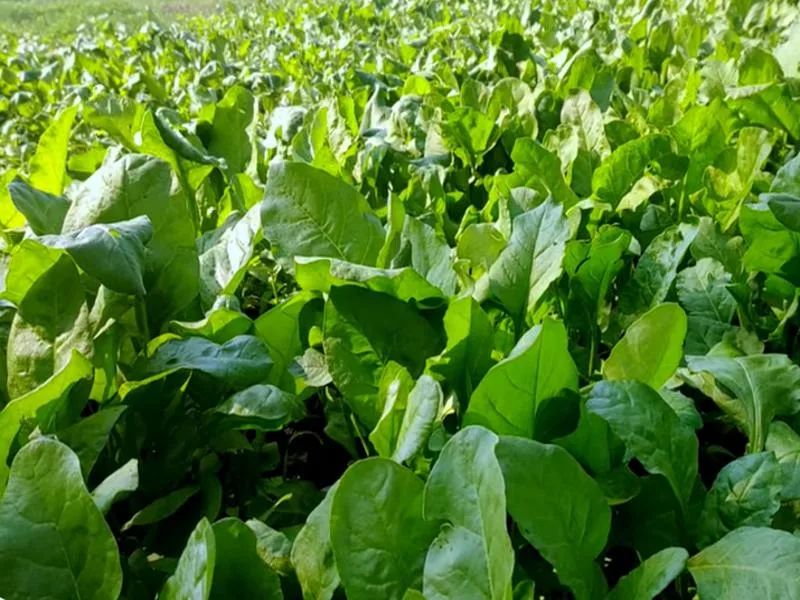
Spinach Farming Guide: Complete Tips for High Yield & Profit
Spinach farming is a low cost and fast income vegetable cultivation option for small and medium farmers in India. Spinach is a leafy vegetable that has demand throughout the year. It is widely used in homes, hotels, roadside eateries, and vegetable markets. With proper techniques, correct timing, and basic knowledge, farmers can earn good profit per acre from spinach cultivation.
Spinach originated in Central and Western Asia and belongs to the Amaranthaceae family. It is an evergreen leafy vegetable cultivated all over the world. In Hindi, it is known as “Palak”. Spinach is rich in iron, vitamins, and antioxidants. It strengthens the immune system and is beneficial for digestion, skin, hair, eyes, and brain health. Spinach is also used in making anti cancer and anti aging medicines.
In India, Andhra Pradesh, Telangana, Kerala, Tamil Nadu, Uttar Pradesh, Karnataka, Maharashtra, West Bengal, and Gujarat are major spinach producing states.
All the information given below is explained per acre, so farmers can easily understand and implement it in their fields.
1. Climate and Weather Requirements
1.1 Temperature
Spinach grows best in a moderate climate.
• Suitable temperature ranges from 15 to 30 degree Celsius
• Ideal sowing temperature is 25 to 30 degree Celsius
• Ideal harvesting temperature is 15 to 20 degree Celsius
1.2 Rainfall
• Required rainfall is 80 to 120 centimeters
• Excess rainfall or waterlogging can damage the crop
2. Soil Requirement and Land Selection
Spinach can be grown in many soil types, but best results are obtained in well drained sandy loam and alluvial soil.
2.1 Soil Characteristics
• Soil pH should be between 6 and 7
• Avoid acidic soil and waterlogged fields
2.2 Land Preparation
- Plough the field 3 to 5 times to make soil fine
- Level the field after each ploughing
- Prepare beds or ridges
- Give light irrigation before sowing
3. Popular Spinach Varieties | Varieties
3.1 Punjab Green
• Leaves are semi erect and dark shiny green
• Ready for first cutting after 30 days
• Average yield is 125 quintals per acre
• Low oxalic acid content
3.2 Punjab Selection
• Leaves are light green, thin, long, and narrow
• Slightly sour taste
• Stem is purple in color
• Average yield is 115 quintals per acre
3.3 Other Improved Varieties
• Pusa Jyoti
• Pusa Palak
• Pusa Harit
• Pusa Bharati
4. Sowing Method
4.1 Best Time for Sowing
Spinach can be grown almost throughout the year, but August to December is considered the best period.
4.2 Seed Rate
• 4 to 6 kilograms of seed per acre
4.3 Seed Treatment
• Soak seeds in water for 12 to 24 hours before sowing for better germination
4.4 Method of Sowing
• Line sowing
• Broadcasting method
4.5 Spacing and Depth
• Row to row spacing 20 centimeters
• Plant to plant spacing 5 centimeters
• Seed depth 3 to 4 centimeters
5. Manure and Fertilizer Management (Per Acre)
5.1 Organic Manure
• Well decomposed farmyard manure 200 quintals per acre
5.2 Chemical Fertilizer Requirement
• Nitrogen 32 kilograms
• Phosphorus 16 kilograms
• Urea 70 kilograms
• Single super phosphate 100 kilograms
5.3 Fertilizer Application Method
- Apply full farmyard manure and full phosphorus before sowing
- Apply half nitrogen before sowing
- Apply remaining nitrogen in two equal splits at each cutting
- Light irrigation after fertilizer application
6. Irrigation Management
• Adequate soil moisture is essential for good germination
• If soil is dry, irrigate before or immediately after sowing
• In summer, irrigate every 4 to 6 days
• In winter, irrigate every 10 to 12 days
• Avoid excessive irrigation
• Do not allow water to stay on leaves
• Drip irrigation is highly beneficial for spinach cultivation
7. Weed Management
• 2 to 3 hand weedings are required
• Weeding improves soil aeration
• For chemical control, use Pyrazone 1 to 1.12 kilograms per acre
• Avoid herbicide use after crop establishment
8. Pest and Disease Management
8.1 Aphid Control
• Spray Malathion 50 EC 350 milliliters
• Mix in 80 to 100 liters of water
• Do not harvest immediately after spraying
• Harvest only after 7 days
8.2 Disease Control
Leaf Spot Disease
• Small circular spots appear on leaves
• Grey center with reddish margins
Control Method
• Spray Carbendazim 400 grams
• Or Indofil M 45, 400 grams
• Mix in 150 liters of water
• Repeat spray after 15 days if required
9. Harvesting of Crop
• First harvesting is done 25 to 30 days after sowing
• Subsequent harvest every 20 to 25 days
• Use sharp knife or sickle for cutting
• Proper harvesting increases crop duration and yield
10. Seed Production Method
• Spacing for seed crop is 50 centimeters × 30 centimeters
• Maintain isolation distance of 1000 meters
• Leave one row after every five rows for inspection
• Remove diseased and off type plants
• Harvest when seeds turn brown
• Dry plants in the field for one week
• After drying, thresh and collect seeds
11. Yield per Acre, Cost of Cultivation and Profit
11.1 Average Yield
• 110 to 130 quintals per acre
11.2 Estimated Cost of Cultivation
• Seed cost 800 to 1200 rupees
• Fertilizer and manure 3000 to 4000 rupees
• Irrigation and labor 3000 to 4000 rupees
• Total cost 8000 to 10000 rupees
11.3 Expected Profit
• Average selling price 10 to 15 rupees per kilogram
• Total income 110000 to 180000 rupees
• Net profit 90000 to 160000 rupees per acre
12. Government Schemes
• National Horticulture Mission
• Pradhan Mantri Krishi Sinchai Yojana
• Soil Health Card Scheme
• Farmers should contact local agriculture department or Krishi Vigyan Kendra for guidance
13. Special Tips for Farmers
• Always sow at the right time
• Use balanced fertilizers
• Do timely harvesting
• Understand local market demand
• Control pests at early stage
• Try to adopt organic farming practices
14. Frequently Asked Questions | FAQs
Question 1. How many days does spinach take to harvest
Answer: First harvesting can be done within 25 to 30 days after sowing.
Question 2. How many times can spinach be harvested
Answer: With proper care, 6 to 8 cuttings are possible.
Question 3. Which soil is best for spinach cultivation
Answer: Sandy loam and alluvial soil are best.
Question 4. Which is the most harmful pest in spinach
Answer: Aphids cause maximum damage to spinach crop.
Question 5. Can spinach be grown with drip irrigation
Answer: Yes, drip irrigation saves water and improves yield.
Question 6. How can cost be reduced in spinach farming
Answer: Use organic manure and locally available inputs.
Question 7. Can farmers produce their own spinach seed
Answer: Yes, seed production is possible by following proper method.
Question 8. Which month is best for spinach farming
Answer: August to December is considered best.
Question 9. Where is spinach demand highest
Answer: In cities, hotels, restaurants, and vegetable markets.
Question 10. Is spinach farming profitable for small farmers
Answer: Yes, due to low cost and quick returns, it is very profitable.
15. Conclusion
Spinach farming is a safe, low risk, and high return farming option for Indian farmers. With proper knowledge, timely operations, and understanding of the market, spinach cultivation can strengthen farmers’ financial condition. By adopting modern techniques and using government schemes, farmers can earn good income even from small landholdings.
For more vegetable farming details, visit our website.
Farmers should also take guidance from the Indian Institute of Horticultural Research and Krishi Vigyan Kendra Portal.
Work hard, farm smart, and move towards self reliant agriculture.
Jai Kisan
Reference Websites