


What Is a Poplar Tree? Uses, Growth, Types & Benefits
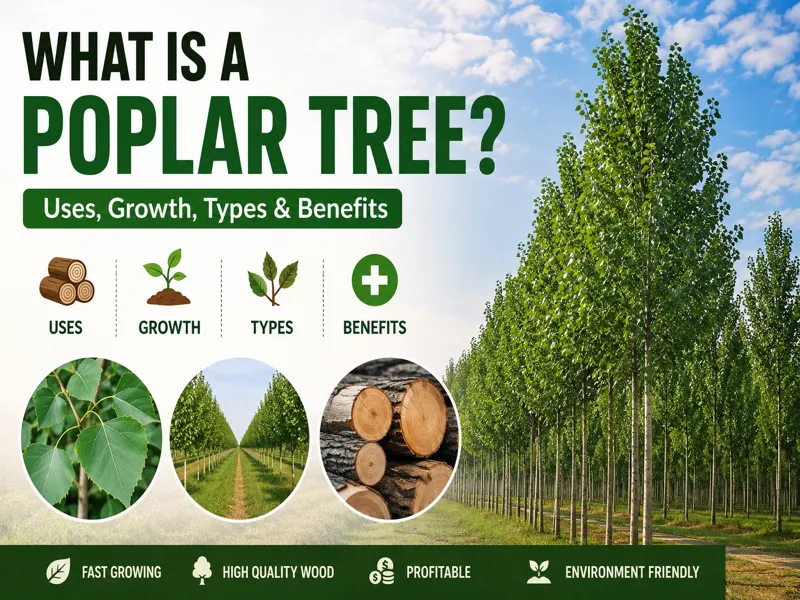
Poplar Tree Farming Guide: Profit, Growth, Yield, Price & Complete Information
Poplar tree farming has become one of the most profitable agroforestry businesses for farmers in India and many other countries. Poplar trees are fast-growing, easy to manage, and widely used in industries such as plywood, paper, packing boxes, furniture, and matchstick manufacturing. Because poplar trees shed their leaves during winter, farmers can also grow crops like wheat, mustard, sugarcane, turmeric, and pulses between the tree rows, creating an additional source of income.
The scientific name of the most commonly cultivated poplar in India is Populus deltoides. Under proper management, poplar trees can reach commercial harvesting size within 5–8 years, making them one of the fastest-returning tree crops available to farmers. Their strong market demand and relatively stable wood prices make poplar farming a low-risk investment compared to many traditional crops.
In recent years, improved hybrid poplar varieties have further increased profitability by offering faster growth, better wood quality, and higher yields. This guide covers everything you need to know about poplar trees, including growth rate, yield, profits, spacing, climate requirements, harvesting, diseases, and commercial farming opportunities.
For detailed cultivation practices, varieties, spacing, and profit calculations, farmers can also refer to the comprehensive guide available at Subsistence Farming – Poplar Farming Guide.
1. What Is a Poplar Tree?
A poplar tree is a fast-growing deciduous tree belonging to the genus Populus and the family Salicaceae. It is widely cultivated for timber, plywood, paper production, and agroforestry systems.
Poplar trees are known for their:
- Straight trunk
- Rapid growth rate
- High commercial value
- Ability to support intercropping
The most commonly cultivated species in India is Populus deltoides (Eastern Cottonwood). Farmers prefer poplar because it can be harvested much faster than many other timber trees. Additionally, its leaf-shedding nature allows sunlight to reach crops during winter, making it highly suitable for integrated farming systems. Poplar farming is especially popular in Punjab, Haryana, Uttar Pradesh, Uttarakhand, and Himachal Pradesh.
2. What Is a Poplar Tree Used For?
Poplar trees are mainly grown for their wood, which has strong industrial demand. Poplar wood is lightweight, easy to process, and widely accepted by manufacturing industries.
Major uses of poplar wood include:
- Plywood manufacturing
- Matchsticks and matchboxes
- Paper and pulp production
- Packing boxes and crates
- Furniture manufacturing
- Sports goods
- Pencil production
- Particle boards
Because multiple industries continuously require poplar wood, farmers usually find ready buyers after harvesting. This strong market demand is one of the biggest reasons why commercial poplar farming remains profitable. In addition, sawdust and wood waste can be used for biomass fuel and organic manure production.
3. What Does a Poplar Tree Look Like?
A poplar tree typically has a tall, straight trunk with a broad crown and smooth bark when young. As the tree matures, the bark becomes rougher and darker.
Key identifying features include:
- Height of 60–85 feet or more
- Fast vertical growth
- Green, triangular, or heart-shaped leaves
- Smooth bark on young trees
- Deciduous nature (leaf shedding in winter)
Commercial poplar plantations often appear uniform because farmers plant cloned varieties. The trees grow upright with limited branching when managed properly, making them ideal for timber production. Their rapid growth and straight stems are among the most recognizable characteristics of poplar plantations.
4. How to Identify a Poplar Tree?
You can identify a poplar tree by examining its leaves, bark, and growth pattern. Poplars have a distinctive tall and straight appearance that sets them apart from many other tree species.
Common identification signs include:
- Rapid growth rate
- Straight cylindrical trunk
- Broad, green leaves
- Smooth gray bark in young trees
- Leaf shedding during winter
- Dense canopy during the growing season
Many commercial poplar varieties are planted in rows, creating organized plantations. The leaves often flutter in the wind due to their flattened stalks. When planted in agricultural fields, poplar trees are usually spaced evenly to support both timber production and intercropping.
5. Where Do Poplar Trees Grow?
Poplar trees grow best in temperate and subtropical climates with adequate moisture and fertile soil. They are cultivated across Asia, Europe, and North America.
In India, major poplar-growing regions include:
- Punjab
- Haryana
- Uttar Pradesh
- Uttarakhand
- Himachal Pradesh
- Jammu & Kashmir
- Bihar
- West Bengal
Poplars perform best where annual rainfall ranges between 750–800 mm and temperatures remain between 20°C and 30°C. They thrive in well-drained soils and areas with reliable irrigation facilities. Farmers often plant poplar trees near agricultural fields because they integrate well with crop cultivation.
6. What Is a White Poplar Tree Called?
The White Poplar tree is scientifically known as Populus alba. It is a deciduous species native to Europe, Western Asia, and parts of North Africa.
Its main characteristics include:
- Silvery-white underside of leaves
- Broad crown
- Fast growth
- Tolerance to different soil types
White Poplar is mainly used for ornamental planting, windbreaks, and environmental landscaping. Although it has commercial value, it is less commonly used in large-scale Indian agroforestry systems compared to Populus deltoides. The white appearance of its leaves gives the species its common name and makes it easy to recognize.
7. What Is a Hybrid Poplar Tree?
A hybrid poplar tree is a genetically improved cross between different poplar species. These hybrids are developed to provide faster growth, better wood quality, and improved disease resistance.
Benefits of hybrid poplar trees include:
- Faster maturity
- Higher timber yield
- Better trunk diameter
- Uniform growth
- Strong market demand
Popular hybrid varieties include W109, W110, W111, W112, and W113. Many of these varieties can reach harvestable size faster than traditional types. Because of their superior performance, hybrid poplars are widely used in commercial farming and agroforestry projects.
8. How Fast Does a Poplar Tree Grow?
Poplar trees are among the fastest-growing commercial timber trees. Under ideal conditions, they can grow 6–10 feet per year during their early growth stages.
Growth speed depends on:
- Variety selection
- Soil fertility
- Irrigation
- Climate
- Fertilizer application
- Pest management
Commercial varieties often reach heights of 80–85 feet within 5–7 years. Hybrid varieties may grow even faster under intensive management. This rapid growth makes poplar one of the most attractive tree species for farmers seeking quicker returns from timber cultivation.
9. How Long Does a Poplar Tree Take to Grow?
A poplar tree begins establishing quickly after planting and achieves substantial growth within the first few years.
Typical growth timeline:
- Year 1: Root establishment
- Year 2–3: Rapid stem growth
- Year 4–5: Significant trunk development
- Year 6–8: Commercial harvesting stage
The exact growth period depends on management practices and climate conditions. Trees grown with proper irrigation and fertilization typically develop faster than those grown under poor conditions. Commercial farmers focus on maximizing trunk diameter because it directly influences timber value and market price.
10. How Long Does It Take for a Poplar Tree to Mature?
Most commercial poplar trees mature within 5–8 years. However, some fast-growing hybrid varieties may reach harvestable size in approximately 3–4 years under excellent growing conditions.
Factors affecting maturity include:
- Tree variety
- Soil quality
- Water availability
- Nutrient management
- Plant spacing
Although some varieties mature quickly, many farmers wait longer to achieve thicker trunks and higher timber weight. A larger trunk generally commands a better market price and improves overall profitability. Therefore, harvesting decisions should balance growth rate with market demand.
11. How Tall Does a Poplar Tree Grow?
A mature poplar tree can grow between 60 and 85 feet tall, depending on the variety and growing conditions.
Under commercial farming conditions:
- Average height: 60–80 feet
- Excellent conditions: Up to 85 feet or more
- Annual growth: 6–10 feet
Poplar trees invest much of their energy into vertical growth during the early years. Their straight stems are highly valued by plywood and veneer industries. Proper spacing and pruning help maintain strong trunk development and maximize timber quality.
12. How Long Does a Poplar Tree Live?
The lifespan of a poplar tree varies by species and environmental conditions. Many poplar species live between 30 and 100 years.
However, commercial farmers rarely keep trees that long because:
- Timber value peaks earlier
- Harvesting provides faster returns
- New plantations offer better productivity
Most agroforestry plantations harvest trees within 5–8 years. Therefore, the economic lifespan of a commercial poplar plantation is much shorter than the biological lifespan of the tree itself.
13. How Many Poplar Trees Can Be Planted Per Acre?
The number of poplar trees per acre depends on spacing.
Common planting densities include:
| Spacing | Trees Per Acre |
|---|---|
| 5m × 5m | 182 |
| 5m × 4m | 396 |
| 5m × 2m | 476 |
Wider spacing supports intercropping and thicker trunks, while closer spacing increases total wood volume. Farmers should choose spacing based on soil fertility, irrigation availability, and income goals. Proper spacing also improves air circulation and reduces disease risks.
14. What Is the Average Yield of Poplar Trees Per Acre?
The average yield of poplar trees varies according to spacing, age, and management practices.
For a plantation with 182 trees per acre:
- Average tree weight: 2.5–3.5 quintals
- Total yield: 455–637 quintals
Higher yields are possible with improved varieties and intensive management. Yield depends heavily on irrigation, fertilizer application, and harvesting age. Trees harvested after full maturity generally provide the best balance between volume and market value.
15. How Much Is a Poplar Tree Worth?
The value of a poplar tree depends on:
- Trunk diameter
- Tree height
- Weight
- Variety
- Wood quality
- Local market demand
In many commercial plantations, a mature tree can generate significant income because timber is sold by weight. Trees with larger diameters and straight trunks attract premium prices from plywood and veneer manufacturers. Therefore, proper management throughout the growth cycle directly affects the final value of each tree.
16. What Is the Market Price of Poplar Wood?
The market price of poplar wood varies by region and industrial demand. In many Indian timber markets, poplar wood typically sells between ₹1,200 and ₹1,600 per quintal.
Price fluctuations depend on:
- Industry demand
- Wood quality
- Tree size
- Transportation costs
- Seasonal supply
Premium-quality timber with larger diameters often receives better rates. Farmers should monitor local market conditions and establish connections with plywood industries before harvesting.
17. How Profitable Is Poplar Tree Farming?
Poplar tree farming is considered highly profitable because it combines timber income with intercropping opportunities.
Profitability advantages include:
- Fast growth cycle
- Strong industrial demand
- Additional crop income
- Relatively low maintenance
- Stable timber market
Compared with many long-duration timber species, poplar provides returns much sooner. Farmers can generate income from crops during the first few years while waiting for timber harvest. This dual-income system significantly improves overall farm profitability.
18. How Much Profit Can You Earn From One Acre of Poplar Trees?
With proper management, one acre of poplar farming can generate approximately ₹5.4 lakh to ₹10.2 lakh in gross income over a 6-year period.
Profit depends on:
- Variety selection
- Market price
- Yield
- Plantation density
- Input costs
Additional earnings from intercrops can further increase total returns. Farmers who maintain healthy plantations and sell during favorable market conditions often achieve better profitability than average.
19. Is Poplar Tree Farming a Good Investment?
Yes, poplar tree farming is generally considered a good long-term agricultural investment.
Reasons include:
- High market demand
- Predictable harvesting cycle
- Intercropping income
- Environmental benefits
- Strong agroforestry support
Like any agricultural business, success depends on management quality and market conditions. However, compared to many timber species requiring decades to mature, poplar offers a relatively quick return on investment. Farmers seeking diversified income often choose poplar as part of their agroforestry strategy.
20. When Can Poplar Trees Be Harvested?
Poplar trees can generally be harvested once they reach the desired trunk diameter and marketable size.
Most plantations harvest trees:
- After 5 years (minimum commercial stage)
- Between 6–8 years (best returns)
Harvest timing should consider wood prices and tree growth. Delaying harvest slightly may improve trunk diameter and total timber weight, leading to higher profits. Farmers should evaluate both biological growth and market trends before making harvesting decisions.
21. How Many Years Does It Take to Harvest Poplar Trees?
Most poplar plantations are harvested within 5–8 years. Fast-growing hybrid varieties may become marketable earlier, but many farmers wait longer for maximum value.
Harvesting age depends on:
- Variety
- Growth rate
- Market demand
- Desired trunk size
Although some hybrids mature faster, waiting until trees reach optimal diameter often increases profitability. Therefore, harvesting schedules should align with commercial objectives rather than growth speed alone.
22. Which Poplar Variety Is Best for Commercial Farming?
Several varieties perform well commercially, but the best choice depends on climate and market requirements.
Popular varieties include:
- G-48
- W-22
- W109
- W110
- W111
- W112
- W113
G-48 remains one of the most trusted varieties in North Indian plains, while W-series hybrids are preferred for faster growth and earlier returns. Farmers should purchase certified planting material from reputable nurseries to ensure quality and disease resistance.
23. What Is the Best Climate for Growing Poplar Trees?
Poplar trees grow best in temperate climates with moderate temperatures and sufficient moisture.
Ideal conditions include:
- Temperature: 20–30°C
- Planting temperature: 18–20°C
- Rainfall: 750–800 mm annually
Although poplars tolerate temperatures from 10°C to 45°C, extreme conditions can reduce growth. Good drainage is essential because waterlogging damages roots and affects tree health. Consistent irrigation further improves productivity in commercial plantations.
24. Can Poplar Trees Be Grown in India?
Yes, poplar trees are widely grown in India and form an important part of agroforestry systems.
Major growing states include:
- Punjab
- Haryana
- Uttar Pradesh
- Uttarakhand
- Himachal Pradesh
- Bihar
India has a strong plywood industry that creates consistent demand for poplar wood. Farmers benefit from both timber income and intercropping opportunities. With suitable soil and irrigation, poplar cultivation can be highly successful across many northern Indian regions.
25. What Is the Ideal Spacing Between Poplar Trees?
The ideal spacing depends on whether the goal is timber production, intercropping, or both.
Recommended spacing:
- 5m × 5m for agroforestry
- 5m × 4m for mixed farming
- 5m × 2m for dense plantations
Wider spacing allows more sunlight to reach crops and promotes thicker trunk development. Closer spacing increases wood volume but may reduce space for agricultural crops. Farmers should select spacing according to their farm management objectives.
26. Can Poplar Trees Grow in All Types of Soil?
No, poplar trees do not perform equally well in all soils. They grow best in fertile, deep, well-drained soils.
Suitable soils include:
- Loamy soil
- Sandy loam soil
- Organic matter-rich soils
Unsuitable soils include:
- Waterlogged fields
- Highly saline soils
- Poorly drained land
The ideal soil pH range is approximately 5.8–8.5. Good drainage remains one of the most important requirements for successful poplar cultivation.
27. How Much Water Does a Poplar Tree Need?
Poplar trees require regular irrigation, especially during the first two years after planting.
Typical irrigation schedule:
- First year: Every 7 days
- Second year: Every 15–20 days in winter
- Summer: Every 7 days
- Third year onward: Twice monthly during summer
Water requirements vary depending on climate, soil type, and rainfall. Consistent moisture promotes faster growth, better survival rates, and stronger trunk development. However, excess water and waterlogging should always be avoided.
28. Do Poplar Trees Need Fertilizer?
Yes, poplar trees respond well to balanced fertilization. Nutrient management improves growth rate, trunk thickness, and overall yield.
Common fertilizer practices include:
- Farmyard manure (FYM)
- Urea
- Single Super Phosphate (SSP)
- Potash where needed
Fertilizers are usually applied during the active growing season. Combined with proper irrigation, balanced nutrition helps trees reach commercial size faster. Soil testing before planting can further improve fertilizer efficiency and reduce unnecessary expenses.
29. What Diseases and Pests Affect Poplar Trees?
Several pests and diseases can affect poplar plantations if not managed properly.
Major pests include:
- Termites
- Stem borers
- Aphids
- Defoliators
Common diseases include:
- Stem rot
- Blight disease
- Heat-related drying disorders
Preventive measures are crucial. Farmers should use healthy planting material, maintain proper irrigation, ensure good drainage, and regularly inspect plantations. Early detection usually reduces damage and helps maintain timber quality and yield.
30. How to Increase Poplar Tree Growth Rate?
You can increase poplar tree growth by following proper scientific management practices.
Best growth-improving methods include:
- Plant certified saplings.
- Maintain recommended spacing.
- Apply balanced fertilizers.
- Irrigate regularly.
- Control pests early.
- Improve soil fertility.
- Ensure proper drainage.
- Use high-yield hybrid varieties.
Growth rate depends on the combined effect of genetics and management. Farmers who follow recommended practices generally achieve faster growth, thicker trunks, and higher market value at harvest.
👉 For detail poplar tree farming guides – click here