


Tulsi Farming
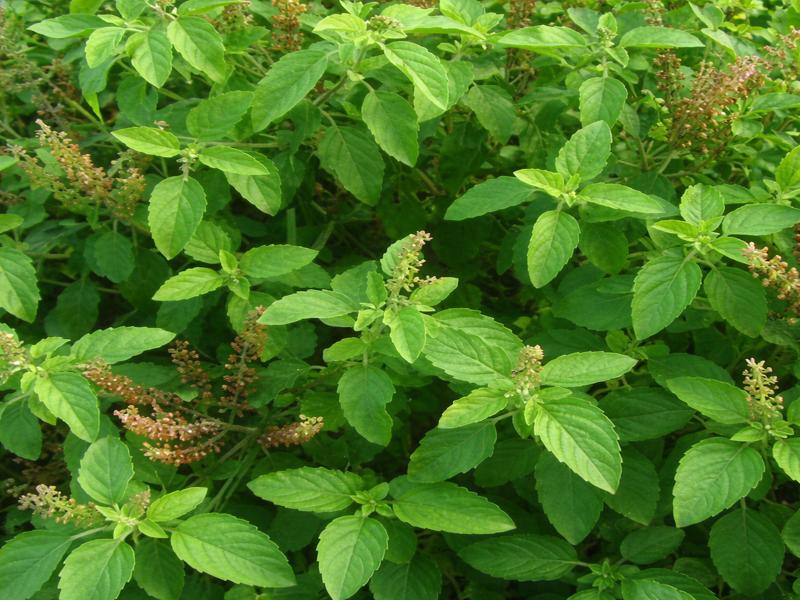
🌿 How to Do Tulsi Farming: More Profit in Low Cost
Tulsi farming in India is a very profitable and important farming from religious, medicinal, and commercial point of view. Tulsi (Ocimum species) has been used for centuries in Ayurveda, home remedies, religious rituals, and modern industries. Today, due to increasing demand in perfume, cosmetic, medicines, and herbal products, Tulsi farming has become a great source of income for farmers.
In India, Tulsi is grown on a large scale in states like Uttar Pradesh, Bihar, Madhya Pradesh, Rajasthan, and Maharashtra. Especially in areas like Bareilly, Badaun, Moradabad, and Sitapur, its commercial farming is very popular.
Tulsi plant is a low-cost and high-profit crop, which can be easily grown even in less fertile land. In this blog, we will give you complete information about Tulsi farming, so that you can do successful and profitable farming.
1️⃣ 🌱 Crop Introduction
Tulsi is a medicinal and aromatic plant, which belongs to the Lamiaceae family. It is mainly cultivated for its oil (Essential Oil), which is used in medicines, soap, shampoo, and cosmetics.
Main Features:
✔ Medicinal plant
✔ Farming possible at low cost
✔ Multiple harvesting in a year
✔ Good price of oil
✔ Domestic and industrial use
2️⃣ 💊 Health Benefits and Uses of Tulsi
Tulsi is called the “Queen of Herbs”.
Main Benefits:
✔ Increases immunity
✔ Helpful in cough, cold, and fever
✔ Strengthens digestive system
✔ Reduces stress and anxiety
✔ Useful for skin and hair
Uses:
✔ Ayurvedic medicines
✔ Herbal tea
✔ Cosmetics
✔ Perfume industry
✔ Religious use
3️⃣ 🔬 Scientific Classification
| Classification | Details |
|---|---|
| Botanical Name | Ocimum sanctum |
| Family | Lamiaceae |
| Common Name | Holy Basil |
| Hindi Name | Tulsi |
4️⃣ 🌦️ Climate & Temperature
Tulsi farming requires warm and moderate climate.
Required Temperature:
✔ 20°C to 35°C is best
✔ Cold and frost are harmful
Rainfall:
✔ 60 to 120 cm rainfall is suitable
5️⃣ 🌾 Soil Requirement
Well-drained soil is necessary for Tulsi farming.
Suitable Soil:
✔ Sandy loam soil is best
✔ Light and medium fertile land is also suitable
Soil pH:
✔ 5.5 to 7.5
6️⃣ 🌿 Seed & Varieties
Many varieties of Tulsi are found in India.
Main Varieties:
- Sweet Basil
- Kapoor Tulsi
- Kali Tulsi
- Ram Tulsi
- Shyama Tulsi
Special:
✔ Shyama Tulsi oil is expensive
✔ Kapoor Tulsi has more fragrance
7️⃣ 🌱 Seed Rate
Correct seed quantity is very important for successful Tulsi farming. Using more or less seeds affects plant quality and production.
Seed Quantity per Acre:
✔ For nursery: 400 to 500 grams seeds
✔ For direct sowing: 1 to 1.2 kg seeds per acre
Seed Treatment:
✔ Treat seeds with Trichoderma or Carbendazim before sowing
✔ This improves germination and reduces disease
8️⃣ 🚜 Land Preparation
Proper land preparation is necessary for good yield.
Preparation Steps:
- First ploughing with soil-turning plough
- Do 2 to 3 ploughing with local plough or rotavator
- Level the field to avoid water stagnation
Use of Organic Manure:
✔ Apply 5 to 6 tons of well-rotted cow dung per acre
✔ Mix it well in soil during ploughing
9️⃣ 🌿 Sowing Method
Direct sowing is not considered suitable, so nursery method is best.
Nursery Preparation Method:
✔ Make beds 1 meter wide and required length
✔ Mix seeds with sand and sow
✔ Cover with light soil or compost
✔ Do light irrigation regularly
Transplanting:
✔ Plants are ready in 5 to 6 weeks
✔ Always transplant in evening or cloudy day
Spacing:
✔ Row to row: 60 cm
✔ Plant to plant: 30 cm
🔟 🌾 Fertilizer & Manure Management
Balanced nutrition increases both production and oil quality.
Fertilizer per Acre:
✔ Cow dung: 5 to 6 tons
✔ Nitrogen: 30 to 32 kg
✔ Phosphorus: 16 kg
✔ Potash: 16 kg
Application Method:
✔ Apply full phosphorus and potash before transplanting
✔ Divide nitrogen into 2 to 3 parts
✔ First top dressing: 25 days after transplanting
✔ Second top dressing: after first cutting
1️⃣1️⃣ 💧 Irrigation Schedule
Tulsi crop does not need much water, but timely irrigation is important.
Irrigation Timing:
✔ First irrigation immediately after transplanting
✔ Then every 10 to 12 days
Important Points:
✔ Do not allow water logging
✔ Increase irrigation in summer
✔ Reduce irrigation during rain
1️⃣2️⃣ 🌿 Weed Control
Weeds affect crop growth, so timely control is necessary.
Control Methods:
✔ First weeding: 25 to 30 days after transplanting
✔ Second weeding: after 20 to 25 days
Additional Measures:
✔ Use mulching
✔ Do hoeing with tractor or cultivator
1️⃣3️⃣ 🐛 Pest & Disease Management
Tulsi crop has less pests and diseases, but care is necessary.
Main Pests:
✔ Leaf eating insects
✔ White fly
Control:
✔ Spray neem oil 5 ml per liter water
✔ Use organic pesticides
Main Diseases:
✔ Leaf spot disease
✔ Root rot
Control:
✔ Spray Carbendazim or Mancozeb
✔ Maintain proper drainage
1️⃣4️⃣ ⏳ Crop Duration
Tulsi is a fast-growing crop.
Duration:
✔ First cutting after 70 to 90 days
✔ 2 to 3 harvests possible in a year
1️⃣5️⃣ ✂️ Harvesting Method
Timely harvesting improves oil quality and quantity.
Harvest Time:
✔ When flowering starts
✔ When lower leaves turn yellow
Harvest Method:
✔ Cut 10 to 15 cm above ground
✔ Harvest in morning or evening
1️⃣6️⃣ 📦 Yield per Acre
Production depends on variety, care, fertilizer, irrigation, and weather. With scientific method, very good production can be achieved.
Average Yield per Acre:
✔ Fresh leaves: 50 to 60 quintal
✔ Dry leaves: 15 to 20 quintal (in 3 to 4 months)
✔ In advanced farming: 20 to 25 quintal dry leaves
Seed Production:
✔ Normal variety: 2 to 2.5 quintal per acre
✔ Advanced variety (Kali or American Tulsi): up to 8 to 10 quintal
Oil Production:
✔ 10 to 20 kg essential oil per acre
Special Information:
✔ First cutting: 60 to 90 days
✔ Total crop duration: approx. 150 days
✔ 3 to 4 harvests possible in a year
👉 With proper management, Tulsi farming can give very high production.
1️⃣7️⃣ 💰 Market Price & Profit per Acre
Tulsi farming is one of the most profitable medicinal farming today.
Cost per Acre:
✔ ₹28,000 to ₹30,000
Market Price:
✔ Dry leaves: ₹80 to ₹90 per kg
✔ Tulsi oil: ₹1500 to ₹2000 per liter
Estimated Income:
✔ Dry leaves (20 quintal × ₹80) = ₹1,60,000
✔ Oil (15 kg × ₹1500) = ₹22,500
✔ Extra income from seeds
Total Income:
✔ ₹1.8 lakh to ₹3 lakh
Net Profit:
✔ ₹1.5 lakh to ₹3 lakh per acre (in 3 to 4 months)
👉 With better management and marketing, profit can reach up to ₹4 lakh.
1️⃣8️⃣ 📦 Storage
Proper storage maintains quality and gives good market price.
Leaf Storage:
✔ Dry in shaded place
✔ Store only after complete drying
✔ Keep in moisture-free place
Oil Storage:
✔ Store in airtight container
✔ Keep in cool and dark place
✔ Protect from sunlight and heat
1️⃣9️⃣ 🏛️ Government Schemes
Government runs many schemes to promote medicinal crops.
Main Schemes:
✔ National Medicinal Plants Board Scheme
✔ Pradhan Mantri Krishi Vikas Yojana
✔ State-level herbal farming schemes
Benefits:
✔ Subsidy on seeds and plants
✔ Training and technical guidance
✔ Marketing support
✔ Support for oil extraction unit
2️⃣0️⃣ ❓ FAQs
Q1. How much income per acre from Tulsi farming?
✔ ₹1.5 lakh to ₹3 lakh (in 3 to 4 months)
Q2. When is first harvesting done?
✔ In 60 to 90 days
Q3. How many harvests in a year?
✔ 3 to 4 times
Q4. Dry leaf production?
✔ 15 to 25 quintal per acre
Q5. Oil production?
✔ 10 to 20 kg per acre
Q6. Best variety?
✔ Ram Tulsi and Kali Tulsi
Q7. Does it require more water?
✔ No, it is a low water crop
Q8. Can small farmers do it?
✔ Yes, very profitable for small farmers
Q9. Is market easily available?
✔ Yes, high demand in Ayurveda and cosmetic industry
Q10. Total crop duration?
✔ Around 150 days
✅ Conclusion
Tulsi farming is a highly profitable and low-risk medicinal farming. Its increasing demand, low cost, and high profit make it a great option for farmers.
If farmers follow correct techniques, choose improved varieties, and do proper care, they can easily earn ₹1.5 lakh to ₹4 lakh per acre.
👉 In today’s time, Tulsi farming is a golden opportunity for farmers to increase their income multiple times. 🌿
👉 For more detailed information on medicinal farming, click here