


Green Chilies Farming Guide: Benefits, Cultivation & Tips
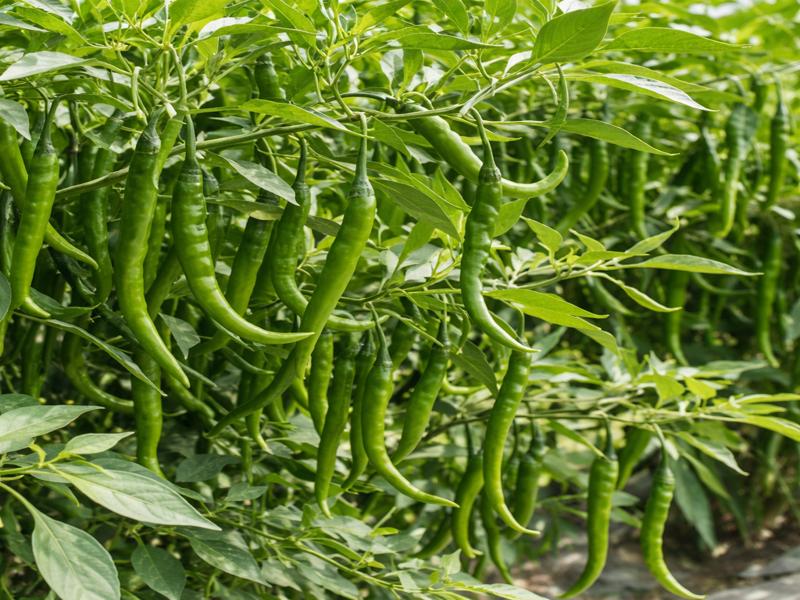
🌶️ How to Do Chili Farming: Complete Information About Chili Cultivation
Chili farming is a profitable and popular cash crop in India. Whether you are a small farmer or want to do farming on a large scale, chili cultivation can give you good profit. In this blog, we will give you complete information related to chili farming, so that you can get higher production and better income at low cost.
👉 The information given in this guide is based on modern techniques, scientific farming, and farmers’ experiences.
👉 If you want to read more information related to farming, then read this also:
➡️ How to Do Organic Farming
1️⃣ Introduction to Chili Farming
Chili is an important spice crop which is used in vegetables, pickles, chutneys, and spices. The capsaicin element present in chili makes it spicy and it is also full of medicinal properties.
India is the largest producer of chili in the world. Major producing states:
- Andhra Pradesh
- Maharashtra
- Karnataka
- Tamil Nadu
- Uttar Pradesh
- Rajasthan
👉 Chili farming can be done throughout the year, but Rabi and Kharif seasons are considered the most suitable.
2️⃣ Health Benefits and Uses of Chili
🌿 Health Benefits:
- Strengthens the digestive system
- Helps in thinning the blood
- Beneficial in heart diseases
- Has pain-relieving properties
- Contains anti-cancer elements
🍽️ Uses:
- In vegetables and spices
- Pickles and chutneys
- Dry chili powder
- Medicine making
3️⃣ Scientific Classification
Chili is an important vegetable and spice crop, whose scientific classification is as follows:
| Category | Description |
|---|---|
| Kingdom | Plantae |
| Division | Angiosperms |
| Class | Dicotyledons |
| Order | Solanales |
| Family | Solanaceae |
| Genus | Capsicum |
| Species | Capsicum annuum |
👉 For more information click here
4️⃣ Climate and Temperature
Warm and humid climate is most suitable for chili farming.
✔ Temperature:
- Minimum: 18°C
- Maximum: 40°C
✔ Sowing Temperature:
- 35°C
✔ Rainfall:
- 625 to 1500 mm
👉 For more information click here
📌 Tips:
- Extreme cold and frost can damage the crop
- In too much heat, flowers may fall
5️⃣ Soil Requirement
For good yield of chili, selection of soil is very important.
✔ Suitable Soil:
- Loamy soil
- Sandy loamy soil
✔ pH Level:
- 6.0 to 7.0
✔ Characteristics:
- Proper drainage should be there
- Moisture should be maintained
📌 Note:
- In heavy soil, waterlogging can cause root rot disease
6️⃣ Seeds and Varieties
🌱 Improved Varieties:
- CH-1
- CH-3
- CH-27
- Punjab Sindhuri
- Punjab Tej
- Pusa Jwala
- Pusa Sadabahar
🌟 Hybrid Varieties:
- Arka Meghana
- Arka Sweta
- Kashi Early
- Kashi Surkh
- Kashi Anmol
👉 For more information click here
📌 Tips:
- Hybrid varieties give higher production
- Choose disease-resistant varieties
7️⃣ Seed Quantity
✔ Hybrid Variety:
- 80 to 100 grams per acre
✔ Normal Variety:
- 200 grams per acre
📌 Tips:
- Using more seeds increases competition among plants
8️⃣ Land Preparation
✔ Do ploughing 2 to 3 times
✔ Remove stones and weeds
✔ Mix 150 to 200 quintal farmyard manure per acre
✔ Bed preparation:
- Keep 60 cm distance
✔ Bio fertilizers:
- Azospirillum 800 gram
- Phosphobacteria 800 gram
👉 Click here for Organic Farming Guide
📌 Tip:
- Do not grow chilli near tomato crop
9️⃣ Sowing Method
✔ Adopt nursery method
✔ Spacing:
- Row: 75 cm
- Plant: 45 cm
✔ Seedling Preparation:
- 30 to 40 days
✔ Depth:
- 1 to 2 cm
📌 Tip:
- Only healthy seedlings should be transplanted in the field
🔟 Fertilizer and Nutrient Management
✔ Per Acre Quantity:
- Urea: 55 kg
- SSP: 75 kg
- MOP: 20 kg
✔ Nitrogen:
- Half at the time of transplanting
- Remaining after first picking
✔ Spray:
- 19:19:19
- 0:52:34
- Calcium Nitrate
📌 Tip:
- Balanced fertilization increases production
1️⃣1️⃣ Irrigation Management
✔ Do irrigation as per requirement
✔ Water is necessary at the time of flowering and fruit formation
📌 Note:
- Excess water causes flower drop
- Waterlogging increases fungal diseases
👉 For drip irrigation information, click here
1️⃣2️⃣ Weed Control
Weed control is very important in chili crop because weeds compete with the crop for nutrients, water, and sunlight.
✔ Chemical Control:
- Pendimethalin 1 liter per acre before sowing
- Fluchloralin 800 ml per acre can be used
✔ Mechanical Control:
- First weeding 25 to 30 days after transplanting
- Second weeding as required
✔ Organic Methods:
- Use mulching
- Apply farmyard manure and organic matter
📌 Tip:
- Keep the field always weed-free
- First 40 days are most important
1️⃣3️⃣ Pest and Disease Management
Pests and diseases can cause the biggest loss in chili crop, so timely identification and control are necessary.
🐛 Major Pests and Control:
1. Fruit Borer
Symptoms: Holes in fruits and insects inside
Control:
- Pheromone traps 5 per acre
- Emamectin Benzoate 4 grams per 10 liters water
2. Whitefly
Symptoms: Yellowing of leaves
Control:
- Yellow sticky traps
- Acetamiprid spray
3. Thrips
Symptoms: Leaf curling
Control:
- Blue sticky traps
- Imidacloprid spray
4. Aphids (Chepa)
Symptoms: Sticky substance on leaves
Control:
- Methyl Demeton spray
🦠 Major Diseases and Control:
1. Blight Disease
Control:
- Copper Oxychloride spray
2. Anthracnose
Control:
- Propiconazole 1 ml per liter
3. Damping Off
Control:
- Trichoderma treatment
4. Leaf Curl Disease
Control:
- Remove infected plants
📌 Tip:
- Do timely inspection
- Give priority to organic methods
1️⃣4️⃣ Crop Duration
The duration of chili crop depends on variety and season.
✔ First Picking:
- 60 to 75 days
✔ Total Duration:
- 150 to 180 days
📌 Tip:
- Hybrid variety gives early production
1️⃣5️⃣ Harvesting Method
Right time and method of harvesting affect both production and quality.
✔ Green Chili:
- Harvest at light green color
✔ Red Chili:
- Harvest when fully ripe
✔ Harvesting Interval:
- Every 10 to 15 days
📌 Tip:
- Do harvesting in morning or evening
- Regular picking is necessary for higher production
👉 For more information, click here
1️⃣6️⃣ Yield per Acre
✔ Normal Variety:
- 60 to 80 quintal
✔ Hybrid Variety:
- 100 to 130 quintal
📌 Tip:
- With proper management, yield can go up to 150 quintal
1️⃣7️⃣ Market Price & Profit per Acre
In chili farming, selling at the right time gives more profit.
✔ Market Price:
- ₹20 to ₹60 per kg (depends on season)
✔ Total Production:
- Up to 100 quintal
✔ Total Income:
- ₹1,50,000 to ₹3,00,000
✔ Cost:
- ₹40,000 to ₹70,000
✔ Net Profit:
- ₹1,00,000 to ₹2,00,000 per acre
👉 Click here to check mandi price
📌 Tip:
- Selling in off-season gives more profit
1️⃣8️⃣ Storage
Proper storage after harvesting reduces loss and gives better price.
✔ Storage Methods:
- Dry chilies in sunlight
- Keep away from moisture
- Do airtight packing
✔ For Dry Chili:
- Store only after complete drying
📌 Tip:
- Moisture can cause fungus
1️⃣9️⃣ Government Schemes
Government provides many schemes for chili farming.
✔ Major Schemes:
- Pradhan Mantri Krishi Sinchai Yojana
- National Horticulture Mission
- Drip irrigation subsidy
- Subsidy on seeds and fertilizers
👉 Click here for more information
📌 Tip:
- Contact nearest agriculture department
2️⃣0️⃣ Frequently Asked Questions
1. What is the right time for chili farming?
The best time for raising chili nursery is from end of October to mid-November. Transplanting is usually done from February to March. Sowing at the right time gives better production.
2. How much irrigation is required in chili farming?
Chili crop does not require too much water.
- Do light irrigation after transplanting
- Give regular water at the time of flowering and fruiting
- Avoid waterlogging, as it causes root rot disease
3. Which soil is best for chili farming?
Loamy and sandy loam soil is considered best.
- pH should be 6 to 7
- Drainage should be good
4. Why is seed treatment necessary?
Seed treatment helps protect the crop from soil-borne diseases.
- Treat with Thiram or Carbendazim
- Use Trichoderma
5. Why should we do hybrid chili farming?
Benefits of hybrid varieties:
- Higher production
- Disease resistance
- Better quality
6. How much income per acre in chili farming?
If proper management is done:
- Total income: ₹1.5 lakh to ₹3 lakh
- Net profit: ₹1 lakh to ₹2 lakh per acre
7. Which are the most dangerous pests in chili crop?
Main pests:
- Fruit borer
- Whitefly
- Thrips
- Aphids
8. In how many days chili crop is ready?
- First picking: 60 to 75 days
- Full crop: 150 to 180 days
👉 It depends on variety and season
9. Is drip irrigation beneficial for chili farming?
Yes, benefits of drip irrigation:
- Saves water
- Proper use of fertilizers
- Increase in production
10. Can we grow other crops with chili?
Yes, intercropping increases income:
- Onion
- Coriander
- Garlic
- Marigold
👉 It also helps in weed and pest control
🔚 Conclusion
Chili farming has become a very good source of income for farmers today. If farmers adopt the right techniques, improved varieties, and scientific management, then good income per acre can be easily achieved.
👉 Key points for success:
- Select quality seeds
- Use balanced fertilizers and nutrients
- Do irrigation and weeding on time
- Control pests and diseases on time
🌱 Right knowledge + right effort = higher production + higher profit
👉 For more detailed and practical information on spice farming, click here