


Future of Small Farmers
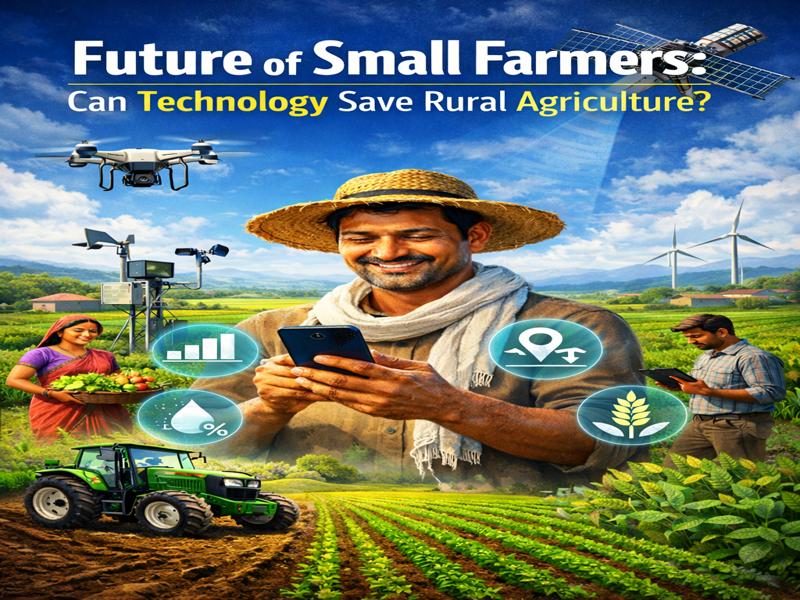
🌱 Future of Small Farmers: Can Technology Save Rural Agriculture?
🚜 10 Successful Low-Cost Modern Farming Models
Small farmers are the real strength of rural agriculture. 🌾
They provide food to cities and towns, support the local economy, and protect traditional farming knowledge passed down through generations.
But today, small farmers are facing many problems—
💰 Farming costs are increasing
🌦️ Weather has become unpredictable
📉 Crop prices are unstable
Because of this, it has become difficult for families depending on small landholdings to earn a stable income.
🔧 How Technology Is Changing Farming
Modern farming does not always mean expensive machines or big investment.
📌 Many low-cost smart farming models are available today that help small farmers to—
- Increase production
- Reduce expenses
- Earn better profits
These models focus on practical ideas and simple solutions.
The future of small farmers depends on how easily they can adopt these affordable technologies.
Let us understand 10 low-cost modern farming models that can strengthen rural agriculture 👇
💧 1. Drip Irrigation Farming
Drip irrigation is one of the most effective ways to save water.
In this system, water is supplied directly to plant roots, so there is no wastage.
✅ Benefits:
- 💦 Saves up to 50% water
- 🌱 Improves crop health
- 🌿 Reduces weed growth
- ⚡ Lowers electricity cost
This method is very useful for small farmers in drought-prone areas.
🥬 2. Organic Vegetable Micro Farming
Growing organic vegetables on small land has become a good business today.
Farmers can sell directly to local markets, hotels, or homes.
🌿 Key focus areas:
- 🚫 Chemical-free farming
- ⏱️ Fast-growing crops
- 💰 High-value vegetables
- 🤝 Direct connection with customers
Even half an acre of land can give regular income.
☀️ 3. Solar-Based Farming
Solar-powered pumps reduce dependence on costly diesel and electricity.
With government support, solar pumps are now reaching more farmers.
🔋 Advantages:
- ❌ Zero fuel cost
- 💧 Reliable irrigation
- 🌍 Environment-friendly
- 📉 Long-term savings
This is a strong solution for remote villages.
📱 4. Mobile-Based Smart Advisory
Smartphones now provide farmers with information on weather, pests, and market prices.
Farming is no longer based on guesswork but on correct information.
📊 Digital advice helps to:
- 🌾 Reduce crop loss
- ⏰ Do farm work at the right time
- 💹 Make better selling decisions
- ⚠️ Reduce risks
Today, information is as important as land and hard work.
🔄 5. Integrated Farming Model
In this model, crops, livestock, fish farming, and poultry are done together.
Waste from one activity is used in another.
🔁 Examples:
- 🐄 Animal waste becomes manure
- 🌾 Crop residue is used as animal feed
- 🐟 Pond water is used properly
This creates multiple income sources.
🚜 6. Shared Machinery Farming
Buying expensive farm machinery is difficult for small farmers.
So, renting machines is becoming popular.
- Farmers rent tractors and equipment when needed
- 💸 Low investment
- ⚡ Faster and easier work
🏗️ 7. Vertical and Terrace Farming
Farmers with less land can grow crops using vertical structures.
Farming is possible even on rooftops or small spaces.
🌿 Benefits:
- 📐 More farming in less space
- 🥗 Production of high-value vegetables
- 💰 Low investment
- 📆 Year-round farming
This is a good option for young farmers.
🌾 8. Crop Diversification Model
Depending on only one crop is risky.
Growing different crops helps keep income stable.
🌱 Farmers grow together:
- 🌾 Grains
- 🥦 Vegetables
- 🍎 Fruits
- 🌿 Medicinal plants
If one crop fails, another supports income.
🤝 9. Community Cooperative Farming
Small farmers form cooperative groups.
This improves access to resources, training, and markets.
🧑🤝🧑 Benefits of cooperatives:
- 🛒 Cheaper inputs
- 🏬 Bigger markets
- 🔧 Shared technology
- 💬 Strong bargaining power
Unity makes small farmers stronger.
🧪 10. Soil Health–Based Farming
Soil testing and balanced fertilizer use increase production and reduce costs.
Farmers are now using soil testing kits.
🌍 This results in:
- 🎯 Correct use of fertilizers
- 🌱 Better soil quality
- 💸 Lower expenses
- 🌾 Higher natural production
Healthy soil is the future of farming.
❓ Why Technology Is Important for Small Farmers
Technology does not replace farmers; it supports them.
Affordable machines, digital platforms, and smart systems-
- Reduce risk
- Make farming easier
- Attract young people to agriculture
Technology must be simple, local, and affordable.
Governments and institutions should provide training so farmers can adopt new methods with confidence.
👉 Modern farming is not about land size, but about planning and smart thinking.
✅ Conclusion
The future of small farmers can be secure.
By adopting the right low-cost models, rural agriculture can become profitable.
🌟 Key Points:
- 💡 Affordable technology reduces risk
- 💰 Multiple income sources provide financial security
- 📚 Knowledge sharing strengthens villages
If these innovations continue to reach villages,
small farmers will not just survive – they will shape the future of agriculture. 🌾✨
Written by Kalyani Giri– Guest Author (Content Writer at KhetiGaadi)