


Flax Farming In India
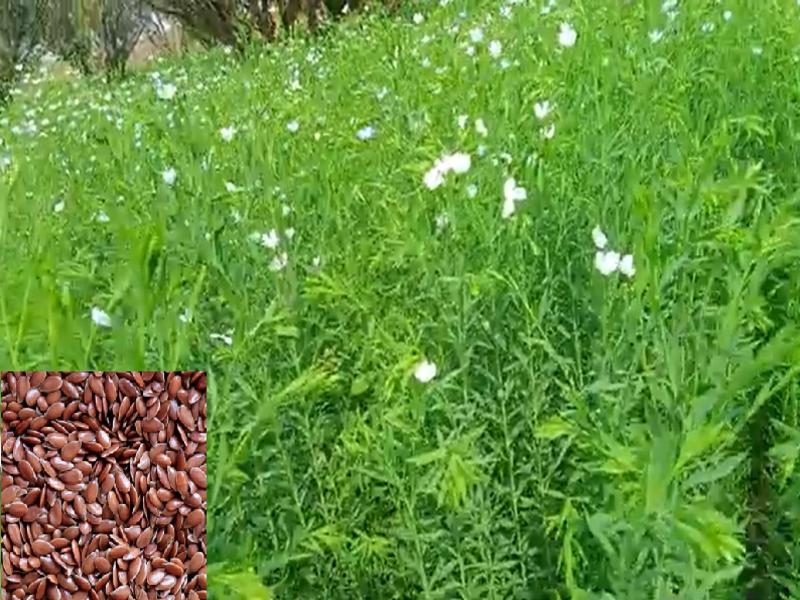
Why Flax Farming is a Profitable Crop Today?
Flax, popularly known as Alsi (Linum Usitatissimum), is one of the most valuable Rabi oilseed crops grown widely across India. Its seeds contain 33–47% oil, which is used for cooking, paints and varnishes, waterproof fabric, paper and plastic manufacturing, and many industrial products. In several regions, flax seeds are also consumed as food and used in Ayurvedic preparations.
After oil extraction, the leftover flax cake is used as organic fertilizer and nutritious cattle feed, making it a no-waste profitable crop. Flax requires comparatively low investment, adapts well to various soils, and offers a good price in the market, which makes it favorable for small and medium farmers.
Climate Requirements for Flax Farming
Flax grows best in cool and dry climatic conditions. It is cultivated mainly in the Rabi season, and timely sowing plays a major role in good yield.
| Factor | Ideal Requirement |
|---|---|
| Temperature during growth | 21–26°C |
| Rainfall required | 45–75 cm annually |
| Sowing temperature | 20–21°C |
| Harvesting temperature | 30–31°C |
Excessive heat or heavy rainfall during flowering can reduce productivity, so regions with mild winters are most suitable.
Best Soil for Flax Cultivation
Flax performs well in a wide range of soils, but the best results are seen in:
- Heavy black clay soil
- Clay loam soil
- Soil must retain moisture but should NOT have waterlogging
- Ideal pH: 5.0 to 7.0
Loose, well-prepared soil ensures healthy germination and good root development.
High-Yield Flax Varieties & Production Per Acre
1. LC-2063 (2007)
- Suitable for both irrigated & rainfed conditions
- Maturity: 158–160 days
- Blue flowers, medium-sized seeds
- Oil content: 38.4%
- Resistant to leaf white spot disease
- Yield: 4–5 quintals per acre
2. LC-2023 (1998)
- Performs well in irrigated & dryland areas
- Maturity: 155–165 days
- Oil content: 37.5%
- Yield: 4.5 quintals per acre
- Leaf spot resistant
3. Surbhi (KL-1)
- One of the high-yielding cultivars
- Maturity: 165–170 days
- Oil content: 44%
- Yield: 3–6 quintals per acre
- Tolerant to drought, wilt & leaf spot
4. Jeevan (DPL-21)
- Plant height 75–85 cm
- Maturity: 175–181 days
- Oil content: high, seeds brown & medium-sized
- Drought & disease tolerant
- Yield: up to 6 quintals per acre
Other recommended varieties:
Pusa-3, LC-185, LC-54, Sheela (LCK-9211), K2
Land Preparation for Flax
- Plough the field 2–3 times to break clods
- Harrow thoroughly to make soil fine & crumbly
- Level the field for uniform moisture
- Use light mulching to retain soil moisture
Good preparation ensures proper seed placement and germination.
Sowing Method – How to Plant Flax Seeds?
When to Sow?
- 1st week of October to mid-November
- Early sowing is best for rainfed farming
- Early sowing reduces disease risk and ensures better growth
Spacing
| Row spacing | 23 cm |
| Plant spacing | 7–10 cm |
Seed Depth
- Sow seeds 4–5 cm deep
Seed Rate
- 15 kg seeds per acre
Seed Treatment
- Treat seeds with 2g Bavistin/Thiram per kg for better germination and disease protection
Sowing Method
- Broadcasting or drill sowing in rows using seed drill
Fertilizer Requirement Per Acre
Recommended Dose
| Fertilizer | Quantity per Acre |
|---|---|
| Urea | 55 kg |
| SSP (Single Super Phosphate) | 100 kg |
| MOP | Not required |
Nutrient Content
| Nutrient | Required per Acre |
|---|---|
| Nitrogen | 25 kg |
| Phosphorus | 16 kg |
| Potash | Not required |
Application Method:
- Apply 50% nitrogen + full phosphorus at sowing
- Remaining nitrogen after 35 days with first irrigation
Balanced nutrition helps in healthy flowering and seed formation.
Weed Management in Flax Fields
Common weeds in flax:
- Purple nutsedge
- Bathua
- Mustard weed
- Spiny weed
- White flower broadleaf weeds
To control weeds:
Use Isoproturon 75 WP – 500g/acre, mixed with 200 liters of water
Spray 2 days after sowing (pre-emergence) or before first irrigation
Timely weed control improves yield significantly.
Irrigation Management
Although flax is moderately drought tolerant, irrigation at the correct stages can boost yield.
- 1st irrigation – right after sowing
- 2nd irrigation – during flowering to seed formation stage
- 2–3 irrigations are usually enough depending on soil and temperature
Avoid overwatering as it increases disease incidence.
Pest Control Measures
Lucerne Caterpillar
It damages leaves and seed pods, reducing seed quality.
Control Spray:
- Carbaryl (Sevin/Hexavin) 50 WP 600–800 g/acre
- Or Malathion 50 EC 400 ml/80–100 L water
Major Diseases & Control
1. Wilt Disease (Kungi)
Pink spots on leaves, stems & pods
Solution:
- Spray Sulphur 7 kg/acre
- Or Indofil Z-78 500 g/150L water
2. Drying Disease (Sukha)
Young plants become yellow and die
Control:
- Grow resistant varieties
- Maintain field moisture levels
Harvesting & Post-Harvest Process
Harvesting Time
- Harvest when seed capsules turn brown completely
- Usually in April
After Harvest
- Cut plants and sun-dry for 4–5 days
- Thresh by beating with sticks or running bullock cart over bundles
- Clean seeds and store in dry, moisture-free containers
Proper storage maintains seed quality and market price.
Cost & Profit Analysis (Approx Per Acre)
| Expense | Estimated Cost |
|---|---|
| Seeds | ₹800–1200 |
| Fertilizers | ₹1200–1600 |
| Chemicals & Sprays | ₹800–1200 |
| Labour & field operations | ₹2000–3000 |
| Total Cost | ₹5000–7000/acre |
Yield & Returns:
- Average yield: 4–6 quintals/acre
- Market price: ₹6500–₹9000/quintal
- Profit: ₹20,000–₹45,000+ per acre
A highly profitable oilseed crop with low maintenance!
Frequently Asked Questions (FAQs)
1. When is the best time to sow flax?
From early October to mid-November.
2. How much seed is required per acre?
Around 15 kg per acre.
3. Which variety gives the highest yield?
Jeevan (DPL-21) and Surbhi KL-1 are top performers.
4. What is the average oil percentage in flax seeds?
Between 33% to 47%.
5. How many irrigations are needed?
Usually 2–3 irrigations are sufficient.
6. Which fertilizer is best for flax?
55 kg Urea + 100 kg SSP per acre.
7. How much yield can we expect?
4–6 quintals per acre depending on variety & management.
8. What is the ideal soil type?
Black clay or clay loam soil with good moisture.
9. When should flax be harvested?
When pods turn brown – usually April.
10. Is flax farming profitable?
Yes! Farmers can earn ₹20,000–₹45,000 or more per acre.
A Smart Crop for Modern Farmers
Flax (Alsi) stands out as an excellent winter oilseed crop that offers high returns at low investment. With suitable varieties, proper sowing time, balanced fertilization, and disease management, farmers can easily achieve high yields. Growing demand in food processing and industrial sectors also ensures good market value.
👉 If you are looking for a profitable Rabi crop, flax can be a smart choice for your farm.
👉 Start small, apply the right practices, and scale for better income!
References for More Information
- Govt. Agriculture Knowledge Portal – Vikaspedia
- HP Agriculture Department
- Indian Institute of Horticultural Research
- Krishi Vigyan Kendra Agriculture Portal
👉 Explore detailed guides on other oilseeds farming – click here to read more.