


Hibiscus Farming
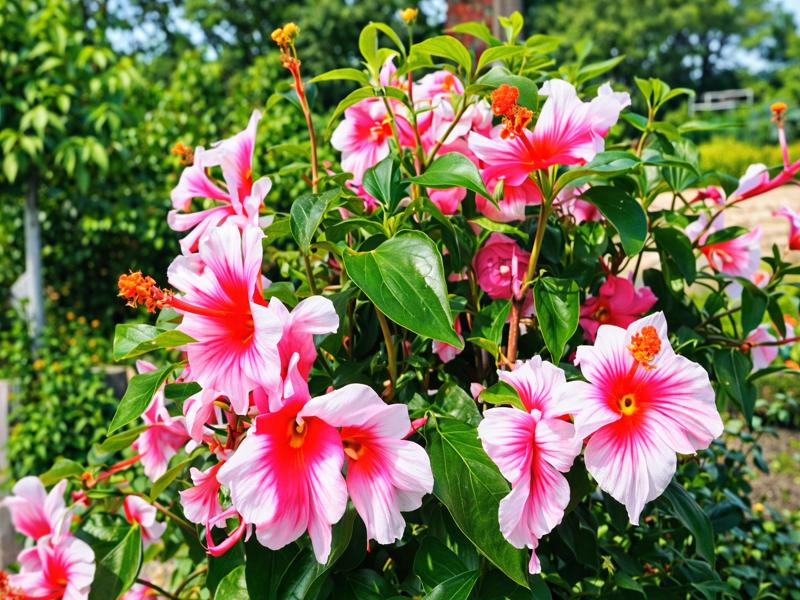
🌺 Earn Lakhs from Gudhal Farming – Complete Information
Gudhal ki Kheti (Hibiscus Farming) is becoming a growing commercial crop in today’s time. Earlier it was planted only as a decorative plant, but now its flowers and leaves are used in Ayurvedic medicines, herbal tea, cosmetic products, and natural colors.
In India, many progressive farmers are earning good profit by doing commercial Gudhal farming. This crop gives good yield even with low maintenance. Once the plant is established, it continues to produce flowers for many years.
This article is prepared in simple language for rural farmers so that you can also earn good income from Gudhal ki Kheti.
1️⃣ Crop Introduction
🌺 1.1 What is Gudhal?
Gudhal is a perennial bush-type plant. In English, it is called Hibiscus or Shoe Flower. It is mainly known for its bright red flowers.
🌺 1.2 Commercial Importance
✔ Used for medicinal purposes
✔ Used for making herbal tea
✔ Used in cosmetic industry
✔ Used in religious activities
✔ Used for making Ayurvedic oil and powder
🌺 1.3 Scope in India
Gudhal farming is done in states like Tamil Nadu, Maharashtra, Karnataka, and Andhra Pradesh. In places where herbal processing units are available, the demand for Gudhal flowers is higher.
2️⃣ Health Benefits and Uses
🌿 2.1 Medicinal Benefits
✔ Helps in controlling blood pressure
✔ Good for hair growth
✔ Beneficial for skin
✔ Rich in antioxidants
✔ Good for digestion
🌿 2.2 Uses
- Herbal tea
- Hair oil
- Face pack
- Ayurvedic medicines
- Natural color
3️⃣ Scientific Classification
| Classification | Details |
|---|---|
| Botanical Name | Hibiscus rosa sinensis |
| Family | Malvaceae |
| Type | Perennial shrub |
| Useful Parts | Flowers and leaves |
4️⃣ Climate & Temperature Required
☀ 4.1 Suitable Climate
✔ Tropical and subtropical climate is best
✔ Temperature should not go below 6°C
✔ Planting during monsoon is best
🌡 4.2 Temperature
✔ Ideal temperature is 18°C to 35°C
✔ More flowers come in summer (March to May)
5️⃣ Soil Requirement
🌱 5.1 Suitable Soil
✔ Red loamy soil
✔ Sandy loamy soil
✔ Well-drained land
🌱 5.2 pH Level
✔ 6.0 to 7.5
🌱 5.3 Special Care
For the first 4 months, plants need special care. Mixing organic matter makes the soil more fertile.
6️⃣ Seed & Varieties
In Gudhal ki Kheti, selecting the right planting material is the foundation of future yield and profit. For commercial farming, stem cutting method is more suitable than seed method.
🌺 6.1 Why Seed Method is Less Popular
✔ Plants grown from seeds may not have same qualities as mother plant
✔ Flower color, size, and quality may change
✔ Production is not fixed
✔ Uniformity as per market demand is not achieved
Therefore, seed method is not recommended for commercial Gudhal farming.
🌿 6.2 Stem Cutting – Most Reliable Method
✔ Take 6 to 8 inch cutting from healthy and disease-free plant
✔ Select medium hard stem
✔ Choose portion with at least 2 nodes
✔ Plant in 6-inch nursery bag
✔ Keep in 60% shade area for 2 months
✔ After root formation, transplant in field
💡 Tip: Always buy plants from certified nursery to ensure better flower quality and production.
🌺 6.3 Popular Varieties with High Market Demand
Choose variety according to market demand in Gudhal farming.
✔ Red single-petal variety
✔ Red double-petal variety
✔ Large deep red flower variety
✔ Thick petal variety for herbal industry
👉 Most herbal and Ayurvedic companies prefer large red flowers.
🌱 6.4 Points to Remember While Selecting Plants
✔ Plant should be at least 2 months old
✔ Roots should be well developed
✔ Leaves should be green and healthy
✔ No pest or disease infection
7️⃣ Seed Rate (Plant Requirement)
In Gudhal farming, plant number per acre is more important than seed rate.
🌿 7.1 Plants per Acre
✔ Around 500 plants per acre
✔ Plant to plant distance: 8 to 10 feet
✔ Row to row distance: 12 feet
This spacing is kept because Gudhal plant is bushy and spreading in nature.
🌱 7.2 Plant Calculation
✔ 1 acre = 43,560 square feet
✔ With proper spacing, 450 to 550 plants can be planted
✔ 500 plants per acre is considered ideal for commercial farming
💰 7.3 Plant Cost per Acre
✔ Average price of one plant: ₹20
✔ Cost of 500 plants: Around ₹10,000
If you purchase advanced plants from certified nursery, cost may go up to ₹15,000 to ₹20,000.
🌾 7.4 Why Extra Plants are Necessary
✔ 5–10% plants may fail
✔ Keep 50 extra plants ready in nursery
✔ Fill empty spaces within 30 days after planting
📌 Important Suggestions
✔ Prepare plants 2 months before monsoon
✔ Do field planting in June
✔ Healthy plants can give up to 1000 kg production per acre in future
8️⃣ Land Preparation
In Gudhal ki Kheti (Hibiscus Farming), land preparation is very important because it is a perennial crop. Once planted, it gives production for many years. So, good preparation in the beginning is necessary.
8.1 Field Ploughing
✔ Do 2 to 3 deep ploughings of the field
✔ First ploughing with soil-turning plough
✔ Second and third ploughing with desi plough or rotavator
✔ Make the soil fully loose and level
8.2 Use of Organic Manure
✔ Add 8 to 10 tons of well-rotted cow dung per acre
✔ Mix 2 tons of vermicompost
✔ If available, add 1 ton of leaf compost
Adding organic matter improves air circulation in the soil and helps roots to spread fast.
8.3 Pit Preparation
✔ Dig pits of 1.5 x 1.5 x 1.5 feet size
✔ Mix pit soil with 5 kg cow dung manure and 200 grams neem cake
✔ Prepare pits 15 days before monsoon
8.4 Drainage System
✔ Water should not stay in the field
✔ Make slight slope in the field
✔ Arrange proper drainage for rainwater
9️⃣ Sowing Method
In Gudhal ki Kheti, planting through saplings or stem cuttings is more profitable than seeds.
9.1 Preparing Saplings
✔ Take 6 to 8 inch long cutting from healthy and disease-free plant
✔ Plant in 6-inch nursery bags
✔ Keep in 60% shade for 2 months
✔ After good root formation and 2 new branches appear, transplant to field
9.2 Planting Time
✔ June to July is best time
✔ Plant at the beginning of monsoon
9.3 Spacing and Density
✔ Plant to plant distance: 8 to 10 feet
✔ Row to row distance: 12 feet
✔ Around 500 plants per acre
9.4 Planting Process
✔ Place plant in prepared pits
✔ Press soil gently and give light irrigation
🔟 Fertilizer & Manure Management
Gudhal flowers are used for medicinal purposes, so chemical fertilizers should be avoided.
10.1 Basal Dose
✔ 8 to 10 tons cow dung manure per acre
✔ 2 tons vermicompost
10.2 Monthly Nutrition
✔ 2 kg cow dung manure per plant every month
✔ 500 grams vermicompost per plant
✔ Rajphos 100 grams per plant, twice a year
10.3 Micronutrients
✔ Use Jeevamrit or Ghan Jeevamrit
✔ Neem cake 200 grams per plant
1️⃣1️⃣ Irrigation Schedule
11.1 Initial Stage
✔ Irrigate twice a week for first 4 months
11.2 Summer Season
✔ 3 to 5 liters water per plant
✔ Twice a week
11.3 Winter Season
✔ Once in 15 days
11.4 Monsoon
✔ No extra irrigation required
Drip irrigation saves water and gives better flowers.
1️⃣2️⃣ Weed Control
12.1 First Year
✔ Do hand weeding 3 to 4 times
✔ Take special care during monsoon
12.2 From Second Year
✔ Plants become bushy
✔ Only path cleaning is required
12.3 Earthing Up
✔ Put soil around plants
✔ It strengthens the roots
1️⃣3️⃣ Pest & Disease Management
In Gudhal ki Kheti, pest management is very important because this crop is mainly grown for flowers. If pests are not controlled on time, flower quality and production both can reduce.
🐛 13.1 Major Pests
✔ Aphids
✔ White fly
✔ Mealy bug
✔ Thrips
✔ Ants
🔎 13.2 Damage Caused by Pests
✔ Leaves curl
✔ Buds fall
✔ Flowers remain small
✔ Plant growth stops
✔ Sticky substance on leaves
Most pests are more active in summer. Problem is less during monsoon.
🌿 13.3 Organic Control Methods
Since Gudhal flowers are used for medicinal purpose, avoid chemical pesticides.
✔ Spray 5 liters neem oil solution per acre
✔ Spray garlic and green chili solution mixed in 10 liters water
✔ Use strong water spray to remove insects
✔ Install 10 to 15 yellow sticky traps per acre
🦠 13.4 Major Diseases
✔ Leaf spot disease
✔ Root rot
✔ Fungal infection
🌱 13.5 Disease Control
✔ Maintain good drainage
✔ Cut and destroy infected branches
✔ Mix 2 kg Trichoderma per acre in soil
✔ Spray cow urine-based organic solution
👉 Do regular inspection. Check plants carefully at least once a week.
1️⃣4️⃣ Training and Pruning
In Gudhal ki Kheti (Hibiscus Farming), pruning is very important. Without pruning, the plant becomes too leafy and flowering will reduce.
✂ 14.1 Time of Pruning
✔ At least 2 times in a year
✔ February and August are suitable months
✂ 14.2 Benefits of Pruning
✔ More branches grow
✔ Number of flowers increases
✔ Plant becomes strong
✔ Production can increase by 20 to 30 percent
About 15 to 20 labour days per acre may be required for pruning work.
1️⃣5️⃣ Crop Duration
✔ Flowering starts 5 to 6 months after planting
✔ Higher production from second year
✔ Continuous production for 5 to 7 years
In the first year, production will be less. From second year, you can get 1000 kg or more flowers per acre.
1️⃣6️⃣ Harvesting Method
🌺 16.1 Time of Harvest
✔ Do harvesting early in the morning
✔ Pick half-bloom flowers or bud stage flowers
🌺 16.2 Precautions
✔ Do not press the flowers
✔ Keep in clean baskets
✔ Do not leave in direct sunlight
For daily harvesting, 2 to 3 labourers per acre are enough.
1️⃣7️⃣ Yield per Acre
✔ Around 1 kg flowers per plant per year
✔ 500 plants per acre
✔ Around 1000 kg fresh flowers per acre per year
✔ Around 200 kg dry flowers per acre
From second year, production may increase by 10 to 20 percent.
1️⃣8️⃣ Market Price & Profit per Acre
💰 18.1 Total Cost per Acre
- Land preparation – ₹20,000
- Plant cost – ₹20,000
- Manure and fertilizers – ₹5,000
- Labour cost – ₹25,000
- Harvesting cost – ₹35,000
Total Cost – Around ₹1,05,000
💰 18.2 Sale of Fresh Flowers
✔ Average price – ₹200 per kg
✔ Total income – ₹2,00,000
✔ Net profit – Around ₹95,000
💰 18.3 Sale of Dry Flowers
✔ 200 kg dry flowers
✔ ₹600 to ₹750 per kg
✔ Total income – ₹1,20,000 to ₹1,50,000
✔ Additional drying cost – ₹15,000
✔ Net profit – Around ₹30,000
👉 From second year, plant cost and land preparation cost will reduce, so profit will increase.
1️⃣9️⃣ Storage
📦 Fresh Flowers
✔ Send to market immediately
✔ Can be stored for 2 to 3 days at 8 to 10°C temperature
🌺 Dry Flowers
✔ Dry in shade
✔ Store in moisture-free place
✔ Use airtight packing
✔ Keep moisture below 10 percent
During monsoon, using a dryer machine is beneficial.
2️⃣0️⃣ Government Schemes
Many schemes are available to promote Gudhal ki Kheti.
✔ National Horticulture Mission
✔ Pradhan Mantri Krishi Sinchai Yojana
✔ Organic Farming Promotion Scheme
✔ 50 to 70 percent subsidy on drip irrigation
✔ State Medicinal Plant Board support
Contact your district agriculture officer or horticulture department for details.
2️⃣1️⃣ FAQs
1. What is the right time for Gudhal farming?
Beginning of monsoon is the best time.
2. How many plants per acre?
Around 500 plants are sufficient.
3. Is seed method profitable?
No, stem cutting method is better.
4. When does flowering start?
After 5 to 6 months.
5. How much income per acre is possible?
Around ₹95,000 net profit.
6. Which soil is best?
Red loamy or sandy loamy soil.
7. Is drip irrigation necessary?
Not compulsory, but it gives better production.
8. Should chemical pesticides be used?
No, follow organic methods.
9. Where is demand for dry flowers?
In herbal companies and Ayurvedic industry.
10. For how many years production continues?
For 5 to 7 years continuously.
✅ Conclusion
Gudhal ki Kheti (Hibiscus Farming) is a low-risk, sustainable and profitable farming option. If you identify the right market and follow organic methods, this crop can give regular income for many years.
Keep patience in the first year. From second year, both production and profit will increase.
🌺 Follow proper techniques, do regular pruning, and connect directly with the market. Success is sure.
👉 For more flower farming guides, keep exploring our website and grow smarter every season.