


Peanut Farming in India
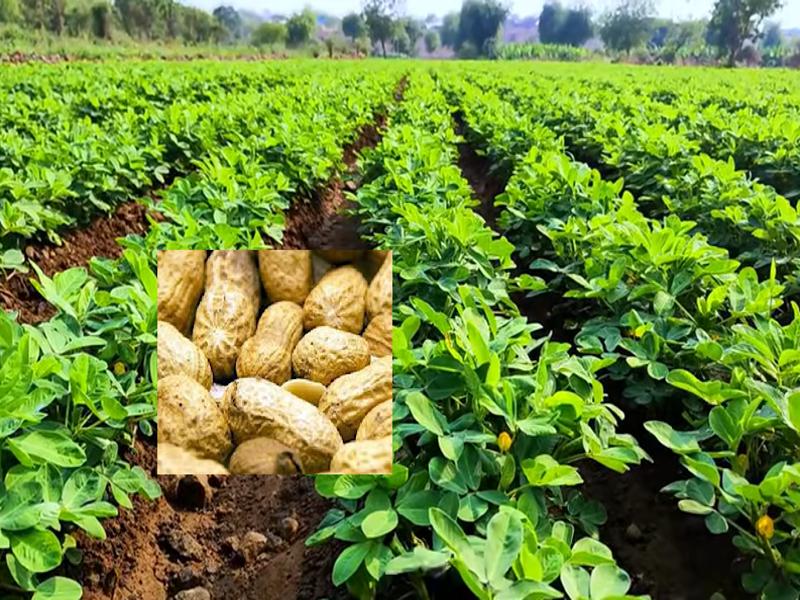
🌱 Introduction: Importance of Groundnut in India
Groundnut (Moongfali) is one of India’s most important oilseed crops. It is a key source of edible oil and also used as livestock feed and in various food products. Major groundnut-growing states in India are Gujarat, Andhra Pradesh, Tamil Nadu, Karnataka, Rajasthan, Madhya Pradesh, Uttar Pradesh, and Punjab.
In Rajasthan, groundnut is cultivated in about 3.47 lakh hectares, producing around 6.81 lakh tonnes of yield, with an average productivity of 1963 kg per hectare (2010–11).
The Indian Council of Agricultural Research (ICAR) and various agricultural universities have developed high-yielding varieties, disease control methods, and weed management techniques to help farmers achieve better productivity. Let’s understand everything about groundnut farming step-by-step.
🌾 Soil and Land Preparation
Groundnut grows best in well-drained, loose sandy loam or loamy soils. Proper land preparation is crucial for a healthy crop.
- Plough the field once deeply with a soil-turning plough.
- Follow it with two cultivator ploughings to make the soil fine and level.
- During the final ploughing, mix Quinalphos 1.5% (25 kg/ha) into the soil to protect from termites and soil insects.
- Create small drainage channels across the field to prevent waterlogging during rains.
🌰 Seeds and Sowing
Groundnut sowing usually starts with the onset of the monsoon (15 June to 15 July).
Seed rate and spacing:
- For bunch-type (less spreading) varieties – use 75–80 kg seeds/ha
- For spreading varieties – use 60–70 kg seeds/ha
- Separate kernels from pods 10–15 days before sowing.
- Treat seeds before sowing with Thiram (3 g/kg) or Mancozeb/Carbendazim (2 g/kg) to protect against seed-borne diseases.
- To prevent termite and white grub damage, treat seeds with Chlorpyrifos (20 EC) 12.5 ml/kg before sowing.
- Maintain row spacing of 30 cm for bunch types and 45 cm for spreading varieties.
- Keep 15 cm plant-to-plant distance and sow at 5–6 cm depth.
🌿 Tip: Always use certified and healthy seeds for better germination and disease resistance.
🌾 Fertilizer Management
For obtaining a good yield of groundnut, it is very important to use a balanced amount of organic and chemical fertilizers in the field. Proper fertilizer management not only enhances plant growth but also improves kernel quality and overall production.
Below is a step-by-step guide to fertilizer management for the groundnut crop:
1️⃣ Pre-Sowing Fertilizer Management
Apply well-decomposed compost or farmyard manure (FYM) at the rate of 25 quintals per hectare about 10–15 days before sowing.
This organic manure improves soil fertility and also enhances its structure.
After applying manure, mix it well into the soil through ploughing so that the plant roots can easily access sufficient nutrients during growth.
2️⃣ Quantity of Chemical Fertilizers at Sowing Time
At the time of sowing, apply the following chemical fertilizers per hectare:
- Urea (Nitrogen): 50 kg
- Single Super Phosphate (Phosphorus): 2 quintals
- Muriate of Potash (Potassium): 35 kg
Mix these fertilizers uniformly into the soil during the final ploughing.
This ensures that plants receive the essential nutrients right from the early growth stage.
3️⃣ Improvement of Acidic Soil
If the soil of the field is acidic in nature, it should be corrected by adding lime (calcium carbonate).
Apply 25 quintals of lime per hectare once every 4–5 years.
This helps to maintain soil pH balance and improves nutrient availability for the plants.
4️⃣ Termite Control Measures
Termite attack can cause serious damage to the groundnut crop.
To control termites, apply Aldrin dust (5%) during the final ploughing.
⚠️ Note: Never use BHC (Benzene Hexachloride), as it is considered harmful for the groundnut crop.
5️⃣ Use of Bio-Fertilizers (Optional but Beneficial)
The use of Rhizobium culture (bio-fertilizer) in groundnut farming helps in nitrogen fixation, providing plants with a natural source of nitrogen.
Treating the seeds with Rhizobium culture before sowing can increase production by 10–15%.
💧 Irrigation Management
Groundnut is mainly a rainfed (kharif) crop but may require irrigation in dry spells.
- Provide one pre-sowing irrigation (palewa) if soil moisture is low.
- During flowering, irrigation is critical to avoid drought stress.
- Ensure adequate moisture during pod development to get bigger and filled pods.
⚠️ Avoid waterlogging, as it severely affects pod formation and reduces yield.
🌿 Weeding and Intercultural Operations
Weed management plays a major role in groundnut yield because the crop has a low canopy and weeds grow faster during monsoon.
- Do first weeding at the flowering stage.
- Perform second weeding after 2–3 weeks when pegs start entering the soil.
- Avoid weeding after that to prevent pod disturbance.
- To control weeds effectively, apply Pendimethalin (3 liters/ha) mixed in 500 liters of water within 2 days of sowing.
🌾 Crop Rotation
Adopting a proper crop rotation system helps maintain soil fertility and reduce pest infestation.
- In rainfed areas, long-duration varieties are common.
- In irrigated areas, early maturing varieties allow double cropping – for example, growing groundnut followed by wheat.
- Crop rotation with cereals or pulses maintains nitrogen balance in the soil.
🌿 Disease Management
🌱 1. Seed Rot or Seedling Blight
Caused by fungi like Aspergillus niger and A. flavus, it results in brown patches on cotyledons and stems.
Prevention:
- Use certified seeds.
- Treat seeds with Thiram (2.5 g/kg) before sowing.
- Remove infected seedlings immediately.
🌱 2. Rosette Disease
A viral disease transmitted by aphids, causing stunted growth and yellowing of leaves.
Prevention:
- Remove infected plants early.
- Spray Imidacloprid (1 ml/3 liters of water) to control aphids.
🌱 3. Tikka (Leaf Spot) Disease
Caused by Cercospora arachidicola fungus, it creates dark brown spots on leaves leading to defoliation.
Prevention:
- Spray Dithane M-45 (2 kg/1000 liters water/ha) every 10 days (2–3 times).
- Remove infected plant debris from the field.
🐛 Insect and Pest Management
🪱 1. Hairy Caterpillar (Romil Illi)
It eats leaves and defoliates the crop.
Control: Collect and destroy egg masses or infested leaves. Spray Quinalphos (1 liter in 700–800 liters water/ha).
🐜 2. Aphids
Small brown insects that suck sap and spread viral diseases.
Control: Spray Imidacloprid (1 ml/liter water).
🍃 3. Leaf Miner
Larvae feed inside leaves creating white lines.
Control: Spray Imidacloprid solution for effective control.
🪳 4. White Grub
A major soil pest that feeds on roots and stems, causing wilting.
Control:
- Treat seeds with Chlorpyrifos before sowing.
- In severe infestation, apply Phorate (25 kg/ha) in the soil before sowing.
🌾 Seed Production Technique
For quality seed production:
- Choose fields where groundnut has not been grown for 2–3 years.
- Maintain a 15–20 meter isolation distance from other groundnut fields.
- Remove off-type plants before flowering and harvest.
- Harvest only the central part of the field, leaving 10 meters from all sides.
- Dry pods properly until moisture is below 8–10%.
- Grade and treat seeds with fungicides/insecticides before storage.
🌾 Harvesting and Post-Harvest Operations
- Harvest when plants turn yellow and most leaves start shedding.
- Dry the uprooted plants in sunlight for 5–7 days.
- Separate pods after drying and store when moisture falls below 10%.
- Avoid storing moist pods to prevent mold or fungal growth.
💰 Yield and Profitability
By adopting improved techniques and good management:
- Average yield: 20–25 quintals per hectare (irrigated).
- Total cost: ₹25,000–₹30,000 per hectare.
- Net profit: ₹35,000–₹40,000 per hectare (at ₹30/kg market rate).
Groundnut thus proves to be a profitable crop for Indian farmers when grown scientifically.
❓ Frequently Asked Questions (FAQs)
1. When should groundnut be sown?
👉 The best sowing period is from mid-June to mid-July.
2. Which soil is best for groundnut cultivation?
👉 Light sandy loam or loamy soil with good drainage is ideal.
3. What are the best groundnut varieties in India?
👉 Popular varieties include TAG 24, Girnar 3, TMV-2, ICGS-44, JL-24.
4. How much seed is required per hectare?
👉 75–80 kg/ha for bunch types and 60–70 kg/ha for spreading types.
5. What are common insect pests of groundnut?
👉 Aphids, hairy caterpillars, white grubs, and leaf miners.
6. What are the major diseases of groundnut?
👉 Leaf spot (tikka), rosette virus, and seed rot.
7. When should irrigation be given?
👉 During flowering and pod formation stages for maximum yield.
8. How to increase groundnut yield?
👉 Use improved varieties, apply neem cake, gypsum, and ensure timely irrigation and pest control.
9. What is the average profit from groundnut per hectare?
👉 Around ₹35,000–₹40,000 per hectare, depending on price and yield.
10. When is groundnut ready for harvest?
👉 When leaves turn yellow and pods harden – usually after 110–120 days.
🌿 Conclusion
Groundnut farming is a profitable and sustainable venture for Indian farmers. Apart from providing edible oil, it enriches the soil with nitrogen, improving fertility for the next crop.
By following improved agricultural practices – right seed selection, balanced fertilization, timely irrigation, and pest management – farmers can achieve high yields at low cost.
👉 Let’s adopt modern farming methods and make India self-reliant in edible oil production through successful groundnut cultivation.
👉 Explore detailed guides on other oilseeds farming – click here to read more.