


Paramparagat Krishi Vikas Yojana
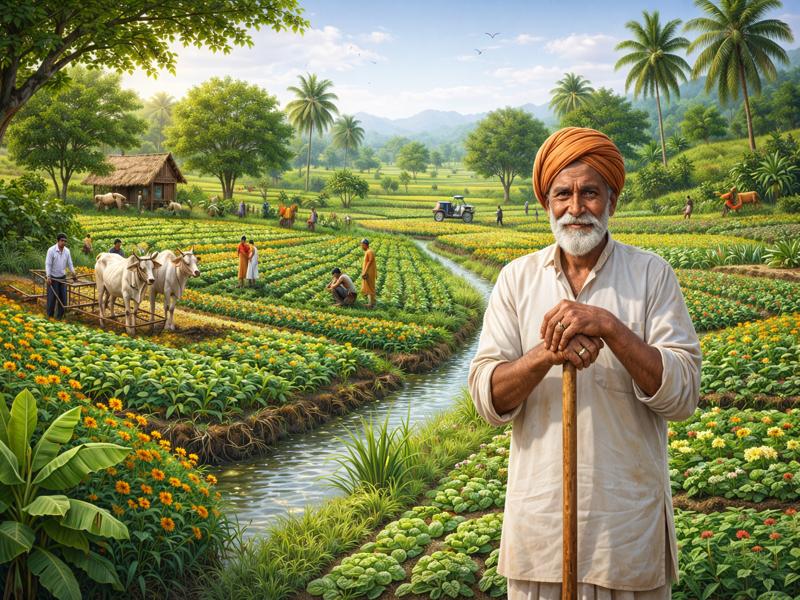
Government Scheme Promoting Organic Farming
India is an agriculture-based country and crores of farmers depend on farming for their livelihood. In the last few decades, excessive use of chemical fertilizers and pesticides has started reducing the fertility of soil and also created negative impact on the environment.
Keeping this problem in mind, the Government of India started Paramparagat Krishi Vikas Yojana (PKVY). The main objective of this scheme is to encourage farmers towards Organic Farming.
Through this scheme, farmers get financial assistance, training, certification, and marketing support so that they can do farming without chemical fertilizers and pesticides. This scheme plays an important role in increasing farmers’ income and also protecting the environment and human health.
In this blog we will learn in detail about what is Paramparagat Krishi Vikas Yojana, its benefits, eligibility, subsidy, application process, required documents, and its importance.
1. Paramparagat Krishi Vikas Yojana (PKVY) kya hai?
Paramparagat Krishi Vikas Yojana (PKVY) is an important agriculture scheme of the Government of India which was launched in 2015. This scheme runs under National Mission for Sustainable Agriculture (NMSA) and its main objective is to promote organic farming in India.
Under this scheme, farmers are connected through a Cluster Model (Cluster Approach). In this model, many farmers form a group together and practice organic farming. Because of this, farmers can easily get training, certification, and marketing support.
The government’s aim is to bring more land under organic farming and motivate farmers to adopt a sustainable agriculture system.
2. Paramparagat Krishi Vikas Yojana ka Uddeshya
The main objective of this scheme is to promote chemical-free farming in India and encourage farmers to adopt a sustainable agriculture system.
Main Objectives
- Encourage farmers to adopt organic farming.
- Improve soil fertility and soil health.
- Reduce dependency on chemical fertilizers and pesticides.
- Reduce the production cost of farmers.
- Provide better market for organic products.
- Ensure environmental protection and food safety.
The aim of this scheme is to produce chemical-free agricultural products so that healthy and safe food can be provided.
3. Paramparagat Krishi Vikas Yojana ki Mukhya Visheshataen
Paramparagat Krishi Vikas Yojana (PKVY) is designed in such a way that farmers can easily adopt organic farming and increase their income while making farming environmentally friendly. This scheme includes many important features.
3.1. Cluster Based Farming (Cluster Approach)
The most important feature of PKVY is cluster-based farming.
- Under this scheme, a group of 50 or more farmers is formed.
- This group does organic farming on about 50 acres of land.
- The cluster model helps farmers in training, inputs, and marketing support.
The purpose of this cluster model is that farmers work together and organic production can be increased on a large scale.
3.2. Participatory Guarantee System (PGS) Certification
Under PKVY, farmers get organic certification through PGS-India (Participatory Guarantee System).
Main features of PGS certification:
- It is a low-cost organic certification system.
- In this system, farmer groups monitor each other’s farming practices.
- Because of this, farmers’ products get recognition as organic products.
After this certification, farmers can sell their products in the market with an organic label.
3.3. Training and Technical Support for Farmers
Under PKVY, the government provides training to farmers on modern methods of organic farming.
Training includes the following topics:
- Making organic fertilizers (like vermicompost)
- Preparing natural pesticides
- Crop rotation
- Methods to increase soil fertility
- New technologies for organic farming
This training helps farmers to easily shift from chemical farming to organic farming.
3.4. Support for Organic Inputs
Under this scheme, farmers get financial support for preparing organic inputs.
This includes:
- Cow dung manure
- Vermicompost
- Organic pesticides
- Organic seeds
Because of this, farmers do not need to buy expensive chemical fertilizers from outside.
3.5. Marketing and Branding Support
One important objective of PKVY is also to create a market for organic products.
The government provides farmers support such as:
- Product packaging
- Branding
- Market linkage
- Platforms for selling organic products
Because of this, farmers get better prices for their products.
4. Paramparagat Krishi Vikas Yojana ke Labh
The PKVY scheme provides many economic and environmental benefits to farmers.
4.1. Financial Assistance
Under this scheme, farmers get up to ₹31,500 per hectare assistance for a period of three years.
This amount is used for:
- Organic fertilizers and pesticides
- Training and awareness
- Certification process
- Packaging and marketing
4.2. Improvement in Soil Quality
Organic farming increases the amount of organic matter in soil, which helps maintain soil fertility for a long time.
4.3. Reduction in Farming Cost
Instead of chemical fertilizers and pesticides, farmers use local organic resources, which reduces farming cost.
4.4. Better Market Value
Nowadays, demand for organic food products is increasing rapidly.
Because of this, organic products get higher price in the market compared to normal products.
4.5. Environmental Protection
Organic farming helps in:
- Reducing soil pollution
- Protecting water sources
- Promoting biodiversity
In this way, this scheme plays an important role in environmental protection.
5. Eligibility for Paramparagat Krishi Vikas Yojana
To get the benefit of this scheme, farmers must fulfill some conditions.
Eligibility
- The applicant must be a farmer of India.
- The farmer must have cultivable land.
- The farmer should be willing to adopt organic farming.
- The farmer must become a member of a cluster group.
- Assistance is provided for a maximum of 2 hectares of land.
6. Subsidy Under Paramparagat Krishi Vikas Yojana
Under the PKVY scheme, the government provides up to ₹31,500 per hectare assistance to farmers.
Distribution of Assistance
| Type of Assistance | Amount |
|---|---|
| Organic Input Support | ₹15,000 |
| Training and Capacity Building | ₹9,000 |
| Certification Process | ₹3,000 |
| Marketing and Packaging | ₹4,500 |
This amount is given in phases over 3 years.
7. Required Documents for Paramparagat Krishi Vikas Yojana
While applying for this scheme, farmers need the following documents:
- Aadhaar Card
- Bank account details
- Land documents
- Passport size photo
- Mobile number
- Residence certificate
8. How to Apply for PKVY Scheme
If a cluster is already formed in your area, you can register on the PGS-India portal.
8.1. Online Application Process
- Visit the PGS-India website
https://pgsindia-ncof.gov.in - On the homepage click on Apply / Registration option
- Fill the application form with details such as:
- Name
- Address
- Mobile number
- Bank details
- Farming information
- Upload required documents
- Submit the form
- After submission you will receive a registration number.
8.2. Offline Application Process
In many states of India, this scheme is also implemented through offline process.
Offline Application Steps
- Visit your District Agriculture Office
- Join the PKVY cluster group
- Fill the application form
- Submit the required documents
After that, the state government and agriculture department provide the benefits of the scheme.
8.3. Required Documents
For online or offline application, generally these documents are required:
- Aadhaar card
- Bank account
- Land documents
- Mobile number
- Passport photo
8.4. Important Point (Many People Do Not Know)
In the PKVY scheme, individual farmers do not get subsidy directly. Instead:
- A group of 50 farmers
- About 50 acres cluster
is formed for organic farming.
Then the government provides around ₹31,500 per hectare assistance in 3 years.
In simple words:
- Online registration for PKVY scheme is possible.
- But most applications happen through farmer clusters and agriculture department.
9. Major Crops Grown Under Paramparagat Krishi Vikas Yojana
Under this scheme, almost all types of crops can be grown.
Major Crops
- Wheat
- Rice
- Pulses
- Oilseeds
- Vegetables
- Fruits
- Spices
- Medicinal plants
Farmers can select crops according to their local climate conditions.
10. Importance of Paramparagat Krishi Vikas Yojana
Today farming is facing many challenges such as decreasing soil quality and harmful effects of chemical farming.
In this situation, the PKVY scheme is very important for farmers.
Importance of the Scheme
- Promotes sustainable agriculture system.
- Helps increase farmers’ income.
- Produces healthy and safe food.
- Supports environmental protection.
Conclusion
Paramparagat Krishi Vikas Yojana (PKVY) is an important scheme of the Government of India which aims to encourage farmers to adopt organic farming.
Through this scheme, farmers get financial support, training, certification, and market access.
If more farmers join this scheme, then organic farming will expand in India, farmers’ income will increase, and the environment will also remain safe.
👉 For more detailed information on government schemes, click here