


Micro Irrigation System
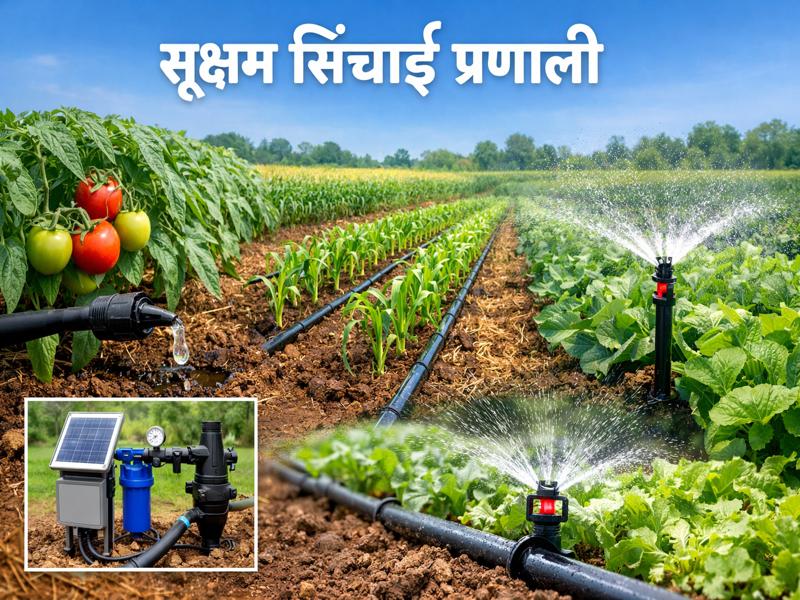
💧 Micro Irrigation System: Grow More Crops Using Less Water
(Drip, Sprinkler & Raingun Irrigation Technology)
The Micro Irrigation System is one of the most important innovations in modern agriculture. It allows farmers to irrigate larger areas using significantly less water. Compared to traditional flood or canal irrigation, this system plays a vital role in water conservation, energy saving, and higher crop productivity.
With growing water scarcity and rising farming costs, micro irrigation has become a sustainable and future-ready solution for Indian agriculture.
🌱 Importance of Micro Irrigation System
Traditional irrigation methods lead to excessive water loss through runoff, evaporation, and deep percolation. In contrast, the Micro Irrigation System, such as drip, sprinkler, and raingun irrigation, delivers water in a controlled and uniform manner directly to crops.
✅ Key Benefits
- Saves water and energy
- Improves soil moisture balance
- Enhances crop growth and yield
- Reduces groundwater over-extraction
📊 Comparison of Irrigation Efficiency
| 🚜 Irrigation Method | 💧 Water Use Efficiency |
|---|---|
| Canal / Flood Irrigation | 30% |
| Sprinkler Irrigation | 70–75% |
| Drip Irrigation | 90–95% |
👉 This clearly shows why the Micro Irrigation System is far superior in terms of water efficiency and sustainability.
🚜 What Is Irrigation?
Irrigation is the artificial application of water to crops as per their requirement to support growth and productivity.
🔹 Major Irrigation Methods
- 🌊 Surface (Flood) Irrigation
- 🌧️ Sprinkler Irrigation
- 💧 Drip Irrigation
- 🌱 Sub-Surface Irrigation
👉 The selection of an irrigation method depends on water availability, soil type, land slope, and crop pattern.
💦 Major Types of Micro Irrigation System
🌧️ 1. Sprinkler Irrigation System
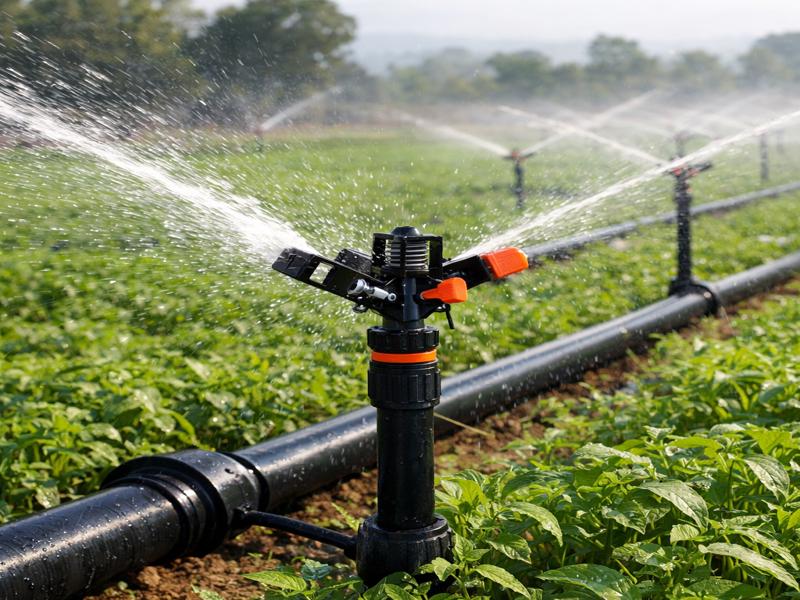
(Spray / Fountain / Raingun Method)
In the sprinkler irrigation system, water is delivered through pipelines under pressure and sprayed into the air through sprinkler heads. It falls on crops like natural rainfall.
✅ Key Features
- Uniform water distribution
- No waterlogging
- No soil compaction
- Faster and better germination
🌾 Suitable Crops
Wheat, cotton, groundnut, tobacco, pulses, oilseeds, and fodder crops.
🔧 Main Components of Sprinkler Irrigation
- ⚙️ Pump Unit
- 🚰 Main Pipeline
- 🔗 Sub-Main Line
- ⬆️ Riser Pipe
- 🌧️ Sprinkler Head
- 📏 Pressure Gauge
🌟 Advantages of Sprinkler Irrigation
- 💧 25–50% water saving
- 🌍 Suitable for uneven land
- 🌱 Maintains ideal soil moisture
- 🧪 Allows fertigation & pesticide application
- ❄️ Protects crops from frost
- 📈 Improves yield and crop quality
⚠️ Limitations of Sprinkler Irrigation
- 🌬️ Uneven distribution in strong winds
- ⚡ Higher energy requirement
- 🧂 Saline or dirty water not suitable
- 🌡️ Less effective in hot winds and clay soils
💧 2. Drip Irrigation System
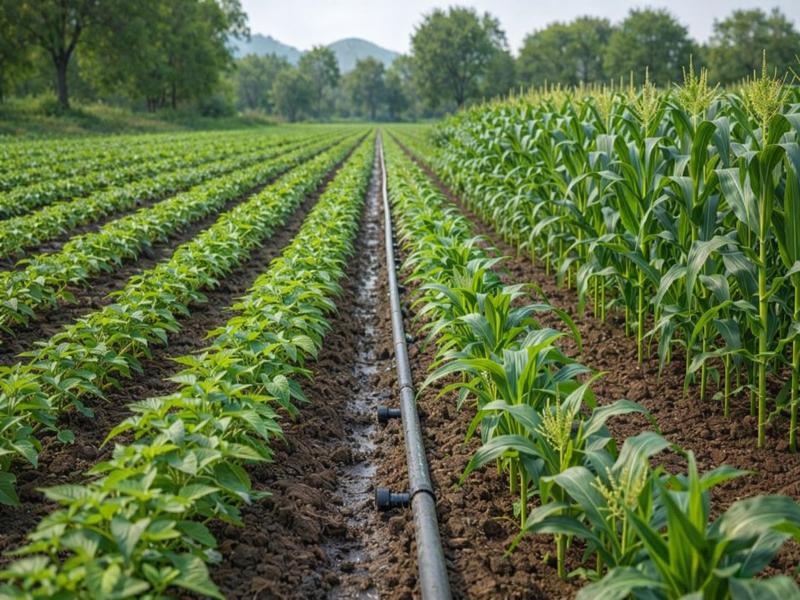
(Most Advanced Micro Irrigation System)
The drip irrigation system is the most efficient form of micro irrigation. Water is applied drop by drop directly to the root zone at low pressure, minimizing wastage.
🌳 Suitable Crops
Mango, guava, lemon, papaya, grapes, vegetables, and horticultural crops.
✅ Advantages of Drip Irrigation System
- 💧 50–70% water saving
- 📈 Up to 50% increase in yield
- 🌱 Fertilizer saving through fertigation
- 🌾 Reduced weed growth
- ⚡ 30–40% energy saving
- 🧂 Limited use of saline water possible
- 🌍 Works well on uneven terrain
❌ Limitations of Drip Irrigation
- 💰 High initial installation cost
- 🚫 Dripper clogging risk
- 🎓 Requires skilled design and installation
- 🌱 Best suited for widely spaced crops
📐 Drip Irrigation System Design
A drip system operates at low pressure (around 1 kg/cm²). Poor design can lead to:
- Some plants receiving excess water
- Others receiving no water at all
👉 Design Depends On:
- Crop water requirement
- Soil type
- Land slope
- Pipe diameter and length
- Dripper discharge rate
🚰 Precautions During Installation
- ⬇️ Install lateral lines along the downward slope
- 🕳️ Keep main and sub-main pipelines underground
- 🐄 Protect pipelines from animals
- 🏗️ Place pump and filters on a solid platform
- 🌳 Position drippers near the root zone
- 🔁 One crop row = one lateral line
- 📏 Keep sub-plot size between 1–2 acres
🔧 Operation and Maintenance
- ⏱️ Operate system for 30–60 minutes daily
- 🧼 Clean filters once a month
- 🔄 Flush pipelines every 6 months
- 🧪 Test water quality (chlorination / acidification)
- 🐭 Protect system from rodents
- ✂️ Avoid excessive hoeing
- 🔩 Replace damaged pipes or drippers immediately
🏛️ Government Support for Micro Irrigation System
The Government of India actively promotes the Micro Irrigation System to ensure water conservation, modern farming, and higher agricultural productivity.
🌊 Pradhan Mantri Krishi Sinchai Yojana (PMKSY)
Under PMKSY, the goals are “Har Khet Ko Pani” and “Per Drop More Crop”.
💧 Key Benefits
- 55% to 80% subsidy on drip and sprinkler systems
- 🧑🌾 Extra benefits for SC/ST farmers
- 🌱 Priority for small and marginal farmers
- 💰 Significant reduction in system cost
👉 This scheme has made micro irrigation financially accessible for farmers.
🧪 Soil Health Card Scheme
Under this scheme, soil testing is done and farmers receive crop-specific guidance on:
- 🌾 Fertilizer quantity
- 💧 Irrigation requirement
- 🌱 Suitable crops
👉 This helps save water and fertilizers, reducing overall cultivation cost.
🎓 Role of Krishi Vigyan Kendras (KVKs)
KVKs across India support farmers through:
- 👨🏫 Training programs
- 🧑🌾 Field demonstrations
- 📘 Technical guidance
- 🔧 Operation & maintenance support for micro irrigation systems
👉 The ultimate goal is to make farmers self-reliant and technically skilled.
🌾 Conclusion
The Micro Irrigation System is the future of agriculture in times of water scarcity. With proper planning, scientific design, and regular maintenance, it delivers higher profits, better yields, and sustainable farming at lower cost.
👉 For more detailed and practical information on modern irrigation techniques for farming, explore our related articles and guides.