


Marigold Farming
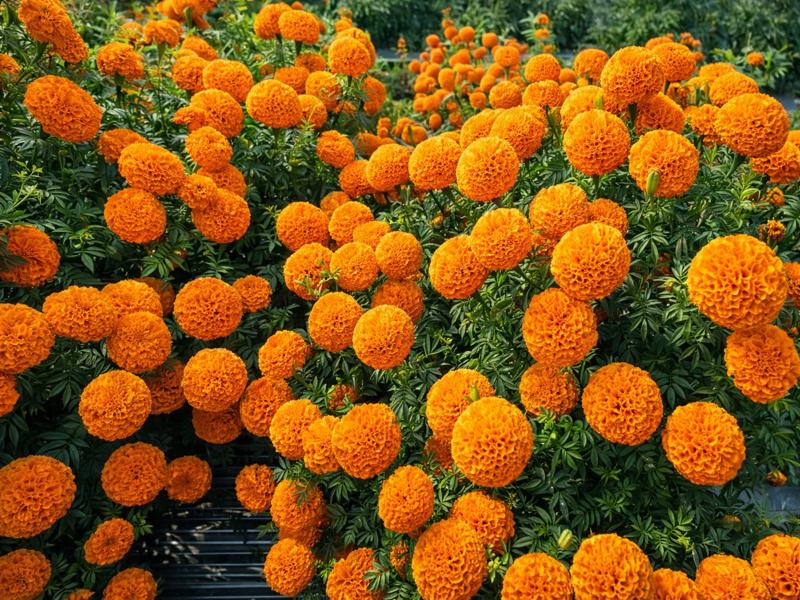
🌼 How to Cultivate Marigold? More Profit with Low Cost
Marigold is a very popular flower in India, and almost every farmer knows it. This flower is not only used in religious and social functions, but it is also known as a crop that gives high profit in less time and at low cost. For rural farmers, it is a crop through which they can earn good income with low investment.
Marigold cultivation is easy, its demand remains in the market throughout the year, and during festivals its price increases even more. By adopting the right information, right time, and right techniques, farmers can earn good profit per acre from marigold cultivation.
In this blog, we will explain in detail all important topics such as marigold cultivation information, how to grow marigold, best time for marigold cultivation, hybrid marigold cultivation, Kolkata marigold cultivation, Jafri marigold cultivation, and the time for wild marigold cultivation.
Now, further we will understand the complete scientific and practical details of marigold cultivation in a systematic manner.
🌱 1. Crop Introduction
1.1 Description of Marigold Cultivation
Marigold is a seasonal flowering crop that can be grown in all three seasons in India – Kharif, Rabi, and Zaid. This flower is found in yellow, orange, golden, and dark yellow colours, which look very attractive.
Marigold cultivation is popular because:
• Its cultivation is easy
• The crop gets ready in a short time
• Low cost and high profit
• Demand remains in the market throughout the year
1.2 Importance of Marigold Cultivation in India
Uses of marigold in India
• In worship and religious programmes
• In marriages and social functions
• In temples and decoration work
• To attract insects and protect other crops
Maharashtra, Karnataka, Gujarat, Andhra Pradesh, Tamil Nadu, and Madhya Pradesh are major marigold-producing states. Its demand is highest during Dussehra and Diwali.
🌼 2. Health Benefits and Uses
2.1 Uses of Marigold Flowers
Marigold is not just a decorative flower; it has many uses:
• Religious use
• Decoration and garland making
• Medicinal use
• In the cosmetic industry
• As a natural pesticide
2.2 Medicinal Benefits
• Beneficial for eyes
• Used in skin diseases
• Helps reduce swelling
• Has antibacterial properties
2.3 Use in Agriculture
When marigold is grown along with vegetables, it attracts pests and helps protect the main crop from damage.
🔬 3. Scientific Classification
• Kingdom – Plantae
• Division – Angiosperms
• Class – Dicotyledonae
• Order – Asterales
• Family – Asteraceae
• Genus – Tagetes
🌦️ 4. Climate and Temperature
4.1 Suitable Climate
Warm and moderate climate is considered best for marigold cultivation.
4.2 Temperature Requirement
• At the time of sowing: 25 to 35°C
• At the flowering stage: 28 to 32°C
4.3 Rainfall Requirement
• 100 to 150 cm rainfall is sufficient
• Protection from waterlogging is necessary
🌍 5. Soil Requirement
5.1 Suitable Soil
Marigold can be grown in different types of soils, but best results are obtained in fertile soil with good drainage.
5.2 Soil pH Value
• Suitable pH: 6.5 to 7.5
• Highly acidic or saline soil is unsuitable
5.3 Soil According to Variety
• French Marigold
French marigold grows well in light soil.
• African Marigold
African marigold performs better in soil rich in organic matter.
🌱 6. Seed and Varieties
In marigold cultivation, choosing the right seed and suitable variety is most important. Good quality seeds ensure healthy plant growth, bigger and attractive flowers, and increase both yield and profit per acre. In India, African marigold, French marigold, hybrid marigold, Kolkata marigold, and Jafri marigold varieties are commonly grown.
🌼 6.1 Classification of Major Marigold Varieties
Marigold varieties are mainly divided into two types:
• African marigold
• French marigold
Apart from these, improved and region-specific varieties are also available.
🌻 6.2 African Marigold Cultivation | African Marigold Varieties
African marigold is known for large-sized flowers and higher production. Its plants are tall and strong.
Main Characteristics
• Plant height about 80 to 90 cm
• Flowers are large and round
• Colours: yellow, dark yellow, golden, and orange
• Crop duration is slightly longer
• High market demand
Major Varieties
• Giant Double African Orange
• Giant Double African Yellow
• Crown of Gold
• Chrysanthemum Charm
• Golden Age
• Cracker Jack
👉 African marigold cultivation is considered very profitable at the commercial level, especially during the festival season.
🌸 6.3 French Marigold Cultivation | French Marigold Varieties
French marigold is suitable for small farmers and those who want an early crop. This variety matures quickly.
Main Characteristics
• Short-stature plants
• Flowers are small but in large numbers
• Colours: yellow, orange, rusty red, and mahogany
• Early flowering variety
• Market-ready crop in less time
Major Varieties
• Rusty Red
• Butter Scotch
• Red Borcade
• Star of India
• Lemon Drop
👉 French marigold cultivation is good for farmers with limited land.
🌼 6.4 Improved Pusa Marigold Varieties
Pusa marigold varieties developed by the Indian Agricultural Research Institute are known for high quality and good yield.
🌻 Pusa Basanti Gainda
• Plant height about 58 to 60 cm
• Leaves are dark green
• Flowers are sulphur yellow and double
• Long flowering duration
🌻 Pusa Narangi Gainda
• Takes 125 to 136 days for flowering
• Plant height about 73 cm
• Flowers are orange, dense, and double-layered
• Fresh flower yield about 140 quintals per acre
👉 This is considered the most reliable variety for commercial marigold cultivation.
🌺 6.5 Hybrid Marigold Cultivation
Hybrid marigold cultivation is a modern and more profitable system.
Benefits of Hybrid Varieties
• Uniform plant growth
• Large and attractive flowers
• Higher yield per acre
• Better disease resistance
• Higher market price
👉 Hybrid marigold cultivation is suitable for farmers who want to adopt flower farming as a business.
🌼 6.6 Kolkata Marigold Cultivation
Kolkata marigold cultivation is mainly popular in eastern India, but its demand is now increasing across the country.
Characteristics
• Very large and thick flowers
• Deep orange colour
• Most preferred for garlands and decoration
• High demand during festivals
👉 Farmers get good market prices from Kolkata marigold cultivation.
🌻 6.7 Jafri Marigold Cultivation
Jafri marigold is cultivated for religious and traditional use.
Main Characteristics
• Fragrant flowers
• Widely used in worship and temples
• Good demand in local markets
• Medium-sized flowers
🌼 6.8 Time for Wild Marigold Cultivation
Wild marigold is generally grown as a low-maintenance crop.
Time for Wild Marigold Cultivation
• Best sowing time is the rainy season
• Sowing between June and July
• Naturally disease-resistant
👉 This variety is useful for marginal farmers.
🌱 6.9 Why Choosing the Right Variety Is Important
According to marigold cultivation information:
• Right variety increases production
• Flower quality improves
• Better market price is obtained
• Profit is higher compared to cost
👉 Selecting the variety as per area, season, and market demand is the key to success in marigold cultivation.
🌾 7. Seed Rate
7.1 Seed Quantity per Acre
• 600 to 800 grams of seed per acre
7.2 Seed Treatment
Seed Treatment Details
• Azospirillum 200 grams
• 50 ml rice bran
• Seed treatment before sowing is necessary
🚜 8. Land Preparation
8.1 Field Preparation
• 2 to 3 deep ploughings
• Soil should be loose and friable
8.2 Organic Manure
• 250 quintals of farmyard manure during last ploughing
• Mix well-decomposed cow dung manure
🌱 9. Sowing Method
Following the correct sowing method in marigold cultivation is very important, as plant growth, flower quality, and yield per acre depend on it. Marigold is generally cultivated through the nursery method, which makes plants strong and reduces disease risk.
9.1 Time of Marigold Cultivation
Marigold can be grown almost throughout the year, but selecting the right time gives better yield.
Season-wise Sowing Time
• Kharif season
Mid-June to mid-July
• Rabi season
Mid-September to mid-October
• Zaid season
February to March
👉 Time for Wild Marigold Cultivation
The beginning of the rainy season is considered most suitable as it requires less care.
👉 Hybrid Marigold Cultivation
Sowing hybrid varieties between September and October gives more flowers.
9.2 Nursery Raising Method
First, nursery is prepared and then seedlings are transplanted into the field.
Nursery Bed Preparation
• Bed size: 3 metres long and 1 metre wide
• Make soil loose
• Mix well-rotted cow dung manure
• Keep the bed slightly raised to avoid waterlogging
Seed Sowing Method
• Sprinkle seeds lightly on the nursery bed
• Cover with a thin layer of fine soil or manure
• Do light irrigation to maintain moisture
9.3 Seed Depth
• Marigold seeds are very small
• Seeds should not be sown too deep
• Proper depth: about 1 to 1.5 cm
Deep sowing affects germination, so shallow sowing is best.
9.4 Right Time for Transplanting
• When plant height is 10 to 15 cm
• Seedling age: about 25 to 30 days
At this stage, seedlings are fully ready for transplanting.
9.5 Plant Spacing (per Acre)
Proper spacing ensures enough sunlight, air, and nutrients.
Spacing According to Variety
• French marigold: 35 cm × 35 cm
• African marigold: 45 cm × 45 cm
👉 With proper spacing:
• Plants become bushy
• Flower size increases
• Diseases and pests are reduced
9.6 Transplanting Method
• Evening time is best for transplanting
• Do light irrigation immediately after transplanting
• Avoid damage to plant roots
9.7 Topping or Pinching
This is a very important technique in marigold cultivation.
• When the crop is 30 to 45 days old
• Lightly cut the top of the plant
Benefits of Pinching
• Plants become bushy
• More branches develop
• Number and quality of flowers increase
• Yield per acre increases
9.8 Important Sowing Tips
• Do not allow waterlogging in the field
• Monitor plants regularly for 7 to 10 days after transplanting
• Remove weak or diseased plants immediately
• Use only good quality certified seeds
🌿 10. Fertilizer Management
For good flowering, large size, and higher yield, balanced fertilizer management is very important. Proper dose at the right time keeps plants healthy and improves flower quality.
10.1 Importance of Soil Testing
• Before starting marigold cultivation, soil testing is very beneficial.
• It shows which nutrients are deficient or excess in the field.
• Fertilizer quantity can be adjusted based on the soil report.
10.2 Use of Organic Manure
• Using organic manure increases soil fertility.
• It makes soil loose and improves water-holding capacity.
Organic Manure per Acre
• 250 quintals of well-decomposed farmyard manure
• Mix cow dung manure properly during last ploughing
10.3 Recommended Chemical Fertilizer Dose (per Acre)
10.3.1 Fertilizer Quantity
• Urea: 70 kg
• SSP: 100 kg
• Muriate of Potash: 53 kg
10.3.2 Nutrient Quantity
• Nitrogen: 32 kg
• Phosphorus: 16 kg
• Potash: 32 kg
10.4 Method of Fertilizer Application
• Apply full phosphorus and potash during final land preparation.
• Do not apply full nitrogen at once.
• Apply nitrogen in two equal splits.
Nitrogen Application Time
• First dose: 15 to 20 days after transplanting
• Second dose: at bud formation stage
10.5 Fertilizer Management in Hybrid Marigold
• Hybrid marigold requires slightly more nutrients.
• Balanced chemical fertilizer along with organic manure is necessary.
• Timely fertilizer application results in bigger and brighter flowers.
10.6 Importance of Micronutrients
• Zinc, iron, and boron are also important.
• Yellowing leaves or small flowers indicate deficiency.
Solution
• Zinc sulphate 10 kg per acre
• Or spray solution as advised by an agriculture expert
10.7 Important Precautions in Fertilizer Management
• Excess fertilizer can weaken plants.
• Waterlogging causes nutrient loss.
• Always do light irrigation after fertilization.
• Adjust fertilizer dose according to soil type.
10.8 Benefits of Proper Fertilizer Management
• Plant growth improves.
• Flowers become bigger and heavier.
• Yield per acre increases.
• Better market price is received.
💧 11. Irrigation Schedule
11.1 Irrigation Time
• Immediately after transplanting
• Very important from bud formation to harvesting
11.2 In Summer Season
• Irrigate at 4 to 5 days interval
🌾 12. Weed Control
12.1 Weeding and Hoeing
Weeding and Hoeing Details
• 2 to 3 times as required
• Keep the field clean
🐛 13. Pest and Disease Management
If pests and diseases are not controlled on time, flower quality and yield are directly affected.
13.1 Major Pests and Their Control
1. Mealy Bug
Symptoms
• White cotton-like substance on leaves and stems
• Sticky substance on leaves
• Black fungus appears later
Control
• Spray Dimethoate 2 ml per litre of water
• Repeat spray after 7 to 10 days if infestation is high
2. Thrips
Symptoms
• Leaf colour change
• Leaf curling and dropping
• Small flower size
Control
• Install 20 yellow sticky traps per acre
• Spray Fipronil 1.5 ml per litre
• Organic option: Azadirachtin 3 ml per litre
13.2 Major Diseases and Their Control
1. Leaf Spot Disease
Symptoms
• White or brown spots on underside of leaves
• Starts from older leaves
• Leaf fall
Control
• Avoid waterlogging
• Keep field clean and airy
• Spray soluble sulphur 20 g in 10 litres of water
twice at 10-day interval
2. Damping Off / Stem Rot
Symptoms
• Water-soaked spots on stem
• Sudden falling of plants
• Heavy damage in nursery
Control
• Use well-drained soil
• Apply Copper oxychloride 25 g or
Carbendazim 20 g in 10 litres of water
in the channels
13.3 General Preventive Measures
• Avoid water stagnation
• Use balanced fertilizers
• Remove diseased plants immediately
• Inspect crop regularly
• Use chemicals only when required
⏳ 14. Crop Duration
Marigold is a short-duration crop, making it very profitable for small and medium farmers. Crop duration varies by variety and season.
14.1 Crop Duration by Variety
• French Marigold
- 45 to 50 days, early flowering and quick market readiness
• African Marigold
- 60 to 75 days, large flowers and longer harvesting period
• Hybrid Marigold
- 55 to 70 days, uniform flowers and longer harvesting duration
✂️ 15. Harvesting Method
15.1 Right Time for Harvesting
- Marigold harvesting should be done when the flowers are fully developed.
- Do not pluck half-open or over-open flowers, as this reduces the market price.
- Morning or evening time is considered the most suitable for harvesting.
15.2 Harvesting Method
- Flowers should be plucked by hand or using a clean, sharp tool.
- Care should be taken not to damage the stalk, so that the next harvesting is not affected.
- Light irrigation one day before harvesting improves the quality of flowers.
15.3 Harvesting Frequency
- After the first harvesting, flowers can be plucked continuously at an interval of 7 to 10 days.
- Regular harvesting results in more flowers and a longer production period.
15.4 Post-Harvest Care
- Fresh flowers should be kept in a shaded place.
- Bamboo baskets or gunny bags should be used for packing.
- Flowers should be sent to the market quickly, as marigold flowers cannot be stored for a long time.
🌸 16. Yield per Acre
16.1 Average Yield
• Rainy season: 200 to 225 quintals per acre
• Winter season: 60 to 70 quintals per acre
💰 17. Market Price and Profit
17.1 Market Price
• Normal time: ₹8 to ₹15 per kg
• During festivals: ₹20 to ₹30 per kg
17.2 Profit per Acre
• Total cost: about ₹30,000 to ₹40,000
• Net profit: ₹80,000 to ₹1,50,000
🏪 18. Storage
Marigold is a fresh flower crop, so long-term storage is not possible. Proper storage helps maintain freshness, colour, and market value for a short time.
18.1 Key Storage Points
• Keep flowers in a cool, shaded place immediately after harvesting
• Fill flowers gently in bamboo baskets or gunny bags
• Ensure good air circulation
• Do not sprinkle water on flowers
• Avoid heat and direct sunlight
18.2 Short-Term Storage Duration
• 1 to 2 days at normal temperature
• 2 to 3 days in a cool, dry place
18.3 Transportation Precautions
• Keep packing light and airy
• Transport in morning or evening for long distances
• During festivals, sending flowers quickly to market is more profitable
🏛️ 19. Government Schemes
19.1 Major Schemes
• National Horticulture Mission
• Pradhan Mantri Krishi Sinchai Yojana
• Subsidy from State Horticulture Department
❓ Important Questions Related to Marigold Cultivation | FAQs
Q1. What is the best time for marigold cultivation?
Ans: Both rainy and winter seasons are suitable.
Q2. How much seed is required per acre?
Ans: 600 to 800 grams.
Q3. When is maximum profit obtained in marigold cultivation?
Ans: During Dussehra and Diwali.
Q4. Which marigold variety gives the highest yield?
Ans: Pusa Narangi Gainda.
Q5. In how many days does the marigold crop get ready?
Ans: 45 to 75 days.
Q6. How important is irrigation in marigold cultivation?
Ans: Very important during flower formation.
Q7. Can marigold be grown throughout the year?
Ans: Yes, with proper planning.
Q8. How can diseases be prevented in marigold cultivation?
Ans: Avoid waterlogging and use medicines properly.
Q9. Is hybrid marigold cultivation profitable or not?
Ans: Yes, due to higher production.
Q10. How is marigold cultivation for small farmers?
Ans: Very profitable and safe.
🌼 Conclusion
Marigold cultivation is an excellent option for farmers today. Short duration, low cost, and assured market make it a profitable flower crop. With the right knowledge, right variety, and timely cultivation, farmers can earn good profit per acre.
If you want to start flower farming, knowing how to cultivate marigold will be a strong beginning for you. 🌸🌾
Best Wishes to Farmers
👉 For more flower farming guides, keep exploring our website and grow smarter every season.
Reference Source:
- Indian Institute of Horticultural Research
- Krishi Vigyan Kendra Portal