


Lemon Farming
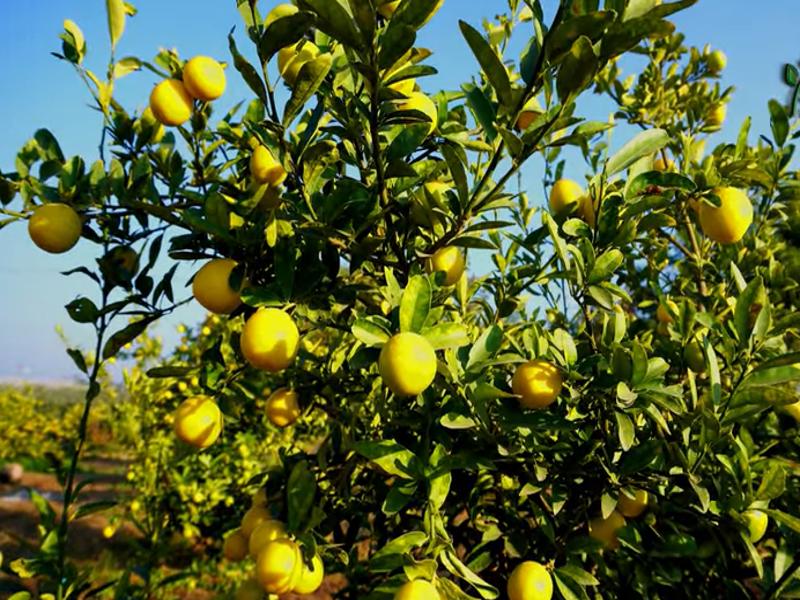
⭐ Lemon Farming: Complete Guide on Climate, Varieties, Irrigation & Disease Control
Lemon is one of the most widely used citrus fruits in India. Due to its acidic taste, medicinal properties, and high juice content, it is considered a highly profitable horticulture crop. Lemon farming is a low-cost, high-profit crop, making it suitable even for small and medium farmers.
In the citrus category, lemon is an important fruit crop. It is globally known for its use in juice, pulp, and the food-processing industry. In India, Nagpur, Assam, Dibrugarh, and the Brahmaputra Valley are major citrus-producing regions. Almost 923,000 hectares of land is used for citrus cultivation in India, producing 8608 thousand metric tons annually.
In Punjab, about 39.20 hectares of land is under citrus cultivation, and the state is considered highly suitable for high-quality lemon production.
Climate for Lemon Farming
Lemon grows best in a sub-tropical climate. Most regions of India are naturally suitable for lemon cultivation.
Below are the ideal temperature and rainfall conditions:
| Requirement | Suitable Range |
|---|---|
| General Temperature | 20°C – 25°C |
| Rainfall | 75 – 200 cm |
| Planting Temperature | 20°C – 25°C |
| Harvesting / Maturity Temperature | 25°C – 30°C |
✔ Warm and low-humidity climates support healthy lemon growth.
✔ Frost or extremely cold weather can severely damage the crop.
Best Soil for Lemon Farming
Lemon can grow in almost any soil, but for maximum yield, the following soil type is best:
- Light loamy soil
- Well-drained soil
- Soil pH: 5.5 – 7.5
✔ Lemon can be grown in slightly alkaline or slightly acidic soil as well.
✔ Waterlogging must be avoided as it causes root-rot disease.
Popular Lemon Varieties in India
Many Indian states have developed advanced and high-yielding lemon varieties. The following are the most popular among farmers:
Major Varieties of Punjab
1. Punjab Baramasi
- Branches grow close to the ground
- Fruits are yellow, round, and juicy
- Naturally seedless
- Average yield: 84 kg/tree
2. Eureka
- Semi-vigorous tree
- Bright yellow, acidic, aromatic fruits
- Ripening time: August
3. Punjab Galgal
- Strong tree, light green leaves
- Oval, medium-sized fruits
- 8–10 seeds per fruit
- Ripening time: November–December
- Yield: 80–100 kg/tree
4. PAU Baramasi
- Ripening time: First week of July
- Almost seedless fruits
- Yield: 84 kg/tree
5. PAU Baramasi-1
- Seedless variety
- Ripening time: Last week of November
- Yield: 80 kg/tree
Famous Varieties of Other States
Rasraj
- Developed by IIHR
- Juice content: 70%
- Acidity: 6%, Sugar: 8 Brix
- Resistant to many diseases
Lisbon Lemon
- Tolerant to cold and strong winds
- Medium-sized yellow fruits
Lucknow Seedless
- Medium-sized seedless fruits
Pant Lemon
- Dwarf plant type
- Fruits contain high juice
- Resistant to scab, canker, and gummosis
Field Preparation
For successful lemon farming, the field must be prepared properly:
- Deep ploughing
- 2–3 cross ploughings
- Level the field well
- In hilly areas, plant on ridges instead of slopes
- High-density plantation is possible
Planting & Spacing in Lemon Farming
Best Time for Planting
✔ July–August is the ideal time for planting lemon saplings.
Intercropping
During the first 2–3 years, farmers can grow:
- Cowpea
- Vegetables
- French beans
Plant Spacing
- 4.5 × 4.5 meters
- Pit size: 60 × 60 × 60 cm
Fertilizer to add in pits
- Well-rotted FYM: 10 kg
- Single super phosphate: 500 g
Plant Density
- 208 plants per acre
Pruning & Training
- Remove branches that grow below 50–60 cm from the ground.
- Keep the center of the plant open for proper sunlight and airflow.
- Remove weak or inward-growing branches regularly.
Fertilizer Management in Lemon Farming
Age-wise fertilizer schedule:
FYM & Urea Requirements
| Age | FYM (kg/tree) | Urea (g/tree) |
|---|---|---|
| 1–3 years | 5–20 | 100–300 |
| 4–6 years | 25–50 | 400–500 |
| 7–9 years | 60–90 | 600–800 |
| 10+ years | 100 | 800–1600 |
✔ Apply FYM in December.
✔ Apply urea in two splits: February and April–May.
Irrigation Management
Lemon requires regular and careful irrigation:
- Light irrigation in winter and summer
- Mandatory irrigation during flowering and fruit-setting stages
- Excess water causes root-rot
- Saline water is harmful
- Drip irrigation is the best method
Weed Management
- Manual weeding
- Spray Glyphosate 1.6 liters mixed in 150 liters of water (spray only on weeds, not on plants)
Major Insect Pests & Their Control
1. Citrus Psylla
- Sucks plant sap
- Causes leaf curling and fruit drop
Control: - Monocrotophos 0.025%
- Carbaryl 0.1%
2. Leaf Miner
- Creates zigzag lines inside leaves
- New leaves become deformed
Control: - Monocrotophos 1.5 ml
- Phosphomidon 1 ml
- Pheromone traps
3. Scale Insects
- Suck sap and weaken the plant
Control: - Neem oil
- Parathion 0.03%
- Dimethoate 150 ml
- Malathion 0.1%
4. Aphids & Mealybugs
- Use pyrethroid spray
- Neem oil is effective
Major Diseases & Their Management
1. Citrus Canker
- Brown spots on leaves and fruits
Control: - Remove infected branches
- Bordeaux mixture 1%
- Streptomycin sulfate
2. Gummosis
- Gum oozing from the trunk
- Bark hardens and turns yellow
Control: - Improve drainage
- Apply Metalaxyl + Trichoderma in soil
- Apply Bordeaux paste
3. Leaf Spot
- Cotton-like white spots on leaves
Control: - Carbendazim spray (3 sprays at 20–22 day intervals)
4. Black Spot
- Black patches on fruits
Control: - Apply copper fungicide in spring
5. Scab Disease
- Grey patches on leaves and fruits
Control: - Spray copper + white oil
6. Root Rot
- Bark of roots decays
Control: - Remove affected parts
- Copper spray
- Ensure good air circulation
7. Nutrient Deficiencies
Zinc Deficiency
- Leaves turn yellow
- Fruit size reduces
Control: - Zinc sulphate spray
- Increase organic manure
Iron Deficiency
- Leaves turn yellowish-green
- More common in alkaline soils
Control: - Iron chelate
- Organic fertilizers
Harvesting
- Fruits should have attractive color
- Sugar–acid ratio should be around 12:1
- Harvesting time varies by variety but mostly January–February
✔ Very early or late harvesting reduces fruit quality.
Post-Harvest Management
- Wash fruits with clean water
- Dip in water containing 2.5 ml chlorine per liter
- Apply Citrashine wax foam
- Dry fruits in shade
- Grade fruits
- Pack in boxes
Profit from Lemon Farming
Additional useful information:
- A mature lemon tree yields 80–120 kg of fruit.
- 208 plants per acre can produce 15–20 tons.
- Lemon demand remains throughout the year, ensuring good prices.
- Average market price: ₹40–₹120 per kg (season-based)
✔ Lemon farming is low-cost, low-maintenance, and highly profitable.
Additional Useful Resources
If you want to learn about cultivation of other fruits, this resource is extremely helpful:
👉 Explore detailed guides on other fruits farming – click here to read more.
This link provides detailed information on major fruit crops grown in India, varieties, soil type, fertilizers, irrigation, disease control, and advanced farming techniques.
FAQs – Frequently Asked Questions
1. What is the best season to start lemon farming?
July–August is the best planting time.
2. How many plants can be grown in one acre?
About 208 plants per acre.
3. How often should lemon trees be irrigated?
Every 7–10 days, depending on the season.
4. Which fertilizers are best for lemon trees?
Well-rotted FYM and urea.
5. Why does fruit dropping occur in lemon trees?
Due to nutrient deficiency, over-irrigation, or pest-disease attack.
6. Can lemon grow in all types of soil?
Yes, as long as the pH is 5.5–7.5 and drainage is good.
7. How to increase lemon production?
Proper irrigation, fertilizer management, pruning, and disease control.
8. Major diseases of lemon?
Canker, root rot, scab, black spot, etc.
9. How many years does a lemon plant take to start production?
3–4 years.
10. Which lemon varieties are most profitable?
PAU Baramasi, Eureka, and Rasraj.
Inspiring Message for Indian Farmers
Lemon farming is a profitable crop that offers high returns with low investment. With the right climate, improved varieties, balanced fertilizers, proper irrigation, and effective disease management, farmers can achieve excellent yields. Lemon has year-round demand in India, so market prices remain stable.
By adopting modern farming techniques, lemon cultivation can significantly improve farmers’ income.
Dear farmers, with the right knowledge and consistent effort, you can achieve outstanding success in lemon farming.