


Sorghum Farming
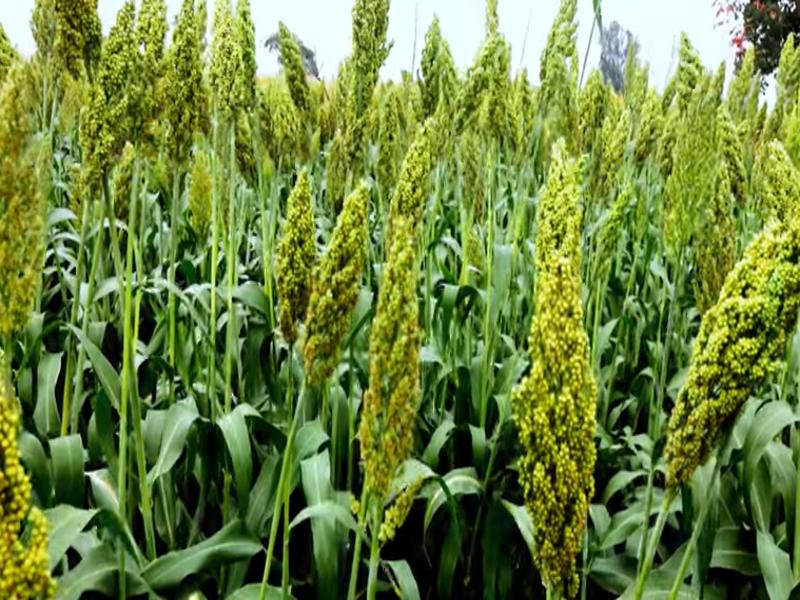
🟩 Jowar Farming: Methods, Yield, Cost & Profit Guide 2025
Jowar (Sorghum) is one of India’s most important coarse grain crops. In Uttar Pradesh, it is primarily cultivated in districts like Jhansi, Hamirpur, Jalaun, Banda, Fatehpur, Allahabad, Farrukhabad, Mathura, and Hardoi.
The cultivation area, irrigated land, production, and productivity of jowar have shown consistent improvement over the last five years.
Jowar is a drought-tolerant, low-cost, highly nutritious crop, making it an excellent choice for small and marginal farmers.
This comprehensive guide covers land selection, sowing, improved varieties, fertilizer management, irrigation, weed control, pest and disease management, harvesting, and profitability.
🟩 Suitable Regions and Importance of Jowar Farming
Jowar grows best in hot and semi-arid climates. It performs well even under limited water conditions, which is why it is widely cultivated in Bundelkhand and similar dry areas.
Major Uses:
- Grain as food
- Green fodder for livestock
- Dry fodder
- Food products like roti, porridge, flakes, etc.
Jowar contains protein, fiber, minerals, and iron, making it a highly nutritious and health-friendly grain.
🟩 Improved and Recommended Jowar Varieties
To achieve better yields, farmers should always use pure, certified seeds suitable for their local climate.
🟦 Composite (Sankul) Varieties
| Variety | Duration (days) | Height (cm) | Grain Yield (q/ha) | Dry Fodder (q/ha) | Characteristics | Suitable Area |
|---|---|---|---|---|---|---|
| Varsha | 125–130 | 200–220 | 25–30 | 100–110 | Light brown grains | All UP except Bundelkhand |
| CSB 13 | 105–111 | 160–180 | 22–27 | 100–110 | Shiny light brown | All UP |
| CSB 15 | 105–110 | 220–240 | 23–28 | 100–110 | Shiny light brown | All UP |
| SPB-1388 (Bundela) | 110–115 | 240–250 | 30–35 | 115–120 | Pearl-like white grains | All UP |
| Vijeta | 100–110 | 240–250 | 30–35 | 115–120 | Well-formed panicle | All UP |
🟦 Hybrid Varieties
| Variety | Duration (days) | Height (cm) | Grain Yield (q/ha) | Dry Fodder (q/ha) | Area |
|---|---|---|---|---|---|
| CSH 16 | 105–110 | 200 | 38–42 | 90–95 | UP |
| CSH 9 | 110–115 | 175–200 | 35–40 | 80–100 | UP |
| CSH 14 | 100–105 | 180–200 | 35–40 | 80–100 | UP |
| CSH 18 | 115–125 | 180–200 | 35–40 | 80–100 | UP |
| CSH 13 | 115–125 | 160–180 | 35–40 | 80–100 | UP |
| CSH 23 | 120–125 | 180–200 | 40–45 | 75–120 | UP |
🟩 Field Selection and Preparation
Jowar grows best in sandy loam soil with good drainage.
In Bundelkhand, it is also grown in medium-heavy and sloping land.
Field Preparation:
- First ploughing with a mouldboard plough
- 2–3 additional ploughings with country plough or cultivator
- Make the soil fine, weed-free, and level
- Remove crop residues for better pest control
🟩 Sowing (Planting Method)
🟦 Best Time for Sowing
The ideal sowing period is:
Last week of June to the first week of July
🟦 Seed Rate
- Hybrid varieties: 7–8 kg/ha
- Composite varieties: 10–12 kg/ha
🟦 Seed Treatment
For every 1 kg of seed:
- Thiram – 2.5 g/kg
- For termite control: Chlorpyriphos – 25 ml/kg
Seed treatment improves germination and protects against early-season diseases.
🟦 Spacing
- Row to row: 45 cm
- Plant to plant: 15–20 cm
- In late-maturing pigeon pea fields, sow one row of jowar between two rows of pigeon pea
🟩 Fertilizer Management
Always apply fertilizers based on soil testing.
For Hybrid Varieties:
40:20:20 kg/ha (N:P:K)
For Composite Varieties:
80:20:20 kg/ha (N:P:K)
Application Method:
- Half nitrogen + full phosphorus and potash at sowing
- Remaining half nitrogen 30–35 days after sowing
Apply fertilizers below the seed line in furrows.
🟩 Irrigation Management
Although jowar is drought-tolerant, two irrigations are essential:
1️⃣ At the booting (panicle initiation) stage
2️⃣ At grain-filling stage
Lack of moisture during these stages can reduce yield by 20–30%.
🟩 Weed Control and Intercultivation
- First weeding: 15 days after germination
- Second weeding: 35–40 days after sowing
🟦 Chemical Weed Control
- Atrazine
- Light soil: 1.25 kg/ha
- Medium/Heavy soil: 2 kg/ha
- Spray in 500 liters water per hectare
- Apply within 2 days of sowing
Where Patharchatta weed is absent:
- Lasso 50 EC (Alachlor) – 5 L/ha
For hardy weeds:
- Atrataf + Stomp 30 EC or Treflan 48 EC
- 1 liter per acre
- 200 liters water
🟩 Pest & Insect Management in Jowar
🟦 1. Shoot Fly
Identification:
Small fly that damages seedlings by drying the central shoot.
Control:
- Quinalphos 25 EC – 1.5 L/ha
🟦 2. Stem Borer
Identification:
Larvae bore into stems and damage the central whorl.
Control:
- Carbofuran 3G – 20 kg/ha
- Phorate 10G – 20 kg/ha
🟦 3. Ear Head Midge
Identification:
Red-colored maggots suck grain juice, causing shriveled grains.
Control:
- Carbaryl 50% WP – 1.25 kg/ha
🟦 4. Jowar Mite
Identification:
Tiny mite feeding inside webs under leaves.
Control:
- Dimethoate 30 EC – 1 L/ha
- Chlorpyriphos 25 EC – 1.5–2 L/ha
🟩 Major Diseases in Jowar
🟦 Grey Mold (Brown Fungus)
Symptoms:
White fungal growth on panicles; grains become light, brittle.
Control:
- Mancozeb – 2 kg/ha
- 700–800 liters water spray
🟦 Termites
- Chlorpyriphos 20 EC – 2.5 L/ha (through irrigation)
🟦 Nematodes
- Before sowing: Phorate 10G – 10 kg/ha
🟩 Key Success Tips for Jowar Farming
- Use only recommended improved varieties
- Sow at the right time
- Treat seeds before sowing
- Apply fertilizers as per soil test
- Give irrigation at panicle and grain stages
- Control pests and diseases in early stages
- Perform timely weeding
- Avoid waterlogging
- Follow crop rotation
- Use proper herbicides for weed control
🟩Income and Profit from Jowar Farming
Expected Yield per Hectare:
- Grain: 25–40 quintals
- Dry fodder: 80–120 quintals
Profitability:
- Total Cost: ₹10,000–₹15,000 per hectare
- Gross Income: ₹30,000–₹60,000
- Net Profit: ₹20,000–₹45,000 per hectare
Farmers can earn additional income by selling dry fodder.
🟩 FAQs (Frequently Asked Questions)
❓1. What is the best time for sowing jowar?
✔ Last week of June to first week of July.
❓2. What type of soil is best for jowar?
✔ Sandy loam soil with good drainage.
❓3. What is the seed rate for jowar?
✔ 7–8 kg/ha for hybrids, 10–12 kg/ha for composite types.
❓4. Which jowar varieties give the highest yield?
✔ CSH 16, CSH 14, SPB-1388, Vijeta, CSB 13.
❓5. How many irrigations are required?
✔ Two—panicle initiation and grain filling.
❓6. What are common diseases in jowar?
✔ Grey mold, stem rot, leaf spot, termites.
❓7. How to control shoot fly in jowar?
✔ Quinalphos 25 EC – 1.5 L/ha.
❓8. Is jowar good as fodder?
✔ Yes, it is nutritious and easily digestible.
❓9. What is the average yield?
✔ 25–40 quintals grain and 80–120 quintals dry fodder per hectare.
❓10. Is jowar farming profitable?
✔ Yes, it is a low-cost, high-profit crop for farmers.
🟩 A Motivational Message for Indian Farmers
Jowar is a highly beneficial crop that requires low investment, less water, and grows well even in dry regions. Farmers who adopt improved varieties, timely sowing, proper fertilizer management, and effective pest control can significantly increase their yield.
With rising demand in the food and fodder industry, and growing health awareness, jowar is becoming an economically rewarding crop.
Dear farmers, your dedication and hard work shape India’s agricultural future.
Adopt modern techniques, believe in your abilities, and success will always follow.
👉 Explore detailed guides on other food grains farming – click here to read more.