


Moong Farming
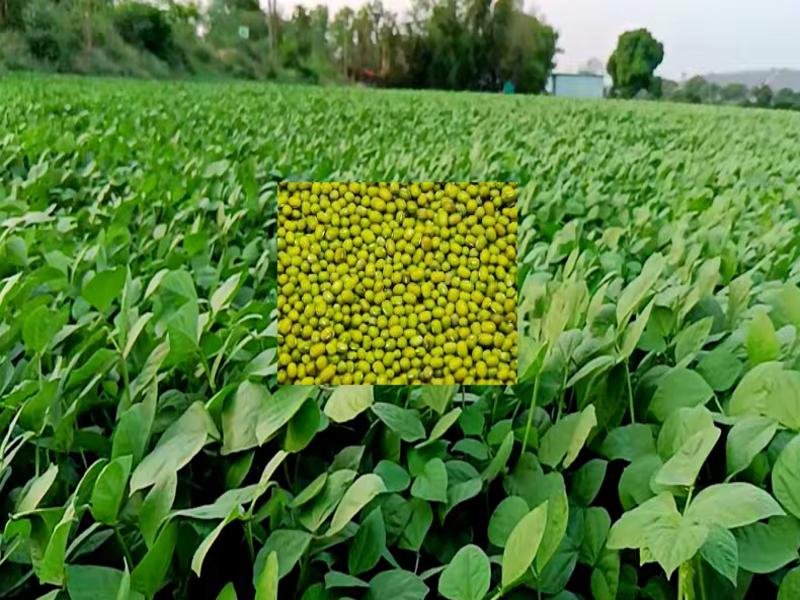
Moong Farming: Method, Benefits & Pest Control
Moong (Green Gram) is one of the most important pulse crops in India. Especially in states like Rajasthan, it is grown during the Kharif season. It plays a major role in increasing pulse productivity, maintaining soil fertility, and providing economic benefits to farmers.
This blog explains how to cultivate moong — from seed selection to harvesting — to maximize yield and profit.
1. Introduction and Importance
India has long faced a shortage of pulses. Moong is an important solution to this problem because it is not only a rich source of protein but also improves soil nitrogen levels through biological fixation.
In Rajasthan alone, moong is grown on about 1.2 million hectares, but average productivity remains low. With improved techniques and proper management, yields can be increased by 20–50%.
Benefits of Moong Farming for Farmers:
- High demand and good market price
- Improves soil fertility
- Suitable for crop rotation
- Reduces fertilizer cost due to nitrogen fixation
2. Suitable Climate and Environment
2.1 Climate Requirement
- Warm weather is ideal for moong cultivation.
- Optimum temperature: 25–35°C.
- Can grow well in light rainfall or irrigated conditions.
- Excess moisture or waterlogging can damage the crop.
- Usually sown during Kharif (monsoon) season when rainfall is available.
2.2 Water Management
- Soil should have good drainage to prevent waterlogging.
- Light irrigation may be required at critical growth stages in irrigated areas.
- Use water-saving techniques like drip or sprinkler irrigation.
3. Land and Soil Preparation
Moong grows best in loamy or sandy-loam soils with proper aeration and drainage.
Steps for land preparation:
- First ploughing: Use a moldboard plough or disc harrow.
- Second ploughing: Cross harrowing to make soil fine.
- Third ploughing: Use cultivator and level the field with a plank.
Level land helps retain moisture and facilitates uniform sowing.
Proper soil preparation ensures good air, moisture, and nutrient balance for healthy root growth.
4. Moong Varieties
Common moong varieties suitable for Rajasthan and similar regions:
| Variety | Duration (Days) | Avg. Yield (Quintal/Ha) | Features |
|---|---|---|---|
| RMG-62 | 65–70 | 6–9 | Suitable for irrigated & rainfed; resistant to Rhizoctonia blight & pod borer; uniform maturity |
| RMG-268 | 62–70 | 8–9 | Drought-tolerant, low pest incidence, uniform pods |
| RMG-344 | 62–72 | 7–9 | Suitable for Kharif & summer; blight-tolerant, bold grains |
| SML-668 | 62–70 | 8–9 | Can be grown both seasons, resistant to major diseases |
| Ganga-8 | 70–72 | 9–10 | Suitable for early or late sowing, disease-tolerant |
| GM-4 | 62–68 | 10–12 | Uniform maturity, large green grains |
| Moong Ke-851 | 70–80 | 8–10 | Suitable for both irrigated and dryland conditions |
Choose variety based on soil, region, and sowing season.
5. Sowing
5.1 Sowing Time
- Sowing should be completed by 15th July.
- If monsoon is delayed, early maturing varieties can be sown up to 30th July.
5.2 Seed Quality and Treatment
- Always use certified, healthy, and high-quality seeds.
- Seed treatment process:
Mix 600g Rhizobium culture in 1L water with 250g jaggery, heat slightly, let it cool, and coat the seeds.
Dry in shade before sowing.
5.3 Planting Configuration
- Maintain 45 cm row spacing and 10 cm between plants.
- Proper spacing ensures adequate sunlight, air circulation, and nutrient uptake.
6. Fertilizer Management
Moong being a pulse crop, needs less nitrogen but proper nutrients ensure good yield.
Recommended dose per hectare:
- Nitrogen: 20 kg
- Phosphorus: 40 kg
Apply 87 kg DAP + 10 kg Urea at sowing time.
Use 5–10 tons FYM or compost every 2–3 years.
Conduct a soil test before applying fertilizers for accurate nutrient management.
7. Weed Management
Weeds reduce yield drastically. Control measures include:
- Apply Pendimethalin (Stomp) 3.3 L/ha mixed in 500 L water within 1–2 days after sowing.
- After 25–30 days, do hand weeding or hoeing.
- Alternatively, use Imazethapyr (Pursuit) 750 ml/ha for post-emergence weed control.
Effective weed control improves crop growth and reduces pest/disease risks.
8. Pest and Disease Management
Timely pest and disease management prevents heavy losses.
8.1 Termite
- Damages roots.
- Control: Mix Quinalphos 1.5% or Chlorpyriphos 25 kg/ha in soil during final ploughing.
- Treat seeds with 2 ml Chlorpyriphos per kg seed.
8.2 Cutworm
- Cuts stems near soil surface.
- Control: Keep field clean, destroy weeds, apply Quinalphos 1.5% dust 25 kg/ha.
8.3 Aphids, Whiteflies, Jassids
- Suck plant sap.
- Control: Spray Monocrotophos 36 WSC or Methyl Demeton 25 EC (1.25 L/ha).
8.4 Leaf Beetle
- Control: Quinalphos 1.5% dust, 20–25 kg/ha.
8.5 Pod Borer
- Bores pods, causing holes.
- Control: Spray Monocrotophos 0.5 L or Malathion/Quinalphos dust 20–25 kg/ha; repeat after 15 days.
8.6 Sucking Pests
- Control: Imidacloprid 200 SL (500 ml/ha) spray; repeat after 15 days if needed.
8.7 Bacterial Leaf Spot
- Brown spots on leaves & pods.
- Control: Agrimycin 200 g or Streptocycline 50 g in 500 L water/ha.
8.8 Yellow Vein Mosaic
- Yellow patches on leaves, spread by whitefly.
- Control: Spray Methyl Demeton 0.25% + Malathion 0.1% every 10 days.
8.9 Stem Blight
- Control: Treat seed with 2g Mancozeb/kg seed and spray 2kg Mancozeb in 500L water/ha after 30–35 days.
8.10 Chlorosis (Yellowing)
- Control: Spray 0.5% Ferrous Sulphate or Sulphuric acid solution.
8.11 Cercospora Leaf Spot
- Purple-red circular spots.
- Control: Spray Carbendazim 1g/L water; treat seeds with Captan 3g/kg or Carbendazim 2g/kg.
8.12 Curl Virus
- Leaves curl, very low pod formation.
- Control: Dimethoate 30 EC (0.5 L) or Methyl Demeton 25 EC (750 ml/ha); repeat after 15 days.
8.13 Integrated Disease Management
Mix and spray per litre of water:
Carbendazim 1g + Streptocycline 0.1g + Methyl Demeton 1ml.
9. Crop Rotation
Crop rotation improves yield and soil fertility.
- Rainfed: Moong–Bajra
- Irrigated: Moong–Wheat, Moong–Cumin, Moong–Mustard
This helps maintain soil nutrients and reduces pest/disease build-up.
10. Seed Production
- Choose fields where moong wasn’t grown in the previous season.
- Maintain 10-meter isolation distance from other moong fields.
- Follow all cultural, weed, and pest control practices.
- Harvest, dry, and clean seeds separately.
- Store treated, dried seeds in a cool, dry place.
11. Harvesting & Threshing
- Harvest when pods turn black and dry.
- Delay may cause shattering.
- Use thresher or sticks to extract seeds.
- Clean, dry, and grade seeds before storage.
12. Yield and Profitability
- Yield: 7–8 quintals/ha under rainfed conditions.
- Cost: ₹18,000–20,000 per hectare.
- Net Profit: ₹12,000–14,000 per hectare (at ₹40/kg price).
A profitable crop, especially for small and marginal farmers.
13. Modern Tips and Technologies
- Improved seed technology: Choose high-yield, disease-resistant varieties.
- Integrated Pest Management (IPM): Use bio-pesticides, trap crops, and beneficial insects.
- Nano fertilizers: Reduce costs, enhance nutrient efficiency.
- Solar irrigation systems: Lower irrigation cost.
- Weather apps: Use forecasts for timely sowing and irrigation.
- Micronutrients: Apply zinc and boron to improve yield.
- Farm mechanization: Use small tractors and mini-threshers to save labor.
- Market linkage: Use co-operatives and online marketplaces.
- Government schemes: Avail subsidies, training, and certified seed programs.
- Organic farming: Promote eco-friendly and consumer-demanded practices.
14. Challenges and Solutions
| Challenge | Solution |
|---|---|
| Pest & disease outbreak | Adopt IPM and regular monitoring |
| Irregular rainfall | Use water-saving irrigation and rainwater harvesting |
| Yield fluctuation | Conduct soil testing and nutrient management |
| Seed shortage | Buy certified seeds from agriculture departments |
| Market risk | Join cooperatives, use contract farming, or e-markets |
| Labor shortage | Adopt mechanization tools |
15. Future Prospects
The future of moong farming in India is very promising:
- Rising demand for pulses in domestic markets.
- Increasing adoption of bio-fertilizers and bio-pesticides.
- Smart irrigation and digital farming improving productivity.
- Government policies supporting pulse production.
- Export opportunities for high-quality moong.
16. Additional Information and Government Resources
If you want more information about soil testing, fertilizer recommendations, or crop nutrition management,
you can visit the official website operated by the Ministry of Agriculture, Government of India:
Soil Health Portal – Government of India
On this portal, you will find:
- Facility to view the Soil Health Card for your land
- Crop-wise fertilizer recommendations
- State-wise agricultural expert advice
- Useful information related to organic farming
Frequently Asked Questions (FAQs)
Q1. Which soil is best for moong cultivation?
Loamy or sandy-loam soil with good drainage is ideal.
Q2. When is the best time to sow moong?
By 15th July, or up to 30th July for early-maturing varieties if monsoon is delayed.
Q3. Which moong varieties are best?
RMG-62, RMG-268, RMG-344, SML-668, Ganga-8, GM-4, Moong Ke-851 — all perform well in Rajasthan-type climates.
Q4. How much fertilizer is needed?
20 kg Nitrogen + 40 kg Phosphorus/ha (apply DAP + Urea during sowing). Add FYM every 2–3 years.
Q5. How to manage pests and diseases?
Follow IPM: use chemical + biological pesticides, monitor crops, and treat seeds before sowing.
Q6. How to control weeds?
Use Pendimethalin (Stomp) post-sowing, then hoe or apply Imazethapyr after 25–30 days.
Q7. When and how to harvest moong?
Harvest when pods turn black; use thresher or sticks, and dry seeds properly.
Q8. What is the yield and profit?
7–8 quintals/ha yield; net profit ₹12,000–14,000/ha.
Q9. How to produce quality seed?
Grow in isolation, monitor field, dry and treat seeds, and store in a dry place.
Q10. What government schemes are available?
Farmers can avail subsidies, certified seeds, and training from agriculture departments.
Q11. How to grow moong in low-water areas?
Use drip irrigation, solar pumps, nano fertilizers, and adopt Moong Bajra crop rotation.
Conclusion
Moong farming is not only a solution to India’s pulse shortage but also a gateway to economic prosperity for farmers.
By applying scientific methods – improved seeds, better management, pest control, and crop rotation – farmers can achieve higher yields and profitability.
Dear farmers, it’s time to adopt new technologies, modern practices, and smart farming to make your land more productive and your life more prosperous.
Follow the step-by-step guidance above, and consult your local agriculture department or experts for personalized help.
With knowledge and dedication, your moong crop can become a successful and profitable venture. 🌱🚜
👉 Explore detailed guides on other pulses farming – click here to read more