


BeetRoot Farming
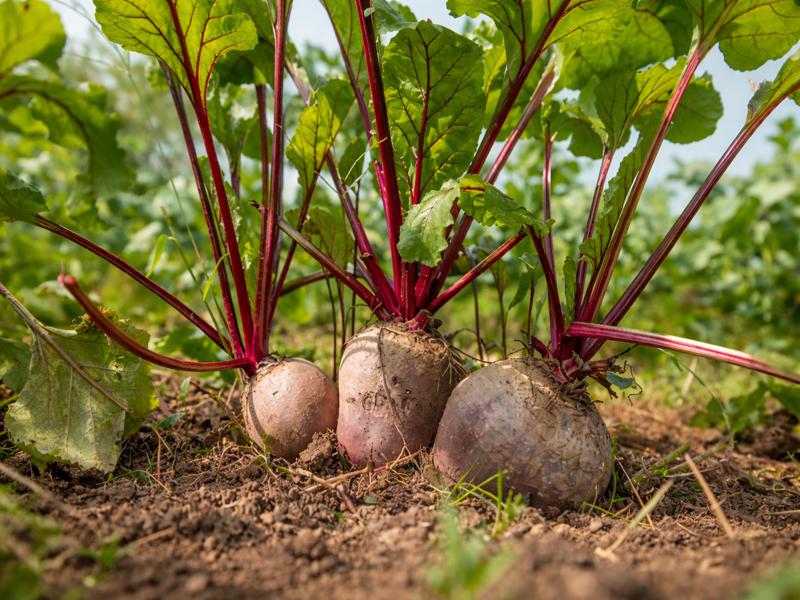
🌱 How to Do Beetroot Farming? Complete Information and More Profit
Beetroot farming is becoming a profitable and short-duration crop for farmers in today’s time. It is a root vegetable which grows under the soil and remains in demand in the market for 12 months because of its light sweet taste, deep red color, and medicinal properties.
In India, in cold regions like Uttarakhand, Himachal Pradesh, Kashmir, Rajasthan, and the cold areas of Punjab, it is mostly grown in the Rabi season. By using the right techniques, farmer brothers can get good production per acre and earn good profit.
In this article, we will give complete information about beetroot farming per acre in detail, so that rural farmer brothers can easily understand and take benefit.
1. Crop Introduction
Beetroot farming is the cultivation of a root vegetable which is called Beetroot or Garden Beet in English. It is considered the second largest sugar crop in the world after sugarcane.
Main Features
- Light sweet in taste
- Rich in antioxidant properties
- Ready in 3 to 4 months
- Both root and leaves are useful
- More profit at low cost
Uses of Beetroot
- Eaten raw in salad
- Used as a vegetable
- Used for juice and health drink
- Used as animal fodder
2. Health Benefits and Uses
One big reason for doing beetroot farming is its increasing health demand.
Nutrients
- Iron
- Calcium
- Magnesium
- Potassium
- Vitamin C
- Vitamin B
Health Benefits
- Removes blood deficiency
- Beneficial in heart disease
- Helpful in cancer prevention
- Improves digestion system
- Beneficial for skin
3. Scientific Classification
State: Plantae
Class: Magnoliopsida
Family: Amaranthaceae
Species: Beta vulgaris
Beetroot farming scientifically belongs to the species Beta vulgaris.
4. Climate & Temperature Required
Ideal Temperature
18 to 21 degree Celsius
Suitable Season
October to mid-November is best for sowing
Important Points to Remember
- Avoid too much heat
- Protect from frost
- Cool and dry weather is suitable
5. Soil Requirement
Suitable Soil
- Sandy loam soil
- Well-drained land
pH Value
Between 6 to 7
Special Attention
- There should be no water logging
- Get magnesium and boron test done
- If needed, apply 4 kg borax per acre
6. Seed & Varieties
In beetroot farming, selecting the right seed is the key to higher production. If farmer brothers select certified and improved varieties, then both yield and quality will be better.
🔹 Points to Remember While Selecting Seeds
- Take certified and disease-free seeds
- Germination capacity should be more than 80 percent
- Choose variety suitable to local climate
- Select red or round variety as per market demand
🔹 Improved Varieties
Pushpa
- Deep red color
- Medium duration
- Good market demand
Dark Red
- Attractive color
- More juicy
- Suitable for processing
QT
- Round shape
- Uniform size root
- Good yield
Golden
- Light yellow color
- Popular for salad
Bule Di
- Early ready
- Good quality
Chioggia
- Red and white rings
- Demand in hotels and supermarkets
🔹 Yield of Hybrid Varieties
- 240 to 320 quintal per acre
- 13 to 15 percent sugar content
7. Seed Rate per Acre
Keeping the correct seed quantity is very important. If more seeds are used, plants become dense and the root size remains small.
🔹 Seed Quantity per Acre
- 4 kg seed
- Around 40,000 plants
🔹 Seed Treatment
Do seed treatment before sowing.
- Carbendazim 2 gram per kg seed
or - Thiram 2 gram per kg seed
Seed treatment helps to protect from fungal diseases.
8. Land Preparation
Good land preparation helps the roots to grow straight and big.
🔹 Steps of Field Preparation
- Do first deep ploughing with soil turning plough
- Run harrow or cultivator 3 to 4 times
- Make soil loose and level
- Before last ploughing, mix 8 ton well-rotted cow dung manure per acre
- To protect from termite and cutworm, mix 250 ml Quinalphos in soil
- Proper moisture should be present in the land
9. Sowing Method per Acre
In beetroot farming, sowing at the right time and right distance is very important. If sowing is done properly, the root becomes round, smooth, and market-ready.
🔹 Suitable Time of Sowing
- In Rabi season, October to mid-November is best
- In cold areas, sowing can be done till November
- Avoid extreme heat and frost
🔹 Soil Moisture
- Soil should have light moisture
- Do not sow in very dry or very wet soil
🔹 Row and Plant Spacing
- Row to row distance 45 to 50 centimeter
- Plant to plant distance 15 to 20 centimeter
- Keep one plant per pit
🔹 Sowing Depth
- 2 to 2.5 centimeter depth
- More depth can make germination weak
🔹 Sowing Methods
Dibbling Method
- Make lines and put seeds by hand
- Uniform germination is obtained
Ridge Method
- Make 10 to 12 inch ridge
- Irrigation and drainage become easy
Broadcasting Method
- Less recommended
- Requires more seeds
10. Fertilizer & Manure Management
In beetroot farming, root size and color depend on proper nutrition. Balanced manure management increases production.
🔹 Organic Manure
- Well-rotted cow dung manure 8 ton per acre
- Mix properly in soil before sowing
- Vermicompost 2 ton per acre is also useful
🔹 Chemical Fertilizer Requirement per Acre
- Nitrogen 60 kg
- Phosphorus 12 kg
🔹 Fertilizer Quantity
- Urea 135 kg per acre
- SSP 75 kg per acre
🔹 Method of Applying Fertilizer
At the time of sowing
- 45 kg Urea
- Full SSP
After 30 days
- 45 kg Urea
After 60 days
- 45 kg Urea
🔹 Micronutrients
In case of Boron deficiency
- 4 kg Borax per acre
In case of Potash deficiency
- 20 kg MOP per acre
11. Irrigation Schedule
In beetroot farming, excess water can cause root rot. Therefore, balanced irrigation is necessary.
🔹 Irrigation Program
- Light irrigation immediately after sowing
- Second irrigation after 15 days
- After that, at interval of 20 to 25 days
- In March and April, at interval of 10 to 15 days
- Stop irrigation 15 days before harvesting
🔹 Important Points
- Do not allow water logging in field
- Drip irrigation saves water and gives better production
12. Weed Control
Weeds take nutrients and moisture, due to which root development stops.
🔹 Control Measures
- First weeding 25 to 30 days after sowing
- Second weeding after 50 days
- Remove weeds by hand
- Mulching reduces weeds
13. Pest & Disease Management
In beetroot farming, generally fewer diseases occur, but negligence can cause loss.
🔹 Major Pests
Beet Webworm
- Dimethoate 200 ml per acre
Weevil
- Methyl Parathion 2.5 kg per acre
Aphids and Jassids
- Chlorpyrifos 300 ml per acre
Red Spider Mite
- Malathion 2 ml per liter water
🔹 Major Diseases
- Alternaria leaf spot
- Cercospora leaf spot
- Root rot
🔹 Control
- Mancozeb 400 gram in 120 liter water
- Must do seed treatment
- Do not allow water logging in field
14. Crop Duration
- 90 to 120 days from sowing
- Harvest when root diameter becomes 5 to 7 centimeter
15. Harvesting Method
Harvesting at the right time is necessary. If delayed, the root becomes hard.
🔹 Harvesting Time
- Mid April to May
🔹 Harvesting Methods
- Digging by hand
- Potato digging machine
- Cultivator
🔹 After Harvest
- Clean the soil
- Cut the leaves
- Send to market within 48 hours
16. Yield per Acre
- Average yield 240 to 320 quintal
- With good care up to 300 quintal
- In organic farming also 200 to 250 quintal possible
17. Market Price & Profit per Acre
For farmer brothers, the most important question is how much profit will come from beetroot farming. So here we are calculating according to the current mandi rate.
🔹 Current Wholesale Rate March 2026
In Delhi’s Azadpur Mandi, in the early week of March 2026, the wholesale rate of beetroot is approximately
₹ 1,372 per quintal
That means
₹ 13 to ₹ 15 per kg
Note that mandi rates keep changing according to quality, demand, and supply.
🔹 Possible Production per Acre
Average production
250 quintal per acre
With good care
Up to 300 quintal per acre
Here we are calculating on the basis of average 250 quintal.
🔹 Total Income Calculation
250 quintal × ₹ 1,372 per quintal
= ₹ 3,43,000 per acre approximately
If production is 300 quintal
300 × ₹ 1,372
= ₹ 4,11,600 per acre approximately
🔹 Estimated Cost per Acre
Seed cost ₹ 8,000 to ₹ 12,000
Manure and fertilizer ₹ 30,000 to ₹ 40,000
Labour ₹ 40,000 to ₹ 50,000
Irrigation ₹ 15,000 to ₹ 20,000
Pesticide and other expenses ₹ 20,000 to ₹ 25,000
Total estimated cost
₹ 1,50,000 to ₹ 1,80,000 per acre
🔹 Net Profit Calculation
If production is 250 quintal
Total income ₹ 3,43,000
Minus cost ₹ 1,60,000 average
Net profit approximately ₹ 1,80,000 per acre
If production is 300 quintal
Total income ₹ 4,11,600
Minus cost ₹ 1,70,000
Net profit approximately ₹ 2,40,000 per acre
🔹 Ways to Increase Profit
- Supply directly to retail or hotels
- Contact juice and processing units
- Do off-season production
- Sell after grading and packing
If farmers sell directly in retail market at ₹ 20 to ₹ 25 per kg, then profit can become double.
18. Storage
In beetroot farming, with proper storage farmers can wait for better price.
🔹 Storage Method
- Keep in cool and ventilated place
- Ideal temperature 0 to 4 degree Celsius
- 85 to 90 percent humidity suitable
- Can also store safely by covering in sand
With proper storage, it can be kept safe for 2 to 3 months.
19. Government Schemes
Farmer brothers can reduce their cost by taking benefit of these schemes.
🔹 Main Schemes
- Pradhan Mantri Kisan Samman Nidhi
- Pradhan Mantri Fasal Bima Yojana
- Kisan Credit Card
- Soil Health Card Scheme
- National Agriculture Development Scheme
Through these schemes, subsidy, insurance, and loan at low interest are available.
20. Frequently Asked Questions | FAQs
Below given questions are the most common and important questions related to beetroot farming, and answers are given on per acre basis.
20.1. What is the current mandi rate of beetroot
As per March 2026, in Delhi’s main vegetable mandi, the wholesale rate is approximately ₹ 1,372 per quintal, which is equal to around ₹ 13 to ₹ 15 per kg. Mandi rate can change according to demand and quality.
20.2. How much income can be earned per acre from beetroot farming
If average production is 250 quintal per acre and rate is ₹ 1,372 per quintal, then total income can be around ₹ 3.4 lakh. With better production and good rate, it can go above ₹ 4 lakh.
20.3. How much net profit is possible per acre
If average cost is considered ₹ 1.5 to ₹ 1.8 lakh, then net profit can be around ₹ 1.8 to ₹ 2.4 lakh per acre. If farmers sell directly in retail, profit can increase more.
20.4. How much production is received per acre in beetroot farming
In normal condition, 240 to 320 quintal per acre production is received. With good care and improved variety, yield up to 300 quintal is possible.
20.5. What is the best time for beetroot farming
October to mid-November is the most suitable time for sowing. Cool weather is considered better for root development.
20.6. How many times irrigation should be done in beetroot farming
Do first irrigation immediately after sowing. After that, irrigate after 15 days and then at interval of 20 to 25 days. Stop water 15 days before harvesting.
20.7. Why is Boron necessary
If there is boron deficiency in field, roots can become weak and crack. By applying 4 kg borax per acre, deficiency can be removed.
20.8. Can beetroot farming be done in summer season
Avoid farming in extreme heat. Temperature 18 to 21 degree Celsius is considered most suitable.
20.9. Can small farmers also do beetroot farming
Yes, it is a short duration and medium cost crop. Small farmers can also earn good profit in 1 acre.
20.10. What to do to increase profit
- Sell after grading and packing
- Supply directly to hotels or juice centers
- Store and wait for good price
- Use improved hybrid variety
- Do organic farming and sell in premium market
21. Additional Important Suggestions
To get success in beetroot farming, not only sowing and harvesting are important, but market strategy is also necessary.
🔹 Importance of Grading
- Keep big size beetroot separate
- Keep medium size separate
- Keep damaged or cracked separate
With proper grading, 10 to 20 percent higher price can be received.
🔹 Benefits of Direct Marketing
- Contact local vegetable sellers
- Reach directly to consumers instead of mandi
- Make WhatsApp group or local network
🔹 Extra Income from Processing
- Beetroot juice
- Powder
- Pickle
- Salad pack
From this, value of ₹ 20 to ₹ 40 per kg can be received.
Conclusion
Beetroot farming is a short duration crop which gives stable income. According to the current wholesale rate of March 2026, this crop gives medium but safe profit. If farmer brothers use modern techniques, balanced fertilizer management, proper irrigation, and good market strategy, then more than ₹ 2 lakh net profit per acre can be earned.
Most important is timely sowing, balanced fertilizer, good drainage system, and regular information about mandi rate.
If you want to grow a reliable and high-demand crop in Rabi season, then beetroot farming can be a good option for you.
With hard work, knowledge, and proper planning, farming can be made a strong source of profit. 🌱🌾
👉 For detailed and practical information on vegetable farming, click here